Sonntag, 31. Oktober 2010

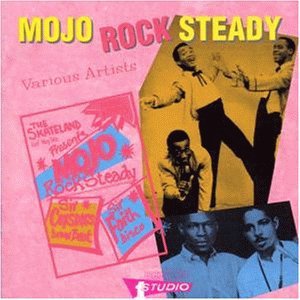
VA - Mojo Rock Steady

The term "reggae," often used to describe any music coming from Jamaica, is in reality a term that represents a whole canon of music that has grown, developed, and branched off from Jamaica's first native popular music, ska. Rock steady, the next form the island developed, is the precursor to the specific sub-genre of reggae, as well as the politically and culturally directed music that followed it called roots. In the rock steady era of the '60s and '70s, ska's blaring horns were minimized, and an electric bass and syncopated horn line carried the rhythm. The lyrics became more centered upon political and social concerns, especially the plight of Jamaica's black citizens. MOJO ROCK STEADY is an excellent introduction to this important era in the development of reggae music. Rhythmically and contextually, the songs contained herein represent important markers in reggae's growth. There are classic instrumental pieces like "Rockfort Rock" (originally titled "Psychedelic Rock" but renamed because a DJ from the Rockfort area of Kingston claimed it as his neighborhood's theme song), protean social protest songs from the Gaylads ("Africa") and the Bassies ("River Jordan"), and an example of one of reggae's lesser-known female vocalists, Denise Darlington ("Feel So Good"). You´ll find the tracklist in the comment.

Mojo Rock Steady (192 kbps)

Freitag, 29. Oktober 2010

Pete Seeger - The Royal Albert Hall (03/07/78)

More than any other individual, Pete Seeger had conceived and fostered a tradition of protest song that drew from a number of cultural roots, had significant political consequence, and reshaped the forms and content of popular music.

This is a recording for the Chile solidartiy concert at the Royal Albert Hall, London, 1978.

Tracks:

Intro
You’ve Got To Walk That Lonesome Valley (trad.)
Garbage
Victor Jara
Estadio Chile
Guantanamera
The Wagoner’s Lad
Song Of A Strike
Photographer’s Ballad
Where Have All The Flowers Gone
If I Had A Hammer
(320 kbps, no cover)

Three Johns - The World By Storm (1986)

Far and away the best Three Johns album. Funnier, sharper, and more focused than "Atom Drum Bop", "The World By Storm" really lets the guitars rip, creating a more manic, tuneful wall of noise behind which the Johns rant and rave.

The record featured the three best singles the band ever recorded, "Atom Drum Bop" (this is not a mistake — there's no song by this title on the LP "Atom Drum Bop"), "Sold Down the River," and the scaborously funny "Death of the European" (with its John Lydon-like opening lines, "Big mouth/open wide/open up the pearly gates of freedom").

The lyrical concerns are the same as always — mindless, conspicuous consumption, empty-headed conservatism — but here the Johns sound more in control, and that begets a ferocity and urgency that makes this a compelling record. The Three Johns cult and Mekons fans lapped this up when it came out, but it was only available in America as an import (still is, as far as I know) and sank without a trace. Too bad, as it was one of the best records of 1986.

Three Johns - The World By Storm (1986)
(192 kbps)

Dienstag, 26. Oktober 2010

Maniacs vs. Sarkiat - Don´t Climb The Pyramids

Cram an electric trio and seven egyptian musicians in a little room in the heart of Cairo for ten days and see what happens. The first steps of egyptian hard core? An oriental version of end-of -the millenium electric rock`n`roll? The rebirth of arabic pop muisc?

It`s a dream Alain Croubalian, from the Maniacs (based in Geneva), and Fathy Salama, leader of Sharkiat (means "coming from the east), wanted to bring to life. They felt, more than they exactly knew, the common ground where egyptian folk music, international pop, electronic sounds and independent rock could meet. And they made it happen.

After concerts in the Cairo Opera House and a tour of swiss underground clubs they recorded 10 songs in an old studio in Shobra, the heart of popular Cairo.


Escaping the usual cliches about oriental music isn`t easy. When talking about Egypt, you automatically think of sand, camels and pyramids. But Cairo is a busy urban city where 13 million people struggle for everyday life. Traffic is hell and the pop muisc is all electronic beats twisted in a mayheim of selfish pop. This encounter doesn`t really fit your usual world music standards, where exotism counts more than reality. Maniacs and Sharkiat agree and sincerely feel this "Don`t climb the pyramids" album is as authentic as music gets; at the same time a strange encounter. At the end of the recording sessions everybody looked at each other wondering: "It`s great music ! But what is it ?" Neither of us had heard such sounds collide excepts in our wildest fantasies. Today they are reality.
.

Up, Bustle & Out - Che Guevara ... A Dream Of Land And Freedom

With influences drawn from diverse sources all over the world — from Istanbul to Bolivia, Andalusia to North Africa — Up, Bustle and Out is one of the harder groups to pin down on the experimental breakbeat landscape. Hailing from the English town of Bristol, home also to Tricky and Massive Attack, Up, Bustle and Out comprises producers Rupert Mould and D. "Ein" Fell, who formed the group in the early '90s as an adjunct to their respective interests in non-Western musics, funk and soul, jazz, and experimental underground club styles like house, techno, ambient, and trip-hop.

Up, Bustle & Out take their romantic Latin dabblings to their most ambitious extreme with this limited 7-track CD, released to coincide with the 30th anniversary of the death of Cuban revolutionary Che Guevara. A must for those who appreciate good intellectual music dedicated to a man who will live in our memories for ever.
.
No link.

Swing Is Here - Small Band Swing 1935 - 1939

The mid-1930s were golden years for jazz. The music on this CD is quite exciting but much of it is issued here in incomplete fashion.

There are all four titles from Gene Krupa's Swing Band (a superb pickup group with trumpeter Roy Eldridge, clarinetist Benny Goodman and Chu Berry on tenor in additon to two Helen Ward vocals) but just three numbers from a session led by arranger Gene Gifford with trumpeter Bunny Berigan, six of the ten titles recorded by Mezz Mezzrow's bands during 1936-37 (featuring trumpeter Frankie Newton, Bud Freeman on tenor and a rare outing outside of the Jimmy Lunceford orchestra by trumpeter Sy Oliver), two jams by Frankie Newton in 1939 and seven songs from Wingy Manone.

Swing Is Here - Small Band Swing 1935 - 1939 (192 kbps)

Montag, 25. Oktober 2010

Laurel Aitken & Girlie - Scandal In A Brixton Market (1969)

Known as "the Godfather of Ska," Laurel Aitken was Jamaica's first real recording star. He was a pioneer in many other respects as well: he was one of the first artists ever to release a ska record, the first to work at promoting his music in the U.K., and one of the first to record for the seminal Island label, itself a major force in the international popularity of Jamaican music. Cutting his teeth on the sort of jump blues and boogie shuffles popular during the early days of American R&B, Aitken recorded numerous hits for a variety of labels over the years, enjoying his heyday during the '60s. His continued presence in the U.K. made him an elder statesman to the Two Tone ska revival movement of the punk era, and he continued to tour even into the new millennium.

"Scandal In A Brixton Market" was released in 1969 on the Pama label.

Tracks:

Side 1:
Laurel Aitken & Girlie: Scandal In A Brixton Market
Laurel Aitken & Girlie: Madame Streggae
Laurel Aitken: Stupid Married Man
Laurel Aitken: Tammering
Laurel Aitken: Have Mercy
Laurel Aitken: Night Cricket

Side 2: Laurel Aitken: Run Powell Run
Laurel Aitken: Teddy Bear
Laurel Aitken: Mr Soul
Laurel Aitken: Woke Up This Morning
Laurel Aitken & Rico Rodriguez: Babylon
Laurel Aitken & Rico Rodriguez: Stop The War In Vietnam

Laurel Aitken & Girlie - Scandal In A Brixton Market (1969)
(192 kbps)

Donnerstag, 21. Oktober 2010

Ari Up - Rest In Peace! - The Slits Debut 12" (Island, 1979)

ARI UP (SLITS) - On stage 1977
Ari Up, member of the Slits, died on Wednesday at age 48. Up’s stepfather, the Sex Pistols’ John Lydon, announced her death from a “serious illness” on his website. Up, a.k.a. Arianna Forster, formed the Slits with Palmolive (Paoloma Romero) and Viv Albertine when she was just 14, and the band’s mix of punk, reggae, and politics made them trailblazers. Meanwhile, the Slits’ last video, “Lazy Slam,” has been released posthumously according to Up’s wishes.
There’s no denying the importance of the Slits, especially their 1979 album "Cut". The group’s dizzy blend of dub rhythms, post-punk artiness, punk attitude and unpracticed enthusiasm was thrilling and unique, both when it first came out and 30 years later as well. On top of the glorious clatter and bounce of the music were Ari Up’s vocals. Yes, they may have wandered, they may have grated at times, but her style was perfect for the band and perfect for the times.

After "Cut", both the band and Up went through all kinds of changes that led to some interesting music at times - espcially her work with the Adrian Sherwood-produced, avant-garde reggae group the New Age Steppers.

Up’s death this week at the tragically young age of 48 gives us pause, and spurs us to remember just how influential, and fun, the Slits were at their peak.

To honour Ari Up we post the debut 12″ release from The Slits on Island records in 1979 with the wonderful tracks "Typical Girls" and "Grapevine".


Tracks:
01. Typical Girls / Brink Style
02. I Heard It Through The Grapevine / Liebe And Romanze

The Slits - Debut 12 Inch (Island, 1979)
(128 kbps, cover art included)

Rest in peace!

Children Of September

The PinkPudelCrew is lucky to present the film "Children Of September" next tuesday, (October, 26) at "Größenwahn", Kinzigstr. 9, 10247 Berlin.

"Children Of September" is a documentary film about the military putsch in Turkey on 12th September 1980 from the view of five eyewitnesses.

Five young people, four cities (Berlin, Copenhagen, Zurich and Paris). Everyone of them was born in a different region of Turkey. What their biographies have in common is the fact that their families had gone through the violence of the putsch on 12th September 1980.

How do the children who hanging on to their families apron strings had to emigrate to those countries live today? Are they, as were their parents, involved in politics? Do they have some special characteristics which make them the “Children of September”?

One of the directors and one of the protagonists will take part at the screening and invite you to a discussion about the topic and the film. The entry is free and you are welcome!

Montag, 18. Oktober 2010

Johnny Cash - The Sun Demos & Outtakes

Though Johnny Cash went from total unknown to Number 1 charting artist (“I Walk The Line”) during his time with Sun Records, it’s easy to forget that it all happened pretty quick and he was only with the label for two years, from 1955 to 1957, before he moved on to greener pastures at Columbia Records. The music that he made during this time, however, is truly timeless and in its grit and fatalism marked a new kind of country music with songs more than embracing sadness and loss, songs that turned a cold, brooding eye on the stark realities of life and love.
Before massive fame and excess and later producers got their hands on Cash’s songs and sound and tricked up the accompaniments and arrangements, for the most part it was just Johnny and the Tennessee Two, Luther Perkins on guitar and Marshall Grant on upright bass with added drums and maybe piano or pedal steel. This collection of demos and more polished and complete outtakes—which should be named “Some Sun Demos & Outtakes” because there are quite literally hundreds of hours of extant recordings from the time—is a priceless snapshot of a pivotal period in the history of popular music. Artwork is included.


Tracklist:

1. Wide Open Road (Cry, Cry, Cry)
2. Rock & Roll Ruby
3. You're My Baby
4. Get Rhythm
5. I Walk The Line
6. Train Of Love
7. One More Ride
8. Folsom Prison Blues
9. Wide Open Road (Cry, Cry, Cry)
10. Goodnight Irene
11. My Treasure
12. I Love You Because
13. Leave That Junk
14. Country Boy
15. Come In Stranger
16. Oh Lonesome Me
17. You're The Nearest Thing To Heaven
18. Don't Make Me Go
19. Give My Love To Rose
20. The Ways Of A Woman In Love
21. Thanks A Lot
22. Fools Hall Of Fame
23. I Just Thought You'd Like To Know
24. I Forgot To Remember To Forget
25. Always Alone
26. The Story Of A Broken Heart

No link.

Willie Dixon - "The Quiet Knight" - Live Chicago, January 24, 1974

Willie Dixon's life and work was virtually an embodiment of the progress of the blues, from an accidental creation of the descendants of freed slaves to a recognized and vital part of America's musical heritage. That Dixon was one of the first professional blues songwriters to benefit in a serious, material way — and that he had to fight to do it — from his work also made him an important symbol of the injustice that still informs the music industry, even at the end of the 20th century. A producer, songwriter, bassist, and singer, he helped Muddy Waters, Howlin' Wolf, Little Walter, and others find their most commercially successful voices.
He probably wrote some of the most common known blues songs. To name a few, most of them included here: "Spoonfull", "Little Red Rooster", "Hoochie Coochie Man", "Down in the Bottom", "Back Door Man" & "Wang Dang Doodle".

His songs have become standards for blues players of all stripes and generations and you could argue that bands like Led Zeppelin and the Rolling Stones wouldn’t have existed as they did if it wasn’t for the great big Chicago bass player. He is to blues what George Gershwin is to jazz.

Here´s a classic, exellent sounding Blues show of the great Willie Dixon with his Allstar Band, broadcasted by WXRT-FM Chicago & recorded by Bob Craig to reel.

Setlist:
01-Intro Boogie
02-Crazy ´bout my Baby
03-Rock Me
04-I don´t trust nobody(when it comes to my Girl)
05-29 Ways
06-Wang Dang Doodle
07-Hoochie Coochie Man
08-Little Red Rooster
09-I think I got the Blues
10-My Baby
11-Spoonfull
12-Closing Boogie
No link.

Ranking Trevor & Friends - Roots Of All Roots (Micron, 1979)

Ranking Trevor has been largely ignored by the archivists, a peculiar oversight, as the DJ was a major force in the sound systems on both sides of the Atlantic during the roots age. Most of his recordings remain infuriatingly out of print, and his singles and albums, now with hefty price tags attached, are much sought after by collectors. Born Trevor Grant in Jamaica on January 20, 1960, the toaster to be fell under U-Roy's spell in childhood. He never completely shook the Originator's influence, but no matter, for Ranking Trevor had an equally sharp sense of timing and relaxed delivery that never went out of fashion in this period. Eager for success, Grant was barely into his teens when he began professionally DJing, honing his skills at the Socialist Roots Sound System. He was all of 15 when Jo Jo Hookim took him into the studio for the first time, where he cut 1975's "Natty a Roots Man." Over the next few years Trevor recorded a steady stream of singles for Hookim, all backed by the Revolutionaries, with his popularity increasing proportionally.

By 1977, the teen star was shaking up the British reggae chart as well, with "Cave Man Skank," "Three Piece Chicken & Chips" (a humorous riposte to Trinity's "Three Piece Suit"), and "Anti-Lulu" all hitting the Top Ten. "Pure & Clean" and "Rub a Dub Style" followed them up the chart in 1978. By then, the DJ had signed a deal with Virgin's Frontline imprint, the resulting "In Fine Style" album, which arrived that same year, proving wildly popular. Beyond hits like "Rub a Dub Style" and "Masculine Gender," it also included splendid versions of "Satta Massa Ganna" and "Queen Majesty." Meanwhile, back in Jamaica, Hookim also unleashed the "Three Piece Chicken & Chips" split set, which set Trevor head to head with Trinity himself. The former won that round, as Hookim stuffed it with Trevor's latest hits - the title track, "Lulu," "Love Yu Sister," and, best of all, "Answer Me Question," a retort to Lone Ranger's "Question."

In 1979, Trevor linked up with singing producer Linval Thompson, resulting in the following year's "Repatriation Time", a set again recorded at Channel One and backed by the Revolutionaries. The following year, Prince Jammy remixed a clutch of Thompson, Wayne Jarrett, and Trevor recordings for the simmering "Train to Zion Dub" set. For Repatriation, Trevor took on a new moniker, Ranking Superstar, which explains why producer Sugar Minott titled the DJ's excellent next set Presenting Ranking Trevor. Both Minott and Thompson were featured alongside the DJ on the "Roots of All Roots" set released by Micron later in the decade.
.
(192 kbps, front cover included)

Samstag, 16. Oktober 2010

The World Of Terry Jacks and the Poppy Family (London Records, 1976)

It's been a long time since "Seasons in the Sun" became a monster hit for Canadian Terry Jacks, but the syrupy 1974 single is still top dog among all best-sellers issued by Canadian acts. The release spent more than three months on the U.S. charts and more than four months on the charts in Jacks' native country. Its accumulated sales topped more than 11 million copies. Jacks, who moved on to producing for artists such as the Beach Boys, Nana Mouskouri, DOA, and Chilliwack, reaped the good life from the monster hit's royalties, which he acknowledged by naming his power boat Seasons in the Sun. Royalties also spill in from "Which Way You Goin' Billy?" He and former wife Susan Pesklevits recorded the song under the name the Poppy Family in 1969. The release hit number two in the U.S. and topped the Canadian charts, raking in four Juno Awards and selling more than two million copies.

Power boats and hit singles aside, life hasn't all been smooth sailing for Jacks. His marriage to Pesklevits dissolved in 1973. A second marriage produced a daughter, Holly, and later charges of spousal abuse. According to Canada's CNEWS, when officers in Sechelt, British Columbia, arrived at Jacks' home in 2001, they leveled a charge of improperly storing a firearm against him in addition to the abuse charge, although the rifle was not related to the alleged assault.

As a youth, Jacks resisted family pressures to turn him into an architect. Favoring music instead, he joined the Vancouver-based Chessmen, playing guitar and providing vocals on a pair of singles released by London Records and on two more released by Mercury Records during the mid-'60s. Jacks met his first wife through the Chessmen's appearance on Music Hop, a Canadian television program. Eventually the pair formed the Poppy Family after recruiting guitarist Craig McCaw and Satwant Singh, who played the tabla.

Before "Which Way You Goin' Billy" landed the group in the spotlight, Jacks and the Poppy Family released two singles that didn't go anywhere, "What Can the Matter Be" and "Beyond the Clouds." Later they scored two lesser hits, "Where Evil Grows" and "That's Where I Went Wrong." But Jacks did not take well to performing live. That aversion, coupled with the pressures of stardom, led to his decision to break up the band. In 1973, he produced his wife's eponymous debut album and wrote one of the songs, "I Thought of You Again," which garnered a Juno Award nomination. Despite their working relationship, or perhaps because of it, Jacks and his wife split that year.

A major concern for the musician is environmental pollution, and he has transformed himself into something of a major obstacle for large-scale pulp and logging companies that are suspected of noncompliance with Canadian pollution laws. To that end, he established an organization called Environmental Watch.

"The World Of Terry Jacks and the Poppy Family" was released on Londn Records in 1976. The meticulous songwriting, production and arranging skills of guitarist/mastermind Terry Jacks lift these recordings above the work of many of the group's better-known contemporaries. Singer Susan Jacks has a beautiful voice that sometimes sounds like (but predates) Karen Carpenter, but is eminently more soulful. Although characterized in the liner notes as a "soft pop" band, the Poppy Family was also capable of a somewhat tougher sound that sometimes recalled Surrealistic Pillow-era Jefferson Airplane and folkier material in the Kenny Rogers & the First Edition/Roger McGuinn vein. Throughout, Jacks frames the songs with creative, if often dated, arrangements that compare favorably to his obvious influences, the Beatles, the Beach Boys, and Phil Spector.

Tracklist:
seasons in the sun
i`m gonna love you too
today i started loving you again
remember the rain
the love game
shadows on my wall
sail away
where evil grows
if you go away
rock n roll
of cities and escapes
someone must have jumped
i`m so lonely here today
a good thing lost
concrete sea
Thanks to http://akashaman.blogspot.com/!

No link.
Freitag, 15. Oktober 2010

Jazz Classics In Digital Stereo Vol.3 - New York

On the third of four CDs in the Robert Parker series that reissues a cross section of early jazz recordings from a regional area, the music ranges from the famous (Jelly Roll Morton, Fletcher Henderson, Bessie Smith and Duke Ellington) to the lesser known (Charlie Johnson's Paradise Ten, Lloyd Scott and Freddy Jenkins).

Veteran collectors will prefer to skip this sampler and get the complete sessions elsewhere but listeners just beginning to explore early jazz should find these early recordings (which range from pre-swing to some heated jams) worth investigating.

Jazz Classics In Digital Stereo Vol. 3 - New York
(192 kbps, front cover included)

Mittwoch, 13. Oktober 2010

Sylvan Morris & Harry J - Cultural Dub (1978, vinyl rip)

Harry Johnson, or Harry J as he's better known to fans around the world, was a prolific producer of top-notch reggae, and continues to run one of Jamaica's most legendary studios. Born in Kingston, Jamaica, in 1945, after leaving school Johnson worked as an insurance salesman. Interest in music, however, led him to schedule time at Studio One in 1968 to record the vocal group the Beltones. The resulting single, "No More Heartaches," was a hit, the first of many. Lloyd Robinson's seminal — and much versioned — "Cuss Cuss" arrived the following year, as did a slew of sizzling instrumentals from Johnson's studio band, the Harry J All-Stars. Their first, 1968's "Smashville," mashed up the sound systems, but it was the phenomenal success of "Liquidator," a number that stormed into the Top Ten of the British chart in late 1969, that cemented his reputation. The British reggae label Trojan promptly handed Johnson his own imprint, Harry J, and a slew of the All-Stars' instrumentals saw release. Although none of them repeated "Liquidator"'s success, the songs went down a storm with the skinhead crowd. Of course, the instrumentals were actually backings of vocal cuts, spiffed up by soloing organs or brass, and those vocal numbers were exciting plenty of attention, too. During these early years, Johnson oversaw excellent singles from the Cables, Winston Jarrett & the Flames, Joe White, Bob Andy, and Marcia Griffiths. When the latter two artists joined forces in duet, Johnson's fortune was made, with Bob & Marcia's cover of "Young, Gifted and Black" sailing into the U.K. Top Five, with "Pied Piper" following it up the chart.

With the money amassed from those two hits, Johnson opened his own 16-track Kingston studio on Roosevelt Boulevard. A series of masterful albums emerged across the rest of the decade, all overseen by Johnson himself. The Heptones' Book of Rules and Cool Rasta, I-Roy's Crisus Time and Heart of a Lion, Zap Pow's Revolution, the Melodians' Sweet Sensation, Delroy Wilson's Last Thing on My Mind, Dennis Brown's So Long Rastafari, and Sylvan Morris' Cultural Dub and Jah Jah Dub sets are just some of the highlights. The Wailers recorded their first four albums for Island at Harry J's, with Burning Spear and Augustus Pablo among the many other top-drawer artists who set up shop there. However, it was a young emerging singer who returned Johnson to the U.K. pop chart at the end of the decade. Sheila Hylton first hit with "Breakfast in Bed," and her follow-up, "Bed to Big Without You," was even bigger. In the new decade, the producer was working mainly with DJs, overseeing excellent material from Charlie Chaplin, Uglyman, and Little John, with Computer a fine roundup of these more digitized-sounding productions. By then, Johnson's interest in production was waning, or perhaps he just couldn't find the time anymore, so busy was he looking after the studio, which remains a mainstay of the Kingston music industry.

Sylvan Morris & Harry J - Cultural Dub (1978, vinyl rip)
(192 kbps, front cover included)

Neil Young & The Stray Gators - Norfolk, Virginia 1973 (Soundboard)

.
Over three months, Neil Young planned to visit 65 cities and stop for a break at the end of March. The "Time Fades Away"-tour would resume in August and shift to Europe in November, playing seven shows in the UK. Then back to America to play the final dates in New York, Boston, two shows in Ohio, Chicago and finally in Berkeley.

The Stray Gators lasted only till end March and were replaced by the Santa Monica Flyers for the rest of the tour. It is also well-documented that by March, Young’s voice was shot and he asked Linda Ronstadt, David Crosby and Graham Nash to join him to offer vocal support. This is also the famous tour where the band asked and received a hefty salary increase. "Harvest" had become a multi-million seller and the money was rolling in. Young was furious but paid them anyway. Perhaps he felt guilty about the way he had dismissed the late Danny Whitten, with $50 and a plane ticket. Whitten used the money, scored heroin and died of an overdose.

Young had figured correctly. He opened with an acoustic set, playing the ballads from "After The Goldrush" and "Harvest", winning the audience completely and setting the stage for his electric set with the Stray Gators. By then, the crowd was waiting for rock ‘n’ roll and Young delivered some new songs ("Time Fades Away", "Look Out Joe", "New Mama", "Don’t Be Denied") with some of his well-loved rockers "The Loner", "Southern Man" and "Cinnamon Girl". Everybody went home happy. The critics praised his shows. The only unhappy man was Neil Young - at his band, at his voice and at the audience. According to David Downing’s "A Dreamer Of Pictures", Young "found the audiences too loud during his acoustic set, too quiet in the electric portion of the show. He started screaming at them to wake up." Young was obviously stressed out.

Everything came crashing down at the final show in Oakland, March 31. If you know the "Citizen Kane Junior Blues" show, you can listen to Young explain how it all ended:

"I was singing away - Southern Man, better keep your head, don’t forget what the good book said - and this guy in the front row, he was about as far away as you are from me, he jumped up and yelled, ‘Right on, right on, I love it!’ He felt really good, I could tell. And all of a sudden, you know, this black cop just walked up to him, you know, and it just was the scene the way he looked at him, and he just crunched him."I just took my guitar out and put it on the ground and got in the car and went home…" Rock ‘n’ roll was not making him happy and Young felt disconnected from his fans. This unhappy period is documented on "Time Fades Away", the album. No doubt it remains unreleased because Young wants to forget. It would take the successful 1976 tour with Crazy Horse to lift his spirits and set him in a new direction as a rock ‘n’ roll survivor.

Of all the shows from the ’73 tour, this is one of the best in sound quality. The vocals are upfront and Young sings well. There’s also the rare "Here We Are In The Years". The drums and guitars are properly balanced and offer a solid backing to the singing. So is this a professional recording? This show was taken from a torrent site. According to the seeder, it was copied from a vinyl bootleg, "The 1973 Tour", re-pitched and remastered. The sound is excellentfor the acoustic portion but is a bit muddy during the electric set. You can hear the clicks and pops here. Quite hissy at loud volumes. Never officially released.
- Professor Red, bigozine2.com

No link.

Sonntag, 10. Oktober 2010

Unknow Cases - Masimba Bele (12 Inch, 1983)

"The Unknown Cases" was a german music project by Helmut Zerlett and Stefan Krachten.
Special Guest on the all-time-dj-track "Masimba Bele" was Reebob Kwaku Baah on vocals and percussion.

This 12 Inch was released in 1983 on Rough Trade.

1. (00:05:52) The Unknown Cases - Masimba Bele
2. (00:04:20) The Unknown Cases - Oëkikawai
3. (00:03:55) The Unknown Cases - Masimba Bele '96 (Radio Edit) [Bonus Track]

The Unknown Cases - Masimba Bele (12 Inch, 1983)

Safi Allah Abdullah - Afrika Is Burning And The Black Man Is Doing The Freak (1980, vinyl rip)

I´m definitly touched by this tune, so I decided to share it on this blog.

Thanks a lot to http://rippammell.blogspot.com for bringing this tune to my ears. This single was introduced with the following words on this very interesting blog - and there is nothing to add:

"Apocalyptic song but it really describes the situation! Musically, I think is beatiful, danceable but also very conscious and intense!! I reported all the data that were on the cover because I think that behind this production there is a huge staff!!!
Make your this perfect tune..."

Side A:
Afrika Is Burning And The Black Man Is Doing The Freak (Vocal - 6:53)

Side B:
Afrika Is Burning And The Black Man Is Doing The Freak (Dub 6:53)

Vocals: Safi Allah Abdullah
Music: Safi Allah Abdullah
Lyrics: Safi Allah Abdullah
Arrangement: Eugene Gray
Recorded At: Right Track Recorders, N. Y. C. - Franos, Brooklyn, N. Y. C.

Safi Allah Abdullah - Afrika Is Burning And...
(192 kbps, cover art included)

Freitag, 8. Oktober 2010

Michael Bakunin - Selected Works


"Replacing the cult of God by respect and love of humanity, we proclaim human reason as the only criterion of truth; human conscience as the basis of justice; individual and collective freedom as the only source of order in society." - Michael Bakunin

Contents:
Aldred, Guy A. - Michel Bakunin, Communist.pdf
Bakunin - God and the State.pdf
Bakunin - Integral Education.pdf
Bakunin - Integral Education2.pdf
Bakunin - Marxism Freedom and the State.pdf
Bakunin - Power Corrupts The Best.pdf
Bakunin - Revolutionary Catechism.pdf
Bakunin - Rousseau's Theory of the State.pdf
Bakunin - Selected writings.pdf
Bakunin - Stateless Socialism = Anarchism.pdf
Bakunin - THE CAPITALIST SYSTEM.pdf
Bakunin - The Commune, the Church & The State.pdf
Bakunin - The Immorality of the State.pdf
Bakunin - The Organization of the International.pdf
Bakunin - The Paris Commune and the Idea of the State.pdf
Bakunin - The Policy of The International.pdf
Bakunin - Where i stand.pdf
J. M. W. - Mikhail Bakunin (The Torch of Anarchy).pdf

Michael Bakunin - Selected Works (2 MB)

Donnerstag, 7. Oktober 2010

Killamanjaro vs Super Saint & Black Scorpio 1988 (Dancehall Soundtape)

This is an original vintage dancehall classic:

A clash of three jamaican soundsystems in the year 1988: Killamanjaro vs. Super Saint & Black Scorpio.

Jeremy Lee was the selector with performances by Ninja Man, Shabba Ranks, Papa San, Sanchez, Little John, Hopeton James, Flourgan, Red Dragon and Don Angelo.
It´s a classic tape, so the sound is not as we know it from recent productions.

No link.