Montag, 31. Januar 2022

Oktober - Himmel auf Erden! (Eigelstein, 1979)

Oktober was a polit-rock band in the uniquely German tradition, akin to Floh De Cologne, Lokomotive Kreuzberg, Checkpoint Charlie, et al., but with a larger sound, male and female vocals, and a progressive edge often close to Grobschnitt.

The album "Himmel auf Erden" was recorded in July and August 1979 and released on the "Eigelstein" label. "Straßenkämpfer" ist a cover version of the Stones´ "Street Fighting Man". Track 6 was mis-spelled "Broksorfer Liebeslied" on the back cover. The lyrics for the "Brokdorfer Kantate" (track 5 to 9) were written by the German anarchist writer Peter Paul Zahl.

Peter-Paul Zahl (born March 14, 1944 in Freiburg im Breisgau ; † January 24, 2011 in Port Antonio , Jamaica ) was a libertarian writer of the so-called '68 generation who most recently had German-Jamaican dual citizenship . In the late 1960s he worked in West Berlin as a printer of the underground magazine Agit 883 and as a publisher and author of subcultural writings from the milieu known to the radical left and thus came into the focus of state investigative authorities .

After he had seriously injured one of the officers while fleeing the police, he was imprisoned from 1972 to 1982. During the prison years Peter Paul Zahl intensified his literary work. After his imprisonment, he was temporarily involved in cultural policy for the left-wing revolutionary movements in Grenada and Nicaragua . From 1985 he lived mainly in Jamaica.


Tracks:

01. Oma Meier (Kalla Wefel/Brita Segebrecht) - 5:45
02. Himmel auf Erden (Kalla Wefel/Heinrich Heine) - 6:43
03. Mädchenballade (Peter Robert-Mandl/Steve Peinemann) - 7:23
04. Straßenkämpfer (Mick Jagger, Keit Richards/Peter Robert-Mandl) - 3:56

Brokdorfer Kantate:
05. Geniestreich (Kalla Wefel/Peter Paul Zahl) - 4:09
06. Brokdorfer Liebeslied (Kalla Wefel/Peter Paul Zahl) - 4:02
07. Singe Du (Kalla Wefel/Peter Paul Zahl) - 5:47
08. Der Bauer und die Oma (Peter Robert-Mandl/Peter Paul Zahl) - 2:46
09. Hierher gehört Leben (Kalla Wefel/Peter Paul Zahl) - 3:59


Musicians:

- Jürgen Hansen / drums
- Pierre Meyn / guitar, vocals
- Peter Robert-Mandl / keyboards
. Brita Segebrecht / vocals
- Kalla Wefel / guitars, bass, vocals


(320 kbsp, cover art included)

Sonntag, 30. Januar 2022

Cannonball Adderley Quintet - The Price You Got To Pay To Be Free (1970)

Jazz was undergoing a sea change in 1970 thanks to Miles Davis' electronic and structural breakthroughs, and his former sideman, Cannonball Adderley, was right in the thick of things (the two leaders shared musicians and traded influences during this period). 

Like Miles, the Adderleys expanded their canvas to double-LPs -- this live album being the first of a series in the double-pocket format -- and each side would be organized into nearly continuous medleys. Not only that, Cannonball still had Joe Zawinul on board, who greatly altered the texture of Cannonball's music with his floating electric piano and science-fiction interludes with a ring modulator (this would be his last album with the Quintet). Roy Booker had replaced Victor Gaskin on upright bass, 

Still, Cannonball was a populist at heart, and his generosity of spirit shines through this often deliciously diverse album, which ranges wildly from flat-out soul and funky grooves to Brazilian music (Milton Nascimento's "Bridges") and even possesses a cautious toe dip into the avant-garde ("Out and In"). It endures as such a document, too, since parts of it have been sampled by J Dilla, Pharcyde, Kwest the Madd Ladd, and Funkdoobiest. Along the way, we hear vocals from both Adderleys (including an exceedingly rare yet oddly charming one from Cannon on Milton Nascimento's challenging "Bridges"), a stunningly touching Cannonball testament on soprano in "Some Time Ago," and alto solos that definitely show that Cannonball had absorbed the Coltrane vocabulary. 

Guest Nat Adderley, Jr.'s clichéd anti-Nixon sloganeering on the title tune is just that (granted, he was only 15 years old), but his presence testifies to the close-knit, liberal family atmosphere that Cannonball encouraged. He more than compensates for it with his funky acoustic guitar playing backing his father's vocal on "Down in the Black Bottom" (the B-side for the album's rousing single "Get Up Off Your Knees") while a gospel Rhodes piano testifies. Another notable track is Zawinul's modal "Painted Desert" in its first recorded (and most likely edited) version. "The Price You Got to Pay to Be Free" is a fascinating snapshot of the Quintet in transition.


Tracklist:

01. Soul Virgo
02. Rumplestiltskin
03. Inquisition
04. Devastatement
05. Pra Dizer Adeus (To Say Goodbye)
06. The Price You Got to Pay to Be Free
07. Some Time Ago
08. Exquisition
09. Painted Desert
10. Directions
11. Down in Black Bottom
12. 1-2-3-Go-O-O-O!
13. Lonesome Stranger
14. Get Up off Your Knees
15. Wild-Cat Pee
16. Alto Sex
17. Bridges
18. Out and In
19. Together
20. The Scene

Cannonball Adderley Quintet - The Price You Got To Pay To Be Free (1970)
(320 kbps, cover art included)

Samstag, 29. Januar 2022

Amalia Rodrigues - For Your Delight (1962)

The unrivaled queen of the Portuguese fado, singer Amália Rodrigues was born in Lisbon's Alfama district in 1920; one of ten children, she was abandoned by her mother at the age of one and raised by her grandmother, spending her formative years selling produce on the streets and working as a seamstress. Against the wishes of her family, as a teen Rodrigues performed as a tango dancer, and at 19 she made her professional singing debut alongside her sister, Celeste, at the fashionable Lisbon nightspot Retiro da Severa.

Within a year she was a star, selling out clubs every night; in 1944, she traveled to Brazil, drawing huge crowds during her stay at the Copacabana Casino and later returning to Rio de Janeiro to make her first recordings. Rodrigues not only popularized the fado throughout South America, she reinvented it -- brilliantly fusing the urban and rural styles of Lisbon and Coimbra, she also sought out material that moved far beyond the traditional tales of failed romance to explore instead the deepest crises of the soul and spirit, delivering performances unmatched in their fatalistic power and haunting beauty.

Because Rodrigues' manager, José de Melo, believed her native fans would stop attending her live appearances if they could buy her recordings, she did not enter a Portuguese recording studio until 1951, issuing a handful of sides on the Melodia label before moving to the Valentim de Carvalho imprint the following year. In the wake of World War II she began touring outside of South America, and scored an international hit in 1956 with "Coimbra," recorded live at Paris' Olympia Theatre.

In all, Rodrigues recorded upwards of 170 albums and even appeared in a number of feature films, retaining her drawing power even after the popularity of fado itself began to dissipate during the 1960s. She continued touring well past her 70th birthday, entering retirement only after undergoing surgery; she spent the final years of her life as a recluse, making her final public appearance at the opening of Lisbon's Expo in 1998. Rodrigues died October 6, 1999, at the age of 79; upon receiving news of her passing, Portuguese Prime Minister Antonio Guterres ordered three days of national mourning, declaring her "the Voice of Portugal."


Tracklist:

Vida Enganada
Acho Inuteis As Palavras
Algemas
Rasga O Passado
Caminhos De Deus
Espelho Quebrado
Assim Nasceu Este Fado
Eu Queria Cantar-Te Um Fado
Rua Do Silêncio

(ca. 192 kbps, cover art included)

Willy Michl - Blues & Balladen (1976)

Willy Michl was born on July 9, 1950 in Munich, Germany. He is a Bavarian blues singer and singer-songwriter and originated the "bavarian blues style". 

He also worked as an actor, known for "Tapetenwechsel" (1984), "Der Bulle von Tölz" (1996) and "Ottis Schlachthof" (1995). 

Willy Michl is called the "ISARINDIAN" and produced 9 albums.
Tracklist:

A1 Dichterstress 2:10
A2 Drah di net um 6:15
A3 Fliag, Vogel fliag 3:16
A4 Wintermorgen 10:01
B1 Mein Traum 3:47
B2 Die Zeche 4:57
B3 Entrümpelung 3:08
B4 Stein der Weisen 3:36
B5 Waxenstein-Blues 4:02
B6 Abschied 3:44


Willy Michl - Blues & Balladen (1976)
(320 kbps, cover art included)

Montag, 24. Januar 2022

Gilberto Gil - Louvação (1967)

Gilberto Gil's debut album presented him as one of the brightest young performers and composers in Brazil. Composed just a few years before tropicalia hit, stripped-down songs like the title track, "Lunik 9," and "Roda" reflect the native influence of bossa nova and samba. Though it's clear he's not yet the enthusiastic performer he would soon become, "Louvação" is a solid debut, packed with intriguing songs.       

In 1967 Gil was already established as a Bossa Nova star in Brazil and had helped launch Musica Popular Brasileira, introducing traditional northern folkloric styles into the urban bossa nova style to create a new hybrid that effectively defined Brazilian popular music for the next 25 years.

Just around the corner the musical and cultural anarchy of the Tropicalia movement was about to be created by Gilberto Gil, Caetano Veloso, Tom Ze and Os Mutantes.

Gil had first met Caetano Veloso in Bahia in the early 1960s. Alongside Maria Bethania, Gal Costa and Tom Ze they had formed the Group from Bahia. In 1965 he moved to Sao Paulo to launch his solo career after Elis Regina had a hit with Gil's own composition Louvacao.


Tracklist:
  1. "Louvação" (Gil, Neto) - 3:45
  2. "Beira-Mar" (Gil, Caetano Veloso) - 3:54
  3. "Lunik 9" (Gil) - 3:04
  4. "Ensaio Geral" (Gil) - 1:57
  5. "Maria (Me Perdoe, Maria)" (Gil) - 2:37
  6. "A Rua" (Gil, Neto) - 3:33
  7. "Roda" (Augusto, Gil) - 2:41
  8. "Rancho da Rosa Encarnada" (Gil, Neto, Vandre) - 2:38
  9. "Viramundo" (Capinan, Gil) - 2:18
  10. "Mancada" (Gil) - 2:02
  11. "Água de Meninos" (Capinan, Gil) - 4:32
  12. "Procissão" (Gil) - 2:38
  13. "Minha Senhora" (Gil, Neto) - 3:24
  14. "A Moreninha" (Tom Zé) - 2:47
     
Gilberto Gil - Louvação
(192 kbps, cover art included)

Neonbabies - Harmlos (1982)

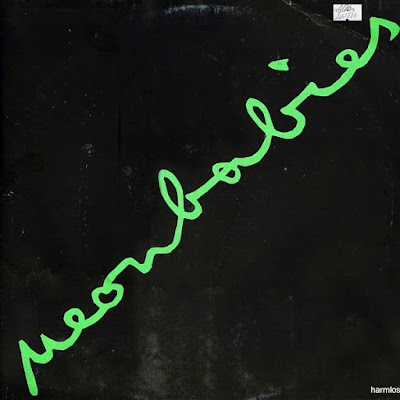
Neonbabies were a German "Neue Deutsche Welle"-band founded in Berlin in 1979 by Annette Humpe and Inga Humpe and others. Annette left the band in 1980 for her new project Ideal. The band split up in 1983. Inga Humpe's current project is called 2raumwohnung.

The album "Harmlos" was recorded in February 1982 in Conny Plank's Studio, Wolperath.


GeneralError on rateyourmusic.com:

"Harmlos" means "harmless" in German, and that's pretty much what this album is. A little pop, a little new wave, a flirt with some experimental stuff, but all in all, it's pretty nondescript and undecided... While it's the Neonbabies best album, with a few good tracks ("Carosello", "Moderne Liebe" and "Aiaiaiai"), most of the tracks are just average. Even if Neonbabies are pretty unknown today, I still consider them overrated, as they're often cited as Neue Deutsche Welle pioneers -- I consider them rather as bandwagon jumpers.

Seeing what singer Inga Humpe does today (horrible Deutschpop with 2raumwohnung), this is no surprise.


Tracklist:

A1 Alibi
A2 Reise
A3 Angelogen
A4 Ausser sich
A5 Carosello
B1 Moderne Liebe
B2 Triebtäter
B3 Roboter
B4 Gemini
B5 Aiaiaiaiai

Neonbabies - Harmlos (1982)
(ca. 192 kbps, cover art included)

Sonntag, 23. Januar 2022

Los Fabulosos Cadillacs - Yo te Avise!!! (1987)

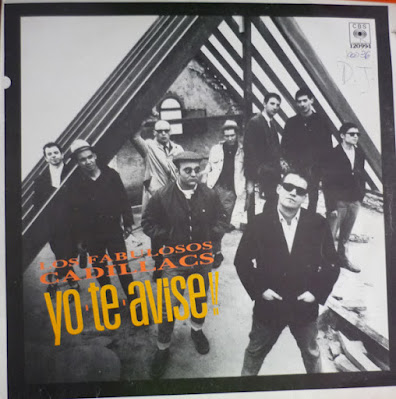
Los Fabulosos Cadillacs is an Argentine ska band from Buenos Aires. Formed in 1985, they released their first album, Bares y Fondas (Bars and Boardinghouses), in 1986 and have since released fourteen more albums. They are one of the most influential and most-referenced ska bands of the Latin ska world.

The band's sound is a mix of ska, salsa, mambo, reggae, rock, funk and samba. It is also noted for its irreverent and humorous lyrics which often contain political undertones.

Yo Te Avisé! (Spanish for "I told you so") was their second studio album and was released in 1987. Having built on their experience from the first album, the band also benefited from the assistance of Andres Calamaro in production. On this album, Daniel Lozano joined the band as a guest player on the trumpet, eventually becoming a full-time member.

The album was a step forward for the band; it sold more than 250 000 copies, earning the band a platinum certification, catapulting them to a moderate fame that allowed them to expand their tour schedule to countries outside of Argentina. Structurally, the album was an evolutionary shift for the band, with a focus on more elaborate songs and the incorporation of new genres in their sonic vocabulary, including reggae and dub, seen in the songs "Muy, Muy Temprano" and "El Genio del Dub", respectively.

The singles were "Mi Novia se Cayo en un Pozo Ciego", "Yo te Avise", the permanent concert opener "Cadillacs" and "Yo No Me Sentaria en Tu Mesa", which is still played in soccer matches in Argentina.


Tracklist:
"El Genio del Dub" ("The Genie of Dub")  5:21
"Botellas Rotas" ("Broken Bottles") 2:35
"Mi Novia Se Cayó En Un Pozo Ciego" ("My Girlfriend Fell In A Cesspool") 3:52
"Una Ciudad Llamada Vacío" ("A City Called Emptiness")  4:07
"Cadillacs" 2:01
"Yo No Me Sentaría En Tu Mesa" ("I Wouldn't Sit At Your Table") 2:58
"Yo Te Avisé" ("I Told You So") 3:07
"Muy, Muy Temprano" ("Very, Very Early")  5:50
"Estoy Harto de Verte Con Otros" ("I'm Tired of Seeing You With Others") 4:53
"Aún los Escuchamos Cantar" ("We Can Still Hear Them Sing")  4:37

(320 kbps, cover art included)

Samstag, 22. Januar 2022

Bob Dylan – Bonnie Beecher's Apartment, December 22 1961


This bootleg was recorded December 22, 1961 at Bonnie Beecher's Apartment in Dinkytown, Minnesota.Dinkytown is a small "student-centric" shopping and entertainment area just off the campus of the University of Minnesota.

Bonnie Beecher's Apartment was called 'The Minnesota Hotel' because it was a revolving door for the 'musicians types'.


"…the most famous of Dylan’s many “home” tapes, the so-called “Minneapolis Hotel Tape.” Recorded by Tony Glover at Bonnie Beecher’s apartment in Minneapolis, whimsically dubbed The Beecher Hotel by Dylan (hence the title of the tape), large portions of this tape appeared on the first Dylan bootleg album, the legendary Great White Wonder."
~Clinton Heylin (Bob Dylan: A Life in Stolen Moments Day by Day 1941-1995)

"The December tape has been in wide circulation for many years. It was actually the first bootleg ever produced. It was released on a 2 LP set in 1969, and went by the title ‘Great White Wonder’ It has been available under various titles a countless number of times in the decades that followed. The quality has generally been very good, and the performance tells the story of a fresh faced boy just out of high school, who had the energy and natural ‘world-traveled weariness’ quality that would forever change the world. It is absolutely required material for even the smallest collection."
~bobsboots.com


Tracklist:


A1 Candy Man
A2 Baby Please Don't Go
A3 Hard Times In New York Town
A4 Stealin'
A5 Poor Lazarus
A6 I Ain't Got No Home
B1 It's Hard To Be Blind
B2 Dink's SOng
B3 Man Of Constant Sorrow
B4 Naomi Wise
B5 Wade In The Water
B6 I Was Young When I Left Home
C1 In The Evening
C2 Let Me Follow You Down
C3 Sally Gal
C4 Gospel Plow
C5 Long John
C6 Cocaine
C7 VD Blues
C8 VD Waltz
D1 VD City
D2 VD Gunners Blues
D3 See That My Grave Is Kept Clean
D4 Ramblin' Round
D5 Black Cross

(320 kbps, cover art included)

Donnerstag, 20. Januar 2022

VA - Chants Populaires Yiddish - Popular Yiddish Songs (1996)

Today is the 80th anniversary of the Wannsee Conference. On January 20, 1942, senior Nazi officials met at a Berlin villa to discuss the "final solution" to "the Jewish question." Deportations to ghettos and concentration camps had already begun, but the Wannsee Conference coordinated plans for the systematic murder of European Jews.

The Yiddish language, which probably began to develop around the tenth century A.D. in south Germany, was the main spoken language and language of oral creation of the Ashkenazi Jews of both Western and Eastern Europe, whereas in the latter region it was influenced by Slavic languages. Both the language and the folksongs, like many other elements of Ashkenazi culture, are made up of a combination of components from different cultures, geographical regions, and periods: the vocabulary, syntax, morphology, and prosody of Yiddish combine German and Hebrew components, and in Eastern Europe also elements of Slavic languages, as well as words of other surrounding languages. In a similar manner, the folksongs of the Ashkenazi Jews bare resemblance to Western European folksongs, Slavic songs from different periods, as well as Ashkenazi liturgical chants.

This combination of diverse and far ranging components is one of the prominent features of the Yiddish folksong. Throughout the ages it has been part of both rural and urban folklore and has developed oral traditions alongside an attachment to the written word. Its performance contexts include functional or gender specific performances (wedding songs, playsongs, lullabies, religious para-liturgical songs), as well as performances that are neither functional (lyric and narrative songs) nor gender specific (dance songs).

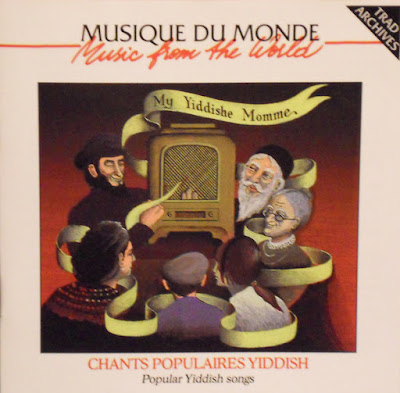
This compilation of popular Yiddish songs was released on "Musique Du Monde" in 1996.

Tracklist:

Rumania Rumania (3:05)
Mazel Tov (3:09)
Far neela nolkh neela (2:45)
Al-d-dai-da (2:27)
Odessa mama (2:36)
Yach tsire bim (2:42)
Oib mir Bessarabia (3:10)
Skrip, klezmer, skrip (3:13)
Tsen kopikes (2:25)
Az men farzucht (2:58)
Dos oibershte fun shtoisel (2:31)
Des helige schneider (3:12)
Passach shine sha (3:30)
Meshuigner moshiakh (5:08)
Khazan a shiker (6:21)
My yiddishe momme (5:42)
Eli Eli (4:10)
Den Rebens Nigun (3:07)
Tanst tanst yidelekh (3:02)
Baym rebens sude (3:18)
(320 kbps, cover art included)

Mittwoch, 19. Januar 2022

Carambolage - Eilzustellung Exprèss (1982, David Volksmund Produktion, vinyl rip)

Carambolage never set out to be a "girl band" but they were one of the first German new wave bands whose members were all female. The punk alliance comprising Britta Neander, Elfie-Esther Steitz and Angie Olbrich emerged organically from the environs of Ton Steine Scherben, friends united by a common interest in musical experimentation. Britta's passion for the drums ignited in 1974 in Fresenhagen, North Frisia, where she played percussion for Ton Steine Scherben. R.P.S. Lanrue's little sister Elfie-Esther was an obvious candidate. Angie, a child from the streets who joined the commune in 1972, completed the line-up. Carambolage surfed on their very own "North Frisian Wave" -- an epithet dreamed up for their distinctive sound. Shortly before her death in 2004, Britta was interviewed by music journalist Tine Plesch and described how the "girls gang" gave them the freedom to experiment and come up with "these really funny, filthy lyrics". There is a childish, subversive charm to the songs, emboldened by the realization that "we could fool around as much as we wanted." Their sound was not the only aspect of the group which resulted from experimental tinkering. Keen to have their own space, away from a male-dominated environment, they used cardboard and carpets to build their own practice room inside an old grain silo.

On their sophomore album "Eilzustellung-Exprès" ("express delivery"), Carambolage's ranks were bolstered by the arrival of Janett Lemmen, who had deputized for the pregnant Angie on a recent tour. The record was produced in Fresenhagen by R.P.S. Lanrue and released on the Scherben label David Volksmund Produktion. Like a whirlwind girl gang on the road, the album revs up with dynamic guitar riffs, indulging their "turned on to the max" sexual desires, before the mood shifts to the deeper realms of life on the Eilzustellung-Exprès: melancholy musings on dismaying love affairs, a song about contradictory feelings experienced in childbirth, culminating in a declaration of love for Angie's new daughter Lisa. The baby was always on board when Carambolage went on tour. The idea of her father Kai Sichtermann (Scherben bass player) taking her on tour would have been too much even for the left-leaning alternative Ton Steine Scherben. Making a mockery of male privilege, Carambolage delivered an album orbiting punk and pop in a classic line-up: Britta on drums, Elfie's snotty vocals and effects-drenched guitar and keyboards, Angie on bass. The trio is augmented by Janett's screeching saxophone on the instrumental track "Maschine" and a squeaky baby sample (Lisa?).

Both Carambolage albums will be reissued this year on the great Tapete label. 

Tracklist:
01 Vollgeturnt
02 Eingeschneit
03 Widerlich
04 Was mir widerfuhr
05 Gehirnwäsche
06 Warum
07 Maschine
08 Die Zeit
09 Psychoeintopf
10 Was ist das
11 Take Me
12 Lisa
13 I Remember You


Carambolage - Eilzustellung Exprèss 
(1982, David Volksmund Produktion, vinyl rip)
(320 kbps, cover art included)

Montag, 17. Januar 2022

Gal Costa - Legal (1970)

On "Legal", the follow-up to her extremely bombastic self-titled release, Gal Costa retains only some of the fire and experimentation, instead opting to return to more accessible and subdued arrangements. This was likely a wise decision on Costa's part, even though the reckless abandon she displayed on "Gal Costa" was astonishing, for her to recklessly continue flailing down that path would've certainly led to her burning out or completely alienating the public she was trying to inform. 

Furthermore, "Legal" is a much more diverse record than her previous records, displaying influences from American blues-rock, R&B, and soul with winding, organ-driven rock closer to the sound Milton Nascimento would later latch onto and nurture with his "Clube da Esquina" albums. This diversity is welcome and served as a setup for Costa to further explore complex arrangements on her later records.

Costa's lovely voice flourishes on the jazzy churning of "Língua Do P," the emotional groove of "Mini-Misterio" as well as the gorgeous version of Caetano Veloso's "London, London" -- certainly included as a reminder to the Brazilian public of her comrades (Veloso and Gilberto Gil) who were still exiled for upending politics through their radical music. The only questionable track on the album is "Love, Try, and Die," which has a fun, bouncy Dixieland style but is ruined by the unnecessary and terrible Louis Armstrong impersonation contributed by one of the backing vocalists. In spite of this small blunder, "Legal" appears near the beginning of Costa's most consistent period and should be sought out by those interested in the revolutionary late-'60s/early-'70s period of Brazilian rock.


Tracklist:

A1 Eu Sou Terrivel 2:30
A2 Lingua Do P 3:40
A3 Love, Try And Die 2:23
A4 Mini-Misterio 4:16
A5 Acaua 2:49
B1 Hotel Das Estrelas 4:22
B2 Deixa Sangrar 2:53
B3 The Archaic Lonely Star Blues 3:03
B4 London, London 4:00
B5 Falsa Baiana 2:11


Gal Costa - Legal (1970)
(320 kbps, cover art included)

Freitag, 14. Januar 2022

Los Lobos - Vientos del pueblo (Spain, 1972)

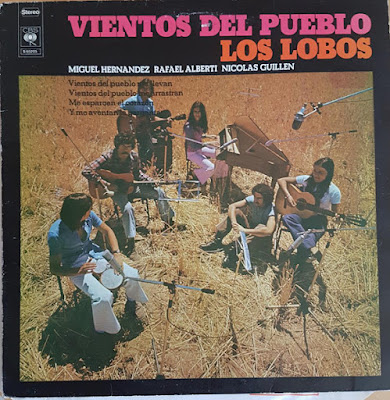
Los Lobos was a Spanish folk band founded in 1971 by Manuel Roiz, Antonio Gómez and sisters Almudena Langa and Leonor Langa

In 1972, a group of university students from Madrid founded the group Los Lobos, which debuted on the CBS label with an album entitled "Vientos del pueblo". The great popular success of the album came from the homonymous poem by the great Miguel Hernández, which received numerous critics' awards and sold tens of thousands of copies as a single. 

But the censorship was still giving its last death rattles then in Spain and the song was banned for months on Radio Nacional de España and on Spanish Television.


Tracklist:

A1 Vientos Del Pueblo
A2 Papa Montero
A3 Tristes Guerras
A4 La Muralla
A5 Mi Corza

B1 Coco Cacao
B2 Si Mi Voz Muriera En Tierra
B3 Ausencia
B4 Amigo
B5 Tres Morillas

(192 kbps, cover art included)

Slapp Happy‎ – Acnalbasac Noom (1973)

The history of this album is a bit complicated. Originally titled "Casablanca Moon", it was recorded for Polydor in 1973, but scrapped when the group signed with Virgin; their first Virgin release was an entirely re-recorded version of the same material, although it was entitled "Slapp Happy" when released.

To compound the confusion, the Virgin version was retitled "Casablanca Moon" when it was reissued on CD in 1993 (on a single-disc release that also included their 1974 Virgin album "Desperate Straights").

"Acnalbasac Noom" is the original, 1973 recording of the "Casablanca Moon" material, and not a mere archival curiosity; it's quite worthy on its own merits. The group's songwriting had improved since their debut, and Krause's German chanteuse-influenced vocals found catchier, more rock-oriented settings. The lyrics are witty and oddball without being pretentious. Tracks like "Mr. Rainbow" recall Yoko Ono's early-'70s song-oriented material, with an important difference: Krause's vocals are much better than Ono's, while just as distinctive. "The Secret," with its almost girl-group-worthy catchiness, and "Charlie 'n Charlie," with its nifty surfish guitar riff, even sound like potential commercial singles. The four bonus tracks include the delightful 1982 single "Everybody's Slimmin'," with its immortal opening line, "Listen my children and you will hear/You can shed weight and still drink beer."  

Tracklist:

1 Casablanca Moon
2 Me And Paravati
3 Mr Rainbow
4 Michelangelo
5 The Drum
6 A Little Something
7 The Secret
8 Dawn
9 Half-Way There
10 Charlie 'N Charlie
11 Slow Moon's Rose
12 Everybody's Slimmin'
13 Blue Eyed William
14 Karen
15 Messages


Slapp Happy‎ – Acnalbasac Noom (1973)     
(320 kbps, cover art included)

Paul Robeson - Ol´ Man River (1990)

Paul Leroy Robeson was born on April 9, 1898 in Princeton, New Jersey. He was the youngest son of five children born to Presbyterian minister Reverend William Drew Robeson (1845-1918) and former schoolteacher Maria Louisa Bustill Robeson (1853-1904). He was the grandson of slaves and the son of a minister who escaped slavery and became one of Rutgers University's most famous and accomplished alumni.

In 1915, Robeson was awarded a four-year academic scholarship to Rutgers University. He was inducted into the Phi Beta Kappa Society and Rutgers' Cap & Skull Honor Society. He was valedictorian of his graduating class in 1919. Rutgers awarded Robeson honorary Master of Arts degree in 1932 and an honorary Doctorate of Humane Letters on his 75th birthday in 1973.

In addition to his academic achievements, Robeson had an outstanding athletic career as the first Black football player at the University winning 15 varsity letters in baseball, football, basketball, and track and field. He was named to the All American Football Team twice in spite of open racism and violence expressed by his teammates. In 1995, he was inducted posthumously into the College Football Hall of Fame.

In 1923, Robeson earned a law degree from the Columbia Law School. There, he met his wife Eslanda Cordoza Goode, the first black woman to head a pathology laboratory. Robeson took a job with a law firm after graduation, but left the firm and the practice of law when a white secretary refused to take dictation from him. He decided to use his artistic talents in theater and music to promote African and African-American history and culture.

What followed was a brilliant career as an actor and concert singer which spanned nearly four decades. Robeson made his concert debut in 1925 with a highly successful program of Black music. He went on to such stage successes in Show Boat, Porgy and Bess and Othello, which was hailed by some critics as the play's greatest interpretation. He starred in 13 films between the 1920s and the early 1940s, but decided to stop making movies until there were better opportunities for blacks.

Paul Robeson used his deep baritone voice to promote black spirituals, to share the cultures with other countries, and to support the social movements of his time. He sang for peace and justice in 25 languages throughout the United States, Africa, Asia Europe, and the Soviet Union.

Robeson became known as a citizen of the world, as comfortable with the people of Moscow and Nairobi as with the people of Harlem. Wherever he traveled, Robeson championed the cause of the common person. Among his friends, he counted future African Leader Jomo Kenyatta, India's Nehru, anarchist Emma Goldman and writers James Joyce and Ernest Hemingway.

During the McCarthy Era of the 1950s, every attempt was made to silence and discredit Paul Robeson because of his political views and dedication to civil rights. In 1958, he embarked on a successful three-year tour of Europe and Australia. Unfortunately, illness ended his professional career in 1961. He lived the remainder of his years as a private citizen in his sister's home in Philadelphia. He died on January 23, 1976 at the age of 77.

For his steadfast commitment to his social conscience, Paul Robeson - activist, scholar, artist, athlete - was shunted from the center of America's cultural stage to its wings. For a generation, his memory was obscured and his achievements forgotten, but the centennial of his 1989 birth has sparked new debate about his place in our history.


Tracklist:


01 - Ol' Man River
02 - My Old Kentucky
03 - Lazy Bones
04 - My Lindy Lu
05 - Poor Old Joe
06 - Old Folks At Home (Swanee River)
07 - Just Keepin' On
08 - Little Pal
09 - Water Boy
10 - Shenandoah
11 - Swing Low, Sweet Chariot
12 - Joshua Fit The Battle Of Jericho
13 - Wagon Wheels
14 - Got The South In My Soul
15 - St Louis Blues
16 - Rockin' Chair
17 - River Stay 'Way From My Door
18 - Canoe Song
19 - Congo Lullaby
20 - Love Song
.
(192 kbps, cover art included)

The Brothers Four - Roamin´ (1961)

The Brothers Four bear a distinction as one of the longest surviving groups of the late-'50s/early-'60s folk revival and perhaps the longest running "accidental" music act in history - 43 years and counting as of 2001, without any break and with two original members still in the fold. If few recognize that distinction, then it's because the Brothers Four were also part of a largely forgotten chapter in the history of folk music in America.                

Most accounts of the post-WWII folk music boom focus on the political and issue-oriented branch of the music, embodied by Woody Guthrie and Bob Dylan, at the expense of the softer, more entertainment-oriented branch, embodied by the likes of the Kingston Trio, the Chad Mitchell Trio, and The Brothers Four. Those acts and the music they made - though it sold well and, indeed, for many years defined what most Americans visualized when the phrase "folk music" was mentioned - are scarcely mentioned in most histories; The Brothers Four aren't even listed in the Guinness Who's Who of Folk Music.

One major misconception about The Brothers Four is that they were an attempt to emulate the Kingston Trio. Actually, Bob Flick (upright bass, baritone, bass), John Paine (guitar, baritone), Mike Kirkland (guitar, banjo, tenor), and Dick Foley (guitar, baritone) had met as undergraduates at the University of Washington in 1956 and began singing together in 1957, more than a year before the Kingston Trio made their first record. Folk music was booming at most liberal arts colleges in those days, and every campus seemed to have its share of trios and quartets, mostly drawn from the ranks of their fraternities. Flick, Paine, Kirkland, and Foley were all members of Phi Gamma Delta and aspired to careers in medicine, engineering, and diplomacy - as amateur performers, however, they were good on their instruments and delighted campus audiences with their ability to harmonize on traditional tunes, novelty songs, and romantic ballads.

They turned professional completely by accident, as a result of a practical joke. A member of a rival fraternity arranged for a woman to telephone the group members, identifying herself as the secretary to the manager of a local Seattle venue, the Colony Club, and invite the quartet down to audition. When they got there, they discovered that there was no invitation or any audition scheduled, but since they were there anyway, the club manager asked them to do a couple of songs and ended up hiring them. The engagement lasted through most of 1958, and while they were often paid off only in beer, the experience was invaluable in that it allowed the group - christened after their impromptu audition as The Brothers Four - to pull its sound together as they never would have if they'd remained confined to occasional performances on campus.

Tracklist:

Low Bridge 2:26
Hey, Hey, My Honey 2:29
The Lilies Grow High 2:57
The Ballad Of Sam Hall 2:41
Variation On An Old English Theme 1:45
Abilene 2:22
Frogg 2:41
Pastures Of Plenty 2:26
Times 1:55
Betty And Dupree 2:44
Island Woman 2:46
This Land Is Your Land 2:34

The Brothers Four - Roamin´ (1961)
(256 kbps, cover art included)

Donnerstag, 13. Januar 2022

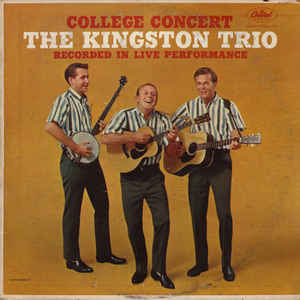
The Kingston Trio - College Concert (1962)

"College Concert" is the twelfth album by the American folk music group the Kingston Trio, released in 1962. It was the group's third live release and the first live release with new member John Stewart. "College Concert" peaked at number three on the Billboard charts.

One of the best-selling LPs ever recorded by the Kingston Trio, "College Concert" is also the album by the trio that holds up best in the decades since -- recorded on December 6 and 7, 1961, at UCLA, it contains several of their best-known songs, including "M.T.A.," in versions that are more spirited than their studio originals. 

There's also an unintentionally telling part of the trio's rap leading into "Chilly Winds," when someone says, "for those of you who think we steal songs..." -- in fact, while on the tour ahead of the recording of this album, the trio heard Peter, Paul & Mary do a version of a Pete Seeger song called "Where Have All the Flowers Gone," which was parlayed by the Kingston Trio into a huge hit single. 

The presence of a live version of "Where Have All the Flowers Gone" on the album, which was released just as the studio version on the single was peaking, didn't hurt sales, but the overall quality of the performance, from the exquisitely arranged "500 Miles" to the rousing version of "Young Roddy M'Corley," was the album's most alluring overall feature. The only flaw that prevents this from getting an even higher rating is the thin-to-non-existent bass in the recording, which detracts from some of the impact of the music.


Tracklist:

Little Light 2:17
Coplas Revisited 2:43
Chilly Winds 2:30
Oh, Miss Mary 2:57
Laredo? 1:13
O Ken Karanga 2:09
Roddy McCorley 2:52
M. T. A. 2:35
500 Miles 2:57
The Shape Of Things 3:45
Where Have All The Flowers Gone 3:15
Goin' Away For To Leave You 2:25

(320 kbps, cover art included)

Mittwoch, 12. Januar 2022

Soledad Bravo ‎– Soledad Bravo Canta (1968)

Soledad Bravo (born January 1, 1943) is a Venezuelan singer. Born in Logroño, La Rioja, Spain her father was a Spanish republican, moving to Venezuela with his family when his daughter was still at an early age. 

At 24, Soledad began studying architecture and philosophy at the Universidad Central de Venezuela, where she also began performing. One year later, in 1968, she released her debut titled "Soledad Bravo Canta" ("Soledad Bravo Sings"), which made her a star in Venezuela and other parts of South America.

In the years that followed, she cooperated with Atahualpa Yupanqui, Gilberto Gil and others, having lived and performed in Europe and the Americas. Her repertoire is a vivid mixture of fiery, vivid Caribbean and Latin rhythms, Sephardic elegies and heartwarming ballads.

Considered to be one of the best voices in Latin America, one of her most popular and best known songs is "Hasta Siempre", a cover of a Cuban hymn by Carlos Puebla to Ernesto "Che" Guevara.


Tracklist:A
01 - Zorongo (Popular)
02 - Las tres hojas (Popular)
03 - Canción de Belisa (F. G. Lorca)
04 - El café de chinitas (Popular)
05 - Las Morillas de Jaén (Popular Siglo XV)
06 - La Tarará (Popular)
07 - Anda Jaleo (Popular)

B
01- Despierte la novia (F. G. Lorca)
02 - Los Peregrinitos (Popular)
03 - Zapatera (F. G. Lorca)
04 - La Dulce mi enemiga (Popular Siglo XV)
05 - Me dijiste que a las diez (Popular)
06 - A raíz do toxo verde (Popular)
07 - Petenera (Popular)


Soledad Bravo ‎– Soledad Bravo Canta (1968)
(224 kbps, cover art included)

Dienstag, 11. Januar 2022

Bob Dylan - Robert Zimmerman Plays Bob Dylan - One Year In NYC

Bob Dylan's influence on popular music is incalculable. As a songwriter, he pioneered several different schools of pop songwriting, from confessional singer/songwriter to winding, hallucinatory, stream-of-consciousness narratives. As a vocalist, he broke down the notion that a singer must have a conventionally good voice in order to perform, thereby redefining the vocalist's role in popular music. As a musician, he sparked several genres of pop music, including electrified folk-rock and country-rock. And that just touches on the tip of his achievements. Dylan's force was evident during his height of popularity in the '60s — the Beatles' shift toward introspective songwriting in the mid-'60s never would have happened without him — but his influence echoed throughout several subsequent generations, as many of his songs became popular standards and his best albums became undisputed classics of the rock & roll canon. Dylan's influence throughout folk music was equally powerful, and he marks a pivotal turning point in its 20th century evolution, signifying when the genre moved away from traditional songs and toward personal songwriting.

As the title, Robert Zimmerman Plays Bob Dylan, implies, these recordings show the young man we all now know as Dylan finding his way in NYC after bumming a ride from Madison in the early months of 1961. Featuring songs that were left off of his first two Columbia LPs, Bob Dylan and The Freewheelin' Bob Dylan, as well as other assorted demos and unreleased recordings, this essential LP of early recordings perfectly captures his growth from traditional folk music interpreter into what he would become: America's greatest living songwriter.


Tracklist:


Side A:
1. He Was A Friend Of Mine
2. Man On The Street
3. Hard Times In New York Town
4. House Carpenter
5. Rambling, Gambling Willie
6. Talkin' Hava Negeilah Blues

Side B:
1. Talkin' Bear Mountain Picnic Massacre Blues
2. Let Me Die In My Footsteps
3. Quit Your Low Down Ways
4. Worried Blues
5. No More Auction Block
6. Kingsport Town


Bob Dylan - Robert Zimmerman Plays Bob Dylan - One Year In NYC
(320 kbps, cover art included)

Montag, 10. Januar 2022

Sister Carol - Jah Disciple (1989)

Carol Theresa East (born 15 January 1959, Kingston, Jamaica), known by her stage name of Sister Carol, is a Jamaican-born American reggae recording artist and actress. She has used many other stage names, including Black Cinderella (also the name of her record label) and Mother Culture. After winning competitions in New York and Jamaica, she toured with The Meditations. Her first album, "Liberation for Africa," was released in 1983, as a limited edition on the Jamaican SG label. The 1984 album "Black Cinderella" established her. She formed her own record label, also called Black Cinderella. 

Sister Carol's album, "Jah Disciple", finally appeared in 1989, kicking off a streak of consistent recording activity that lasted through the '90s. 

Sister Carol emphasized truth and rights over sex and love on this session issued by Ras in 1989. She had harsh words for outer space exploration, internal African problems and rude boys who disrupt social affairs, while recalling an earlier, more enjoyable time on "Remember When" and calling for respect and dignity from an ignorant male on "A No Me Name Peggy." 

Her toasts were slower and paced differently than the rapid-fire dancehall mode; the arrangements and backing combined electronic and acoustic instrumentation, and there was more than a trace of vintage reggae in her style and sound.


Tracklist:

Ram The Party 3:56
A No Me Name Peggy 3:39
Jah Disciple 3:32
Potential 3:18
Get It Straight Africans 3:26
Lost In A Space 3:54
Intelligence 3:07
A No Me Mommy & Daddy 3:44
Wicked Collie 3:23
Remember When 3:42

(192 kbps, cover art included)

Samstag, 8. Januar 2022

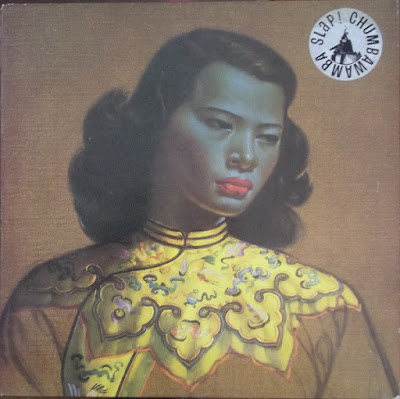
Chumbawamba - Slap (1990)

Formed in a squat in Leeds, England, in 1984, the anarchist pop group Chumbawamba were a most unlikely mainstream success story. After more than a decade in relative obscurity, much of it spent attacking the very notion of stardom, the band signed to a major label in 1997 and quickly scored a major international hit with the riotous single "Tubthumping." The single would prove to the band's commercial peak, even though Chumbawamba continued issuing politically aware albums (many of them featuring an increased emphasis on folk music) during the 2000s.
Their anarcho-communist political leanings led them to have an irreverent attitude toward authority, and to espouse a variety of political and social causes including animal rights and pacifism (early in their career) and later regarding class struggle, Marxism, feminism, gay liberation, pop culture, and anti-fascism.

Unabashedly political, Slap! refers to the Bader-Meinhof Gang, Bernadette Devlin and the Irish troubles, Tiananmen Square and the 1956 Hungarian uprising (which receives the studiously ironic "That's How Grateful We Are," about the destruction of a statue of Stalin). The politics are salted into an entertaining mix of beats and hooks that make the whole album easy to digest. Entertaining music designed to make the listener think -- not a bad deal.

Tracklist:

Ulrike
Tiananmen Square
Cartrouble
Chase PC's Flee Attack By Own Dog
Rubens Has Been Shot!
Rappoport's Testament: I Never Gave Up
Slap!
That's How Grateful We Are
Meinhof

(192 kbps, cover art included)