Donnerstag, 19. Mai 2016

Merle Haggard & The Strangers - Someday We´ll Look Back - Rest In Peace!

Merle Haggard, an icon of American music, died at his home in California on Wednesday, April 6, 2016. It was the singer, songwriter, and musician’s 79th birthday. In 2008 he battled lung cancer, and was hospitalized in December 2015 with double pneumonia. Haggard returned to the stage soon after, but was sidelined again in February due to continuing health concerns. “A week ago Dad told us he was gonna pass on his birthday,” Merle’s son and lead guitarist, Ben, revealed the day his father died, “and he wasn’t wrong.”
"Someday We'll Look Back" is a terrific early-'70s LP from Merle Haggard, one that showcases not only his exceptional songwriting skills, but also his rich, subtle eclectism. Much of the album is given over to ballads, including both lush, string-laden country-pop crossovers and simple, folky tunes, but there are also hints of twangy Bakersfield honky-tonk and blues, as well as western swing. But what really makes the record so distinctive is the quality of the material. Haggard's original songs - including "Someday We'll Look Back," "Tulare Dust," "I'd Rather Be Gone," "One Sweet Hello" - are uniformly excellent, while he invests considerable emotion into covers of Tommy Collins' "Carolyn," Dallas Frazier and Elizabeth Montgomery's "California Cottonfields," and Roger Miller's "Train of Life." The result is one of the finest albums he ever recorded. 


Tracklist:                           
A1Someday We'll Look Back
A2Train Of Life
A3One Sweet Hello
A4One Row At A Time
A5Big Time Annie's Square
A6I'd Rather Be Gone
B1California Cottonfields
B2Carolyn
B3Tulare Dust
B4Huntsville
B5The Only Trouble With Me
          
Merle Haggard & The Strangers - Someday We´ll Look Back   
(256 kbps, cover art included)

Sonntag, 15. Mai 2016

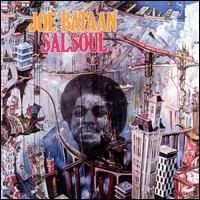
Joe Bataan - Salsoul

No recording artist has more impeccable street credentials than Joe Bataan, the originator of the New York Latin Soul style that paralleled Latin bugalu and anticipated disco. His musical experience began with street corner doo-wop in the 1950s, and came to include one of the first rap records to hit the charts, 1979's "Rap-O, Clap-O".
Image

In between these milestones, he recorded classic albums like "St. Latin's Day Massacre", a perennial favorite in the salsa market, "Salsoul", which gave the record label its name and helped spark the national explosion of urban dance music, and "Afrofilipino", which included one of the very earliest New York disco hits, an instrumental version of Gil Scott Heron's "The Bottle".

Born Peter Nitollano, of African-American/Filipino parents, Joe Bataan grew up in Spanish Harlem, where he ran with Puerto Rican gangs and absorbed R&B, Afro-Cuban and Afro-Rican musical influences. His music career followed a pair of stints in Coxsackie State Prison. Self taught on the piano, he organized his first band in 1965 and scored his first recording success in 1967 with "Gypsy Woman" on Fania Records, . The tune was a hit with the New York Latin market despite the English lyrics sung by Joe, and exemplified the nascent Latin Soul sound. In early anticipation of the disco formula, "Gypsy Woman" created dance energy by alternating what was fundamentally a pop-soul tune with a break featuring double timed hand claps, . Joe would take this tendency even further on his influential "Salsoul", which fused funk and latin influences in slick yet soulful orchestrations.

"Salsoul" remains influential as a rare groove cult item, but pointed to the future at the time of its release. The LP embodied the artist's highly deliberate and culturally aware musical concept. Bataan theorized the '70s next big thing as a hybrid: an Afro Cuban rhythm section playing Brazilian influenced patterns over orchestral funk. In many ways, his vision was on the money, though most of the money would go to others, and mainstream stardom would elude him. He did, however, get in on the ground floor of the new trend as an early hit maker.

Joe Bataan - Salsoul
(192 kbps, front cover included)

Mittwoch, 11. Mai 2016

Animals - Live At The Club A Go-Go (1963) - Happy Birthday, Eric Burdon!

Let´s celebrate Eric Burdon´s 75th birthday with an Animals live recording from the Club A Gogo, Newcastle-on-Tyne, December1963           

In 1964, the Animals exploded onto the international music scene when their intense and ominous version of the folk standard "House of the Rising Sun" became a hit single in England and the United States. But in 1963, they were just another group from Newcastle-on-Tyne eager to show audiences they had something special.

"Live at the Club a Go-Go" was recorded during a December 1963 appearance at a nightspot in Newcastle, several months before they cut their debut single, where the group was serving as both opening act and backing band for the great American blues harmonica player Sonny Boy Williamson. This release only features tracks by the Animals without Williamson, but it offers a vivid picture of the band's raw intensity and drive as they charge through a set of blues and rock standards with an energy and passion they rarely matched in the studio. The quality of the audio is flawed but serviceable.


Tracklist:

1Let It Rock
2Gotta Find My Baby
3Bo Diddley
4Almost Grown
5Dimples
6Boom Boom
7C. Jam Blues


Animals - 1965 - Live At The Club A Go-Go 
(320 kbps, cover art included)          

Samstag, 7. Mai 2016

Lindval (Linval) Thompson - Cool Down

The first thing to understand about "Cool Down" is that, like many other early reggae records, it has been issued a number of times by the same labels. Often the same songs are present but in a different order and with different artwork. Not that it's a particularly big deal, but a certain Clocktower LP pressing even credits Thompson as "Lindval," so look out for that if you think it might bother you.

That having been said, this offering will likely not disappoint fans of rocker's reggae. Bunny Lee's "flying cymbal" production dominates the session and consequently the listener might recognize several of these cuts from dub compilations on Blood & Fire. "Black Princess Lady," for example, can be heard in dub form on "Tapper Zukie's In Dub" as "Rush I Some Dub" and it's downright difficult to find a dub record without a version of "Money Money."

Generally speaking, though, this is not a dub record. Only the last song on each side is followed by a dub version. These are straight-ahead rockers with no frills and, depending on the pressing, rather muddy production. It is also worth mentioning that "Money Money" and "Blood Gonna Run," among others, find Robbie Shakespeare at his slippery and infectious best. Serious basslines throughout.   - allmusic.com     

1. Cool Down Your Temper
2. Jah Jah The Conqueror
3. Big Big Girl
4. No Escape
5. Long Long Dreadlocks
6. Dreadlocks Dub
7. Don't Cut Off Your Dreadlocks
8. Black Princess Lady
9. Blood Gonna Run
10. Money Money
11. Don't Trouble Trouble
12. Double Trouble Dub

Lindval Thomspon - Cool Down
(192 kbps, front cover included)

Freitag, 6. Mai 2016

Luiz Bonfa & Antonio Carlos Jobim - Orfeu Negro (Soundtrack, 1959)

"Black Orpheus", the film by Marcel Camus, and its soundtrack, were the signposts by which the world first learned of samba and bossa nova and fell in love with it. Therefore, it is staggering to consider that it took until 2008 for a definitive edition of the soundtrack to be released, one that assembled all the songs and music heard in the film. After all, this is the score that created the partnership of composer Antonio Carlos Jobim and poet Vinicius de Moraes, and introduced the brilliant and influential guitarist Luiz Bonfá. 

The sounds of the various samba schools from the carnival parades are accompanied by the gorgeous instrumental interludes by Bonfá (including the now ubiquitous "Manha De Carnaval," written with poet Antonio Mara), and the songs of de Moraes and Jobim (including "A Felicidade," as sung by Elizeth Cardoso). The songs may be well known now; the music of the favelas, as practiced by the escolas de samba with their agogo bells, atabaques drumming, stomping batacuda solos, and duels, folk line chants, and unusual (even now if one thinks about it) blend of African rhythms, dissonance, and extended harmonics, is still revolutionary today.  

Luiz Bonfa & Antonio Carlos Jobim - Orfeu Negro (Soundtrack, 1959)
(256 kbps, cover art included)

Mittwoch, 4. Mai 2016

King Tubby, Prince Jammy and Scientist - First, Second And Third Generation Of Dub (1981)

During the 1970s, Tubby's work in the studio gave rise to modern dub music. He had a long string of hit songs, and worked as a producer for some of Jamaica's most popular artists, including Lee Perry, Bunny Lee, Augustus Pablo and Yabby You. In 1973, he began recording vocals to put along the instrumentals. By the later part of the decade though, King Tubby had mostly retired from music, still occasionally recording remixes and tutoring a new generation of artists, including King Jammy and Scientist. In the 1980s, he focused on production for Anthony Red Rose, Sugar Minott and other popular musicians. He was shot and killed by unknown persons, probably in a robbery attempt, in 1989, February 06th.

"First, Second And Third Generation Of Dub" was mixed by King Tubby, Prince Jammy and Scientist at King Tubbys Studio, Waterhouse, Kingstone, Jamaica and released in the UK in 1981.

Tracklist:
01. First Generation - King Tubby
02. Second Generation - Prince Jammy
03. Third Generation - Scientist
04. Tubby's New Fashion - King Tubby
05. Prince Jammy On The Scene - Prince Jammy
06. Scientist At His Best - Scientist
07. Tubb's The Originator - King Tubby
08. Original Stylee - King Tubby,Prince Jammy & Scientist

(192 kbps, cover included)

Freitag, 29. April 2016

Duke Reid´s Treasure Chest (Treasure Isle Rocksteady)

Duke Reid (born Arthur S. Reid ca. 1915, Jamaica, died in 1974) was one of the initial producers in Kingston who developed Jamaican music. He started in the early 1960s with ska productions, developed the rock steady style and took part in the early days of reggae music.

This is the original, 41-track, double CD collection, with all the classic rock steady hits by the great groups (Melodians, Paragons) and singers (Alton Ellis, Phyllis Dillon). Digitally re-mastered, "Duke Reid's Treasure Chest" is a collection that truly showcases the label's greatness, and captures the magic of Treasure Isle rock steady. Pure soul magic from start to finish.

"Duke Reid's Treasure Chest" provides quite a proficient overview of the formative years of reggae. It compiles tunes from the vaults of his Treasure Isle label, perhaps second only to Studio One in terms of success and influence.

Duke Reid´s Treasure Chest CD 1
Duke Reid´s Treasure Chest CD 2
(192 kbsp)

Montag, 25. April 2016

Force Of Music - Freedom Fighters Dub

Although the Royals' lineup had shifted on a number of occasions, in the mid-'70s a more dramatic cleft occurred, forcing Roy Cousins to take stock. While he mulled his next move, the singer/producer kept his group's name alive with the release of "Pick Up the Pieces", a stunning compilation of the Royals' best recent work, with a second set, "Ten Years After", following in 1978.

Thanks to DJ Lloyd Coxsone, who set the London scene shaking with dubs of "Ten Years After"'s songs, Cousins struck a deal with United Artists. The label, via their Ballistic imprint, released both "Pick Up the Pieces" and Ten Years After, as well as "Freedom Fighter Dub", whose ten versions were drawn evenly from both vocal albums. "Freedom Fighter" itself was credited to Force of Music, a moniker that encompassed just about every name musician then on the scene. The Royals never used one studio exclusively, and even the dub set was divvied up, with various tracks mixed down by Errol Thompson, Ernest Hoo Kim, and Scientist.

The echoing-in-the-ether of "Smoke Pipe Dub," the militant sound of "Pagan Front Dub," and the melody laced "Free Nambia Dub" each highlight the diversity of the approaches within. "Tribute to Lloyd Coxsone in Dub" is just exuberant, a fitting homage to the man who helped make it all happen; Cousins gratefully dedicated the album to him. The bulk of the vocal tracks were stunning versions of classic riddims, most arranged in roots reggae style, with only a few falling into rockers territory. The dubs invariably toughened them up, although "Promised Land"'s cheery atmosphere still shines through on "Fresh Cow Milk Dub," while the sweet melody of "Freedom Fighters" bubbles to the surface of "Free Namibia Dub" The vocal sets cemented the Royals' vocal reputation in stone, this dub set did the same for Cousins' productions.

Tracklist:                           
A1Blood For Freedom Dub2:46
A2Free Namibia Dub3:06
A3Black Prince And Princess Dub2:57
A4Quake Heart Dub3:03
A5Pieces Of Dub3:33
B1Smoke Pipe Dub2:54
B2Pagan Front Dub3:41
B3Tribute To Lloyd Coxone Dub3:47
B4Fresh Cow Milk Dub3:51
B5Meet The People Dub3:42

Force Of Music - Freedom Fighters Dub
(192 kbps, cover art included, track 10 is missing!)

Montag, 11. April 2016

King Stitt - Reggae Fire Beat (Jamaican Gold)

Born Winston Cooper, King Stitt was one of the early DJs on the reggae scene. Spotted by Count Machuki at a dance, Stitt was asked to try his hand at DJing because of his spectacular dance moves.

Born with facial disfigurement, Stitt used it as a gimmick, taking advantage of the islanders' love for Westerns and calling himself the Ugly, after Sergio Leone's "The Good, the Bad, and the Ugly". Initially, people went to his shows to find out if he really was ugly or not. After a time, he came into his own as a DJ without needing the gimmick, using ideas taken from radio DJs in Miami and New Orleans that came over the broadcasts to Jamaica.

He began working with Coxsone Dodd, and then moved on to Clancy Eccles, with whom he produced a number of works that met with success in both Jamaica and the U.K.- "Fire Corner," "Herbman Shuffle," and "Van Cleef" (because Lee Van Cleef was the "ugly one" in the movie). Now, he works at Coxsone's Studio One from time to time.

"Reggae Fire Beat" is a superb collection of tracks produced by Clancy Eccles in the first reggae era at the end of the sixties into the early seventies featuring the distinctive voice of one Winston Spark aka The Ugly One aka King Stitt.
Tracklist:

01 - King Alpha (The Beginning)
02 - Dance Beat 1
03 - Jump For Joy
04 - Soul Language
05 - Herbsman Shuffle
06 - Lick It Back
07 - Lee Van Cleef
08 - On The Street
09 - Vigorton Two
10 - Oh Yeah
11 - Fire Corner
12 - I For I
13 - In The City
14 - Rub A Dub
15 - Sounds Of The 70's
16 - Christmas Tree
17 - King Of Kings
18 - Queen Omega (The End)

King Stitt - Reggae Fire Beat (Jamaican Gold)
(320 kbps, front cover included)

Donnerstag, 7. April 2016

Pete Seeger - The Rainbow Quest (1960)


Pete Seeger fills the first half of his 1960 studio album "The Rainbow Desig" with three medleys, playing and singing a chorus or so of 17 different songs in 15 minutes, as if just getting down the basics of the tunes to remember them and perhaps perform them more fully later. Toward the end of this set, he gets a bit more serious and organized, beginning with an original composition "Where Have All the Flowers Gone," a philosophical ballad with the chorus (gently sung), "When will you ever learn?" What he wants his listeners to learn, it becomes apparent, is to avoid war, particularly nuclear war, as he follows with a Japanese poem to that effect before ending the medley section of the album with a poem by early 20th century labor organizer and songwriter Joe Hill.

Seeger begins the album's second half with another lovely original, "Oh, Had I a Golden Thread," which expresses his desire to bind the world together. A trio of songs about the need for peace follows, all of them written by his half-sister Peggy Seeger and/or her husband, Ewan MacColl. The most affecting of these is "The Dove," which finds Seeger putting down his banjo temporarily and playing a melody on the flute. Another call to brotherhood ("To Everyone in All the World") is followed by a marching song from the Montgomery bus boycott ("We Are Moving on to Victory"), and the album concludes with the elegiac "When I'm Dead and Buried" (aka "Don't You Weep After Me"). Although the collection is something of a miscellany, it contains some excellent Seeger songs, typically mixing his love for old folk tunes with his commitment to progressive political causes such as nuclear disarmament and Civil Rights.

Pete Seeger - The Rainbow Quest (1960)
(192 kbps, front cover included)

Josh White - Blues And ... (1956)


Josh White went through so many different phases and sounds in his career, that he was virtually a musical chameleon, adapting easily to whatever audiences expected of him in any given decade. Still, the "big band"-style blues embodied on these 1956-vintage recordings may surprise those who only know White from his acoustic sides cut during the folk revival of the later 1950s and early 1960s. His voice - still an excellent instrument in its own right two decades into his recording career - and acoustic guitar mesh nicely with a sextet consisting of Jack Fallon (bass), Phil Seamen (drums), Bertie King (alto sax), Fred Hartz (tenor sax), Benny Green (baritone sax), and Kenny Baker (trumpet), on "Kansas City Blues."

White gets to show off his skill as a slide guitarist on stripped-down pieces such as "Careless Love" - a nearly six-minute long acoustic blues showcase - and his vocal range on the lusty "Oh Lula," and gives a fresh take on "St. Louis Blues," White's guitar and Seamen's drums interweaving rhythmic patterns around his exuberant vocals.

Tracklist:

- How Long Blues
- Careless Love
- Oh, Lula
- St. Louis Blues
- Kansas City Blues

- I Had To Stoop To Conquer You
- I Know How To Do It
- Dink's Blues
- Mint Julep
- Good Morning Blues

Josh White - Blues And... (1956)
(256 kbps, front & back cover included)

Dienstag, 29. März 2016

Café Rembetika - The Birth Of The Greek Blues

For the uninitiated, rembetika sounds exotic, from another time and place, which is true enough. Rembetika's origins are a bit murky, but one thing is for sure, it flourished in the cafes and bars of Greece in the late 1920s through the '30s. It is outlaw music; the music of the Greek underworld sung by Rebetes (those who are social outsiders, they lived on the margins of society and crossed the line more often than not to stand apart from it).
 
It has been regarded as dangerous music even by the country's government, who nearly banned it: they tried to censor its content in recordings but failed. It has been called the Greek blues, and that's not far off. This is a place where the complex patterns of Middle Eastern modalism and the repetition of form that exist in the blues meet in one place. This collection on Nascente brings together the work of a number of rembetika's finest from two different schools, or "scenes" actually, the Piraeus and the Aman tradition:

"Café Rembetika" features four of the greatest stars of the Piraeus scene that later formed the first Rembetika supergroup: Markos Vamvakaris, Stratos Pagioumjis, Giorgos Batis and Anestis Delias. Also featured are leading singers from the Café Aman tradition: Rosa Eskenazi, Rita Abatsi and Marika Papagika.

Here´s a collection of some of the greatest songs from the golden age of Rembetika:

Café Rembetika - The Birth Of The Greek Blues
(192 kbps, small front cover included)

Dienstag, 22. März 2016

Ramblin´ Jack Elliott - Sings The Songs Of Woody Guthrie (1960, vinyl rip)

Photobucket
Ramblin' Jack Elliott is one of folk music's most enduring characters. Since he first came on the scene in the late '50s, Elliott influenced everyone from Bob Dylan and Pete Seeger to the Rolling Stones and the Grateful Dead. The son of a New York doctor and a onetime traveling companion of Woody Guthrie, Elliott used his self-made cowboy image to bring his love of folk music to one generation after another. Despite the countless miles that Elliott traveled, his nickname is derived from his unique verbiage: an innocent question often led to a mosaic of stories before he got to the answer. According to folk songstress Odetta, it was her mother who gave Elliott the name when she remarked, "Oh, that Jack Elliott, he sure can ramble."

"Jack Elliott Sings the Songs of Woody Guthrie" was released in 1960. Elliott interprets many of the most popular items in the Guthrie repertoire, including "So Long," "This Land Is Your Land," "Pretty Boy Floyd," "Talking Dust Bowl," and "Philadelphia Lawyer," on the recording that is most representative of his role in popularizing the work of his hero.

Photobucket

Tracklist:

Side one:
  1. "Hard Traveling"
  2. "Grand Coulee Dam"
  3. "New York Town"
  4. "Tom Joad"
  5. "Howdido"
  6. "Talking Dust Bowl"
  7. "This Land is Your Land"
Side two:
  1. "Pretty Boy Floyd"
  2. "Philadelphia Lawyer"
  3. "Talking Columbia"
  4. "Dust Storm Disaster"
  5. "Riding in My Car"
  6. "1913 Massacre"
  7. "So Long"
Ramblin´ Jack Elliott - Sings The Songs Of Woody Guthrie (1960, vinyl rip)
(192 kbps, complete cover art included)

Thanks a lot to Uncle Gil for sharing this rip!

Ramblin Jack Elliott - Sings Woody Guthrie and Jimmie Rodgers (vinyl rip)

Ramblin' Jack Elliott is one of folk music's most enduring characters. Since he first came on the scene in the late '50s, Elliott influenced everyone from Bob Dylan and Pete Seeger to the Rolling Stones and the Grateful Dead. The son of a New York doctor and a onetime traveling companion of Woody Guthrie, Elliott used his self-made cowboy image to bring his love of folk music to one generation after another. Despite the countless miles that Elliott traveled, his nickname is derived from his unique verbiage: an innocent question often led to a mosaic of stories before he got to the answer. According to folk songstress Odetta, it was her mother who gave Elliott the name when she remarked, "Oh, that Jack Elliott, he sure can ramble."

The album "Sings Woody Guthrie and Jimmie Rodgers" was recorded November 14, 1959 in London and released in the USA in 1962.
Elliotts covers of a half-dozen Woody Guthrie songs emphasize his vocals and their expressiveness, with the accompaniment subordinate to the singing. The Jimmie Rodgers stuff, by contrast, shows off some very attractive playing by all concerned, with wonderfully smooth guitar and fiddle work, and a very fine produced sound. The two sets of six songs sound very dissimilar to each other - Elliott has more of a drawl on the Guthrie material and a fine yodel on the Rodgers songs.

Tracks:


01 - T For Texas.

02 - Waiting For A Train

03 - Jimmie The Kid

04 - Mother, The Queen Of My Heart

05 - In The Jailhouse Now

06 - Whippin' The Old T.B

07 - Do-Re-Mi

08 - Dead Or Alive

09 - Grand Coulee Dam

10 - Dust Storm Disaster

11 - I Ain't Got No Home

12 - So Long, It's Been Good To Know You


Ramblin Jack Elliott - Sings Woody Guthrei and Jimmie Rodgers (vinyl rip)
(192 kbps, complete art work included)


Thanks a lot to Uncle Gil for sharing this rip!

VA - Your Jamaican Girl (1971)

"Your Jamaican Girl" is a compilation of rock steady and early reggae tracks produced by C.S. Dodd and released in 1971 on the Bamboo label.


Tracklist:

Robert Lynn - Zip Code
Larry Marshall - Jamaican Girl
Delroy Wilson - Just Because Of You
Winston Williams - Still Love
Dennis Brown - Going To The Ball
Ernest Ranglin - Oh My
I'm And David - Chuky
Carl Bryan - Cover Charge
Splenders - Sometimes Coffee
Winston Francis - Halfway To Paradise
I'm And David - Searching Mind
Sound Dimension - Little Green Apples

Your Jamaican Girl (1971)
(192 kbps, front cover included)

Montag, 21. März 2016

Kurt Weill - Symphonies Nos. 1 and 2 - Lady In The Dark

A student of Busoni, Kurt Weill wasn't just the tunesmith of "The Threepenny Opera." In a tangy, neo-classical style, the German composer wrote two symphonies, a violin concerto and a string quartet. This disc features the symphonies, plus a "Symphonic Nocturne" arranged from his 1940 Broadway show "Lady in the Dark."
The piquant reeds and whistle-worthy tunes of Weill's Brechtian theater masterpieces are apparent in his symphonies, especially the Second, of 1934. For his EMI recording, Mariss Jansons had the Berlin Philharmonic bite into the Second with pre-war edginess. While not ignoring the spirit of Stravinsky in both symphonies, Marin Alsop has her English orchestra caress the music more, bringing out its almost erotic allure.


While he left as extensive and as significant an output of stage-works as any composer active during the first half of the twentieth century, the contribution of Kurt Weill to orchestral and instrumental genres was largely restricted to his formative years as a composer from 1918 to 1924. Although he had attempted opera in several unfinished and now lost projects during and after the first World War, Weill’s earliest major works are a String Quartet (1918), a Suite for Orchestra (1919) and a Cello Sonata (1920). Yet an urge towards more concrete expression was inevitable in the social climate of post-war Germany, with political left and right fighting for supremacy as the country moved shakily towards a republic. Something of this turmoil can be gauged from the Symphony Weill completed in 1921, but which remained unperformed – and was for many years thought lost or destroyed before being located, surprisingly, in an Italian convent – until 1956.

"An intriguing musical side-glance at Kurt Weill's output. The First Symphony, from 1921, was written at the time when Weill was studying with Busoni. The Second, from 1934, is a much stronger work: it was premiered by Bruno Walter in Amsterdam and is well worth hearing. Marin Alsop and her doughty Bournemouth ensemble play with tremendous spirit, thrillingly recorded."

The disc concludes with "Lady in the Dark: Symphonic Nocturne", a concert suite of familiar tunes from Weill´s American period, arranged by Robert Russell Bennett, that provide a diverting departure from the dark and unrelenting march of history that has come before.
.

Henry Cow - Unrest (1974)

We would like to celebrate the life and work of Lindsay Cooper, who died in September 2013.

Lindsay Cooper was an English bassoon and oboe player, composer and political activist. Best known for her work with the band Henry Cow, she was also a member of Comus, National Health, News from Babel and David Thomas and the Pedestrians. She has collaborated with a number of musicians, including Chris Cutler and Sally Potter, and co-founded the Feminist Improvising Group. She has written scores for film and TV and a song cycle Oh Moscow which was performed live around the world in 1987. She has also recorded a number of solo albums, including Rags (1980), The Gold Diggers (1983) and Music For Other Occasions (1986).
Cooper was diagnosed with multiple sclerosis in 1991, but did not disclose it to the musical community until 1998 when her illness prevented her from performing live.                   

"Unrest" was the 1974 release of Henry Cow. During their brief and tumultuous lifespan, fiercely political British art rockers Henry Cow spawned a musical subgenre that became known as Rock In Opposition.

By this point Henry Cow consisted of guitarist Fred Frith, drummer Chris Cutler, bassist John Greaves, keyboardist Tim Hodgkinson, and, of particular importance to the band's sound at this point, bassoonist Lindsay Cooper. As is so often the case with avant-garde rock & roll, it's the composed pieces that work best, and the fact that Frith is responsible for the majority of them is significant. "Bittern Storm Over Ulm" is an absolutely brilliant demolition of the Yardbirds' "Got to Hurry," while the brief but lovely "Solemn Music" unfolds in a stately manner with atonal but pretty counterpoint between Frith and Cooper. The improvised material succeeds in a more spotty way. "Upon Entering the Hotel Adlon" demonstrates how fine the line can be between bracing free atonality and mindless cacophony. The unsettling but eventually gorgeous "Deluge," on the other hand, shows how well Henry Cow could walk that line when they tried; in this piece, random guitar skitterings, scattershot drum clatter, and pointillistic reed grunts are eventually snuck up on and overtaken by softly massed chords and Cooper's gently hooting bassoon. The effect is startlingly moving. Overall, this is one of Henry Cow's better efforts.    
The album was dedicated to Robert Wyatt and Uli Trepte. The cover art work was by artist Ray Smith and was the second of three "paint socks" to feature on Henry Cow's albums.


Side one

  1. "Bittern Storm over Ulm" (Frith) – 2:44
  2. "Half Asleep/Half Awake" (Greaves) – 7:39
  3. "Ruins" (Frith) – 12:00
Side two
  1. "Solemn Music" (Frith) – 1:09
  2. "Linguaphonie" (Henry Cow) – 5:58
  3. "Upon Entering the Hotel Adlon" (Henry Cow) – 2:56
  4. "Arcades" (Henry Cow) – 1:50
  5. "Deluge" (Henry Cow) – 5:52
Bonus tracks on 1991 CD re-issue
  1. "The Glove" (Henry Cow) – 6:35
  2. "Torch Fire" (Henry Cow) – 4:48
Henry Cow - Unrest (1974)
(320 kbps, cover art included)

Samstag, 19. März 2016

The Kingston Trio - Close Up (1961)

The Kingston Trio entered the '60s proper under seemingly less than ideal circumstances; founding member Dave Guard had announced his intention to leave the group early in the year, formally exiting in August, and not one single by the trio charted during all of 1961. They were hardly to be counted out, however, as demonstrated by the "Close Up" album, released just a month after Guard's exit.

With new member John Stewart in place, the album showed the trio to be in solid musical shape, harmonizing beautifully, and with a new songwriting talent in their midst in the guise of Stewart, whose haunting, slightly bluesy ballad "When My Love Was Here" was the highlight of the record. "Close Up", although not as groundbreaking as the trio's self-titled debut three years earlier, showed a surprisingly undiminished group and is a good representation of where popular folk music was in late 1961; the mix of traditional songs, well-known standards (most notably a rousing version of Woody Guthrie's "Reuben James"), gospel, humor, and pleasing folk-like originals was popular enough, rising to number three on the LP charts.

The audience for folk music, especially among college students, was to shift dramatically, and into a more radical stance, in a couple of years, but this melodic and aesthetically pleasing album was perfect for its time and still evokes that relatively innocent and calm period in our past. The group was also learning how to use stereo to great effect, even as an acoustic outfit; Nick Reynolds' percussion workout on "O Ken Karanga" was some of the best binaural stereo of this period in Capitol's history.    

Tracklist:                           
A1Coming From The Mountains
A2Oh, Sail Away
A3Take Her Out Of Pity
A4Don't You Weep, Mary
A5The Whistling Gypsy
A6O Ken Karanga
B1Jesse James
B2Glorious Kingdom
B3When My Love Was Here
B4Karu
B5Weeping Willow
B6Reuben James

     
The Kingston Trio - Close Up (1961)    
(256 kbps, cover art included)

Pete Seeger - American Folk Songs For Children (1954)


A1 Jim Along Josie
A2 There Was A Man And He Was Mad
A3 Clap Your Hands
A4 She'll Be Coming 'Round The Mountain
A5 All Around The Kitchen
A6 Billy Barlow
B1 Bought Me A Cat
B2 Jim Crack Corn
B3 Train Is A-Coming
B4 This Old Man
B5 Frog Went A-Courting


The Kingston Trio - String Along (1960)

"String Along" has the most unusual sound of any Kingston Trio album, mostly by virtue of the crisp mixing and voicing of the instruments - guitars and banjo all appear in very high relief, matching the attention usually reserved for the voices on the Kingston Trio's records.

The result is a somewhat quieter record, without much presence of the familiar unified group sound, as the individual members are relied upon more than the ensemble singing on many of the songs. One of the few exceptions is "Buddy Better Got On Down the Line," which has the sound that one associates with past trio recordings. But it's a true exception on an album that has other highlights such as oddities like the trio's surprisingly strong rendition of Ray Charles' "Leave My Woman Alone."

Though no one could have realized it at the time, "String Along" was very close to the tail end of the original Kingston Trio's history - Dave Guard was losing interest in arguing over the direction of the group; and although their albums were still selling well and steadily, "String Along" (which hit number one) would yield the original group's last two charting singles. "Bad Man's Blunder," which also opens this album, became the original Kingston Trio's final Top 40 single; it was cut by the trio and issued as a single as a favor to composer Cisco Houston who was in the hospital and terminally ill. Other songs were done for more mundane reasons - according to Benjamin Blake, Jack Rubek, and Allan Shaw in their book "The Kingston Trio on Record", the English folk-style "The Escape of Old John Webb" was featured on the album in the hope of helping to persuade EMI Records in England to promote the trio's albums more vigorously.     

Tracklist:
A1Bad Man Blunder2:37
A2The Escape Of Old John Webb2:28
A3When I Was Young2:24
A4Leave My Woman Alone2:18
A5This Mornin', This Evenin, So Soon3:06
A6Everglades2:18
B1Buddy Better Get On Down The Line2:19
B2South Wind3:00
B3Who's Gonna Hold Her Hand2:37
B4To Morrow2:37
B5Colorado Trail2:49
B6The Tattooed Lady1:43

The Kingston Trio - String Along (1960)         
(256 kbps, cover art included)