Samstag, 11. Juni 2016

Mombasa - African Rhythm & Blues 2 (1976) [224kbps]

The second album from Mombasa – and possibly even better than the first! The group have really come into their own by the time of this date – mixing together jazz and African roots with a sound that's unlike anyone else we can think of – quite unique in its approach to rhythms, sounds, and solos! The grooves aren't really the Afro Funk you might expect – and instead, they're based on a headier brew of basslines and percussion, one that's somewhere in a space between Boscoe, The Pharoahs, and Demon Fuzz – but with a sound that's ultimately different than both. The trombone of Lou Blackburn carries the lead on most tracks – snaking out wonderfully over the grooves, with a quality that's amazingly soulful, and which almost has him standing head to head with Fred Wesley as a 70s innovator on his instrument. Other members of the group include Doug Lucas on trumpet, Bob Reed on percussion, Alan Tatham on drums, and Don Ridgeway on electric bass – the last of whom really does a great job shaping the sound of the tunes.
.
Tracklist:
1. Yenyeri
2. Holz II
3. Shango II
4. Nomoli
5. African Hustle
6. Al Rahman

Mombasa - African Rhythm & Blues 2 (1976)
(224 kbps, front cover included)

Mombasa - African Rhythms & Blues (1975)

Original first LP release by legendary Mombasa band: Deep Afro Funk & Jazz by Lou Blackburn and his group recorded 1975 in Germany original release on the rare german Spiegelei label, contains the most wanted DJ-spins "Nairobi", "Kenia" and "Shango". This is a classic and sought after afro funk LP. One of the best recordings in the genre: Pulsating african rhythms with funk bass and heavy brass sounds: Essential and ultra hard to find album with tons of true killer afro funk breaks. Some also call it a stripped down Fela Kuti sound ...

From the original liner notes, 1975:

"In describing the music of Mombasa which is a mixture of rhythm, jazz, folklore, blues, spirituals and worksongs, Lou Blackburn would prefer not to use the word jazz. Many people ask us, he says, how one describes our type of music. To this I can only answer that I leave it to the audience because i don`t want to give it a label, for me it is simply ours, Mombasa`s music."

Mombasa - African Rhythms & Blues (1975)
(320 kbps, cover art included)

Montag, 6. Juni 2016

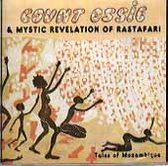
Count Ossie & The Mystic Revelation Of Rastafari - Tales Of Mozambique

"Tales of Mozambique" was released a couple of years after the ground-breaking "Grounation" triple-album, the first album to give nyahbingi music the studio time it deserves.
It goes along similar musical lines: a mixture of rasta chants, nyahbingi drumming and jazz-based horn work.

The album takes account of and analyses the displacement of African blacks to the West Indians coasts. It is a journey which takes in the Maroons, Pan-Africanism and all the international struggles for independence in a musical structure encompassing Burru, Mento, Reggae and Jazz rhythms.

This is music marked with integrity that should be herad by anyone interested in Jamaican culture, percussion or the roots of roots music.

Tracklist:
A1Sam's Intro3:35
A2Mozambique - Tales Of Mozambique5:45
A3Ah Ji Wah Wah - Selam Nna Wadada (Peace & Love)3:20
A4No Night In Zion4:00
A5I Am A Warrior5:02
B6Wicked Babylon5:20
B7Let Freedom Reign3:43
B8Lock, Stock & Barrel - Soon Start Quarrel3:42
B9Nigerian Reggae3:40
B10Run One Mile5:30

Count Ossie & The Mystic Revelation Of Rastafari - Tales Of Mozambique
(192 kbps, ca. 60 MB)

Count Ossie and The Mystic Revelation of Rastafari - The Original Complete Grounation (1973)

The foundations of reggae and its association with Rastafarianism were established by drummer, percussionist and vocalist Count Ossie (born: Oswald Williams). Together with his band, the Mystic Revelation of Rastafari, Count Ossie combined African-influenced music with the European hymnal tradition to create a unique sound that inspired everyone from Ras Michael and the Sons of Negus and the Skatalites to Bob Marley & the Wailers and Toots & the Maytals.

Count Ossie's earliest inspiration came from rasta elder Brother Job, who introduced him to the philosophies of Rastafarianism. A Nyabinghi drummer from the hills of Jamaica, Count Ossie cut his first singles, including "O'Carolina" and "Chubby," for Prince Buster at the studios of RJR radio. Beginning in 1959, Count Ossie recorded for Sir Coxsone Dodd at Studio One.

Together with music director, tenor saxophone, flute and clarinet player Cedric "I-m" Brooks, Count Ossie formed the Mystic Revelation Of Rastafari. Heavily percussive, the group featured philosopher orator Samuel Clayton, double bass player, poet and vocalist Ras Jose, Ras Jose, Little Bop and Count Ossie's son, Time, on fundae drum, bass drummer and percussionist King Rayo, percussionist and vocalist Bunny, percussionist Moses, baritone saxophone and clarinet player Ras Sam II and trombonist Nambo.

There has been some debate as to the cause of Count Ossie's death in 1976. While some sources claim that he was in an auto accident, others say that he was trampled to death when a crowd panicked at the National Arena.

These recordings were originally released as triple LP set in 1973. Incredible music featuring the true roots of Rastafari in Jamaican music.

Track listing:
CD 1:

1. Bongo Man
2. Narration
3. Malorat
4. Poem
5. Four Hundred Years
6. Poem
7. Song
8. Lumba
9. Four Hundred Years

CD 2:

1. Ethiopian Serenade
2. Oh Carolina
3. So Long
4. Grounation

Count Ossie & The Mystic Revelation Of Rastafari - The Original Complete Grounation (1973)
(256 kbps, front cover included)

Sonntag, 5. Juni 2016

Paul Robeson – Ol´ Man River

Paul Robeson (April 9, 1898 – January 23, 1976) was an African-American actor of film and stage, professional athlete, writer, multi-lingual orator, lawyer, and basso profondo concert singer who was also noted for his wide-ranging social justice activism.

A forerunner of the civil rights movement, Robeson was a trades union activist, peace activist, Phi Beta Kappa Society laureate, and a recipient of the Spingarn Medal and Stalin Peace Prize. Robeson achieved worldwide fame and recognition during his life for his artistic accomplishments, and his outspoken, radical beliefs which largely clashed with the colonial powers of Western Europe and the Jim Crow climate of pre-civil rights America.

Paul Robeson was the first major concert star to popularize the performance of spirituals and was the first black actor of the 20th century to portray William Shakespeare’s Othello on Broadway. His run in the 1943-45 Othello production still holds the record for the longest running Shakespeare play on Broadway. In line with Robeson’s vocal dissatisfaction with movie stereotypes, his roles in both the American and British film industry were some of the first parts ever created that displayed dignity and respect for the African American film actor, paving the way for the likes of Sidney Poitier and Harry Belafonte.

Here´s the compilation “Ol´ Man River”, released in 1987 on Conifer Records.

Paul Robeson – Ol´ Man River
(192 kbps, front cover included)

Prince Buster - Judge Dread - Rocksteady - Jamaica´s Pride (1967)


This album bundles up a dozen cuts, hits, instrumentals, and groundbreaking numbers from the rocksteady era. Most fans' point of entry will be the "Judge Dread" trilogy, and this album is the only place to find all three numbers.

With "Judge Dread", the rude boys meet their nemesis, as the magistrate establishes his fearsome reputation. On "The Appeal," the Judge reaches new draconian heights, while "Judge Dread Dance" (aka "Judge Dread Dance the Pardon") brings the saga to a close, as the rude boys are set free.

Inevitably, the rest of the album pales in comparison, an unfair situation, considering the high quality of most of the songs. The haunting letter to the dead of "Ghost Dance," an homage to sound systemstars of old, is certainly "Dread"s equal. "Sweet Beat" (aka "Rocksteady") is as sweet as its title, an enticement to get up and rocksteady that couldn't be ignored. Both songs were successful British singles, as was the moody "Dark Street" (aka "Dark End of the Street") and "Sharing You," an equally luscious love song, a side of Buster later compilations would ignore.

"Judge Dread" boasts a clutch of songs that showcase the passionate Prince at his best, counterpointing the brouhaha of the Judge himself. Thus, this extremely well-rounded set provides a truer picture of Buster's output during this period: dance numbers, smoking soulful pieces, and a pair of sparkling instrumentals from his studio band, the Buster's All Stars.

Tracklist:
Judge Dread
Shearing You
Nothing Takes The Place Of You
Ghost Dance
Rock With A Feeling
Sweet Beat
The Appeal
Dark Street
Judge Dread Dance
Show It Now
Raise Your Hands
A Change Is Going To Come

(192 kbps, cover art included)

Samstag, 4. Juni 2016

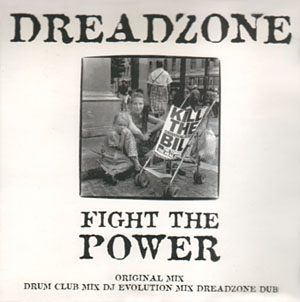
Dreadzone - Fight The Power


Image
Dreadzone is a british dub dance band relying heavily on sampling and other elements of electronica. They debuted in 1993 with the LP “360 Degrees“, an hour long orbit around a world of sound in a dub satellite. Included on this trip was their first single "The Warning", deep dub-charged techno with an ever relevant message - blood will run unless justice come.

Here´s another Dreadzone 12 inch single, called "Fight the Power". This dub-rave track was also part of a CD to raise awareness of the impending Criminal Justice Act that was being brought in to kill off raves.

A1 - Fight The Power (Original Mix)
A2 - Fight The Power (Drum Club Mix)
B1 - Fight The Power (DJ Evolution Mix)
B2 - Fight The Power (Dreadzone Dub)

Dreadzone - Fight The Power
(192 kbps, front cover included)

Prince Buster - Sister Big Stuff (Melodisc, 1976)

You've heard many a ska artist proclaim himself the King of Ska. Perhaps none has more right to do so than the unforgettable Prince Buster, especially since he won so many of those sound system battles against Dodd and the other greats of the early sixties.

By the late 1970s, Prince Buster was in serious financial trouble. Fortunately for him, ska was experiencing a revival in the United Kingdom. In 1979, the band Madness released its first record, a tribute to Buster called "The Prince", which urged ska fans to remember "the man who set the beat", stating "So I'll leave it up to you out there/To get him back on his feet". Interest in Buster soared during this time; he received royalties when his songs were covered by bands like The Specials, The Beat and Madness and his old records were reissued and sold well. Buster is similarly mentioned in The Toasters song "Shebeen": "And there was an old man/Who used to bring up the sounds/And he kept those beats, he kept those beats/From when Prince Buster was around".

Tracklist:

South of the Border
Protection
Sata Masa Gana
Still
Wish Your Picture
Stick By Me
Why Not Tonight
Sister Big Stuff
Stand Accused
Bride Over Troubled Water
Young Gifted and Black
Cool Operator

Prince Buster - Sister Big Stuff (Melodisc, 1976)
(192 kbps)

Harry Belafonte & Nana Mouskouri‎– An Evening With Belafonte / Mouskouri (1965)

Following the pattern of his album duet with Lena Horne on songs from Porgy and Bess, Harry Belafonte teamed up this time with Greek chanteuse Nana Mouskouri.

Belafonte first performed with Mouskouri in Burlington, VT in 1964 during his first college tour. As with Lena Horne, Belafonte sings only two duets with Mouskouri; the remaining tunes may as well have been featured on solo albums, because the two singers didn't even share instrumentalists - Belafonte used his usual stable of musicians, including guitarist Ernie Calabria, bassist John Cartwright, and percussionist Ralph MacDonald, while Mouskouri was accompanied by bouzouki player George Petsilas. The songs are sung in Greek with Mouskouri's naturally coming off as more authentic. Most of the tunes were written by the prolific Greek songwriter Manos Hadjidakis, writer of "Never on Sunday."         

Tracklist
A1–Harry BelafonteMy Moon (Fengari Moo)2:57
A2–Nana MouskouriDream (Oneero)2:33
A3–Harry Belafonte / Nana MouskouriIf You Are Thirsty (Kean Tha Depsasees)3:22
A4–Nana MouskouriThe Train (To Traino)3:10
A5–Harry BelafonteIn The Small Boat (Mes Tin Varka)3:10
B1–Nana MouskouriThe Town Crier (Telalees)2:08
B2–Harry BelafonteWalking On The Moon (Pame Mia Volta)3:30
B3–Nana MouskouriThe Baby Snake (Feedakee)3:12
B4–Harry BelafonteThe Wide Sea (Thalassa Platia)2:38
B5–Harry Belafonte / Nana MouskouriIrene (Erene)2:33

Harry Belafonte & Nana Mouskouri‎– An Evening With Belafonte / Mouskouri (1965)
(256 kbps, cover art included)     

Donnerstag, 2. Juni 2016

John Coltrane - Coltrane (First Trane) (1957)

On his first session as a bandleader, tenor saxophonist John Coltrane is joined by Johnny Splawn on trumpet, Sahib Shihab on baritone sax, and a rhythm section of bassist Paul Chambers and drummer Albert "Tootie" Heath with piano duties split between Mal Waldron and Red Garland.

Right out of the gate, the propulsive syncopated beat that drives through the heart of Coltrane's fellow Philly denizen Calvin Massey's "Bakai" indicates that Coltrane and company are playing for keeps. Shihab's emphatic and repetitive drone provides a manic urgency that fuels the participants as they weave in and out of the trance-like chorus. Coltrane grabs hold with bright and aggressive lines, turning the minor-chord progressions around into a spirited and soulful outing. While the refined and elegant "Violets for Your Furs" as well as the slinky and surreptitious "While My Lady Sleeps" are undeniably ballads, they aren't redundant. Rather, each complements the other with somewhat alternate approaches. "Violets for Your Furs" develops the role of the more traditional pop standard, whereas the somnolence is disrupted by the tension and release coursing just below the surface of "While My Lady Sleeps." The Coltrane-supplied "Straight Street" is replete with the angular progressions that would become his stock-in-trade. In fact, the short clusters of notes that Coltrane unleashes are unmistakable beacons pointing toward his singular harmonics and impeccably timed phrasing on 1960's G"iant Steps" and beyond. The closer, "Chronic Blues," demonstrates Coltrane's increasing capacity for writing and arranging for an ensemble.

The thick unified sound of Coltrane, Splawn, and Shihab presents a formidable presence as they blow the minor-chord blues chorus together before dissolving into respective solos. The trio's divergent styles prominently rise, pitting Shihab's down-and-dirty growl against Coltrane's comparatively sweet tones and Splawn's vacillating cool and fiery fingering. Regardless of the listener's expertise, "Coltrane" is as enjoyable as it is thoroughly accessible.       

Tracklist:
A1Bakai8:45
A2Violets For Your Furs6:10
A3Time Was7:25
B1Straight Street6:15
B2While My Lady Sleeps4:36
B3Chronic Blues8:00


John Coltrane - Coltrane (First Trane) (1957)
(256 kbps, cover art included)        

Mittwoch, 1. Juni 2016

Hazel O´Connor - Alive And Kicking In L.A. (1994)

"Alive and Kicking in L.A." is Hazel O'Connor's live album, released in 1990 and then re-released under other names such as "L.A. Confidential". This live album includes hits like "Will You! and "D-Days" plus other rare tracks.

Tracklisting:
1 D-Days 4:29
2 Reach 4:55
3 Driftwood 5:20
4 Black Man 5:09
5 Summertime 4:19
6 Tell Me Why 3:53
7 Just Like A Woman 5:32
8 Time After Time 4:50
9 Will You 5:17
10 Sing Out Sister 4:33

Hazel O´Connor - Alive And Kicking In L.A. (1994)
(256 kbps, front cover included)

Dienstag, 31. Mai 2016

Cornel Campbell - Natty Dread In A Greenwich Farm (1975)

Born 1948 in Kingston, Jamaica, Cornel Campbell got his start in the early 1960s at Studio One. In 1967 he became a member of short-lived Uniques. By 1969, Cornel had his own group called the Eternals.

Cornel sings in a falsetto style and made his mark as a lovers rock singer (although he did record a string of rasta hits in the mid 70s). He recorded 'Stars' and 'Queen of the Minstrels' at Studio One during the late 60s and moved on to Bunny Lee's studios in 1971. By 1984 their relationship ended and Cornel's career and output slowed considerably.                   

"Natty Dread in A Greenwich Farm" was produced by Bunny Lee, mixed by King Tubby and backed by the Aggrovators.

Tracklist :
Why Did You Leave Me To Cry
I Am Just A Country Boy
Somebody Has Stolen My Girl
King's Heart
I Wonder Why
Lost In A Dream
Duke Of Earl
Natural Facts
The Sun
Girl Of My Dreams
Dance In A Greenwich Farm
Natty Dread In A Greenwich Farm

Cornel Campbell - Natty Dread In A Greenwich Farm (1975)
(192 kbps, cover art included)

Montag, 30. Mai 2016

Mance Lipscomb - Trouble In Mind


Like Leadbelly and Mississippi John Hurt, the designation as strictly a blues singer dwarfs the musical breadth of Mance Lipscomb.

Born on April 9, 1895 in Navasota, TX, Lipscomb was a sharecropper/tenant farmer all his life who didn't record until 1960, "songster" fits what Lipscomb did best. A proud, yet unboastful man, Lipscomb would point out that he was an educated musician, his ability to play everything from classic blues, ballads, pop songs to spirituals in a multitude of styles and keys being his particular mark of originality.

He appeared at numerous blues and folk festivals throughout the '60s, released several albums on Arhoolie and even one for a major label, Reprise, in 1970. Four years later, Lipscomb retired from the festival circuit and passed away on January 30, 1976 in his hometown of Navasota, TX. He was 81.

With a wide-ranging repertoire of over 90 songs, Lipscomb may have gotten a belated start in recording, but left a remarkable legacy to be enjoyed.        


Tracklist:

Corrina, Corrina
Rock Me Mama
Mama Don't Allow
Get Away Blues
Shine On Harvest Moon
Good As I Am To You
Baby Please Don't Go
Get Away Blues
Trouble In Mind
Going Down Slow
Night Time Is the Right Time
Long Way To Tipperary
So Different Blues
Ella Speed
See You Mama Every Night
Late Hours Blues
Nobody Cares For Me
Shorty George Cut Down


These recordings wer done in 1964 at Mance Lipscomb's home in Navasota, TX.

Mance Lipscomb - Trouble In Mind
(192 kbps, cover art included)

Samstag, 28. Mai 2016

Max Collie's Rhythm Aces - Stomp Off, Let's Go

Trombonist John Maxwell "Max" Collie was born on February 21, 1931, in Australia but relocated to England in 1963. A fine trad player, he has led Dixieland-oriented combos ever since, usually under the name of the Rhythm Aces

He played with several different jazz band before forming his own group Max Collie's Rhythm Aces in February 1966.

They released their first record in 1971 and in 1975 they won a world championship in traditional jazz against 14 North American jazz band.


Tracklist:                           
A1Stomp Off, Let'S Go4:32
A2Chimes Blues4:58
A3Doctor Jazz4:00
A4Brownskin Mama2:40
A5High Society4:09
B1Snag It6:20
B2Moarie3:20
B3Baby Brown3:00
B4Cakewalking Babies From Home6:52


Max Collie's Rhythm Aces -  Stomp Off, Let's Go
(256 kbps, cover art included)

Monty Sunshine's Jazzband - The Glory Of Love

Monty Sunshine (9 April 1928 – 30 November 2010) was an English jazz clarinetist, who is known for his clarinet solo on the track "Petite Fleur", a million seller for the Chris Barber Jazz Band in 1959. Sunshine variously worked with the Eager Beavers, the Crane River Jazz Band, Beryl Bryden, George Melly, Chris Barber, Johnny Parker, Diz Disley and Donegan's Dancing Sushine Band.

Born in Stepney, London, he along with Lonnie Donegan, Jim Bray and Ron Bowden, formed the back line of what was the embryo Chris Barber Band. Ken Colyer was the first trumpet player, with Sunshine on clarinet, and the original 1953 band took the Colyer name until there was a split from Colyer in May 1954. Pat Halcox - who only turned the band down originally as he wanted to carry on his studies - took over the spot, and the band formally adopted the Chris Barber Jazz Band as its title.
The band quickly made an international reputation following their inaugural tour of Denmark, before their professional debut in the United Kingdom. Sunshine stayed with the band for several years, until he left around 1960, to be replaced by Ian Wheeler. He formed his own band, staying true to the original six man line up, whilst Barber expanded his band membership to seven, then eight and finally to eleven.

In January 1963, the British music magazine NME reported that the biggest trad jazz event to be staged in Britain had taken place at Alexandra Palace. The event included George Melly, Diz Disley, Acker Bilk, Chris Barber, Kenny Ball, Ken Colyer, Alex Welsh, Bob Wallis, Bruce Turner, Mick Mulligan and Sunshine.

Sunshine returned to play a reunion concert with the original Chris Barber Band at the Fairfield Halls, Croydon in June 1975. This was well received, and the band reformed once again for an international reunion tour in 1994. Sunshine retired from music around 2001.

Monty Sunshine's discography is extensive, and CDs have been issued of recordings with Colyer and Barber, as well as with his own band.

He died in November 2010, at the age of 82.


Tracklist:

A1Wolverine Blues4:45
A2Yellow Dog Blues4:13
A3Sweet Sue3:30
A4Bugle Boy March3:40
A5Wild Cat Blues2:59
A6Margie2:30
B1The Glory Of Love5:28
B2Put On Your Old Grey Bonnet2:50
B3Riverboat Shuffle4:16
B4Mood Indigo3:27
B5What's The Reason4:00

        
Monty Sunshine's Jazzband - The Glory Of Love
(256 kbps, cover art included)

Zebra – Live Rock mit Brecht/Weill Songs und Balladen (Amiga, 1987)

 
The band Zebra was established in the early eighties as a follow up to the band "Klinik - Formation" in the GDR. Members were Ekkehard Kind (voc), Uli Ackermann (g), Matthias Nilius (keyboards), Milo Herrmann (sax, fl), Jens Streifling (sax) Willi Reichert (dr) and Achim Gerber (bg). Later Albrecht Neumann (dr), Elmar Schwenke (keyb, ex-Logo), Larry Brödel (voc) and Olaf Mehl (voc) joined the project.

Zebra recorded in 1986 an live LP with rock versions of Brecht/Weill-songs, which was released in 1987.  In this and in the following year the band toured in the UdSSR. The band broke in 1989, Jens Streifling went to West Germany and played later with BAP, and Elmar Schwenke served at the army.


Side 1:
1. Erstens vergeßt nicht ... Ballade vom angenehmen Leben
2. Ballade von der Unzulänglichkeit menschlichen Strebens
3. Ruf aus der Gruft – Vision in Weiß
4. Ballade von der Höllenlili
5. Lied von der harten Nuß

Side 2:
1. Ballade von den Seeräubern
2. Alabama-Song
3. Die Moritat von Mäckie Messer
4. Anstatt-daß-Song
5. Erstens vergeßt nicht ... Kanonensong
6. Song von Mandeley

Zebra - Live Rock mit Brecht/Weill Songs und Balladen (Amiga)
(320 kbps, vinyl rip, front and back cover included)

John Coltrane - Soultrane (1958)

In addition to being bandmates within Miles Davis' mid-'50s quintet, John Coltrane (tenor sax) and Red Garland (piano) head up a session featuring members from a concurrent version of the Red Garland Trio: Paul Chambers (bass) and Art Taylor (drums).

This was the second date to feature the core of this band. A month earlier, several sides were cut that would end up on Coltrane's "Lush Life" album. "Soultrane" offers a sampling of performance styles and settings from Coltrane and crew. As with a majority of his Prestige sessions, there is a breakneck-tempo bop cover (in this case an absolute reworking of Irving Berlin's "Russian Lullaby"), a few smoldering ballads (such as "I Want to Talk About You" and "Theme for Ernie"), as well as a mid-tempo romp ("Good Bait"). Each of these sonic textures displays a different facet of not only the musical kinship between Coltrane and Garland but in the relationship that Coltrane has with the music.

The bop-heavy solos that inform "Good Bait," as well as the "sheets of sound" technique that was named for the fury in Coltrane's solos on the rendition of "Russian Lullaby" found here, contain the same intensity as the more languid and considerate phrasings displayed particularly well on "I Want to Talk About You." As time will reveal, this sort of manic contrast would become a significant attribute of Coltrane's unpredictable performance style. Not indicative of the quality of this set is the observation that, because of the astounding Coltrane solo works that both precede and follow "Soultrane" - most notably "Lush Life" and "Blue Train" - the album has perhaps not been given the exclusive attention it so deserves.  

Tracklist:     

A1Good Bait12:26
A2I Want To Talk About You11:10
B1You Say You Care6:25
B2Theme For Ernie5:03
B3Russian Lullaby5:42

John Coltrane - Soultrane (1958)
(256 kbps, cover art included)    

Alice Coltrane - World Galaxy (1972)

Alice Coltrane had become a musical world unto herself by the time she issued "World Galaxy", recorded in late 1971. With jazz-rock fusion taking over the mainstream and the terminal avant-garde heading over to Europe, Coltrane stubbornly forged an insistent, ever-evolving brand of spiritual jazz that bore her own signature as much as it did her late husband's influence.

On the two days in November when "World Galaxy" was recorded, Coltrane chose drummer Ben Riley, bassist Reggie Workman, violinist Leroy Jenkins, saxophonist Frank Lowe, and timpanist Elayne Jones in addition to a string orchestra of 16 to help her realize her latest vision. Coltrane herself plays piano, harp, and organ on this date, sometimes within a single track, as she does on her glorious post-modal reworking of "My Favorite Things." This was a gutsy move, considering it was one of John Coltrane's signature tunes, but Alice has it firmly in hand as she moves from organ to harp to piano and back, turning the melody inside out wide enough for the strings to whip up an atmospheric texture that simultaneously evokes heaven and hell and skewers the prissy nature of the tune in favor of bent polyharmonics that allow the entire world of sound inside to play. The jazz modalism Coltrane presents on "Galaxy Around Olodumare" is quickly undone by Lowe in his solo and reconstructed into polyphony by the string section; it's remarkable. The harp work on "Galaxy in Turiya" (Alice's religious name) is among her most beautiful, creating her own wash of color and dynamic for the strings to fall like water from the sky into her mix. As colors shift and change, the rhythm section responds, and focuses them in the prism of Coltrane's textured harpistry. The album closes with another John Coltrane signature, "A Love Supreme," here given an out of this world treatment by the band with Jenkins playing full force through the middle of both channels.

There is a narration by Coltrane's guru inside it, a poem really, spoken by the great guru Satchidananda, which no doubt would have moved John Coltrane, but the real news is Alice's killer, funky breakbeat organ solo that covers the tune top to bottom in blues, in stark contrast to Jenkins' improvisation. This set may take some getting used to for some, but it's easily one of the strongest records Alice Coltrane ever released, and one of the finest moments in jazz from the early '70s.

Tracklist:
My Favorite Things6:22
Galaxy Around Olodumare4:15
Galaxy In Turiya9:55
Galaxy In Satchidananda10:25
A Love Supreme9:58

Alice Coltrane - World Galaxy (1972)
(320 kbps, cover art included)

Gil Evans - New Bottle, Old Wine (1958)

Gil Evans' second album as a leader (a World Pacific set that has been reissued by Blue Note) features his reworking of eight jazz classics including "St. Louis Blues," "Lester Leaps In" and "Struttin' with Some Barbecue."

Evans' charts utilize three trumpets, three trombones, a french horn, a prominent tuba, one reed player, altoist Cannonball Adderley and a four-piece rhythm section. Most memorable is a classic rendition of "King Porter Stomp" featuring the exuberant altoist Cannonball Adderley, who is the main soloist on most of the selections. Other key voices include Evans' piano, guitarist Chuck Wayne and trumpeter Johnny Coles.

This is near-classic music that showed that Gil Evans did not need Miles Davis as a soloist to inspire him to greatness.    

Tracklist:
St Louis Blues5:26
King Porter Stomp3:17
Willow Tree4:40
Struttin' With Some Barbeque4:30
Lester Leaps In4:16
'Round About Midnight4:07
Manteca5:16
Bird Feathers6:54


Gil Evans - New Bottle, Old Wine (1958)          
(192 kbps, cover art included)

Chuck Willis - Let´s Jump Tonight! - The Best Of Chuck Willis 1951 - 56


Before he donned his jeweled turban as "The King of the Stroll" and topped the charts with rock & roll hits like "C.C. Rider" and "It's Too Late," Chuck Willis was a bona fide R&B star and one heck of a songwriter to boot. Let's Jump Tonight contains Willis's essential R&B tracks from that period (1951-56), along with some exciting previously unissued tracks.

Willis was a master vocalist who could swing effortlessly from heartrending ballads to rollicking jump blues. His plaintive singing and intuitive phrasing on songs like "My Story," "I Feel So Bad," and "You're Still My Baby" showcase a soulful jukebox balladeer in his prime.

Willis delivers a stirring interpretation of Fats Domino's style on "Going to the River," and on wild tunes like "Rule My House" and "Blow Freddy Jackson" his full-throated shouting is every bit as powerful as the roof-raising sax solos he sets up. Thrilling music from a very influential R&B stylist.


Tracklist:
1 Be Good Or Be Gone
2 Let's Jump Tonight
3 Can't You See
4 It's Too Late Baby
5 I Rule My House
6 My Baby's On My Mind
7 Loud Mouth Lucy
8 My Story
9 Wrong Lake To Catch A Fish
10 Don't Deceive Me (Please Don't Go)
11 My Baby's Coming Home
12 Going To The River
13 I Feel So Bad
14 You're Still My Baby
15 What's Your Name
16 Keep A Knockin'
17 If I Had A Million
18 My Heart's Been Broken Again
19 I Don't Mind If I Do
20 Blow Freddy Jackson
21 If I Were You
22 Lawdy Miss Mary
23 Search My Heart
24 One More Break
25 Bless Her Heart
26 Charged With Cheating

Chuck Willis - Let´s Jump Tonight!
(256 kbps, front cover included)