Freitag, 12. August 2016

Ramblin' Jack Elliott - Ramblin' Jack Elliott Sings Woody Guthrie And Jimmie Rodgers & Cowboy Songs

This 24-song CD is spellbinding for the different styles and approaches that Elliott takes to the three distinct bodies of work (drawn from two separate LPs) contained within.
His covers of a half-dozen Woody Guthrie songs emphasize his vocals and their expressiveness, with the accompaniment subordinate to the singing.
 
The Jimmie Rodgers stuff, by contrast, shows off some very attractive playing by all concerned, with wonderfully smooth guitar and fiddle work, and a very fine produced sound. The two sets of six songs sound very dissimilar to each other -- Elliott has more of a drawl on the Guthrie material and a fine yodel on the Rodgers songs. And then the Western songs show off another, more rudimentary sound -- Elliott's voice has more of a twang here, and the playing is, once again, usually somewhat subordinate to the singing. Elliott and his producers were careful to juxtapose contrasting songs, so that the bracing Western swing-style number "Sadie Brown," with its jaunty fiddle, is followed by the haunting, unaccompanied "Night Herding Song," highlighted by Elliott's glorious near-falsetto yodel.
 
Also in contrast to the Rodgers and Guthrie songs, the cowboy songs show almost no use of stereo separation. These versions have a beguiling air of authenticity despite their being recorded long after the point they were written -- on "Jack O' Diamonds," in particular, Elliott compares favorably with Tex Ritter (who turned the song into a hit as "Rye Whiskey"), complete with the alcoholic whooping and hollering that helped make Ritter's version so beguiling and endearing. Elliott covers at least three styles here, with little overlap; it's more than one hour of excellent material that's the equal of any of his various best-of compilations from different labels.     

Ramblin' Jack Elliott - Ramblin' Jack Elliott Sings Woody Guthrie And Jimmie Rodgers & Cowboy Songs
(160 kbps, front cover & booklet included)  

Dienstag, 9. August 2016

Harry Belafonte - Belafonte At Carnegie Hall (1959)

An actor, humanitarian, and the acknowledged "King of Calypso," Harry Belafonte ranked among the most seminal performers of the postwar era. One of the most successful African-American pop stars in history, Belafonte's staggering talent, good looks, and masterful assimilation of folk, jazz, and worldbeat rhythms allowed him to achieve a level of mainstream eminence and crossover popularity virtually unparalleled in the days before the advent of the civil rights movement - a cultural uprising which he himself helped spearhead.

"Belafonte at Carnegie Hall" is a live double album by Harry Belafonte. It is the first of two Belafonte Carnegie Hall albums, and was recorded on April 19 and April 20, 1959. The stereo version of the album was released on the RCA Victor label, in the "Living Stereo" series. The concerts were benefits for The New Lincoln School and Wiltwyck School, respectively.


Tracklist:

"ACT I - MOODS OF THE AMERICAN NEGRO"

 Side one:"Introduction/Darlin' Cora"
"Sylvie"
"Cotton Fields"
"John Henry"
"Take My Mother Home"

 Side two:"The Marching Saints"

"ACT II - IN THE CARIBBEAN"

"The Banana Boat Song (Day-O)"
"Jamaica Farewell"
"Man Piaba"
"All My Trials"

Side three:"Mama Look a Boo Boo"
"Come Back Liza"
"Man Smart (Woman Smarter)"

"ACT III - ROUND THE WORLD"


"Hava Nagila"
"Danny Boy"
"Merci Bon Dieu"

 Side four:"Cucurrucucu Paloma"
"Shenandoah"
"Matilda"

Harry Belafonte - Belafonte At Carnegie Hall (1959)
(192 kbps, cover art included)

Donnerstag, 4. August 2016

The Brothers Four - Same (1960)

As folk revival albums go, this one is tame but very upbeat and well sung, treading a fine line midway between the Kingston Trio and Mitch Miller & the Gang.

Side one shows a strong calypso and Carribean influence, and also offers a pair of novelty-style tunes, while side two is weighted more toward traditional American folk material. That material is more beguiling and playful, and serves as a beautiful showcase for the quartet's harmony singing - rousing, straightforward vocalizing on "Hard Travelin'" (which seems like the template for the New Christy Minstrels' sound) and the melodic sea shanty "Eddystone Light," the gorgeous multi-layered arrangement of "Darlin', Won't You Wait," and the moody chart hit "Greenfields."

It's all nicely sung and produced in a restrained style that makes inventive but unobtrusive use of stereo separation. The album seems tame and predictable today but, in 1960, this was what folk music was in the minds of most listeners, and this isn't a bad example of the form.                


Tracklist:

A1 The Zulu Warrior
A2 Sama Kama Wacky Brown
A3 The Damsel's Lament (I Never Will Marry)
A4 Yellow Bird
A5 Angelique-O
A6 Superman

B1 East Virginia
B2 Greenfields
B3 Darlin' Won't You Wait
B4 Eddystone Light
B5 Banua
B6 Hard Travelin'


The Brothers Four - Same (1960)
(256 kbps, cover art included)

Mittwoch, 3. August 2016

Merle Haggard & The Strangers - Hag (1971)

Arriving after the superb Bob Wills salute "Tribute to the Best Damn Fiddle Player in the World", 1971's "Hag" was Merle Haggard's first collection of largely original songs in two years, since 1969's "Portrait". Since that album, Haggard experienced great success with "Okie from Muskogee," which launched two quick live albums (one bearing the name of the song, the other being "The Fightin' Side of Me"), plus an instrumental album by the Strangers, before the labor of love of the Wills album.

Perhaps Haggard had a great stock of songs saved up during those two years, because "Hag" is one of his absolute best albums - which means a lot, because he recorded no shortage of great records. In contrast to the rowdy live albums and the raucous Western swing that preceded it, "Hag" is quite quiet and reflective, sometimes referencing the turmoil within America at the end of the '60s, but more often finding Haggard turning inward.

This album turned out no less than four hits, with three of them addressing larger issues: the revival of Ernest Tubb's WWII hit "Soldier's Last Letter" is now cast in the shadow of Vietnam, Haggard's original "Jesus, Take a Hold" ponders the state of the world, while Dave Kirby's "Sidewalks of Chicago" is about homelessness. The other hit was "I Can't Be Myself," a haunting admission that the singer "can't be myself when I'm with you," and it's only one of many great originals on "Hag". The tempo picks up twice, each time at the end of the side, when he kicks out the self-deprecating "I'm a Good Loser" and the nostalgic rave-up "I've Done It All," but the heart of this is in the gentler material, such as the melancholic elegy of "Shelly's Winter Love," the sighing heartbreak ballad "If You've Got Time," and "The Farmer's Daughter," an affecting tale of a father giving away his daughter in marriage. Each is an expertly observed, richly textured gem, and taken together they add up to one of Haggard's best albums, and one of his most moving.     

Tracklist:

A1Soldier's Last Letter2:11
A2Shelly's Winter Love3:18
A3Jesus, Take A Hold2:15
A4I Can't Be Myself2:49
A5I'm A Good Loser2:39
B1Sidewalks Of Chicago2:30
B2No Reason To Quit2:31
B3If You've Got Time (To Say Goodbye)2:49
B4The Farmer's Daughter2:54
B5I've Done It All2:09

Merle Haggard & The Strangrs - Hag (1971)
(256 kbps, cover art included)         

Mittwoch, 27. Juli 2016

"We Weren´t Given Anything For Free" - A Film About Women In The Italian Resistance - Crowd-Funding Campaign

The german film-maker Eric Esser started a crowd-funding campaign for the DVD release of his award-winning documentary "We Weren't Given Anything for Free" with bonus film material and a comprehensive booklet about women in the Italian resistance.

Eric Esser writes about the film and the campain:

“We Weren’t Given Anything for Free” follows the dramatic events in the lives of former Italian partisan, Annita Malavasi, and her two comrades, Pierina Bonilauri and Gina Moncigoli.
This film is about the Italian resistance during the Second World War, from the perspective of these women. The 58-minute documentary premiered in Germany at the end of 2014. It had a successful run in a total of 30 film festivals in Germany and abroad. The film was honored or awarded a prize on 13 occasions.
Piera Bonilauri with her medals.

I want to create a DVD box for my documentary, “We Weren’t Given Anything for Free.” The comprehensive booklet will tell the story of the women in the Italian resistance; it will contain biographies of each of the three partisan fighters portrayed in the film, as well as historical information on Reggio Emilia during the Second World War.
The DVD menus will be available in Italian, English and Spanish. Printed materials such as the booklet and the DVD box itself will be available initially only in German and Italian.
Partisans in Reggio Emilia after the liberation

What Is Being Funded

With this campaign, I would like to finance the following endeavors:
  • Production of bonus material not included in the original film, including color correction, audio processing, as well as translation, editing of translated texts, and subtitles in three languages.
  • Concept and production of a 12-page booklet, including layout, translation, and editing of translated texts.
  • Creation of further printed media such as the DVD box and DVD label, and corresponding translation and editing of the translated texts.
  • Design and production of the DVD menu, as well as its translation and editing of the translated texts.
  • Conceptualization and authoring of the DVD, as well as production of a glass master for DVD pressing.
Because I financed the original film project for the most part by myself, and because the debts which I incurred for the production of that film have not yet been paid off, I am no longer able financially to contribute to the production of a DVD. I have decided to try to mobilize the necessary funds to realize this project through a crowd-funding campaign. I would therefore like to ask you, would you care to support my endeavor with a financial contribution?"

If you are interested, you´ll find detailed information about the crowd-funding campaign via https://www.kickstarter.com/projects/712197499/dvd-release-geschenkt-wurde-uns-nichts/

Samstag, 16. Juli 2016

Jacques Brel - Olympia 1961

Although Jacques Brel's modern reputation rests on the seemingly endless stream of future classics he tossed out in his capacity as a songwriter, acclaim during his lifetime was equally granted to his live performances. Onstage, as surviving footage amply shows, he was a dynamo of expression, emotion, and energy, imbibing every lyric with an intensity that such phrases as "body language," "facial expressions," and "stage presence" simply cannot begin to explain.
It was a smart move indeed, then, for him to wrap up his Phillips label deal with a live album, recorded at the fabled Paris Olympia in October 1961, with piano accompaniment from arranger Francois Rauber and occasional songwriter Gerard Jouannest, and an orchestra conducted by Daniel Janin.
 
The 15 songs include a number with which the audience might not even have been familiar -- new material scheduled for Brel's next few EPs included "Les Bourgeois," "La Statue," "Zangra," and "Madeleine." All, however, are greeted with enthusiasm -- one of Brel's greatest talents, and the concert environment only amplified it, was his ability to turn total strangers into the closest friends, and friends, of course, into lovers -- an exuberant "Les Flamandes," a jovial "Marieke," a whirling "La Valse a Mille Temps."
 
Effortlessly, Brel holds the audience's emotions in his hand. A playful "Les Paumes Du Petit Matin" is high comedy, as Brel toys with both lyrics and vocal sounds; "Ne Me Quitte Pas," on the other hand, reduces a vast auditorium to the silence of the grave, until even the strings behind it sound like trespassers on the singer's soul. "Le Moribund" jerks the dreamers back to wakefulness, and one cannot help but wonder whether any of the so painfully earnest Anglo-American interpreters of this song could ever even imagine the exuberance with which Brel imbibes it. Joy, fun, seasons in the sun -- as the song speeds toward its conclusion, it almost sounds like Brel has started tap-dancing, so unrestrainedly buoyant is his delivery. The album closes with "Quand on N'a Que L'Amour," of course. It opens slowly, gently, Brel alone with his acoustic guitar and sounding almost uncertain as he stutters out the lyrics. As the band comes in behind him, however, his confidence returns, until the performance explodes with the crowd and, as Brel leaves the stage, the horns play out the refrain. It must have been a marvelous night; it remains a tremendous LP.     

Tracklist:
  1. "Les prénoms de Paris" (Brel / Gérard Jouannest)
  2. "Les bourgeois" (Brel / Jean Corti)
  3. "Les paumés du petit matin" (Brel / François Rauber)
  4. "Les Flamandes"
  5. "La statue" (Brel / Rauber)
  6. "Zangra"
  7. "Marieke" (Brel / Jouannest)
  8. "Les biches" (Brel / Jouannest)
  9. "Madeleine" (Brel / Jouannest / Corti)
  10. "Les singes"
  11. "L’Ivrogne" (Brel / Jouannest / Rauber)
  12. "La valse à mille temps"
  13. "Ne me quitte pas"
  14. "Le Moribond"
  15. "Quand on n'a que l'amour"

Jacques Brel - Olympia 1961
(192 kbps, cover art included)         

Freitag, 15. Juli 2016

Georges Brassens - Fernande (1972)

One of French pop's most poetic songwriters, Georges Brassens was also a highly acclaimed and much-beloved performer in his own right. Not only a brilliant manipulator of language and a feted poet in his own right, Brassens was also renowned for his subversive streak, satirizing religion, class, social conformity, and moral hypocrisy with a wicked glee.

Yet beneath that surface was a compassionate concern for his fellow man, particularly the disadvantaged and desperate. His personal politics were forged during the Nazi occupation, and while his views on freedom bordered on anarchism, his songs expressed those convictions more subtly than those of his contemporary, Léo Ferré.

Though he was a skilled songwriter, Brassens had little formal musical training, and he generally kept things uncomplicated - simple melodies and spare accompaniment from a bass and second guitar. Along with Jacques Brel, he became one of the most unique voices on the French cabaret circuit, and exerted a tremendous influence on many other singers and songwriters of the postwar era. His poetry and lyrics are still studied as part of France's standard educational curriculum.    


Tracklist:

A1Fernande
A2Stances A Un Cambrioleur
A3La Ballade Des Gens Qui Sont Nés Quelque Part
A4La Princesse Et Le Croque-Notes
A5Sauf Le Respect Que Je Vous Dois
A6Le Blason
B1Mourir Pour Des Idées
B2Quatre-Vingt-Quinze Pour Cent
B3Les Passantes
B4Le Roi
B5A L'Ombre Des Maris


Georges Brassens - Fernande (1972)
(ca. 192 kbps, cover art included)

Donnerstag, 14. Juli 2016

John & Alice Coltrane‎ - John & Alice Coltrane (Hörzu Black Label, 1970)

Alice Coltrane was an uncompromising pianist, composer and bandleader, who spent the majority of her life seeking spiritually in both music and her private life. Music ran in Alice Coltrane's family; her older brother was bassist Ernie Farrow, who in the '50s and '60s played in the bands of Barry Harris, Stan Getz, Terry Gibbs, and especially Yusef Lateef. Alice McLeod began studying classical music at the age of seven.
 
She attended Detroit's Cass Technical High School with pianist Hugh Lawson and drummer Earl Williams. As a young woman she played in church and was a fine bebop pianist in the bands of such local musicians as Lateef and Kenny Burrell. McLeod traveled to Paris in 1959 to study with Bud Powell. She met John Coltrane while touring and recording with Gibbs around 1962-1963; she married the saxophonist in 1965, and joined his band -- replacing McCoy Tyner -- one year later. Alice stayed with John's band until his death in 1967; on his albums "Live at the Village Vanguard Again!" and "Concert in Japan", her playing is characterized by rhythmically ambiguous arpeggios and a pulsing thickness of texture.               

This compilation with tracks featuring John and Alice Coltrane was released in 1970 on the "HÖR ZU Black Label" in Germany.

Tracklist:
AMy Favorite Things17:41
B1Reverend King10:55
B2The Sun3:58

"My Favorite Things" was recorded live at Newport Jazz Festival 1963, "Reverend King" on Februara, 02. 1966 in San Francisco and "The Sun" on January, 21, 1968, in New York.
         

John & Alice Coltrane‎ - John & Alice Coltrane (Hörzu Black Label, 1970)
(320 kbps, cover art included)

Mittwoch, 6. Juli 2016

Kurt Weill - Symphonies 1 & 2, Kleine Dreigroschenmusik - The Gulbenkian Orchestra & Michel Swierczewski

"For years the two Weill symphonies were dominated in the LP catalogue by two conductors: Gary Bertini and Edo de Waart. More recently Marin Alsop successfully took the symphonies into the studio for Naxos. Bertini – well respected for his Mahler cycle on EMI Classics – has kept a tighter grip on the shops having been reissued on CD several times. It began life with BBC Symphony Orchestra sessions at the Kingsway Hall in 1965-67. These emerged as an EMI Classics stereo LP (ASD 2390) and then turned up on Argo (ZRG 755) – or was it the other way around. Its somewhat overshadowed ‘echo’ came out in 1975 when the LP had less than ten years to live. The Gewandhausorchester Leipzig were conducted by de Waart. This initially appeared on East German Eterna as ED1 826673 but may be better known as Philips LP 6500-642; I am not sure whether it was ever re-issued on CD - does anyone know? However in 1996 the Bertini had the CD treatment from EMI Classics (5 65869 2.). It was number 25 in their admirable Matrix series.

There is a link between the Bertini recordings and the present disc. It’s to be found in the Calouste Gulbenkian Foundation. The Foundation – always a champion of fine neglected music - financially supported the Bertini sessions and it is the Gulbenkian Orchestra that plays these two symphonies and the Weill-Klemperer suite.

Fine performances from this conductor and Nimbus’s analytical recording reports a host of details without losing impact or the broad sweep in what is a richly resonant acoustic. The First Symphony is tender, world-weary and salty. Its energy is threaded through with disillusion and a knowing cynicism. This is not sufficient to preclude an ending which has a sense of repose. The music has perhaps a shade of Markevitch’s inhuman exuberance but there are also Bergian passages that evoke a tender Klimtian dream. The Symphony was written in April and June 1921 while Weill was part of Busoni’s class. It was premiered in Berlin in 1957 and only published in 1968. The gritty and acrid tang of Kleine Dreigroschenmusik is not tempered by Swierczewski. Indeed the cigar smoke, diesel and drains miasma mixes well with the pompous and dissolute Weimar-Grosz atmosphere. This is greatly helped by the role played by saxophone, guitar and banjo. The Second Symphony Pariser was written around the time of Weill’s enforced departure from Germany in 1933. It was premiered by Bruno Walter at the Concertgebouw in 1934. An agreeably harsh and grating rhythmic mordancy is coupled with a grunting and waxing undertow. There’s a very catchy finale with sparkling woodwind and a Svejk-like strut. The last few pages offer up a galloping romp." - http://www.arkivmusic.com/


Tracklist:

1 Symphony No.1 (1921) 25:46

 
Kleine Dreigroschenmusik Für Blasenorchester. Suite Aus Der "Dreigroschenoper" 21:37
2 1 Ouverture: Maestoso 2:05
3 2 Die Moritat Von Mackie Messer: Moderato Assai 2:21
4 3 Anstatt Daß-Song: Moderato 1:54
5 4 Die Ballade Vom Angenehmen Leben: Foxtrott 2:57
6 5 Pollys Lied: Andante Con Moto 2:50
7 5a Tango-Ballade 2:38
8 6 Kanonen-Song: Charleston-Tempo 2:30
9 7 Dreigroschen-Finale 4:22

 
Symphony No.2 (1933) 26:31
10 I Sostenuto-Allegro Molto 8:51
11 II Largo 10:51
12 III Allegro Vivace 6:49

Kurt Weill - Symphonies 1 & 2, Kleine Dreigroschenmusik - The Gulbenkian Orchestra
(320 kbps, cover art included)

Dienstag, 5. Juli 2016

Les Ambassadeurs ‎– Dance Music From West Africa

After first breaking into the Malian music scene with the Super Rail Band, Salif Keita left to help form Les Ambassadeurs. The strong Cuban influence in the music (obvious not only in the rhythms, but also in the horn charts) helped bring them local fame in the mid-'70s before Keita embarked on a solo career. With some stunning, but laid-back, guitar work from Kante Manfila, this record moves at a wonderful pace, never straining at the leash, but more danceable than 12 albums of funk. An absolute delight. --Chris Nickson

Though it's billed as "Dance Music From West Africa" (these folkie labels, anything for a buck), what you notice is more for the ears than the feet--the emotional range of Mali tenor Salif Keita, a far more stirring singer than the renowned Rochereau, and the way Kante Manfila's guitar anchors synth here and horns there. Gorgeous. And if you wonder what Keita's emoting about, read the notes. He doesn't much like war, prefers past leaders to present, hopes the poor man's prayers will be answered but que sera sera, praises not just cops but also informers for combating the drug scourge, and passionately opposes the newfangled practice of men marrying women older than themselves. Oh well. - R. Christgau

Had the chance to see them playing live on stage a year ago. It was a wonderful evening...
 

Les Ambassadeurs ‎– Dance Music From West Africa
(320 kbps, cover art included)

Sun Ra & His Intergalactic Arkestra - Sleeping Beauty (1979)

This is the great late-night Sun Ra chillout album you never knew about. The band had been working in a more groove-oriented setting off and on for over a year, as evidenced by the albums "Lanquidity" and "On Jupiter", with both featuring prominent electric bass and electric guitar.

"Sleeping Beauty" picks up right where "On Jupiter" left off, with the gentle, swaying "Springtime Again" echoing the same mellow vibe of "Seductive Fantasy" from "On Jupiter". A skittering intro coalesces as different instruments pick up bits of the melody, which is then fully expressed by the horn section and ensemble vocals. It's a simple two-chord vamp, with beautiful solos that seem to embody the reawakening and rebirth of springtime.

"The Door of the Cosmos" starts with a gospel-like chant and handclaps, with comments from Ra's electric piano and electric guitar. A strong bassline enters, very reminiscent of "A Love Supreme, Pt. 1: Acknowledgement," but the accompanying chant celebrates the mysteries of the unknown rather than the universal truth of "A Love Supreme". This track builds in intensity, but never loses its groove or becomes nearly as raucous as the Arkestra is sometimes known for.

"Sleeping Beauty" is the album centerpiece, taking up all of side two. Ra's beautiful electric piano gets things rolling, and the band falls into a peaceful groove before the vocals enter, led by the wonderful June Tyson.

These songs are all built on the simplest of structures, and the playing from everyone is understated and sublime. "Sleeping Beauty" is truly a high point in an unwieldy discography, and something of an anomaly at the same time. There's a good reason copies of this album go for several hundred dollars on the collector's market, but it really deserves a proper release so more people can hear it. Outstanding.
 
Tracklist:          


A1 Springtime Again 9:17
A2 Door Of The Cosmos 9:00
B Sleeping Beauty 11:51

 
(224 kbps, cover art included)

Donnerstag, 30. Juni 2016

The Salsoul Orchestra - Anthology

The music world's prime disco big band during the late '70s, the Salsoul Orchestra recorded several of the tightest, chunkiest disco themes of the 1970s, both on its own productions and as the backing group for several prime vocalists.

Organized by Vincent Montana, Jr. in 1974, the band was an experiment in fusing funk, Philly soul, and Latin music together in a highly danceable discofied style with plenty of room for solos by individual members. With arrangers, conductors, and whole sections of instruments (including up to 18 violinists) contributing to the sound, the Salsoul Orchestra routinely included up to 50 members. Though the Salsoul sound became passé in the wake of disco music's explosion and rapid commercialization during the late '70s, Salsoul was a heavy influence on house music in the 1980s and even the return of disco-inspired electronica during the following decade.

The beginnings of the Salsoul Orchestra (and Salsoul Records) lie with nominal head Vincent Montana, Jr. A longtime jazz vibraphonist, bandleader, and session man with Philly soul groups like Harold Melvin & the Bluenotes, the O'Jays, and the Spinners, Montana dreamed of constructing a large studio orchestra which could fuse polished soul and brassy funk with Latin percussion and live strings. In 1974, he was introduced to local entrepreneurs Joe, Ken, and Stan Cayre (who ran a local Latin music label) by Afro-Cuban pianist Joe Bataan. With their blessing (and financing), Montana spent months recruiting dozens of musicians from the streets and studios of New York — including more than a half-dozen percussionists alone. The collective recorded three tracks, which impressed Bataan and the Cayres so much that they decided to form a new label — named Salsoul for its connotations of salsa and soul — to release a full-length LP.

One of the original Salsoul Orchestra recordings, "The Salsoul Hustle," was released in mid-1975 and it placed well on the charts. Salsoul's second single, "Tangerine" (an unlikely cover of a Jimmy Dorsey tune), hit the Top 20 in early 1976 and pushed the eponymous Salsoul Orchestra LP to number 14 on the album charts. Follow-up singles like "You're Just the Right Size" and "Nice and Nasty" did moderately well on the charts but soon a glut of similar-sounding material began to flood the market, cheap imitations of the amazing instrumentation of Salsoul Orchestra members — guitarist and producer Norman Harris, bassist Ronald Baker, drummer Earl Young, arranger Don Renaldo, percussionist Larry Washington, and vocalists Jocelyn Brown, Phyllis Rhodes, Ronni Tyson, Philip Hurt, and Carl Helm. Many Salsoul contributors played on the biggest and best disco tracks of the era, including Trammps, Grace Jones, the Whispers, Loleatta Holloway, and First Choice.

Though Salsoul records had long been out of print, several were brought back in the mid-'90s, as well as a prescient two-disc retrospective titled "Anthology", a retrospective of The Salsoul Orchestra´s greatest hits and best-known material from "Nice 'n' Nasty," "Don't Beat Around the Bush," "Salsoul Hustle," "Get Happy" and "Tangerine" to "Ooh I Love It (Love Break)."

Salsoul Orchestra - Anthology pt 1
Salsoul Orchestra - Anthology pt 2

Dienstag, 21. Juni 2016

This Is Calypso (1968, vinyl rip)

. "This Is Calypso" was released in 1968 on Trinidad & Tobago, featuring calypso artists like Duke, Canary, Fighter and Lord Blakie.
Tracklist:
A 1: Duke - What Is Calypso
A 2: Duke - Woman Baccanal
A 3: Canary - Beatnik Generation
A 4: Canary - Tribute To Luther King
A 5: Fighter - What You Sow You Reap
B 1: Fighter - Pom Pom
B 2: Fighter - Send Me Instead
B 3: Lord Blakie - Monica
B 4: Lord Blakie - We Ain't Going Back Again
B 5: Duke - Send Them Girls By Me

(192 kbps, front cover included)

Sonntag, 19. Juni 2016

Herbie Goins & The Nighttimers - Soultime

"Herbie Goins, born 21th February, 1939 in Florida, USA, is the son of a Harlem Gospel singer, and after colourful careers as a chef in a New York night club and service in the US Forces, eventually came to England, where he has built and earned the respect of a large following of both jazz and "pop" enthusiasts.

Because of his liking for jazz, Herbie has developed a great "feel" for "pop" music and I hope that this LP exposes the quality and style, which, to my mind, are instantly appreciated and summed up in just two words - Herbie Goins"

- Norman Smith on the original sleevenote from the Herbie Goins LP "No. 1 In Your Heart"

Herbie Goins & The Nightimers - Soultime
(192 kbps, front cover included)

Samstag, 18. Juni 2016

Julie Wilson - Sings The Kurt Weill Songbook

The day after Julie Wilson recorded her Stephen Sondheim songbook album for DRG Records, she went back into the recording studio and recorded her Kurt Weill songbook album. That may seem like rushing things, but when you're 63 years old and you get your first recording contract in 26 years, why wait?

Certainly, Wilson is at least as familiar with Weill's repertoire as she is with Sondheim's, and certainly Weill (with his lyric collaborators) wrote as many songs well suited to her world-weary, seen-it-all nightclub persona as Sondheim has. From her choices, Wilson clearly is more comfortable with the Broadway Weill than the Berlin Weill, particularly with two of his shows of the '40s, "Lady in the Dark" (lyrics by Ira Gershwin) and "One Touch of Venus" (lyrics by Ogden Nash).

Of the 18 songs in 14 tracks on the disc (three tracks are medleys of two or three songs), seven come from those two shows, among them standards like "Speak Low," "That's Him," and "The Saga of Jenny," but also relative obscurities such as "Foolish Heart" and "This Is New." (It is surprising that Wilson passes over another "One Touch of Venus" evergreen, "I'm a Stranger Here Myself.") Elsewhere, she plucks lesser-known songs from lesser-known Broadway shows like "Street Scene", "Love Life", and "The Firebrand of Florence", giving a sense of Weill as largely a ballad-writing romantic. But she also delves into those songs about age and experience, presenting a female-oriented version of "September Song" from "Knickerbocker Holiday", and the bitter torch song "Surabaya Johnny" from "Happy End". The latter is one of the relatively few songs Weill wrote early in his career in Berlin with Bertolt Brecht that Wilson takes on; there are only four such tunes here. (Another surprising omission is "Pirate Jenny.").

As ever, Wilson renders the lyrics knowingly in her half-spoken singing voice, while William Roy provides simple, lively piano accompaniment and occasionally jumps in to sing with her. She succeeds at presenting Weill in the guise of a nightclub sophisticate, but only by making a narrow selection of his catalog.   

Julie Wilson - Sings The Kurt Weill Songbook
(256 kbps, small front cover included)          

Samstag, 11. Juni 2016

Mombasa - African Rhythm & Blues 2 (1976) [224kbps]

The second album from Mombasa – and possibly even better than the first! The group have really come into their own by the time of this date – mixing together jazz and African roots with a sound that's unlike anyone else we can think of – quite unique in its approach to rhythms, sounds, and solos! The grooves aren't really the Afro Funk you might expect – and instead, they're based on a headier brew of basslines and percussion, one that's somewhere in a space between Boscoe, The Pharoahs, and Demon Fuzz – but with a sound that's ultimately different than both. The trombone of Lou Blackburn carries the lead on most tracks – snaking out wonderfully over the grooves, with a quality that's amazingly soulful, and which almost has him standing head to head with Fred Wesley as a 70s innovator on his instrument. Other members of the group include Doug Lucas on trumpet, Bob Reed on percussion, Alan Tatham on drums, and Don Ridgeway on electric bass – the last of whom really does a great job shaping the sound of the tunes.
.
Tracklist:
1. Yenyeri
2. Holz II
3. Shango II
4. Nomoli
5. African Hustle
6. Al Rahman

Mombasa - African Rhythm & Blues 2 (1976)
(224 kbps, front cover included)

Mombasa - African Rhythms & Blues (1975)

Original first LP release by legendary Mombasa band: Deep Afro Funk & Jazz by Lou Blackburn and his group recorded 1975 in Germany original release on the rare german Spiegelei label, contains the most wanted DJ-spins "Nairobi", "Kenia" and "Shango". This is a classic and sought after afro funk LP. One of the best recordings in the genre: Pulsating african rhythms with funk bass and heavy brass sounds: Essential and ultra hard to find album with tons of true killer afro funk breaks. Some also call it a stripped down Fela Kuti sound ...

From the original liner notes, 1975:

"In describing the music of Mombasa which is a mixture of rhythm, jazz, folklore, blues, spirituals and worksongs, Lou Blackburn would prefer not to use the word jazz. Many people ask us, he says, how one describes our type of music. To this I can only answer that I leave it to the audience because i don`t want to give it a label, for me it is simply ours, Mombasa`s music."

Mombasa - African Rhythms & Blues (1975)
(320 kbps, cover art included)

Montag, 6. Juni 2016

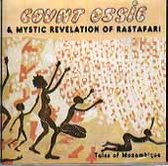
Count Ossie & The Mystic Revelation Of Rastafari - Tales Of Mozambique

"Tales of Mozambique" was released a couple of years after the ground-breaking "Grounation" triple-album, the first album to give nyahbingi music the studio time it deserves.
It goes along similar musical lines: a mixture of rasta chants, nyahbingi drumming and jazz-based horn work.

The album takes account of and analyses the displacement of African blacks to the West Indians coasts. It is a journey which takes in the Maroons, Pan-Africanism and all the international struggles for independence in a musical structure encompassing Burru, Mento, Reggae and Jazz rhythms.

This is music marked with integrity that should be herad by anyone interested in Jamaican culture, percussion or the roots of roots music.

Tracklist:
A1Sam's Intro3:35
A2Mozambique - Tales Of Mozambique5:45
A3Ah Ji Wah Wah - Selam Nna Wadada (Peace & Love)3:20
A4No Night In Zion4:00
A5I Am A Warrior5:02
B6Wicked Babylon5:20
B7Let Freedom Reign3:43
B8Lock, Stock & Barrel - Soon Start Quarrel3:42
B9Nigerian Reggae3:40
B10Run One Mile5:30

Count Ossie & The Mystic Revelation Of Rastafari - Tales Of Mozambique
(192 kbps, ca. 60 MB)

Count Ossie and The Mystic Revelation of Rastafari - The Original Complete Grounation (1973)

The foundations of reggae and its association with Rastafarianism were established by drummer, percussionist and vocalist Count Ossie (born: Oswald Williams). Together with his band, the Mystic Revelation of Rastafari, Count Ossie combined African-influenced music with the European hymnal tradition to create a unique sound that inspired everyone from Ras Michael and the Sons of Negus and the Skatalites to Bob Marley & the Wailers and Toots & the Maytals.

Count Ossie's earliest inspiration came from rasta elder Brother Job, who introduced him to the philosophies of Rastafarianism. A Nyabinghi drummer from the hills of Jamaica, Count Ossie cut his first singles, including "O'Carolina" and "Chubby," for Prince Buster at the studios of RJR radio. Beginning in 1959, Count Ossie recorded for Sir Coxsone Dodd at Studio One.

Together with music director, tenor saxophone, flute and clarinet player Cedric "I-m" Brooks, Count Ossie formed the Mystic Revelation Of Rastafari. Heavily percussive, the group featured philosopher orator Samuel Clayton, double bass player, poet and vocalist Ras Jose, Ras Jose, Little Bop and Count Ossie's son, Time, on fundae drum, bass drummer and percussionist King Rayo, percussionist and vocalist Bunny, percussionist Moses, baritone saxophone and clarinet player Ras Sam II and trombonist Nambo.

There has been some debate as to the cause of Count Ossie's death in 1976. While some sources claim that he was in an auto accident, others say that he was trampled to death when a crowd panicked at the National Arena.

These recordings were originally released as triple LP set in 1973. Incredible music featuring the true roots of Rastafari in Jamaican music.

Track listing:
CD 1:

1. Bongo Man
2. Narration
3. Malorat
4. Poem
5. Four Hundred Years
6. Poem
7. Song
8. Lumba
9. Four Hundred Years

CD 2:

1. Ethiopian Serenade
2. Oh Carolina
3. So Long
4. Grounation

Count Ossie & The Mystic Revelation Of Rastafari - The Original Complete Grounation (1973)
(256 kbps, front cover included)

Sonntag, 5. Juni 2016

Paul Robeson – Ol´ Man River

Paul Robeson (April 9, 1898 – January 23, 1976) was an African-American actor of film and stage, professional athlete, writer, multi-lingual orator, lawyer, and basso profondo concert singer who was also noted for his wide-ranging social justice activism.

A forerunner of the civil rights movement, Robeson was a trades union activist, peace activist, Phi Beta Kappa Society laureate, and a recipient of the Spingarn Medal and Stalin Peace Prize. Robeson achieved worldwide fame and recognition during his life for his artistic accomplishments, and his outspoken, radical beliefs which largely clashed with the colonial powers of Western Europe and the Jim Crow climate of pre-civil rights America.

Paul Robeson was the first major concert star to popularize the performance of spirituals and was the first black actor of the 20th century to portray William Shakespeare’s Othello on Broadway. His run in the 1943-45 Othello production still holds the record for the longest running Shakespeare play on Broadway. In line with Robeson’s vocal dissatisfaction with movie stereotypes, his roles in both the American and British film industry were some of the first parts ever created that displayed dignity and respect for the African American film actor, paving the way for the likes of Sidney Poitier and Harry Belafonte.

Here´s the compilation “Ol´ Man River”, released in 1987 on Conifer Records.

Paul Robeson – Ol´ Man River
(192 kbps, front cover included)