Donnerstag, 10. August 2023

Linton Kwesi Johnson - In Dub, Vol. 3

Poet and social critic (as the name Poet and the Roots suggests) Linton Kwesi Johnson — born in Jamaica, raised in London — helped bridge the gap between reggae and punk, infusing the music with powerful political content and an urge for freedom rooted in his experience as a black man living in Brixton.

Linton Kwesi Johnson has garnered serious respect among reggae aficionados both as a stirringly political poet ("Inglan is a Bitch" stands as an excellent chronicle of a Jamaican immigrant in Ol' Blighty) and as a consummate master of dub. It's a tricky balance, in that Johnson must simultaneously stand on his ability with words and on his ability to work without them.

"LKJ In Dub, Volume 3" continues a series that began in 1980 and, inasmuch as dub whittles reggae down to its barest, most primal essence -- the beat and the bassline -- Johnson pushes dub even further. Recorded in Switzerland, this collection is a perfect distillation of dub's power: achingly sparse and profoundly deep.


Tracklist:

1 Dirty Langwidge Dub 7:15
2 Rootikal Dub 6:58
3 Liesense Fi Dub 6:51
4 Dubbin Di Tradition 4:24
5 Time Fi Dub 6:39
6 Row Man Tik Dub 5:57
7 Mensch Dub 5:23
8 Afro-German Dub 6:47
9 Dubbin Di Diaspora 6:57
10 Poetic Dub 6:25

Linton Kwesi Johnson - In Dub, Vol. 3
(192 kbps, cover art included)

Lin Jaldati - Jiddische Lieder - Live, Köln, 3. Juli 1987

This is a concert recording from 1987, July 3, in Cologne, West Germany. Lin Jaldati performs both traditional and composed Yiddish songs, accompanied by her husband Eberhard Rebling on piano and by their daughters Kathinka Rebling on violin and Jalda Rebling, vocals.

Lin Jaldati was sent to concentration camps when the Nazis occupied Holland. She didn't speak Yiddish, but learned Yiddish songs from her fellow prisoners. Jaldati survived Auschwitz; being a communist, she came to East Germany to help establish a socialist German state. She married Eberhard Rebling, a German communist who later became a member of the Central Committee of the Communist Party, and started to perform Yiddish songs for a German audience with Rebling accompanying her on piano.

Later they were joined by their daughters Katinka and Jalda. Lin Jaldati dedicated her art and her life to communist East Germany. This didn't prevent her from being banned from performing in the late sixties; the hysteria had gone so far that even performing Yiddish songs was interpreted as a pro-Israel statement. For a long time Lin Jaldati, who was highly accepted by what later became the East German Yiddish and klezmer scene, was the only Yiddish performer in East Germany.

Lin Jaldati - Jiddische Lieder - Live, Köln, 3. Juli 1987
(192 kbps, front & back cover included)

Helmut Qualtinger - Der Qualtinger - Ein kabarettistisches Porträt

Helmut Qualtinger (born October 8, 1928 in Vienna, Austria; died September 29, 1986 in Vienna) quit university to become a newspaper reporter and film critic for local press, while beginning to write texts for cabaret performances and theater plays. Qualtinger debuted as an actor at a student theater and attended the Max-Reinhardt-Seminar as a guest student.
Beginning in 1947, he appeared in cabaret performances. In 1949, Qualtinger's first theatrical play, "Jugend vor den Schranken", was staged in Graz. Up to 1960, he collaborated on various cabaret programmes with the nameless Ensemble (Gerhard Bronner, Carl Merz, Louise Martini, Peter Wehle, Georg Kreisler, Michael Kehlmann).

Qualtinger was famous for his practical jokes. In 1951, he managed to launch a false report in several newspapers announcing a visit to Vienna of a (fictional) famous Inuit poet named Kobuk. The reporters who assembled a the railroad station however were to witness Qualtinger, in fur coat and cap, stepping from the train. Asked about his "first impressions of Vienna", the "Inuit poet" commented in broad Viennese dialect, "It's hot here."

The album "Der Qualtinger - Ein kabarettistisches Porträt" is a good overview, presenting highlights by Helmut Qualtinger, often in colaboration with Gerhard Bronner and Carl Merz, recorded between 1956 and 1960.


(192 kbps, cover art included)

Ernst Busch - Der rote Orpheus

"Der rote Orpheus" is a collection of original recordings from the 1930s of Ernst Busch singing Brecht/Eisler and other popular working-class songs. The songs were recorded in Berlin before Hitler's rise to power, and in the Soviet Union after Busch's flight from Germany.

This collection was released in 1996 by "Edition BARBArossa".


Tracklist:

1 In Hamburg an der Elbe 3:09
2 Min Jehann 2:55
3 Seeräuber Ballade 3:14
4 O Suzannah (Alabama-Song) 3:12
5 Californische Ballade 2:42
6 Die Ballade von den Säckeschmeißern 3:19
7 Anrede an ein neugeborenes Kind 2:52
8 Ballade vom Nigger Jim 2:48
9 Ballade vom Soldaten 2:51
10 Das Lied vom Schlaraffenland 2:57
11 Der Bäcker backt uns Morgenrot 3:08
12 Bandera Roja 2:19
13 U.H.P. (Union De Hermanos Proletarios) 2:55
14 Ballade der XI. Brigade 3:09
15 Los Cuatro Generales 2:39
16 Lied der Interbrigaden 2:26
17 Lied der Einheitsfront 2:45
18 De brave Peter 3:12
19 Myn Tohan 2:59
20 Solidaritätslied 2:29


Ernst Busch - Der rote Orpheus
(320 kbps, cover art included)

Bertolt Brecht - Before the House Un-American Activities Committee (1947)

"I have written a number of poems, songs, and plays, in the fight against Hitler, and, of course, they can be considered, therefore, as revolutionary, cause, I, of course, was for the overthrow, of that government."

Bertolt Brecht, at the HUAC, 30. Oktober 1947
A historical document, presented by Eric Bentley: Like Gerhart and Hanns Eisler, also Bertolt Brecht had to answer the questions of the Members of the House Committee on Un-American Activities (HCUA), that was built to opress communist tendencies, which apparently infiltred the american society. After the Second World War and in aftermath of the first big wave of pursuit against communists, the HUAC get propagandistic importance and prepared some legal proceedings against communist expatriates. Hereafter we offer the recording of the interrogation of Bertolt Brecht in octobre 1947. The listeners get an impression of Bertolt Brechts bad, but self-confident spoken English (the exile-friends of Brecht laugh about and learned to like that pronunciation) and also of the trick of Brecht’s answers. The most interesting and surely absurd part of the questioning begins, when Brecht and the questioners quarrel about the interpretation of Brecht’s play »Die Maßnahme« (The Decision). The original recordings are introduced and commented by Eric Bentley. An important and interesting document of communist and anti-communist history.
The liner notes include an introduction by Bentley and complete transcript of the recording.

(128 kbps, cover included)

Mittwoch, 9. August 2023

The Weavers - At Carnegie Hall, Vol. 2 (1960)

By April 1, 1960, when they recorded their fifth Vanguard album (which was their third live disc and second to be recorded at Carnegie Hall), the Weavers had overcome the loss of Pete Seeger and fully integrated his replacement, Erik Darling, who proved a banjo virtuoso and exuberant humorist (listen to his kazoo solo on "Bill Bailey Come Home").

They had an excellent act, mixing old favorites dating back to the days of the Almanac Singers ("The Sinking of the Reuben James") and newer songs that would become standards of the folk boom ("Last Night I Had the Strangest Dream").
And, at least at this point, they seemed to be riding the crest of that boom, which they had inspired with their 1955 Carnegie Hall show, recorded for their first Vanguard album, The Weavers at Carnegie Hall (1957), which belatedly jumped into the album charts a couple of months after this album became their chart debut at the start of 1961.

In retrospect, however, the cannily titled Vol. 2 (you'd think it was more from the first concert, wouldn't you?) represented the peak of the Weavers' comeback; in '60s terms, with their bow ties and tuxedos, they seemed like something from an earlier time compared to the collegiate earnestness of the Kingston Trio and the political seriousness of Peter, Paul and Mary (who debuted the following year) - and, of course, they were. But with "The Weavers at Carnegie Hall, Vol. 2" however briefly, they finally exorcised the ghost of Seeger and demonstrated that they were a valid and popular act on their own.


The Weavers - At Carnegie Hall, Vol. 2 (1960)
(320 kbps, front cover included)

The Almanac Singers - Which Side Are You On?


The Almanac Singers were a group of folk musicians who achieved popularity in the radical left/anti-fascist circles of early 1940s America, using the music of the people and the soil in a classic leftist way to promote their intellectual concerns.

As much a political and philosophical collective as they were an actual singing group, the Almanac Singers, whose entire recorded output was done in the span of a year between March 1941 and February 1942, were in many ways the godfathers of the urban folk revival that broke into the commercial radar (and the pop charts) two decades later. They are the very root of the politicised modern American folk music which rose from the ashes in the early 1960s to take over the world...

Anchored by the hybrid banjo sound (part Appalachian, part his own invention) of Pete Seeger, the group also included, at one point or another, Lee Hays, Millard Lampell, Bess Lomax, Arthur Stern, Sis Cunningham, Josh White and his wife Carol White, and when it suited him, Woody Guthrie, who famously noted that the Almanac Singers were "the only group in the world that rehearsed on stage."

A lesson in applied folk song, the group played Southern folk songs given a whole new utility by being filtered through a left-leaning political agenda and a strong belief in the power of labor unions. The Almanac Singers may have sounded like a stylized and urban version of a mountain string band, but they were hardly the folks you'd call to play a Saturday night sugaree. Hit the picket line on Monday morning, though, and this was your band.

This 31-track, single-disc set from Britain's Rev-Ola Records contains virtually everything of note that the Almanac Singers recorded, including an intimate, unassuming version of Guthrie's "Hard, Ain't It Hard," a decidedly non-blues take on "House of the Rising Sun," and a stirring rendition of "The Sinking of the Rueben James." The sound is wonderful, bringing out the loose (and as Guthrie reminds) unrehearsed intimacy that was the Almanac Singers greatest strength. Everything you need is here.

The Almanac Singers - Which Side Are You On?
(192 kbps, front cover included)

Pete Seeger - If I Had A Hammer - Original Recordings 1944 - 1950 (Naxos)

"If there was a Mount Rushmore of influential folk performers, Pete Seeger would be the first one carved into stone, head raised and singing to the heavens. In the more than sixty years since folk music made its journey from the backwoods, hills, and valleys of America to the concrete jungles of New York City, no one person has had a greater impact or a more pronounced presence on the music than Seeger and his long-necked five-string banjo. In retrospect, even the monumental accomplishments of his friend and frequent musical companion, Woody Guthrie, pale in comparison with Seeger’s. Although Guthrie penned the folk world’s anthem, “This Land is Your Land,” and was the lightning rod for countless aspiring folk singers, it was Seeger who transcended Guthrie’s era and others that came after it; writing, performing, teaching, preaching, reviving folk traditions, and then ensuring their perpetuation. If there was a cause, be it musical, populist, or conservationist, you could count on Seeger to be there, singing out his support. He is as American as Abraham Lincoln in his nobility, his love for his country, and his relentless support of the rights of the individual.

A member of an esteemed family of musicians and folklorists, Seeger was born on 3 May 1919 in New York City. His father, Charles, was a noted ethnomusicologist; his mother, a concert violinist. Seeger attended college at Harvard, but dropped out after becoming entranced with folk music after his father took him to a folk festival in Asheville, North Carolina. In 1938, he hoboed around the U.S., riding the rails while meeting performers such as Lead Belly, Woody Guthrie, and Earl Robinson. His father introduced him to Alan Lomax, and Seeger spent the next two years learning to play the banjo and studying the vast folk music archives at the Library of Congress.

When the Almanac Singers were formed before World War II, Seeger helped lead and organize the group, playing at rallies and contributing pro-union and anti-fascist songs. After serving in the army during the war, Seeger continued his support for labour unions by helping to found People’s Songs, the notorious leftist organization of the late ’40s. During this time, Seeger rode the campaign trail with Henry Wallace and after the demise of People’s Songs, helped organize the Weavers, the group that set the standard for the oncoming ‘folk music revival’. The Weavers soon became victims of the blacklist, which all but destroyed their careers in the early 1950s. In 1955, Seeger himself became a martyr when he invoked the Fifth Amendment, refusing to answer any questions posed by the HUAC (House Un-American Activities Committee) about his political background.

Surviving the Communist witch-hunts, Seeger inspired thousands of would-be musicians to learn to play the five-string banjo with his many recordings for the Folkways label. As ‘Johnny Appleseed’, Seeger penned a long-running column in Sing Out! the folk music Bible that helped disseminate folk songs through articles, printed transcriptions, and record reviews. Since Seeger could not get any gigs himself, he passed his folk traditions on to others through his column, keeping his music alive.

In the ’60s, he was banned from appearing on television’s Hootenanny programme, but continued on, joining the peaceniks and protesting the war in Vietnam. In the process, he penned some of the decade’s best-loved songs, including the Byrds’ “Turn, Turn, Turn” and “Where Have All the Flowers Gone”. Seeger also was responsible for helping transform an ages old hymn (“We Shall Overcome”) into the anthem of the anti-war movement.

Seeger’s dedication toward conservation led to his spearheading the cleanup of the Hudson River, which he counts as one of his proudest achievements. Through all these years, Seeger soldiered on, and today, in his mid-80s, he is the patron saint of folk music. He has outlived Guthrie by more than three decades, yet modestly dismisses his role as America’s folk laureate.

During his long career, Pete Seeger has managed to deftly juggle traditional folk ballads and instrumentals with topical and political songs that were both timely as well as powerful. We have included a generous and balanced sampling of these on this CD. Songs in the former category include the country dance tune Cindy, the cowboy song Git Along Little Dogies, and a medley of instrumentals played on the banjo (Banjo Pieces). Seeger’s abilities on the banjo have always been understated in comparison with his talents as a singer and performer. But Seeger’s musical versatility on the banjo enabled him to play traditional country, blues, classical, jazz, Spanish, and other ethnic styles with great virtuosity.

As a youngster learning to play in the late ’30s, Seeger was especially attracted to records by Uncle Dave Macon, the grand old man of the Grand Ole Opry. As a result, Seeger’s first 78 for the Charter label featured renditions of two songs made famous by Macon, Cumberland Mountain Bear Chase (which Macon recorded as “Cumberland Mountain Deer Race”, based on an 1850s poem entitled “The Wild Ashe Deer”) and Keep My Skillet Good and Greasy (Macon’s first hit in 1924). The latter song was paired on one side with Jimmie Rodgers’ “T” for Texas (aka “Blue Yodel”).

Like Woody Guthrie, Pete Seeger liberally borrowed melodies from traditional sources. Solidarity Forever featured words by Ralph Chaplain, one of the early leaders of the I.W.W. (The Industrial Workers of the World, commonly known as the ‘Wobblies’). Burl Ives sings Chap-lain’s lyrics to the tune of “Battle Hymn of the Republic” which is followed by Seeger’s talking blues verses. The song became popular on scores of picket lines. Ironically, Ives would violate the concept of solidarity by not only cooperating with the HUAC in 1952, but also fingering many of his fellow folk singers, including Seeger, as having attended Communist supported functions.

Theodore Bilbo (1877-1947) was a senator and former governor of Mississippi who, in 1945, wrote letters to constituents using racially offensive terminology. Bob and Adrienne Claiborne were New Yorkers who took particular offense to Bilbo’s insensitivity and penned the biting Listen, Mr. Bilbo, explaining how some of America’s most important personages came from other lands. The song first appeared in the March 1946 issue of People’s Songs Bulletin.

The gathering storm clouds of the HUAC inspired Seeger and Lee Hays to pen The Hammer Song (aka “If I Had a Hammer”), written to warn of the dangers to liberty loosed by Senator Joseph McCarthy. It was one of two songs issued on the first 78 recorded by the Weavers in 1949. The other side was Banks of Marble, a song that was triggered by the post-war recession and subsequent rising unemployment of 1948. A struggling apple farmer from Newburgh, New York named Les Rice wrote the song, which was introduced by Seeger to a hootenanny audience in New York. In time, members of labour unions would include their own verses describing other wretched working conditions among laborers.

Talking Atom (aka “Talking Atomic Blues”) was written by a Los Angeles newspaperman named Vern Partlow. Performed in the style of Woody Guthrie’s “Talking Dust Bowl Blues” (itself a take on Chris Bouchillon’s original “Talking Blues” from 1926), the song was discovered by singer Sam Hinton in a 1947 issue of People’s Songs Bulletin. Partlow ended up being targeted himself by the HUAC, got fired from his job, and ended his days working in a paper box factory in Colorado.

Another early Weavers song, Wasn’t That a Time, was written by Walter Lowenfels and Lee Hays, using classic images from U.S. history to show how the HUAC was violating Americans’ civil rights. The HUAC’s response was to accuse Hays and Seeger of ridiculing these American events. After he testified before the committee (and revealing nothing), Seeger sang Wasn’t That A Time for the throng of reporters waiting outside.

Impressions of Pete Seeger are as varied as are his talents. Carl Sandburg called him ‘America’s tuning fork’. The Limeliters’ Lou Gottlieb said of Seeger, “He was the slickest professional amateur I have ever seen in my life.” Awarded the presti-gious Kennedy Center Honor in 1994, Seeger was called “the living embodi-ment of America’s traditions in folk music.” As the genre’s elder statesman, Seeger has not only outlived all of his erstwhile roommates in the old Almanac House, but also his vitriolic detractors from the deepest, darkest years of the blacklist era. Today, Seeger and his wife of sixty years, Toshi, live modestly in a house he built himself in upstate New York.
In his autobiography, Seeger told a story that summed up his own ever-positive personality and attitude towards life. As he tells it, there was a small peace demonstration in Times Square that consisted of a young Quaker carrying a sign. A passerby ridiculed him and queried, “Do you think you’re going to change the world by stand-ing here at midnight with that sign?” The young man replied calmly, “I suppose not. But I’m going to make sure the world doesn’t change me.” - Cary Ginell

Tracklist:
1 Cindy 2:30
2 The Young Man Who Wouldn't Hoe Corn 1:18
3 The Erie Canal 1:35
4 Casey Jones 1:55
5 Solidarity Forever 2:56
6 U.A.W. - C.I.O. 2:08
7 Listen, Mr. Bilbo 2:42
8 Roll The Union On 2:43
9 Devilish Mary 1:22
10 Danville Girl 1:34
11 I Had A Wife 0:40
12 Talking Atom 2:55
13 Newspaper Men 3:12
14 Cumberland Mountain Bear Chase 2:43
15 Keep My Skillet Good And Greasy 0:56
16 ''T'' For Texas 2:08
17 John Riley 2:30
18 Darling Corey 2:44
19 Git Along Little Dogies 1:31
20 Penny's Farm 1:50
21 The Jam On Jerry's Rocks 1:39
22 Come All Fair Maids 2:34
23 Wasn't That A Time 2:59
24 The Hammer Song (If I Had A Hammer) 2:02
25 Banks Of Marble 2:56
26 Banjo Pieces (My Blue-Eyed Gal/ Cripple Creek/ Old Joe Clark/ Ida Red)

(320 kbps, cover art included)

Sonntag, 6. August 2023

Rebel MC, Double Trouble – Street Tuff (1989)

"Street Tuff" is a song by British producer and toaster Rebel MC and Double Trouble. Released in 1989 as their second single from the debut album, "Rebel Music" (1990), it became a commercial success and the biggest hit of both performers' careers, peaking at number three on the UK Singles Chart. It was the follow-up to their first hit, "Just Keep Rockin'", which made it into the UK top 20.
Additionally "Street Tuff" also peaked within the top 10 in Belgium, Greece, the Netherlands, and Switzerland. A music video was also produced to promote the single.

David Taylor-Wilson from Bay Area Reporter named the song "one of the most infectious grooves we've heard all year", noting that it "mixes the rhythms of Jamaican reggae with a house music beat. Just try and sit still when this one’s playing."

Frank Owen from Spin found that the song is "a single masquerading as an album", "both marketing gimmick and a testament to the way the British mix and match different musical genres, unlike in the US, where the demarcation lines between house, hip hop and reggae still remain fiercely patrolled aesthetic boundaries."

Tracklist:

1 Street Tuff (Scar Radio Mix 7") 3:33
2 Street Tuff (Scar Mix 12") 5:01
3 Street Tuff (Club Radio Mix 7") 3:30
4 Street Tuff (Club Mix 12") 5:04

(256 kbps, cover art included)

Tradition & Protest - The Great American Folk Revival


From the liner notes:

"Of the various artists active in the American folk song revival which began in the late thrties, some were politically motivated and spread their mainly left-wing message through their music, others were active in many different varieties of music and just saw the movement as being another string to their bow. (...)

The American folk song revival embraced artists of different backgrounds and musical persuasions who, for a few years anyway, were united together as brothers with a common cause."

Here´s a fine compilation collecting tunes by Woody Guthrie, Pete Seegr, Leadbelly, Josh Wite, Cisco Houston, The Almanac Singers and Sonny Terry.

Tracks:
1.: Pastures Of Plenty - Guthrie, Woody
2.: All I Want - Seeger, Pete & The Almanac Singers
3.: Silicosis Is Killin' Me - White, Josh
4.: Boll Weevil - Leadbelly
5.: Liza Jane - Seeger, Pete & Woody Guthrie/Leadbelly
6.: House Of The Rising Sun - Guthrie, Woody
7.: Sinking Of The Reuben James - Seeger, Pete & The Almanac Singers
8.: Where Did You Sleep Last Night - Leadbelly
9.: Cindy - Seeger, Pete & Woody Guthrie/Cisco Houston
10.: Grand Coulee Dam - Guthrie, Woody
11.: John Hardy - Leadbelly
12.: I Don't Care Where Dey Bury My Body - White, Josh
13.: Talking Union - Seeger, Pete
14.: Pretty Flowers - Leadbelly & Josh White
15.: Gypsy Davy - Guthrie, Woody
16.: Teroo Teroo - Seeger, Pete
17.: When The Boys Were Out On The Western Plains - Leadbelly
18.: Pick A Bale Of Cotton - Leadbelly & The Golden Gate Jubilee Quartet
19.: New York Town - Guthrie, Woody & Cisco Houston
20.: You Shall Be Free - Guthrie, Woody/Cisco Houston/Sonny Terry
21.: Dear Mr President - Seeger, Pete
22.: Cumberland Mountain Bear Chase - Seeger, Pete
23.: Talking Dust Bowl Blues - Guthrie, Woody
24.: Bring Me Lil Water Silvie - Leadbelly
25.: Dusty Old Dust (So Long It's Been Good To Know You) - Guthrie, Woody
26.: Irene (Goodnight Irene) - Leadbelly

Tradition & Protest - The Great American Folk Revival
(192 kbps, front cover included)

The Almanac Singers - The Sea, The Soil & The Struggle

From the liner notes:

The brief time that the Almanac Singers were together went by like a meteor shower, only with more lasting effects. During the two years of their existence, the ad hoc assemblage of folk singers, left-wing activists, and writers who got their name from the rooming house that they shared recorded five albums and a handful of singles for independent New York-based record labels including General, Asch, and Keynote. But more than sixty years after their short time together, their recordings continue to fascinate not only musical but cultural and political historians. The core members of the group included Pete Seeger (b. 1919) and Woody Guthrie (1912-1967), although performers such as Lee Hays, Millard Lampell, Tom Glazer, Josh White, Butch Hawes, and others drifted in and out, with no set group appearing from session to session.

On this CD we have included a variety of selections recorded by the Almanac Singers during 1941 and 1942, both politically oriented as well as those reflecting authentic folk traditions. The albums "Deep Sea Chanteys and Whaling Songs" and "Sod Buster Ballads" were trailblazers in documenting traditional American folk songs from, respectively, Pete Seeger's seafaring New England ancestors and frontier songs from the plains of Woody Guthrie's Southwest. The album "Songs of the Lincoln Battalion" commemorated the Spanish Civil War (1936-39), in which German and Italian fascist forces succeeded in overthrowing the democratically elected Republic of Spain.

Tracklist:

1 Blow Ye Winds High - O
2 Haul Away Joe
3 Blow The Man Down
4 The Golden Vanity
5 Away Rio
6 Coast Of High Barbary
7 The Dodger Song
8 Ground Hog
9 State Of Arkansas
10 Hard, Ain't It Hard
11 I Ride An Old Paint
12 House Of The Rising Sun
13 Boontown Bill
14 Keep That Oil A-Rollin'
15 Viva La Quince Brigada
16 Jarama Valley
17 Spanish Marching Song
18 Cookhouse; The Young Man From Alcala
19 Quinto Regimiento
20 Quartermaster Song


The Almanac Singers - The Sea, The Soil & The Struggle
(320 kbps, cover art included)

Classic Labor Songs from Smithsonian Folkways

PhotobucketIn the era of the sound bite, when songs are used to hawk everything from shampoo, soap, and cars to wine coolers, dating services, and Viagra, it is easy to lose sight of the more noble utilitarian use songs can have, and this haunting collection of 20th century labor songs calling for fairness, dignity, and a just wage is a compelling document of the power of songs to unite and enable.

Drawn from Smithsonian Folkways' vast collection and from Joe Glazer's Collector Records, which in 2006 became a part of the Smithsonian Folkways catalog, "Classic Labor Songs" from Smithsonian Folkways is by turns spirited, uplifting, wry, and ironic, and if some of these songs seem quaint in the light of today's complicated global economic landscape, the issues they raise for the fair and just treatment of labor continue to be extremely vital ones.

If one were to walk into a factory today and play Classic Labor Songs, the music probably wouldn’t rouse the employees to a frenzied state of uprising. But if performances like John Handcox’s “Roll the Union On” or Hazel Dickens’s “Black Lung” at first sound like quaint relics - poverty’s so cute when it’s in sepia - the album bristles with the passion of decades past, when standing up to the boss seemed like a realistic proposition.

Among the highlights here are Paul Robeson's stately "Joe Hill," which opens the sequence, John Handcox's unaccompanied field recording of his own "Roll the Union On" (based on the gospel song "Roll the Chariot On") from 1937, Woody Guthrie's heart-breaking "1913 Massacre" (based on a true incident during a miner's strike in Calumet, MI where 73 children lost their lives), and a shaky yet riveting version of Florence Reece singing her "Which Side Are You On" from a 1971 archival tape (she actually wrote the song during a miners' strike in Harlan County, KY in 1931) that dovetails seamlessly into the Almanac Singers' 1955 version of the same song.

But not everything here deals with miners and mill workers. Some of the songs have a distinct contemporary feel, like Tom Juravich's "VDT," which pleads the case of cubicle workers who spend all day entering data on a video display terminal, and John O'Connor's unaccompanied "Carpal Tunnel," which explores the health issues that stem from workplace tasks that require continual repetitive movement.

In an era when label-created hipsters rap on about getting personal respect all day over the airwaves, these songs seem unadorned and out of touch by comparison. But there is a quiet strength to them, and a deep understanding of what respect really means, and long after today's flavor of the week drops from sight (utility isn't always measured by chart position), these songs will still be sung.


Classic Labor Songs (Smithsonian Folkways)
(192 kbps, cover art included)

Freitag, 4. August 2023

The Almanac Singers - Songs Of Protest


Protest Music is a long-standing part of American culture, but it wasn't always considered to be part of the folk music tradition. There was a certain consensus among some of the earliest folklorists and song collectors that songs of protest weren't universal enough to fit under the folk music umbrella. Then came the Almanac Singers, who sought out the songs of the labor movement and other traditional tunes of the working class - along with their own original compositions - hoping to use folk music as a tool to organize communities. It's was kind of an experiment with folk songs and, as the mid-century protest song movement can attest, it sort of caught on.

The Almanac Singers were one of the first, most influential groups of protest singers in the history of contemporary American folk music. Singing labor songs in union halls and daring to use music to speak out against oppression, the Almanacs have moved generations of topical singers to action. The Almanacs used songs to organize people, to inspire action, and to nurture communities around the notion of standing up to injustice. Their "Songs of Protest" is easily one of the best recordings in the history of folk music.

The Almanac Singers' Songs of Protest also included what was, arguably, one of Woody Guthrie's greatest topical story-songs, "The Sinking of the Reuben James." The song tells the story of a U.S. Naval ship which was attacked by the Nazi military in 1941, killing 86 people. In Guthrie's quintessential empathetic songwriting style, he created a song that humanized the large number of deaths in the tragedy. It was Guthrie's gift of humanizing history that inspired so many of the political folksingers that followed, and this song was one of the Almanac Singers' greatest efforts (its chorus was actually written by Seeger and Lampell).
Other great highlights from this recording include the traditional "Blow the Man Down" and "The Dodger Song", both of which sung to a suspicion against the government and those who seek to abuse the system. Overall, Songs of Protest is not only an excellent introduction to the work of the Almanac Singers - and, in turn, that of Seeger, Guthrie, and the others - but is also an excellent primer on the history of the American protest song.

Tracklist:

1. I Ride an Old Paint (WG)
2. The Dodger Song (LH)
3. The Golden Vanity (PS)
4. House of the Rising Sun (WG)
5. Blow Ye Winds, Heigh Ho (PS)
6. Haul Away Joe (PH)
7. Blow the Man Down (WG)
8. Ground Hog (PS)
9. State of Arkansas (LH)
10. The Coast of High Barbary (PS)
11. Hard, Ain't It Hard (WG)
12. Away, Rio (LH)
13. Billy Boy (JW/ML)
14. Ballad of October 16 (PS)
15. Plow Under (PS)
16. Get Thee Behind Me Satan (PH)
17. The Strange Death of John Doe (PS)
18. Round and Round Hitler's Grave (PS)
19. The Sinking of the Reuben James (PS)
20. Liza Jane (PS/WG/JW)
21. All I Want (PS)
22. Union Maid (PS)
23. Talking Union (PS)
24. Which Side Are You On? (PS)
25. Deliver the Goods (PS)
26. C for Conscription (PS)
27. Washington Breakdown (PS)
28. Dear Mr President (PS)
29. Round and Round Hitler's Grave - Radio Broadcast (PS)

The Almanac Singers - Songs Of Protest
(320 kbps, front cover included)

This European compilation contains 28 of the 35 studio recordings made by the Almanac Singers in 1941-1942, plus an aircheck of "Round and Round Hitler's Grave." The recordings were released originally on five albums of 78s. The CD gathers all seven tracks from the group's debut album, "Songs for John Doe", five of the six from "Talking Union" (not including "The Union Train"), all six from "Deep Sea Chanteys and Whaling Ballads", all six from "Sod Buster Ballads", and four of six from "Dear Mr. President" (not including "Beltline Girl" and "Side by Side"). But the first-time listener is bound to be surprised by the album's title, "Songs of Protest", at least while listening to the first 12 tracks, all of which are drawn from the non-political third and fourth albums. The compilers have decided against chronological sequencing, which is a big mistake when it comes to the Almanac Singers. The group changed their view radically during the course of their career. "Songs for John Doe", recorded prior to American involvement in World War II, was scathingly anti-war, while "Dear Mr. President", recorded after Pearl Harbor, was just as scathingly pro-war (as a title like "Round and Round Hitler's Grave" suggests). Even 60 years later, sequencing songs from these two albums beside each other creates considerable confusion. Aside from this gaffe, folk fans should welcome having these historical recordings on a single disc.

The Pop Group - Y (1979, Radar Records)

The Pop Group was a post-punk band from Bristol, England whose dissonant sound spanned punk, free jazz, funk and dub reggae. Their lyrics were political in nature more often than not.

Formed in 1978 by Mark Stewart (lyrics, vocals), John Waddington (guitar), Gareth Sager (guitar), Simon Underwood (bass) and Bruce Smith (drums, percussion), they issued their debut single, "She is Beyond Good and Evil" on Radar Records the following year.

Their debut album "Y", was produced by reggae veteran Dennis Bovell to critical acclaim but low sales figures. With today's ears you hear severe political punk with some interesting jazz highlights or leanings. The "Y" LP was a new wave milestone, whose sound is still a smash in the face with its clanging guitars, great funky rhythm section ("Simon Underwood [bass] and Buce Smith [drums] were post-punk's "Sly & Robbie", according to Dennis Bowell), and Mark Stewart's political angst. Imagine a Gang of Four flirting with dub/ethnic experimentalisms and you might get what they sound like.

Although it did not chart, the album's success was sufficient to convince Rough Trade to sign the band, but not before more line-up changes, with Dan Katsis replacing Underwood on bass.

Line Up:

Gareth Sager
Mark Stewart
Bruce Smith
Simon Underwood
John Waddington


Tracklist:

1She Is Beyond Good And Evil3:23
2Thief Of Fire4:35
3Snowgirl3:21
4Blood Money2:57
5We Are Time6:29
6Savage Sea3:02
7Words Disobey Me3:26
8Don't Call Me Pain5:35
9The Boys From Brazil4:16
10Don't Sell Your Dreams6:42
113:383:38

Track 1  ('She Is Beyond Good And Evil') and track 11 ('3:38') are bonus tracks not available on the original album.

The Pop Group - Y (1979, Radar Records)
(320 kbps, cover art included))

By the way, the Mark Stewart docu film "On/Off" is definitly worth a look. Check it out if you have the chance.

Talking Heads - Outtakes, Demos, Alternates (1976 - 1980, Bootleg)

Happy Birthday to Tina Weymouth!

Martina Michèle Weymouth (born November 22, 1950) is an American musician, singer, songwriter, and a founding member and bassist of the new wave group Talking Heads and its side project Tom Tom Club, which she co-founded with her husband, Talking Heads drummer Chris Frantz.[

In 2002, Weymouth was inducted into the Rock and Roll Hall of Fame as a member of Talking Heads.

As a student at the Rhode Island School of Design, she met Chris Frantz and David Byrne, who formed a band called the Artistics. She began dating Frantz and served as the band's driver. After graduation, the three of them moved to New York City. Since Byrne and Frantz were unable to find a suitable bass guitar player she joined them at the latter's request, and began learning and playing the instrument.

As a bass player she combined the minimalist art-punk bass lines of groups such as Wire and Pere Ubu with danceable, funk-inflected riffs to provide the bedrock of Talking Heads' signature sound

This is a bootleg compilation with outtakes, demos and alternate recordings from 1976 to 1980.


Tina Weymouth, 1977


Tracklist:

1. Psycho Killer (take 1)
2. I Feel It In My Heart (Talking Heads 77 outtake)
3. Uh Oh Love Comes To Town (alt ver)
4. The Big Country (alt ver)
5. I'm Not In Love (alt ver)
6. Warning Sign (alt ver)
7. Thank You (alt ver)
8. Life During Wartime (w/Fripp and long ending)
9. Dancing For Money (Fear Of Music outtake)
10. Unison (Remain In Light outtake)
11. Double Groove (Remain In Light outtake)
12. These Boots Are Made For Walking (Talking Heads 77 session)
13. I Walk the Line (Talking Heads 77 session)
14. Can't You Hear My Heartbeat (Talking Heads 77 session)

(320 kbps, cover art included)

Mittwoch, 2. August 2023

The Pop Group - For How Much Longer Do We Tolerate Mass Murder? (1980)

The Pop Group's second full-length album, 1980's "For How Much Longer Do We Tolerate Mass Murder?", was an even more abrasive and challenging assault upon the listener than their striking debut, "Y", and every bit as urgent and uncompromising as the title would lead one to expect.

Reeling from the first salvos of Margaret Thatcher's reign as British Prime Minister, Mark Stewart's agitprop lyrics became even more direct and filled with purposeful rage on tracks like "Forces of Oppression," "Rob a Bank," "Justice," and "How Much Longer," while the music similarly upped the ante from the debut.

"For How Much Longer Do We Tolerate Mass Murder?" lacks the dubwise tone of Dennis Bovell's production on "Y", but the lean, blunt sound of this album connects with even greater ferocity, starting with a guitar-driven variation on James Brown's primal funk sides of the late '60s and adding elements of free jazz, atonal experimental music, and found noises until the music begins to sound like some sort of riot pouring out of your stereo. New bassist Dan Catsis made it clear he was equal to the Pop Group's aggressive low-end fury, Bruce Smith was capable of holding down the beat on drums while adding color and texture to their unfettered forward charge, and Gareth Sager and John Waddington's guitars cut with the precise yet random impact of a machete. Gang of Four's stellar early work sounds meek and toothless compared to the Molotov cocktail that is "For How Much Longer Do We Tolerate Mass Murder?", and it seems somehow fitting that this would be the Pop Group's last album (at least until they reunited in the 2000s) - it's anyone's guess how they could ever match this album for genuine rancor and chaos.   

Tracklist:

A1 Forces Of Oppression
A2 Feed The Hungry
A3 One Out Of Many
A4 Blind Faith
A5 How Much Longer
B1 Justice
B2 There Are No Spectators
B3 Communicate
B4 Rob A Bank

The Pop Group - For How Much Longer Do We Tolerate Mass Murder? (1980)
(320 kbps, cover art included)

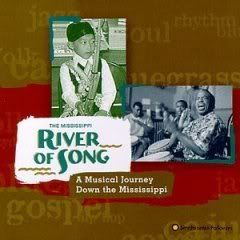
River Of Song - A Musical Journey Down The Mississippi

Image
This two-hour, 36 track, musical journey down the Mississippi from the headwaters to the delta captures the power and diversity of American music in the late 20th century. The music, recorded between 1995 and 1997 in small towns and large cities along the river, reflects centuries of interaction and experimentation along America’s great waterway.

This album offers a landmark presentation of contemporary musicians who have forged their styles out of the rich musical heritage found along the banks of the Mississippi. The combination of musical diversity and striking continuity found in this remarkable region, which slices through the center of the United States, is reflected by a range of artists including Soul Asylum, John Hartford, Chippewa Nation, Babes in Toyland, and the Mississippi Mass Choir.

"River of Song" is the first of a stunning multimedia project (including a four-part PBS documentary, public-radio interviews, and book) on which an array of artists under the tutelage of director-curator Anthony Seeger give voice and share the lore of America's great Mississippi River. The musical journey is parceled into quadrants: from the Northern headwaters, slicing through Twain's heartland; snaking down into the Deep South; wending through Louisiana, where music is king; and culminating at its life-giving, life-taking mouth, the Gulf of Mexico. Prolonged visitation occurs in musical meccas Minneapolis, St. Louis, Memphis, and New Orleans, showcasing the abundant talent and distinct sound of each locale. River of Song celebrates not only the landscapes through which the water traverses but also the colorful cultures that have sprung from and thrive at her banks: Native American, Dutch, African-American, Cajun, and subcultures and hybrids of youth and religion, including indie-rock hipsters, heartland country rockers, Delta blues men, Mexican Dixieland jazz, and both black and white gospel musics from deep believers of faith. Much like driving the Natchez Trace, the journey is profoundly American - deeply affecting in providing not only a sense of the present but of our very roots.

River Of Song, pt. 1
River Of Song, pt. 2
(192 kbps)

Mark Stewart And The Maffia - As the Veneer of Democracy Starts of Fade (1985)

For this album, Mark Stewart and producer Adrian Sherwood assembled the definitive Maffia lineup with the imported talents of drummer Keith LeBlanc, bassist Doug Wimbish, and guitarist Skip McDonald -- best known at that point for their work with the Sugarhill Gang and Grandmaster Flash. 

Opening with a robotic voice informing listeners they are about to be programmed to take their place in society, this is no rapper's delight but another glimpse into Stewart's shadowy world of political and sonic dissidence. LeBlanc, McDonald, and Wimbish contribute to a fearsome collision of industrial noise, abrasive electronics, and heavyweight funk that serves as a soundtrack to Stewart's lyrical obsessions: surveillance, the military-industrial complex, oppression, and economic inequity. 

Thanks to the hefty rhythm section, this album has a more overpowering, assaultive feel than its predecessor, as numbers like the ominous title track and "Passivecation Program" are built on punishing beats and mammoth basslines that batter the listener into submission. On top of that solid foundation, Stewart pastes together an unsettling collage of found sounds ranging from the call of a muezzin and media voices to barking dogs and simply barking mad noise. The air of confrontation is intensified as Stewart harasses listeners with distorted spoken and half-sung pronouncements and warnings. On the chaotic, disjointed "Bastards" -- harrowing enough with Stewart repeatedly shouting the title -- the menacing, sampled rasp of William Burroughs (who also appears fleetingly amid the manic hip-hop beats of "Pay It All Back") makes the proceedings all the more sinister. 

The album's standout is the dub-inflected "Hypnotised," which is infused with scratches, ocean-trawling bass, and shimmering melodic fragments. Uncompromising, challenging, and yet totally compelling, this album stands alongside "Learning to Cope with Cowardice" as one of Stewart's most innovative and important projects.  The CD reissue also contains the "Hypnotised"/"Dreamers"12".

"As The Veneer Of Democracy Starts To Fade" is one of the greatest records ever made and stands proudly next to The Pop Group's "Y" as one of the most innovative records of the last 25 years. Hear it as soon as you can, you'll never be the same." - Julian Cope


Tracklist:

1. "Passcivecation Program" 7:06
2. "Bastards" 5:26
3. "The Resistance of the Cell" 5:21
4. "[untitled]" 0:44
5. "As the Veneer of Democracy Starts to Fade" 5:37
6. "Pay It All Back" 4:29
7. "Hypnotized" 5:51
8. "Slave of Love" 4:46
9. "The Waiting Room" 4:18
10. "Hypnotized" (remix) 7:25
11. "Dreamers" 6:30

(320 kbps, cover art included)

The Chad Mitchell Trio And The Gatemen ‎– In Concert - Everybody's Listening (1964)

This is one of those concert albums that isn't. The Chad Mitchell Trio departed Colpix for Kapp in 1961, leaving Colpix with just four outtakes by the group in the can from its 1960 debut album, "The Chad Mitchell Trio Arrives". Cherry-picking two tracks ("I Do Adore Her" and "Sally Ann") from that album and adding in the four unreleased songs, the label then dubbed in audience noise to make a faux live set. This still didn't add up to an album, so six songs from a forgettable quartet known as the Gatemen were grafted on, again with fake crowd noise, and the end result is a disserve to all involved, especially those who actually purchased the record.

The CMT do shine on the Irving Burgie chestnut "I Do Adore Her," but the exact same recording had already been on Arrives (minus the badly dubbed crowd effects), and although the version here of "Vaya con Dios" is also pretty good, it only proves that some performances can't be ruined no matter what one does to them.

The Gatemen portion of the set is even worse, complete with subpar vocals, a piano player who seems to have wandered in from the nearest lounge bar, some misplaced electric guitar licks, and a drummer who appears to be auditioning for a surf band. - allmusic.com           

This album consists of selections from the Chad Mitchell Trio's studio sessions for Colpix from 1960, twelve of which were released on the "Arrives" album (CP/SCP-411). From those sessions remained four rejected songs ("Herbie Spear," "Devil Road," "Rodger Young," and "Vaya Con Dios"). With the trio signed to Kapp, Colpix did not have enough material to issue a second album, so they decided to build a "live" album around the four tunes, dubbing in poorly EQ'd audience applause, guitar tuning, and even coughing to simulate a live concert. In addition to the four unreleased tracks, Colpix added the released versions of "I Do Adore Her" and "Sally Ann" from the Arrives album to round out side one. As for the unreleased tracks, "Devil Road" is simply a reworked version of "Wayfaring Stranger" with new lyrics, while "Rodger Young" features a rare solo by original member Mike Pugh. "Vaya Con Dios" is actually a beautiful and tender rendition of the ballad made famous by Les Paul & Mary Ford. Side two of the album features an unknown folk quartet called the Gatemen singing songs that could have been sung by the Mitchell Trio (folk staples "Jesse James" and "Wabash Cannonball"). The problem is, these guys couldn't sing. In addition, the group made the unfortunate decision to include a piano and a ponderous rock & roll wannabe drummer in the group. It results in some very painful listening. On top of these abysmal performances, Colpix adds the same phony applause used on the Mitchell tracks. No clue is given as to the Gatemen's identity (it's just as well). A photo on the cover shows six teenagers sitting in what looks like a run-down bohemian apartment room. ~ Cary Ginell, Rovi

Tracklist
A1Chad Mitchell Trio, The                Herbie Spear2:01
A2Chad Mitchell Trio, TheDevil Road2:35
A3Chad Mitchell Trio, TheI Do Adore Her3:07
A4Chad Mitchell Trio, TheRodger Young2:32
A5Chad Mitchell Trio, TheSally Ann2:24
A6Chad Mitchell Trio, TheVaya Con Dios2:43
B1Gatemen, TheJesse James2:34
B2Gatemen, TheGreen Leaves Of Summer2:39
B3Gatemen, TheThe Klan2:13
B4Gatemen, The500 Miles2:53
B5Gatemen, TheWhat Have You Got To Show?2:45
B6Gatemen, TheWabash Cannonball2:20


The Chad Mitchell Trio And The Gatemen ‎– In Concert - Everybody's Listening (1964)
(256 kbps, cover art included)

Dienstag, 1. August 2023

The Weavers - Almanac (1961)


Given that the Weavers evolved out of the politically oriented Almanac Singers, and that this album was released during a period when Peter, Paul & Mary and other folk groups were reviving their songs with commercial success, calling it "The Weavers' Almanac" evoked their past in a newly fashionable present.

Having reached the best-seller charts twice the previous year, the group seemed on the verge of regaining its popularity, and this album must have been intended to foster that comeback. But though the performances were as effective as ever, this collection of songs, among them such stirring and topical works as the Depression-era standard "Brother, Can You Spare a Dime?," "Fight On," and "Which Side Are You On?," failed to return the group to its old prominence.

Erik Darling left the group, which carried on with Frank Hamilton, but by late 1963, following a last-gasp reunion concert, the Weavers were on their last legs. In retrospect, this is an enjoyable album, though it lacks the fervor of the Weavers' younger competitors of the day.


Tracklist:

A1 When The Stars Begin To Fall 3:14
A2 We're All Dodgin' 2:36
A3 Brother Can You Spare A Dime 2:38
A4 Jackhammer John 2:35
A5 A-Walking And-A-Talking 2:17
A6 Rally Round The Flag 2:16
B1 Fight On 2:40
B2 Bill 1:30
B3 Get Along Little Dogies 3:28
B4 True Religion 3:25
B5 Which Side Are You On 2:33
B6 Bye, Baby, Bye 2:23

The Weavers - Almanac (1961)
(vinyl rip, 192 kbps, front cover included)