Samstag, 21. Januar 2023

Crosby, Stills, Nash & Young ‎– Standing Ovation (1969)

"Standing Ovation" utilizes a brand new almost complete very good audience recording. There is an older complete tape source of the entire show that was released on the fan produced cdr "Bring Me Sadness". That source is described by one collector as “horrendous” that wouldn’t even appeal to a hardcore CSN&Y diehard. The two Neil Young tracks from the acoustic set, “Birds” and the rarely played “I’ve Loved Her So Long”, surfaced from a professional source on the fan produced compilation "A Perfect Echo". This new tape source comes very close to the stage, or perhaps even on stage, capturing the performance very well. It emphasizes the treble frequencies although the lower end isn’t absent either, capturing Young’s guitar in the electric set. The August 26th show at the Greek Theater was CSN&Y’s third ever performance after two shows in Chicago followed by their appearance at Woodstock.

The title "Standing Ovation" comes from Robert Hilburn’s review of the event for the Los Angeles Times. “Crosby, Stills, Nash and Young – pop music’s new supergroup-is starting its career at the top and is giving every indication of staying there….Its opening Monday night at the Greek Theater was a triumph of the first order as the group gave a staggering display of individual and collective talent…. But Monday’s ‘sold out’ sign and lengthy standing ovation were indications that Crosby Stills, Nash, and Young have lived up to, if not exceeded, all expectations…. CSNY is composed of David Crosby (an ex-Byrd), Steve Stills (part of the old Buffalo Springfield), Graham Nash (formerly of the Hollies), Neil Young (also an old Buffalo Springfield) plus Dallas Taylor on drums and Greg Reeves on electric bass….In the namesakes, CSNY has four strong writers, musicians and lead vocalists. One of the most impressive things about the group is its resulting versatility.

“With so much writing and performing talent, the group, unlike many current outfits, is not limited to a narrow musical path…. By the end of the evening, Crosby, Stills, Nash and Young, on such songs as ‘Wooden Ships’ and Young’s excellent ‘Sea of Madness,’ had moved a long way from the simple acoustic background and sweet harmony of ‘Suite: Judy Blue Eyes.’…In the process, they gave the Greek Theatre audience a generous sample of the strength and creativity of pop music’s newest supergroup.” Mainstream has done a good job in producing this tape. There is evidence of its being downloaded from the internet with slight swooshes of sound in the higher frequencies, but nothing to distract from the music. This tape is important enough to overlook such deficiencies and the warmth of the performance is enough to make this title an essential piece of the CSN&Y collection. (GS)

Tracklist:

Acoustic Set
1 Suite: Judy Blue Eyes
2 Blackbird
3 Helplessly Hoping
4 Guineverre
5 Lady Of The Island
6 Black Queen
7 Birds / I've Loved Her So Long
8 You Don't Have To Cry
9 So Begins The Task

Electric Set
10 Pre-Road Downs
11 Long Time Gone
12 Bluebird
13 Sea Of Madness
14 Wooden Ships
15 Down By The River


Crosby, Stills, Nash & Young ‎– Standing Ovation (1969)
(320 kbps, cover art included)

Crosby, Stills, Nash & Young - Live At Fillmore East

Crosby, Stills, Nash & Young made their much publicized debut in the summer of 1969. The high profile set at Woodstock was most well known, but they did a substantial amount of touring that summer and in Europe in January. Neil Young booked a solo tour with Crazy Horse early in 1970, and then CSN&Y reconvened for their second trip in the summer of 1970.

Deja Vu was released in March 1970 and beginning on May 12th in Denver, they played twenty-three shows through the middle of July. The six shows at the Fillmore East in New York from June 2nd to June 7th were the longest engagement, and perhaps only equaled by their two shows at the LA Forum later in the month in importance.

All these shows were recorded and filmed for possible official release. But the Los Angeles and Chicago shows were chosen for 4 Way Street, released in April 1971. While those shows were very tight, coming by the end of the tour, the New York shows are much more fun and loose.

This bootleg was recorded at the Fillmore East on June 3, 1970.

Tracklist:


1 Judy Blues Eyes 10:29
2 On The Way Home 4:17
3 Tell Me Why 4:31
4 Triad 6:18
5 Guineveve 5:38
6 Simple Man 3:55
7 The Man In The Mirror 3:42
8 Down By The River 6:38
9 Only Love Can Break Your Heart 3:22
10 Blue Bird 3:09
11 Black Queen 6:11
12 4+20 2:24
13 49 Byes Byes 2:01
14 For What It's Worth 2:00
15 America's Children 3:16
16 Love The One You're With 3:15


Crosby, Stills, Nash & Young - Live At Fillmore East
(192 kbps, cover art included)

David Crosby & Graham Nash: Whale & Fieldworkers Benefit 1974 (Bootleg, San Francisco, CA, Dec 14, 1974)

The credit for this one goes to bigozine2.com:

Wally Heider who recorded Crosby, Stills, Nash & Young at the Fillmore in June, 1970 which became the famous Four Way Street album, was again at the soundboard to record this show in San Francisco. Nothing was released till 1977, when a Crosby & Nash album called Live came out. That album was recorded during the duo’s tours from 1975 to 1977. This show is among the earliest of their professional recordings. It seems to have been edited for a live album but never released.

This was not the country-rock-pop of Loggins & Messina nor the folk-rock-pop of Simon & Garfunkel but soft rock with a conscience. Especially in that vein was Graham Nash’s Prison Song and Chicago. Not to be outdone, David Crosby contributes the angry What Are Their Names?, a song-dirge about accountability that leads into Chicago.

With Stills somewhat distracted and Neil Young tail-spinning into insular projects like On The Beach, these were the years when Crosby & Nash had star power and a real career. But whereas Simon & Garfunkel split over politics [apparently Simon was pissed that Garfunkel was not keen to include Cuba Si Nixon No on Bridge Over Troubled Waters] and Loggins & Messina had too big egos, Crosby & Nash were consumed by their own excesses or at least Crosby’s indulgence with chemicals.

By the end of the ‘70s, the duo or as a trio with Stills could be found at anti-war benefits, anti-nuclear benefits and such shows still holding on to their ideals and those familiar songs. Their solo careers took hiatus as they regrouped to release what can best be said are mediocre albums compared to the first two album as a group or as a duo. When they had stopped listening, they had also stopped creating.

All the happy songs are here in superb hi-fidelity, suitable for entertaining. Play loud. Nothing has been officially released.

- Professor Red

David Crosby & Graham Nash: Whale & Fieldworkers Benefit 1974 (Bootleg, San Francisco, CA, Dec 14, 1974)
(192 kbps, cover art included)

Freitag, 13. Januar 2023

John Renbourn – Faro Annie (1972)

Pentangle singer/guitarist John Renbourn often takes a folk-rock approach, and often investigates American folk songs, on Faro Annie, beginning with the traditional "White House Blues," a song about the 1901 assassination of President William McKinley. "Buffalo Skinners" is a song associated with Woody Guthrie that Renbourn gives an unusually calm treatment to, adding for the first but not the last time a background sitar part. "Kokomo Blues" is the first overtly folk-rock track, finding Renbourn joined by the Pentangle rhythm section of bassist Danny Thompson and drummer Terry Cox. 

The first song with a distinctly British derivation is "Willy O'Winsbury," but before long Renbourn is evoking Robert Johnson on "Come on in My Kitchen." That Delta blues is followed by "Country Blues," and then the original instrumental title tune. Throughout, Renbourn and his cohorts explore the various folk styles with delicacy and restraint; that's the British element coming through, and it gives an elegance to the material.


Tracklist:

A1 White House Blues 3:35
A2 Buffalo Skinners 3:37
A3 Kokomo Blues 3:54
A4 Little Sadie 3:16
A5 Shake Shake Mamma 3:33
B1 Willy O'Winsbury 5:39
B2 The Cuckoo 3:57
B3 Come On In My Kitchen 3:52
B4 Country Blues 3:36
B5 Faro Annie 3:25
B6 Back On The Road Again 3:12

(320 kbps, cover art included)

VA - History of Carnival: Christmas, Carnival, Calenda & Calypso from Trinidad 1933-1939 [Matchbox, 1991]

"History of Carnival: Christmas, Carnival, Calenda and Calypso from Trinidad, 1933-1939" is a collection of original 78rpm recordings released by Matchbox Records in 1991. 

The compilation was produced by John Cowley and Dick Spottswood who should be well-known to calypso fans as collectors, discographers and researchers of Trinidadian music in the latter part of the 20th century and into the 21st. 

They are responsible for other top-notch calypso collections released via Rounder, New Cross, and Heritage labels. 

This album draws together varying forms of Trinidadian song from the pre-WW2 era, considered the first golden age in the island's history of recorded music.


Tracklist:

01 - Attila the Hun - "History of carnival"
02 - Wilmoth Houdini - "Way down sobo"
03 - King Radio and the Tiger - "Millington"
04 - Attila the Hun - "Archie boulay"
05 - the Lion - "Hojoe"
06 - the Attila - "Zingue talala"
07 - John Buddy Williams & his Blue Rhythm Orchestra - "Barre-a-oh"
08 - Lord Invader - "Demasbar"
09 - King Radio - "Matilda"
10 - the Lion - "Buddy Abraham"
11 - the Caresser - "Madame khan"
12 - Al Philip iere Syncopators - "Play mass don't do me that"
13 - Lionel Belasco & his Orchestra - "Juliane"
14 - the Executor - "Christmas is a joyful day"
15 - the Lion - "Netty netty"
16 - Lord Beginner - "Christmas morning the rum had me yawning"

Sonntag, 8. Januar 2023

Hazel O´Connor - Sons & Lovers (1980)

"Sons & Lovers" was Hazel O'Connor's second album, released also in 1980. The album didn't have the same impact of its predecessor as it was felt like a rushed release hot on the heels of her first album.

However, that didn't stop the album from spawning memorable hits such as D-Days (#10 in the U.K.). This song was inspired by one trip Hazel did to a London night club where she met a lot of bizarre looking people.

The album follows pretty much the same line of her previous album, New Wave with intelligent lyrics and saxophones thrown in the songs, but it's worth a listen.


Tracklist:


D-Days 3:10
Waiting 2:33
Who Will Care? 3:18
Zoo 4:32
Gigolo 2:41
Do What You Do 4:36
Sons And Lovers 4:38
Glass Houses 3:19
Ain't It Funny 3:57
Danny Boy 2:30
Bye Bye 3:18
Time (Ain't On Our Side) 3:17


Hazel O´Connor  - Sons & Lovers (1980)
(320 kbps, cover art included)
Samstag, 7. Januar 2023

Swell Maps - International Rescue (1999)

Noisy and experimental, Britain's Swell Maps experienced little commercial success during the course of their chaotic career, but in hindsight they stand as one of the pivotal acts of the new wave: not only was the group an acknowledged inspiration to the likes of Sonic Youth and Pavement, but their alumni -- most notably brothers Nikki Sudden and Epic Soundtracks -- continued on as key players in the underground music community.

You'll have to be a pretty major Swell Maps fan to make heads or tails, at a glance, out of which songs on this 20-track compilation you may already have. It's all over the Swell map, including four songs that have never been on CD [including "Dresden Style (City Boys)," which was on a single]; three that have never been released anywhere; three "unreleased mixes"; and a few songs that appeared on U.K. singles ("Let's Build a Car," "Real Shocks," "Read About Seymour"). 

It doesn't really succeed as either a representative overview compilation or a rarities disc. Approached on its own terms -- which you might want to do if this happens to be the first, or only, Swell Maps album you get -- it's decent arty punk that's too monochromatic to sustain burning interest over the course of the lengthy program. It does have a heartier sense of joie de vivre than much U.K. punk/new wave of the period, particularly in the vocals.


Tracklist:
1 International Rescue 2:24
2 Real Shocks 2:16
3 Let's Build A Car 3:01
4 Black Velvet 1:59
5 Ammunition Train 3:30
6 Ripped & Torn 1:47
7 Secret Island 4:35
8 Read About Seymour 1:29
9 Get Down And Get With It 1:29
10 Spitfire Parade 3:11
11 New York 3:19
12 Forest Fire 3:02
13 Winter Rainbow 3:40
14 Dresden Style (City Boys) 2:30
15 Off The Beach (Spilling Coffee) 2:23
16 One Of The Crowd 2:21
17 Vertical Slum 1:14
18 H.A.K. 1:22
19 I Really Love You 2:13
20 Hey Johnny! Where's The Chewing Gum? 1:11

(320 kbps, cover art included)

Freitag, 6. Januar 2023

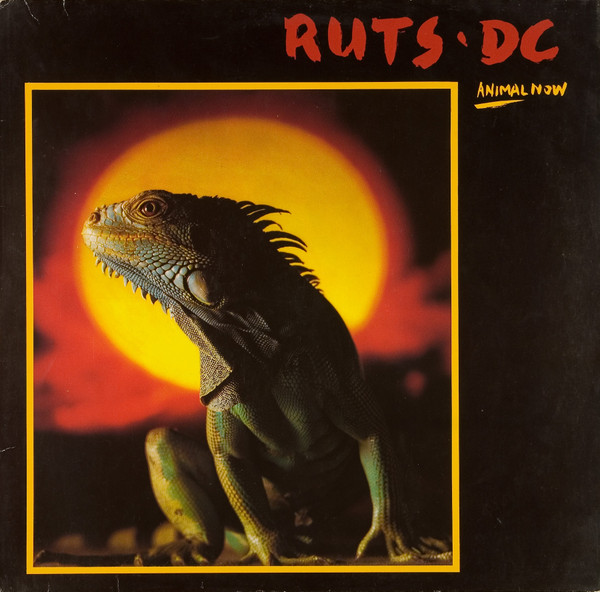
Ruts DC - Animal Now (1981)

While it’s impossible to envisage what The Ruts could have achieved had their career not been curtailed by singer Malcolm Owen’s tragic death from a heroin overdose in July 1980, it’s safe to say that the remaining trio’s subsequent recordings as Ruts DC (or Da Capo) have been significantly under-valued.

Originally released on Virgin in May 1981 and at long-last awarded CD status with detailed sleevenotes from music writer Alex Ogg, the band’s debut, Animal Now, initially copped a lot of critical flak, primarily due to bassist Segs Jennings taking over lead vocals. Yet while he couldn’t realistically compete with the charismatic Owen, that hasn’t prevented the album from growing in cult stature since.
The edgy Mirror Smashed, strident No Time To Kill and epic single Different View all sound like logical extensions of the classic Ruts sound of The Crack and aptly demonstrate why Hayes’ finest were always leagues ahead of the three-chord punk chancers.

Elsewhere, hints of 50s rockabilly (Walk Or Run), tense, atmospheric pop (Dangerous Minds) and even
avant-garde flecks (the atonal piano solo by sax/keyboard alumnus Gary Barnacle on Despondency) are hungrily absorbed. It is, however, the immaculate punky reggae militancy of Fools that points the way to the brilliant dubwise stylings of the second lost Ruts DC classic: 1982’s Mad Professor collaboration
Rhythm Collision. (from: https://recordcollectormag.com/)


Tracklist:

"Mirror Smashed" 3:27
"Dangerous Minds" 3:34
"Slow Down" 4:23
"Despondency" 3:48
"Different View" 4:01
"No Time To Kill" 4:37
"Fools" 6:34
"Walk Or Run" 3:28
"Parasites" 5:25

(320 kbps, cover art included)

Lokomotive Kreuzberg - Gesammelte Werke

Lokomotive Kreuzberg was a Berlin based polit-rock band, who were launched onto the scene in early 1972 with enthusiastic help from Floh De Cologne.

They played funky krautrock with a lot of folk rock included. Gong and Mother Gong is a very good reference. The music is mainly built around the lyrics and their message to the left wing scene. The band breaks out into gospel and Canterbury prog at the twenty minutes long "Mountain Town" epic.

This "best of" compilation was released in 1994 on the Pläne label.

Tracklist:

1. Frühmorgens (3:42)
2. Leise Sohlen (3:35)
3. Fette Jahre (5:34)
4. Come Back (2:44)
5. Verfassungslied (3:00)
6. Tempo Mann (4:03)
7. Hand in Hand im Park (3:51)
8. Hey Mr. Amerika (4:46)
9. (a) Mountain Town, (b) Mountain Town Song (20:35)
10. Requiem (3:17)

Lokomotive Kreuzberg - Gesammelte Werke
(320 kbps, cover art included)

Mittwoch, 4. Januar 2023

Creation Rebel - Historic Moments, Vol. 2 (1994)

"Historic Moments, Vol. 2" is little more than a bonus-tracked reissue of "Starship Africa", the 1978 DJ Superstar album that, unreleased at the time, was remixed and revamped for release in 1980. As such, it remains one of the most intriguing albums in the Adrian Sherwood catalog, not only because of the continuing hope that the original vocal takes might be released someday, but also because things don't get freakier than this. 

Comparisons with Tangerine Dream and the Grateful Dead long ago established Starship Africa as the dub world's answer to Dark Side of the Moon, a spaced-out suite that transports you to other worlds whether you want to go there or not; it comes, therefore, as something of a shock when the bonus tracks kick in, and earth reappears via three distinctly misplaced cuts from "Threat to Creation", plus "In I Father's House," a booming assault by the legendary Prince Far I, previously available only in Japan. 

Overcome those shocks, however, and every accolade poured onto the original "Starship Africa" remains as valid as it ever was. This truly is an album for the ages.


Tracklist:

1 Space Movement Section 1 4:58
2 Space Movement Section 2 5:14
3 Space Movement Section 3 4:31
4 Space Movement Section 4 3:17
5 Space Movement Section 5 0:55
6 Space Movement Section 6 8:50
7 Space Movement Section 7 4:07
8 Space Movement Section 8 4:13
9 Space Movement Section 9 4:31
10 Chemical Specialist 4:18
11 Threat To Creation 3:34
12 Last Sane Dream 3:21
13 In I Father's House 3:50

Tracks 1 to 9 originally released on the LP "Starship Africa".
Tracks 10 to 12 originally released on the LP "Threat To Creation".

Tracks 1-9 bore different titles when originally released on the album "Starship Africa."
Tracks 1-5 were entitled "Starship Africa Section <1-5>," and tracks 6-9 were entitled "Space Movement <1-4>.

Louis Armstrong - Swing Low Sweet Satchmo (1958)

"Swing Low Sweet Satchmo" is an unusual album in the Louis Armstrong canon - this collection of gospel songs, spirituals and homilies was the only religious album this determinedly secular musician recorded.
Backed by a gospel vocal group led by the celebrated jazz arranger Sy Oliver, Armstrong performs a variety of religious-themed favorites, including "Ezekiel Saw De Wheel" and "Didn't it Rain". There's also an affecting version of the traditional spiritual "Sometimes I Feel Like a Motherless Child".

Tracklist:

A1 Down By The Riverside
A2 Go Down Moses
A3 Swing Low, Sweet Chariot
A4 Rock My Soul
A5 Sometimes I Feel Like A Motherless Child
A6 On My Way
B1 Didn't It Rain
B2 Nobody Knows The Trouble I've Seen
B3 Ezekiel Saw The Wheel
B4 Shadrack
B5 Jonah And The Whale
B6 This Train

Louis Armstrong - Swing Low Sweet Satchmo (1958)
(320 kbps, cover art included)

Freitag, 30. Dezember 2022

Creation Rebel - Historic Moments, Vol. 1 (1994)

Long out of print, nearly all the crucial recordings of Creation Rebel are now readily available thanks to CD technology. 

Both volumes are absolutely essential dub records, seductive and compelling play after play after play. Sherwood's avant-garde tendencies were in the early stages of development here, and he adds a daring bravado to the insistent, undeniable groove that Creation Rebel lays down.

Volume 1 is a little more song-oriented; Volume 2 is a bit more adventurous (and slightly better). Both of these are essential for any reggae fan's library. However, those interested in experimentation will walk away from this experience with their lives changed for the better.


Tracklist:

1 Dub From Creation 4:18
2 Basic Princples 4:06
3 Rebel Rouser 3:11
4 Creation In A Iration 2:53
5 Mirage 3:35
6 Liberation 3:00
7 Rising Star 4:24
8 Vision Of Creation 4:55
9 Rebel Vibrations 5:30
10 Jungle Affair 4:26
11 Hunger And Strife 5:03
12 Ian Smith Rock (Dub) 3:48
13 Diverse Doctor 4:41
14 Mountain Melody 5:15
15 Black Lion 2:15
16 Doctors Remedy 3:23

(192 kbps, cover art included)

Donny Hathaway - Everything Is Everything (1970)

Already a respected arranger and pianist who'd contributed to dozens of records (by artists ranging from the Impressions to Carla Thomas to Woody Herman), with this debut LP Donny Hathaway revealed yet another facet of his genius - his smoky, pleading voice, one of the best to ever grace a soul record.

"Everything Is Everything" sounded like nothing before it, based in smooth uptown soul but boasting a set of excellent, open-ended arrangements gained from Hathaway's background in classical and gospel music. (Before going to Howard University in 1964, his knowledge of popular music was practically non-existent.) After gaining a contract with Atco through King Curtis, Hathaway wrote and recorded during 1969 and 1970 with friends including drummer Ric Powell and guitarist Phil Upchurch, both of whom lent a grooving feel to the album that Hathaway may not have been able to summon on his own (check out Upchurch's unforgettable bassline on the opener, "Voices Inside (Everything Is Everything)").

All of the musical brilliance on display, though, is merely the framework for Hathaway's rich, emotive voice, testifying to the power of love and religion with few, if any, concessions to pop music. Like none other, he gets to the raw, churchy emotion underlying Ray Charles' "I Believe to My Soul" and Nina Simone's "To Be Young, Gifted and Black," the former with a call-and-response horn chart and his own glorious vocal, the latter with his own organ lines. "Thank You Master (For My Soul)" brings the Stax horns onto sanctified ground, while Hathaway praises God and sneaks in an excellent piano solo. Everything Is Everything was one of the first soul records to comment directly on an unstable period; "Tryin' Times" speaks to the importance of peace and community with an earthy groove, while the most familiar track here, a swinging jam known as "The Ghetto," places listeners right in the middle of urban America. Donny Hathaway's debut introduced a brilliant talent into the world of soul, one who promised to take R&B farther than it had been taken since Ray Charles debuted on Atlantic.

Tracklist:
Voices Inside (Everything Is Everything) 3:28  
Je Vous Aime (I Love You) 3:31
I Believe To My Soul 3:51
Misty 3:37
Sugar Lee 4:03
Tryin' Times 3:13
Thank You Master (For My Soul) 5:50
The Ghetto 6:57
To Be Young, Gifted And Black 6:45
A Dream (bonus track)                              4:14

Donny Hathaway - Everything Is Everything (1970)
(256 kbps, cover art included)

Dienstag, 20. Dezember 2022

The Fun Boy Three With Bananarama – It Aint What You Do.... /Just Do It (1982, 12")

Terry Hall, the lead singer of the Specials and a former member of Fun Boy Three and the Colourfield, has died aged 63, his bandmates in the Specials have confirmed.

“It is with great sadness that we announce the passing, following a brief illness, of Terry, our beautiful friend, brother and one of the most brilliant singers, songwriters and lyricists this country has ever produced,” the band tweeted.

“Terry was a wonderful husband and father and one of the kindest, funniest, and most genuine of souls. His music and his performances encapsulated the very essence of life… the joy, the pain, the humour, the fight for justice, but mostly the love.” Rest in peace!


"'Tain't What You Do (It's the Way That You Do It)" is a song written by jazz musicians Melvin "Sy" Oliver and James "Trummy" Young. It was first recorded in 1939 by Jimmie Lunceford, Harry James, and Ella Fitzgerald, and again the same year by Nat Gonella and His Georgians. The "shim sham" is often danced to the Lunceford recording of this song.

The jazz tune was transformed into a pop/new wave song with ska elements in 1982. With the title slightly altered to "It Ain't What You Do....", it was recorded by Fun Boy Three and Bananarama, and was included on the former's self-titled debut album, but it was not available on a Bananarama album until 1988's Greatest Hits Collection.

Terry Hall of Fun Boy Three owned a copy of Bananarama's previous single "Aie a Mwana", and after seeing an article about the trio in The Face, he decided he wanted them to sing background vocals on the song, solely based on the fact that he liked their look. "It Ain't What You Do...." became a big hit in the UK, climbing to number four in the UK Singles Chart, and achieving a Silver certification from the British Phonographic Industry. The success of the single also prompted Bananarama to return the favour and have Fun Boy Three sing on their next single, "Really Saying Something".


Tracklist:

A It Ain't What You Do.... / Just Do It 5:55
B The "Funrama" Theme 5:55

(320 kbps, cover art included)

Mittwoch, 14. Dezember 2022

Grethe Weiser – Das Lottchen (Grethe Weiser Spricht Kurt Tucholsky) (1961)

“This small tough person does not need a monument. It already stands,” wrote the critic Friedrich Luft after her death in 1970. Grethe Weiser was a highly talented comedian, whose greatest genius was her verbal eloquence. With her sassy, offhanded quick-wittedness, she was able to elicit thunderous applause from her audiences. Her film and stage partners praised her great discipline in the craft and her helpfulness in general. It was also very important to her personally not to steal anyone else’s show.

Mathilde Ella Dorothea Nowka, the daughter of well-to-do entrepreneurs, was born in Hanover and raised in Dresden, where she attended secondary school for young ladies. At the age of eighteen she engaged in a hunger strike to win her parents' permission to marry the Jewish-Austrian sugar producer Josef Weiser. He was a wealthy man and was able to rent a mansion for his wife in Dresden, where she gave birth to their son Günther in 1922. In the course of the depression, however, Josef lost his fortune. He then tried to establish a new livelihood in Berlin through various projects, among them the management of the Cabaret Charlott, where Grethe rehearsed for her first performances.

By the time her marriage had deteriorated on account of Josef’s many affairs, she had already found her calling as an actress and cabaret artist. From 1929 on, she played important supporting roles in movies, portraying cooks and other household personnel, and dazzled her fans with her cunningly sharp tongue. She experienced her greatest movie successes in 1937 with her roles in Die Göttliche Jette (The Divine Jette) and Mädchen für Alles (Maid-of-All-Work).

During the second world war, Weiser was not only commissioned for theater duty at the front, but also acted in over thirty movies. For more favorable career opportunities membership in the Theater Guild of the German Reich was required, and for this Grethe Weiser would have had to join the Nazi Party (NSDAP), which, in turn, would have meant renouncing her husband and child. She refused to do this, however, sent her son to boarding school in England (Josef had already fled to the Netherlands), and was miraculously left in peace. Her comedy, evidently, was indispensable in time of war.

In 1948 Grethe met Ida Ehre, proprietor of Hamburg’s Studio Theatre Kammerspiele, who offered her the leading role in Das Kuckucksei (The Cuckoo’s Egg). The premiere brought Weiser tremendous ovations, and she frequently went on tour with this piece. Cooperation with Ida Ehre on Hauptmann’s Der Biberpelz (The Beaver Coat)where she played Mother Wolffen, deepened their contact, which eventually developed into a close friendship.

In the movies made during the era of the “economic miracle” following the war, Grethe embodied the type of the Berlinwoman, known for her big heart and even bigger mouth, who was nobody’s fool and nobody's victim. In 1968 she was given the Medal of Honour of the Federal Republic of Germany. An Inter-City Express train on the route between Frankfurt and Hanover has also been named after her, as well as a 100-Pfennig postage stamp from the permanent series “Women in German History”, which was dedicated to her in the year 2000.

When Weiser was killed in a car accident together with her second husband, the movie producer Hermann Schwerin, Ida Ehre wrote in an obituary, “You were one of steadfast loyalty. Whomever you locked in your heart was anchored there firmly … you will always be within me, dear Grethe."

- from: https://www.fembio.org/


Tracklist:
01. Lottchen beichtet 1 Geliebten 
02. Es reut das Lottchen 
03. Lottchen besucht einen tragischen Film


Grethe Weiser – Das Lottchen (Grethe Weiser Spricht Kurt Tucholsky) (1961)
(ca. 192 kbps, cover art included)

Mittwoch, 7. Dezember 2022

Silvio Rodríguez – Memorias (1987)

The tender balladry offsets the hard-edged, politically slanted lyrics of Silvio Rodriguez. 
A spearhead from the nueva trova  design of nueva cancion, Rodriguez masterfully mixes romantic music with protest materials condemning colonization as well as the tyranny that swept through Latin America in the past due ’60s and early ’70s.

Inspired by French chanson, Rodriguez recorded his debut album in 1976. Although his early albums showcased his single classical guitar playing and silken vocals, Rodriguez progressively integrated the accompaniment of electrical instrumentation. 


Tracklist:

Madre [Silvio Rodríguez] (1:55)
El papalote [Silvio Rodríguez] (5:22)
Canción de la nueva escuela [Silvio Rodríguez] (3:34)
Fusil contra fusil [Silvio Rodríguez] (3:12)
El viejo obrero [Silvio Rodríguez] (3:26)
Preludio de Girón [Silvio Rodríguez] (4:26)
Si tengo un hermano [Silvio Rodríguez] (2:43)
Supón [Silvio Rodríguez] (5:04)
Para llegar al cielo [Silvio Rodríguez] (5:31)
La oveja negra [Silvio Rodríguez] (2:18)
El día en que voy a partir [Silvio Rodríguez] (3:04)
Discurso fúnebre [Silvio Rodríguez] (4:05)
El hombre de Maisinicú [Silvio Rodríguez] (5:48)
Ríe y bosteza [Silvio Rodríguez] (1:24)

Silvio Rodríguez – Memorias (1987)
(192 kbps, cover art included)

Sonntag, 4. Dezember 2022

Nico - In Tokyo (1982)

There are more live records of Nico performing in the 1980s than there should be, with inevitable over-repetition of some of the same songs from concert to concert. Should "Live in Tokyo" be one of the one or two such discs Nico fans want in their collection, though, it's not a bad one to have. 

According to the liner notes by Nico biographer Dick Witts, it could be the last Nico concert to have been issued on CD, recorded in Tokyo on April 11, 1986, just a couple of years before her death. The sound quality is reasonable (though not outstanding), and despite her well-founded reputation as a heavy substance abuser, her voice and performance are pretty reasonable as well. At times the songs are over-arranged, as on the thudding near-disco drumbeat of "My Heart Is Empty" and the cold synth-goth ambience of "Purple Lips." On some other tracks, though, a sparse backup (sometimes dominated by Nico's own harmonium) suits the mood better. Some of her old standbys are here, of course -- "Janitor of Lunacy," "My Funny Valentine," a cover of the Doors' "The End," and the Velvet Underground warhorses "All Tomorrow's Parties" (done entirely a cappella) and "Femme Fatale." There are a good number of less familiar items too, including a few from her final albums, like "Das Lied vom einsamen Mädchen."


Tracklist:

My Heart Is Empty 5:21
Purple Lips 4:22
Tananore 4:19
Janitor Of Lunacy 4:05
You Forget To Answer 3:08
60/40 6:36
My Funny Valentine 4:01
All Tomorrow's Parties 2:55
Das Lied vom einsamen Mädchen 6:28
10 Femme Fatale 4:02
11 The End 9:27

(320 kbps, cover art included)

Samstag, 3. Dezember 2022

Eric Andersen - Blue River (1972)

With mid-'60s gems like Violets of Dawn, Thirsty Boots, and Close the Door Lightly, Eric Andersen became the archetypal, literate romantic before the likes of James Taylor and Jackson Browne had even cut their first records, but at the same time seemed to lack direction from album to album. With his eighth album, Blue River, recorded in Nashville in 1972, he found the perfect setting for his gentle, poetic songs. After nearly seven years of dabbling in folk, folk-rock, pop, and country, Andersen found a smart, sympathetic ear in producer Norbert Putnam. Putnam, whose production here is rarely extraneous, utilizes subtle touches of bass, drums, accordion, and organ along with Andersen's own guitar, piano, and harmonica to frame the material. The record, Andersen's first effort for Columbia, also featured his best collection of tunes to date.

Blue River, with its themes of uncertainty and struggle, is by no means a casual record, although songs such as the bittersweet "Is It Really Love at All" and the title track, featuring Joni Mitchell's ethereal supporting vocal, will draw the listener in with their sheer beauty. Andersen, then in his late twenties, was dealing with questions of love, life, and desire with a maturity matched only by a handful of songwriters at the time. Never overly precious or maudlin, nearly every cut resonates with eloquence and grace. Although continuing to grow as a writer in the years to come, Blue River remains Eric Andersen's masterwork and one of the true classics of the genre.


Tracklist:


"Is It Really Love at All" (Andersen) – 5:21
"Pearl's Goodtime Blues" (Andersen) – 2:21
"Wind and Sand" (Andersen) – 4:30
"Faithful" (Andersen) – 3:15
"Blue River" (Andersen) – 4:46
"Florentine" (Andersen) – 3:31
"Sheila" (Andersen) – 4:37
"More Often Than Not" (David Wiffen) – 4:52
"Round the Bend" (Andersen) – 5:38
"Come To My Bedside, My Darlin'" (Andersen) - 4:58 ~*
"Why Don't You Love Me" (Hank Williams) - 2:54 ~*

~* = Bonus Track on CD Release (recorded during album sessions)

Eric Andersen - Blue River (1972)
(320 kbps, cover art included)

Freitag, 2. Dezember 2022

Gil Scott-Heron & Brian Jackson – From South Africa To South Carolina (1976)

The collaboration between Gil Scott-Heron and Brian Jackson was now a formal one, as they were issuing albums as a team.

This was their second duo project to make the pop charts, and it included anti-nuclear and anti-apartheid themes, plus less political, more autobiographical/reflective material like "Summer of '42," "Beginnings (The First Minute of a New Day)," and "Fell Together."

Scott-Heron was now a campus and movement hero, and Jackson's production and arranging savvy helped make his albums as arresting musically as they were lyrically.

Tracklist:
Johannesburg4:47
A Toast To The People5:45
The Summer Of '424:38
Beginnings (The First Minute Of A New Day)5:36
South Carolina (Barnwell)4:33
Essex9:19
Fell Together4:26
A Lovely Day3:25

Gil Scott-Heron & Brian Jackson - From South Africa To South Carolina
(320 kbps, cover art included)

Nina Simone - It Is Finished (1974)

"It Is Finished" is Nina’s farewell to militancy, to her record label and to America. Fittingly, there are backward glances; an affectionate homage to Bill “Bojangles” Robinson, an earlier black hero, and a dedication to Bessie Smith, with the sexy "Sugar In My Bowl". "The Pusher", an unsparing account of the devastation wreaked by drugs, makes clear why escape was necessary.

Having spent fifteen years running, it was time for Nina to relax and take stock. She moved to Barbados in 1974, and subsequently lived in Liberia. The role of freedom fighter had broken down in the face of social and personal problems. Nothing daunted, Simone reinvented herself as the Obeah Woman.

The African-rooted, classically trained pianist freely moved between ‘civilization’ and ‘savagery’ (both are tricky concepts and need those inverted commas). The dark and fearful "Dambala" visits a place beyond death and reveals the secrets that only the "Obeah Woman" knows.

"It Is Finished" is a good live recording of Nina in 1974 and definitively recommended to any Nina Simone fan (and everybody should be IMO), as pretty much every live album I've heard from her.


Tracklist:
The Pusher 5:12
Com' By H'Yere - Good Lord 2:55
Funkier Than A Mosquito's Tweeter 5:21
Mr. Bojangles 5:21
I Want A Little Sugar In My Bowl 5:54
Dambala 6:53
Let It Be Me 3:35
Obeah Woman 6:17

(192 kbps, cover art included)