Dienstag, 18. Februar 2025

Art Bears - The World As It Is Today (1981)

Art Bears were a warm and wonderful avant-garde band consisting of Fred Frith, Chris Cutler, and vocalist extraordinaire Dagmar Krause. Frith and Cutler were longtime members of the seminal English radical political avant-garde art rock band Henry Cow, while Krause sang primarily with the fine German band Slapp Happy and in Henry Cow's latter years. The Art Bears were intended as a short-term project, but, even so, their three-year existence resulted in three excellent albums that relied more on shorter, more traditional, almost pop-oriented song forms than huge, complex musical and lyrical extrapolations. The political tinge of the Henry Cow years never went away, and it was unsurprising that Marxist rhetoric and anti-capitalist diatribes formed much of band's lyrical firmament.

If you thought Henry Cow was a pretty political band to start with, you may be even more taken aback by the Art Bears, which was put together following Henry Cow's demise by former Cows Chris Cutler (percussion), Fred Frith (guitar, violin), and Dagmar Krause (voice).

On "The World As It Is Today" and its predecessor, "Winter Songs", the Art Bears move away from the long-form art rock of Henry Cow and get much, much more politically explicit: song titles like "The Song of the Dignity of Labour Under Capital" and "The Song of Investment Capital Overseas" almost soundlike Monty Python gags today, but if any humor was intended it was clearly meant to be mordant.

Frankly, the lyrics are so overwrought and portentous that it's hard to take them seriously. But the music is something else again. Cutler and Frith are natural collaborators; Cutler's drumming always rides a very fine line between the scattershot and the funky, while Frith bounces his horror-show guitar noise and carnival piano off of Cutler's grooves with manic abandon and fearsome inventiveness. And Krause's singing is just as inventive; she whoops, croons and screams her way through the density of Cutler's lyrics without a hesitation or misstep. Easy listening it isn't, but it's sure worth hearing. Frith fans, in particular, should consider this album a must-own.

Tracklist
A1The Song Of Investment Capital Overseas2:37
A2Truth2:56
A3Freedom3:24
A4(Armed) Peace2:30
A5Civilisation4:39
B1Democracy2:22
B2The Song Of The Martyrs4:08
B3Law0:50
B4The Song Of The Monopolists1:48
B5The Song Of The Dignity Of Labour Under Capital2:27
B6Albion, Awake!4:02

Art Bears - The World As It Is Today (1981)
(320 kbps, cover art included)

Montag, 17. Februar 2025

Atahualpa Yupanqui - Lo Mejor De

The roots of nueva canción trace to the late 1950s and early ’60s, a notably restive era in Latin American history. Many countries were saddled with ineffective or authoritarian governments, and the gap between the wealthy and the impoverished was widening. Moreover, European and North American cultural influence was becoming increasingly palpable, with musical tastes in particular molded to a significant degree by the commercial-music industry of North America. In that milieu two notable singer-songwriters in neighbouring countries embarked on crusades to reclaim what they perceived as the crumbling social and cultural integrity of their homelands: Violeta Parra in Chile and Atahualpa Yupanqui in Argentina.

Much of the work of Parra and Yupanqui involved collecting old songs from the countryside and reworking - or rejuvenating - them to become “new songs” in a more contemporary, broadly accessible format. Parra commonly cast her song in well-established local poetic forms, and, perhaps most significant, she introduced Andean instruments into the accompanying ensemble. Meanwhile, Yupanqui’s semisung lyrics, intoned atop expressive guitar playing, vividly evoked the hardships of life in the Andes. By developing and promoting a body of popular songs that were grounded in local traditions and that addressed the experiences and concerns of ordinary people, both Parra and Yupanqui helped democratize music in their countries; their songs spoke both to and for the populace.


Tracklist:

1Los Ejes De Mi Carreta3:00
2La Copla4:55
3La Olvidada2:10
4La Tarde4:00
5El Poeta3:00
6Malambo3:25
7A La Noche La Hizo Dios3:30
8El Pampino4:10
9Paisaje Con Nieve4:50
10El Aromo4:00
11El Alazán3:19
12El Promesante3:20
13Le Tengo Rabia Al Silencio3:02
14Guitarra Dímelo Tú2:54
15Camino Del Indio3:02
16Trabajo, Quiero Trabajo2:54


Atahualpa Yupanqui - Lo Mejor De
(256 kbps, cover art included)

Sonntag, 16. Februar 2025

Alice Coltrane - Journey In Satchidananda (1970)

Alice Coltrane's landmark "Journey to Satchidananda" reveals just how far the pianist and widow of John Coltrane had come in the three years after his death. The compositions here are wildly open and droning figures built on whole tones and minor modes. And while it's true that one can definitely hear her late husband's influence on this music, she wouldn't have had it any other way.

Pharoah Sanders' playing on the title cut, "Shiva-Loka," and "Isis and Osiris" (which also features the Vishnu Wood on oud and Charlie Haden on bass) is gloriously restrained and melodic. Coltrane's harp playing, too, is an element of tonal expansion as much as it is a modal and melodic device. With a tamboura player, Cecil McBee on bass, Rashied Ali on drums, and Majid Shabazz on bells and tambourine, tracks such as "Stopover Bombay" and the D-minor, modally drenched "Something About John Coltrane" become an exercise in truly Eastern blues improvisation. Sanders plays soprano exclusively, and the interplay between it and Coltrane's piano and harp is mesmerizing.

With the drone factor supplied either by the tamboura or the oud, the elongation of line and extended duration of intervallic exploration is wondrous. The depths to which these blues are played reveal their roots in African antiquity more fully than any jazz or blues music on record, a tenet that exists today, decades after the fact. One last note, the "Isis and Osiris" track, which was recorded live at the Village Gate, features some of the most intense bass and drum interplay - as it exists between Haden and Ali - in the history of vanguard jazz. Truly, this is a remarkable album, and necessary for anyone interested in the development of modal and experimental jazz. It's also remarkably accessible.

Alice Coltrane - Journey In Satchidananda (1970)
(320 kbps, cover art included)


Tracklist:


A1 Journey In Satchidananda 6:33
A2 Shiva-Loka 6:33
A3 Stopover Bombay 2:50

B1 Something About John Coltrane 10:40
B2 Isis And Osiris 11:32


Samstag, 15. Februar 2025

Atahualpa Yupanqui - Camino Del Indio (1942-1944)


Argentinean folk icon Atahualpa Yupanqui became one of the most valuable treasures for the local culture. As a child living in the small town of Roca, province of Buenos Aires, Héctor Roberto Chavero was seduced by traditional music, especially by the touching sound of the acoustic guitar.
After taking violin lessons, the young man began learning how to play guitar, having musician Bautista Almirón as his teacher. For many years, Atahualpa Yupanqui traveled around his native country, singing folk tunes and working as muleteer, delivering telegrams, and even working as a journalist for a Rosario newspaper.
 
In the late '30s, the artist started recording songs, making his debut as a writer in 1941 with Piedra Sola, later writing a famous novel called Cerro Bajo. In 1949, the singer/songwriter went on tour around Europe for the first time, including performances with France's Edith Piaf. During the following decades Atahualpa Yupanqui achieved an impressive amount of national and international recognition, becoming an essential artist, a distinguished Latin American troubadour, and influencing many prominent musicians and Argentinean folk groups. Atahualpa Yupanqui passed away in France in May, 1992.                

Atahualpa Yupanqui - Camino Del Indio (1942-1944)
(192 kbps, cover art included)

Tracklist:

1.: Camino Del Indio 2.: Malambo 3.: Viento Viento 4.: Una Cancion En La Montana 5.: Camino En Los Valles 6.: El Kachorro 7.: Piedra Y Camino 8.: Vidala Del Silencio 9.: Me Voy 10.: Huajra 11.: Carguita De Tola 12.: La Viajerita

Freitag, 14. Februar 2025

Inti-Illimani - Chile Resistencia (1977)

The power and resiliency of artists committed to profound social change resound over time and across natural and human-created borders. The music of the Nueva Canción is a testament to how the musical expressions of that commitment can bridge decades and span a hemisphere.

"Chile Resistencia" is the sixths album by Inti-Illimani. It was recorded at Sciascia Sound Studios in December 1976 - January 1977.        

Tracklist:

A1Chile Resistencia2:17
A2Luchin3:00
A3Creemos El Hombre Nuevo2:35
A4Naciste De Los Leñadores5:23
A5Todas Las Lluvias2:49
B1America Novia Mia3:25
B2A Luis Emilio Recabarren2:32
B3No Nos Someteran2:28
B4Juanito Laguna Remonta El Barrilete4:55
B5Alborada Vendrà2:42

Inti-Illimani - Chile Resistencia (1977)
(192 kbps, cover art included)

Donnerstag, 13. Februar 2025

Rebel Soca - When The Time Comes

Photobucket
Soca? Isn´t that the ultimate party music? If you close your eyes, you may see a dancefloor teeming with revelers who, hands in the air, gyrate ecstatically to the liquid pulse generated by a throbbing, hypnotic bass and on-the-four bass drum countered with off-center percussion accents. Racheting rhythm guitar and stabbing horns supercharge the beat even further, making hip-shaking, belly-rolling, waist-winding almost an involuntary act. But there is even more...

Literally, the term "soca" abbreviates "soul calypso" and came into currency during the 1970´s when calypso was streamlined in response to the disco-dance juggernaut spreading over the world. Calypso, of course, has had a long and venerable history in the Caribbean, with variants in nearly all English-speaking and some French-speaking islands. One can easily trace its origins to the 18th century but its roots stretch back to Africa. In many West African societies singers and poets have traditionaly been not only historians but also mouthpieces for the people. They speak, obliquely, through satire and parables and commentary on everyday events, to the leaders, who ignore such criticism and advice at their peril. In contrast to the smiling, tourist-pleasing image propaged during the 50s and 60s, the business of being a calypsonian was serious business. Although soca lyrics tend to be "party-hearty" celebrations of love and life, a significant percentage deal with more serious issues; calypso´s tradition of social commentary remains vital with today´s "Rebel Soca". A minority of culturally-conscious soca artist have adopted a pan-african perspecitve, incorporating elements of reggae, african music and other caribbean styles into their soca. "Rebel Soca" brings together some of the finest conscious soca tracks of the 70s and 80s which combine unbeatable dance rhythms and some of the sharpest political lyrics in world pop. Often their lyrics are confrontatinal, politically-oriented commentary - a focus for the concerns of oppressed people.


Tracklist:

Side One

Afrika is Burning – Safi Abdullah
Spring Garden in Fire – Ras Iley
What About – Baron
Ring De Bell – Bro Resistance

Side Two

Hard Hard Hard – Black Stalin
When De Time Comes – Nelson
Can’t Find Me Brother – Red Plastic Bag
War Mongers – Johnny King


Rebel Soca - When The Time Comes
(mp3, 192 kbps, ca. 69 MB)

Mittwoch, 12. Februar 2025

Rolando Alarcón - Canciones de la Resistencia y de la Guerra Civil Española

La Nueva Canción Chilena (New Chilean Song) is the musical voice of a social/political movement that lived in Chile in the 1960s and early 70s. The movement championed labor organization, land reform, anti-racism, and anti-imperialism. It supported the North Vietnamese in their struggle against the U.S.

Pinochet and the Fascist military junta seized power in Chile on Sept. 11, 1973. The New Chilean Song movement (along with most leftist political and social organizations) was destroyed, and its leaders murdered. The CIA and other U.S. agencies were heavily involved in installing Pinochet and keeping him in power. His thugs learned torture techniques at the U.S.-sponsored School of Americas.

Rolando Alarcón was a Chilean singer/songwriter of the 60s and early 70s, being a part of La Nueva Canción Chilena.
Alarcón's lyrics are romantic, humanist, patriotic, profound and beautiful. His music blends a strummed-guitar folk sound with the drums and panpipes of indigenous Andean music, and the harmony is fresh and creative. The overall sound is unique.

Alarcón died in 1973. In an interview, Patricio Manns says that Alarcón suffered an internal hemorrhage and was taken to a first-aid station instead of a hospital, that the doctors there refused to operate on him because they were enemies of Allende, and that he died after five days. This was about 6 months before the Pinochet coup. (A relative of Alarcón says this story is apocryphal: that Alarcón was in Chañarall and had a bleeding ulcer, that he travelled to Santiago, was admitted to a hospital, and died on the operating table.)

This is a compilation of songs referring to the spanish civil war and the anti-fascist resistance.


Tracklisting:

1. El Ejercito del Ebro
2. Si Me Quieres Escribir
3. Puente de los Franceses
4. Yo Me Subí a un Pino Verde
5. No Hay Quien Pueda
6. Cancion de Bourg Madame
7. Ya se fue el Verano
8. Nubes de Esperanza
9. En España las Flores
10. Muerte en la Catedral
11. Que Culpa Tiene el Tomate

Rolando Alarcon - Canciones de la Resistencia y de la Guerra Civil Espanola
(128 kbps, front cover included)

Thanks to http://setiweb.ssl.berkeley.edu/~davea/index.php for the background information.

Dienstag, 11. Februar 2025

Art Bears - Winter Songs

Finding distribution on the Residents' Ralph Records label, the Art Bears' second album consists of 12 songs of various tensions: rest vs. speed, improv vs. pulse, space vs. density, Dagmar Kraus's vocals vs. everyone else.

As usual, Chris Cutler's lyrics tell political allegories through medieval-tinged stories: slaves, castles, and wheels of fortune (and industry) dominate. Fred Frith explores discordance through his guitar, and European folk figures through his always enjoyable violin.

Though not as confrontational as their other work, the centerpiece has to be the frantic "Rats and Monkeys" with three minutes of teeth-gritting, out-of-control insanity as all three players are plugged into a wall outlet and let rip. A guaranteed lease breaker if played often enough.


Tracklist:
A1The Bath Of Stars
A2First Things First
A3Gold
A4The Summer Wheel
A5The Slave
A6The Hermit
A7Rats And Monkeys
B1The Skeleton
B2The Winter Wheel
B3Man And Boy
B4Winter / War
B5Force
B63 Figures
B73 Wheels

Art Bears - Winter Songs
(320 kbps, cover art included)

Montag, 10. Februar 2025

Sun Ra - Space Is The Place (1973)

"Space Is the Place" provides an excellent introduction to Sun Ra's vast and free-form jazz catalog. It is a wonderful 1972 recording with the 'definitive' version of the title track, and some very nice shorter pieces too.

Typical of many Sun Ra recordings, the program is varied; earthbound songs, like the swing number "Images" and Egyptian exotica piece "Discipline," fit right in with more space-age cuts, like the tumultuous "Sea of Sounds" and the humorous "Rocket Number Nine." Sun Ra fuses many of these styles on the sprawling title cut, as interlocking harmonies, African percussion, manic synthesizer lines, and joyous ensemble blowing all jell into some sort of church revival of the cosmos.

Throughout the recording, Sun Ra displays his typically wide-ranging talents on space organ and piano, reed players John Gilmore and Marshall Allen contribute incisive and intense solos, and June Tyson masterfully leads the Space Ethnic Voices on dreamy vocal flights. This is a fine recording and a must for Sun Ra fans. 

It is impossible, given the breadth and depth of Ra's work, as well as the fact that most of the albums which he recorded are out-of-print and owned only by a select few collectors, to attempt to trace Ra's career with any thoroughness in less than a hundred pages or so. You find some overview to Sun Ra's life and music on http://www.furious.com/perfect/sunra.html and an interview with John F. Szwed about his superb Sun Ra biography "Space Is The Place" on http://www.furious.com/Perfect/sunra2.html.

Tracklist:

A Space Is The Place
Baritone Saxophone – Danny Thompson* Bass – Pat Patrick Bass Clarinet – Eloe Omoe Organ [Space] – Sun Ra Vocals [Space Ethnic] – Akh Tal Ebah, Cheryl Banks, John Gilmore, Judith Holton, June Tyson, Ruth Wright
21:14
B1 Images
Bass – Pat Patrick Piano – Sun Ra Tenor Saxophone – John Gilmore Trumpet – Akh Tal Ebah, Lamont McClamb
6:15
B2 Discipline 33
Flute – Danny Davis, Danny Thompson*, Eloe Omoe, Marshall Allen Organ [Space] – Sun Ra Tenor Saxophone – John Gilmore Trumpet – Lamont McClamb
4:50
B3 Sea Of Sound
Alto Saxophone – Danny Davis, Marshall Allen Baritone Saxophone – Pat Patrick Drums – Lex Humphries Flugelhorn [Fugelhorn] – Akh Tal Ebah Organ [Space] – Sun Ra Percussion – Russell Branch, Stanley Morgan Tenor Saxophone – John Gilmore Trumpet – Lamont McClamb
7:42
B4 Rocket Number Nine
Bass Clarinet – Eloe Omoe Organ [Space] – Sun Ra Vocals [Space Ethnic] – Cheryl Banks, Danny Thompson*, John Gilmore, Judith Holton, June Tyson, Pat Patrick, Ruth Wright
2:50


Sun Ra - Space Is The Place (1973)
(256 kbps, front cover included)

Sonntag, 9. Februar 2025

Anouar Brahem Trio ‎– Astrakan Café

The Tunisian oud genius has done it again. Anouar Brahem has issued only five records under his own name over the past decade, each more adventurous than the last, without compromising his original vision: for the music of his region to meet with the other music of Africa and Asia and create a delirious sound that is equal thirds past, present, and future, along the precipice of historical lineage. For Brahem there is no attempt to synthesize the globe, or even the sounds of the East with those of the West. He is content in his knowledge that sound is infinite, and that his tradition, as it evolves and expands into a deeper pan-African/trans-Asian whole, is more than large enough for a master musician to rummage through in one lifetime. "Astrakan Café", the follow-up to his brilliant "Thimar", is a smaller-sounding recording that reaches farther into the deep crags of the Balkans.

With Barbaros Erköse on clarinet and the Indian and Turkish percussion stylings of the professor of somber precision, Lassad Hosni, Brahem's oud enters into a dialogue, musically, that has never before existed (though he has collaborated with both players previously). Erköse is a Turkish clarinetist of gypsy origin. His low, warm, rounded tones are consonant with the oud. Erköse plays equal parts music of the Balkan and Arab worlds with a tinge of the ancient klezmorim whispering their secrets through his horn. Despite the journeying these musicians do here, they never stray far from the takht, a small ensemble capable of improvising to the point of drunken ecstasy. Listening through "Astrakan Café", you can hear the gypsy flamenco tied deeply to Indian ragas and even a kind of Eastern jazz. But there is no hyperactivity in it, no need to cram as many traditions as possible into one putridly excessive mix that expresses nothing but the novelty of the moment.

"Astrakan Café" has many highlights: its two title tracks that have their roots in Russian and Azerbaijan music; "Ashkabad," which is an improvisation on a melody from the folk music of Turkmenistan; "Astara," a modal improvisation based on love songs from Azerbaijan; "Halfounie," a segment from a Brahem-composed soundtrack inspired by the medina or marketplace in Tunis; and "Parfum de Gitanie," which takes a fragment from Ethiopian sacred music, slows it to the point of stillness, and waxes lazily and jazzily over the top, with the oud and the clarinet trading syncopated eights. This is deeply personal, profound music. It is also highly iconographic, with timelessness woven through every measure. The only "exotica" on "Astrakan Café" is its "otherness" out of space and any discernable era. The tempos are languid and full of purpose, the dynamics clean and clearly demarcated, the tones and modes warm, rich, and linear. This would be traditional music if a tradition such as this -- which is original, though adapted from many sources on inspiration -- actually existed. Highly recommended. - allmusic.com

Anouar Brahem's oud playing is expressive, entrancing and beautiful. It's so moving and anthemic it's hard to believe any listener wouldn't be frequently overwhelmed by Brahem's brilliance. While one can debate whether Brahem's music should be considered jazz or world or some hybrid of the two, there's no denying the songs on Astrakan Cafe rank among the most lyrical and elegant in any genre. Brahem blends elements of traditional Arab and Islamic religious and popular music with just a slight nod to the American improvising tradition. His spiraling passages and energetic forays reflect some jazz influence, but the overall tone and sound of the work is more North African and Eastern than Western.
Barbaros Erkose, on clarinet, and Lassad Hosni, on percussive instruments bendir and darbouka, prove equally exciting players. The usual splendid ECM engineering and production ensure a rich, rippling trio sound that fully accents the quality of Brahem's oud flights, Erkose's clarinet answers and Hosni's delicate alternating between challenging and exemplifying the duo's statements. The song menu shifts from serious recountings of vintage compositions to film soundtrack pieces, joyous exchanges and somber, probing exchanges. This is Anouar Brahem's sixth date for ECM; here's wishing that he'll get many more chances to display his amazing abilities for international audiences. - jazztimes.com               
Tracklist:
  1. "Aube Rouge à Grozny" (Barbaros Erköse) - 4:22
  2. "Astrakan Café Part 1" - 3:18
  3. "The Mozdok's Train" - 4:46
  4. "Blue Jewels" - 8:31
  5. "Nihawend Lunga" (Jamil Bey) - 3:32
  6. "Ashkabad" (Anouar Brahem, Barbaros Erköse, Lassad Hosni) - 5:38
  7. "Halfaouine" - 5:57
  8. "Parfumo de Gitane" - 7:03
  9. "Khotan" - 3:31
  10. "Karakoum" - 5:08
  11. "Astara" - 10:46
  12. "Dar Es Salam" - 3:47
  13. "Hijaz Pechref" (Brahem, Osman Bey Fragment) - 6:24
  14. "Astrakan Café Part 2" - 4:49

Recorded at Monastery of St Gerold in Austria in June 1999

Anouar Brahem Trio ‎– Astrakan Café
(256 kbps, cover art included)

Samstag, 8. Februar 2025

Mississippi John Hurt - 1928 Sessions


John Smith Hurt, better known as Mississippi John Hurt (July 3, 1893 or March 8, 1892 — November 2, 1966) was an American country blues singer and guitarist.
Raised in Avalon, Mississippi, Hurt taught himself how to play the guitar around age nine. Singing to a melodious finger-picked accompaniment, he began to play local dances and parties while working as a sharecropper. He first recorded for Okeh Records in 1928, but these recordings were commercial failures. Hurt then drifted out of the recording scene and continued to work as a farmer. Tom Hoskins, a blues enthusiast, located Hurt in 1963 and convinced him to relocate to Washington, D.C. where he was recorded by the Library of Congress in 1964. This helped further the American folk music revival, which had led to the rediscovery of many other bluesmen of Hurt's era. Hurt entered the university and coffeehouse concert circuit with other Delta blues musicians brought out of retirement. As well as playing concerts, he recorded several albums for Vanguard Records.

This album features the 13 original 1928 recordings of Hurt. Justifiably legendary, with gentle grace and power on these understated vocal and fingerpicking masterpieces. These are the ones to hear, although all Hurt is worth listening to.     

Tracklist
1Ain't No Tellin'2:55
2Stack O' Lee Blues2:57
3Candy Man Blues2:46
4Spike Driver Blues3:15
5Avalon Blues3:03
6Louis Collins2:59
7Frankie3:21
8Big Leg Blues2:51
9Nobody's Dirty Business2:53
10Got The Blues Can't Be Satisfied2:51
11Blessed Be The Name2:47
12Blue Harvest Blues2:53
13Praying On The Old Camp Ground2:36

Mississippi John Hurt‎– 1928 Sessions                                          
(cover art included)

Freitag, 7. Februar 2025

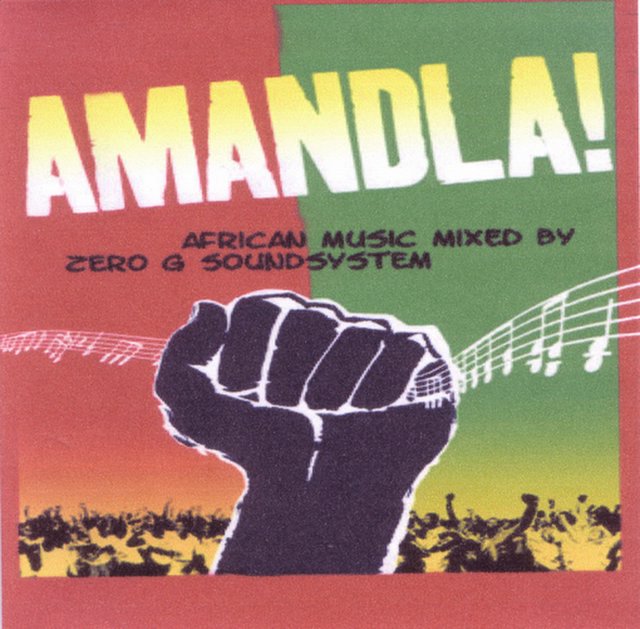
Amandla! The mix-cd.

Some years ago the dj collective "Zero G Sound" made a wonderful mix-cd called "Amandla!". They built a nice and groovy mix of different kind of african music styles.

Here´s the tracklist of this mix:

01-Intro
02-Orchestra Baobab - Boulamine
03-Super Eagles - Aliou Gori-Mami
04-Abdel Gadir Salim All-Stars - Alhagi
05-Alemayehn Eshete - Eskegizew Bertchi
06-Clint Eph Sebastian - Jane
07-Jimmy Solanke - Eja Ka Jo
08-Fela Kuti - Highlife Time
09-Orchestre de la Paillote - Kandia Blues
10-Ze Manel - Na Kaminho Di Luta
11-Ernest Ranglin - Ala Walee
12-Ogyatanaa Band - Disco Africa
13-Oscar Sulley - Buhom Mashie
14-Thomas Mapfumo - Hondo
15-Tiken Jah Fakoly - Francafrique
16-Daara-J - Number One
17-X-Plastaz - Msimu Kwa Msimu
18-Reggie Rockstone - Eye Mo De Anaa
19-Felal Kuti - Shakara
20-Baba Maal & Taj Mahal - Trouble Sleep.mp3

For your listening pleasure you can download the mix (mp3, 192 kbps, ca. 108 MB, cover art included, please burn it without gaps between the tracks!):

Zero G Soundsystem - Amadla!
(192 kbps, front & back cover included)

Donnerstag, 6. Februar 2025

VA - Schauspieler singen Tucholsky - Heute zwischen Gestern und Morgen


Kurt Tucholsky (January 9, 1890 – December 21, 1935) was a German-Jewish journalist, satirist and writer. He also wrote under the pseudonyms Kaspar Hauser, Peter Panter, Theobald Tiger and Ignaz Wrobel. Born in Berlin-Moabit, he moved to Paris in 1924 and then to Sweden in 1930.

Tucholsky was one of the most important journalists of the Weimar Republic. As a politically engaged journalist and temporary co-editor of the weekly magazine Die Weltbühne he proved himself to be a social critic in the tradition of Heinrich Heine. He was simultaneously a satirist, an author of satirical political revues, a songwriter and a poet. He saw himself as a left-wing democrat and pacifist and warned against anti-democratic tendencies – above all in politics, the military and justice – and the threat of National Socialism. His fears were confirmed when the Nazis came to power in 1933: his books were listed on the Nazi's censorship as "Entartete Kunst" ("Degenerate Art") and burned, and he lost his German citizenship.
Gerd Wilden featured these 21 songs between 1972 and 1979 in his annual new years eve concert on german television programm "ZDF". Prominent actors like Luise Martine, Ingrid van Bergen and Günter Pfitzmann are singing lyrics by Kurt Tucholsky.

Tracks:
1. Eine Frau denkt (L. Martini)
2. Die geschiedene Frau (I. van Bergen)
3. Mutterns Hände (G. Pfitzmann)
4. Lamento (I. van Bergen, L.Martini, M.Sebaldt)
5. Die Nachfolgerin (M.Sebaldt)
6. Sie schläft (M. Rehberg)
7. An die Berlinerin (G. Pfitzmann)
8. Heute zwischen Gestern und Morgen (H. Messemer)
9. Ideal und Wirklichkeit (G. Pfitzmann)
10. Das Lied vom Kompromiß (C. Wodetzky, G. Pfitzmann, H. Korte)
11. Olle Germanen (H. Wieder)
12 Justitia schwoft (C. Wodetzky, H. Korte)
13. Einikeit und Recht und Freiheit (H. Wieder)
14. Arbeit tut not (G. Pfitzmann)
15. Werbekunst (L. Martini, M. Sebaldt, H. Wieder, G. Pfitzmann, R. Boysen, K. Schwarzkopf)
16. Deutsche Pleite (H. Messemer)
17. Eine Frage (R. Boysen)
18. Parteimarsch der Parteilosen (G. Pfitzmann)
19. Bürgerliche Wohltätigkeit (G. Pfitzmann)
20. Bürgerliches Zeitalter (H. Messemer)
21. Duo, dreistimmig (K. Schwarzkopf, H. Messemer, H. Menschig)

VA - Schauspieler singen Tucholsky - Heute zwischen Gestern und Morgen
(192 kbps, front cover included)

Mittwoch, 5. Februar 2025

MC 5 - Live Detroit 1968/69

Alongside their Detroit-area brethren the Stooges, MC5 essentially laid the foundations for the emergence of punk; deafeningly loud and uncompromisingly intense, the group's politics were ultimately as crucial as their music, their revolutionary sloganeering and anti-establishment outrage crystallizing the counterculture movement at its most volatile and threatening. Under the guidance of svengali John Sinclair (the infamous founder of the radical White Panther Party), MC5 celebrated the holy trinity of sex, drugs, and rock & roll, their incendiary live sets offering a defiantly bacchanalian counterpoint to the peace-and-love reveries of their hippie contemporaries. Although corporate censorship, label interference, and legal hassles combined to cripple the band's hopes of mainstream notoriety, both their sound and their sensibility remain seminal influences on successive generations of artists.               

This album features more live material by The MC5. It was recorded at Detroit's Unitarian Church in 1968 and at Westfield High School in 1969. Tunes include "Come Together," "I Want You Right Now," "Come on Down," "Looking at You," and three others.   

Tracklist:

1 Intro / Come Together 5:27
2 I Want You Right Now 5:51
3 I Believe 3:17
4 Come On Down 12:31
5 It's A Man's Man's Man's World 5:18
6 Looking At You 3:43
7 Fire Of Love 3:11

(320 kbps, cover art included)

Dienstag, 4. Februar 2025

Bobby Darin - Golden Folk Hits (1963)

"Golden Folk Hits" was Bobby Darin's second collection of folk songs. Guest musicians included Glen Campbell, Phil Ochs, and Roger McGuinn of the Byrds. The songs Darin selected include many popularized by some of the most popular folk artists of the time: Pete Seeger's "Mary Don't You Weep," "If I Had a Hammer," and "Where Have All the Flowers Gone"; Bob Dylan's "Don't Think Twice" and "Blowin' in the Wind"; the Kingston Trio's "Greenback Dollar"; the New Christy Minstrels' "Green, Green"; and Peter, Paul & Mary's "Settle Down (Goin' Down That Highway)."

"Golden Folk Hits" was not a commercial success at all when it was released. Time has revealed Bobby Darin to be a profoundly thoughtful artist and this album deserves to be reconsidered. Important insight can be gained by examining the music a man makes when eschewing commercial pressures. In Darin's case, his music became more organic, thoughtful, and political, and less flashy, glitzy, and (yes) entertaining. "Golden Folk Hits" showcases impressive guitar work in "Abilene," powerful vocals in "Greenback Dollar," and touching reflection in "Why Daddy Why." "Golden Folk Hits" shows an artist looking to communicate on an emotional and social level. It finds Darin daring to let the music speak for itself. (His photo does not appear on the front cover, a strong statement for 1963.) 

"Golden Folk Hits" is an essential Bobby Darin album for anyone who hopes to further understand the aesthetic and political motivations of an inductee to the Rock and Roll Hall of Fame and the Songwriter's Hall of Fame. One of the most underappreciated Bobby Darin albums and one of the most exciting to revisit.       

Tracklist:
  1. "Mary Don't You Weep" (Traditional)
  2. "Where Have All the Flowers Gone?" (Pete Seeger)
  3. "If I Had a Hammer" (Lee Hays, Seeger)
  4. "Don't Think Twice, It's All Right" (Bob Dylan)
  5. "Greenback Dollar" (Hoyt Axton, Kennard Ramsey)
  6. "Why, Daddy, Why" (Bobby Scott)
  7. "Michael Row the Boat Ashore" (Traditional)
  8. "Abilene" (Les Brown, John D. Loudermilk)
  9. "Green, Green" (Barry McGuire, Randy Sparks)
  10. "Settle Down (Goin' Down That Highway)" (Mike Settle)
  11. "Blowin' in the Wind" (Dylan)
  12. "Train to the Sky" (Ben Raleigh)

Bobby Darin - Golden Folk Hits (1963)
(320 kbps, cover art included)

Anirahtak & Jürgen Sturm Band - Das Kurt Weill Programm (Nabel, 1989)

Very interesting interpretations of well-known Kurt Weill songs by the German jazz singer Anirahtak (Ulla Marks, born in Aachen), accompanied by the wonderful Jürgen Sturm Band. Jürgen Sturm is a famous German jazz guitarist.

„Anirahtaks Stimme umfaßt alle erdenklichen Gefühlsschwankungen, ist dabei kein bißchen verschnörkelt und manieriert, sondern kühl, wenn nötig oberflächlich und verschwendet keinen Ton. Ob auf dem Jahrmarkt, auf hoher See oder unter Affen, ihr dunkles Timbre liegt, in dynamischen Schattierungen, wie ein Hauch, aber dennoch klar über den von Jürgen Sturm neu arrangierten Songs.“ (Anna-Bianca Krause, Tageszeitung, 1991)

The album was recorded at Pink Noise Studio in Aachen.


Tracklist:

1. Die Moritat von Mackie Messer (Brecht/Weill) 4.20
2. Die Seeräuber-Jenny (Brecht/Weill) 4.12
3. Die Zuhälterballade (Brecht/Weill) 4.20
4. Der Kanonensong (Brecht/Weill) 6.02
5. Und was bekam des Soldaten Weib (Brecht/Weill) 5.33
6. Das Lied von den braunen Inseln (Feuchtwanger/Weill) 6.35
7. Muschel von Margate (Petroleum Song) (Gasbarra/Weill) 3.51
8. Klops Lied (Weill) 1.11
9. Es regnet (Weill) 7.46


Anirahtak & Jürgen Sturm Band - Das Kurt Weill Programm (Nabel, 1989)
(320 kbps, cover art included)

Brother Resistance - When De Riddum Explode

Born in East Dry River, Trinidad, Brother Resistance became, together with Brother Shortman, the lead singer of the Network Riddum Band, a Trinidadian ensemble, in 1979. They developed a hybrid of soca and rap that they called 'rapso', a genre for which they credited Lancelot Layne as originator. Considered subversive by the authorities, the band's rehearsal space and offices were destroyed by the police in June 1983.
The group released their first album, Roots of de Rapso Rhythm, in 1984, which was followed by Rapso Explosion and Rapso Takeover in 1985 and 1986 respectively. International performances brought recognition from overseas, changing the attitude of the T&T government, who selected Brother Resistance as their cultural delegate to the World Festival of Youth and Students in Korea.

He appeared at New York's 'New Music Festival' in 1992 and in 1993 at the International Dub Poetry Festival in Toronto.


Brother Resistance - When De Riddum Explode
(256 kbps, front cover included)

Montag, 3. Februar 2025

Ramblin´ Jack Elliott - Jack Takes The Floor (Topic, 1958, vinyl rip)

Ramblin' Jack Elliott is one of folk music's most enduring characters. Since he first came on the scene in the late '50s, Elliott influenced everyone from Bob Dylan and Pete Seeger to the Rolling Stones and the Grateful Dead. The son of a New York doctor and a onetime traveling companion of Woody Guthrie, Elliott used his self-made cowboy image to bring his love of folk music to one generation after another. Despite the countless miles that Elliott traveled, his nickname is derived from his unique verbiage: an innocent question often led to a mosaic of stories before he got to the answer. According to folk songstress Odetta, it was her mother who gave Elliott the name when she remarked, "Oh, that Jack Elliott, he sure can ramble."

Elliott's recording debut came in the mid-'50s when he recorded three songs for a multi-artist compilation, "Bad Men, Heroes and Pirates", released by Elektra. Elliott was so influenced by Guthrie (whom he had met during a Greenwich Village picking session in 1950) that he began his musical career by mimicking the legendary folksinger. When Guthrie traveled to Florida in 1952, he sent for Elliott to join him. By the time Elliott arrived, however, Guthrie had already left for Mexico, where he was turned back at the border and forced to return to New York. Elliott reunited with Guthrie a few months later. In the winter of 1954, they traveled together back to Florida; in the spring of 1954, they continued on to California's Topanga Canyon. The trip marked the last time that Elliott saw a healthy Guthrie. When he went to Europe in 1955, Elliott sang Guthrie's songs and told stories about him. England provided the setting for Elliott's early success; his first album on his own, Woody Guthrie's Blues, was recorded in England for the Topic label. In addition to recording four more albums for Topic, he attracted attention with his performances with Derroll Adams, a banjo player he had met in California. The duo barnstormed throughout Europe and had a profound influence on the British music scene.


Here´s his Topic album from 1958 released in Great Britain on a 10-inch LP.

Ramblin´ Jack Elliott - Jack Takes The Floor (Topic, 1958, vinyl rip)
(192 kbps, cover art included)

Sonntag, 2. Februar 2025

Pete Seeger - Wimoweh and other songs of freedom and protest (1968)

In 1961, Pete Seeger, long the flagship artist of the tiny independent Folkways Records label, signed to the major label Columbia Records. This did not, as it turned out, mean that he actually left Folkways, which retained the right to issue not only previously unreleased recordings dating from before the Columbia deal, but also new recordings if Columbia didn't deem them sufficiently commercial to constitute competition.

Nevertheless, Moses Asch, head of Folkways, couldn't have been very pleased at the development, and when Columbia issued its first Seeger album, a live LP called "Story Songs" in August 1961, Folkways countered the same month with its own live album, "Sing Out with Pete!", which turned out to be a cobbled-together set of tracks that had been left off earlier Seeger live collections.

In 1968, Folkways was in a flurry of releasing Seeger compilations (the others were "Pete Seeger Sings Woody Guthrie", "Pete Seeger Sings Leadbelly", and "Where Have All the Flowers Gone?"), and this one takes eight of the 12 tracks from the "Sing Out with Pete!" album, re-sequences them, and adds a few other stray tracks ("Wasn't That a Time," "What a Friend We Have in Congress," and "Hymn to Nations"). The recordings also seem to have been re-edited and remixed, with some extra waves of applause overdubbed. Although it contains a couple of Seeger's greatest hits, "Wimoweh" and "If I Had a Hammer (Hammer Song)," as well as some interesting performances of spirituals, with such collaborators as Big Bill Broonzy, Memphis Slim, and Willie Dixon thrown in, the album is still a hodgepodge. In fact, it's even more of a hodgepodge than the original version was seven years previously. 

The album features protest songs as well as old spirituals sung by legendary folk singer Pete Seeger. With Seeger's modern interpretations the folk process is truly at work, "making past experience meaningful for present-day life." Liner notes include background information on each of the tracks.
  

Tracklist:
101 I'm On My Way to Canaan's Land       4:20
102 Wimoweh      2:48
103 Wasn't That a Time           2:59
104 Freiheit           3:06
105 Study War No More (Down By the Riverside) - Pete Seeger and Big Bill Broonzy 5:28
201 Hold On - Pete Seeger, Memphis Slim, and Willie Dixon 3:27
202 If I Had a Hammer (Hammer Song)           2:21
203 We are Soldiers in the Army           4:05
204 Mrs. McGrath           4:19
205 What a Friend We Have in Congress           1:58
206 Hymn to Nations (Beethoven, Ludwig v.: 9th Symphony)           2:06    


Pete Seeger - Wimoweh and other songs of freedom and protest (1968)
(192 kbps, cover art included)     

Samstag, 1. Februar 2025

Woody Guthrie - The Legendary Woody Guthrie

Originally posted in July, 2012:

HAPPY 100th BIRTHDAY WOODY!

Woody Guthrie was born on July 14th, 1912 in Okemah, Oklahoma. So we can celebrate his 100th birthday next saturday. And we will post some of his wonderful songs during this week.

Woody Guthrie was the most important American folk music artist of the first half of the 20th century, in part because he turned out to be such a major influence on the popular music of the second half of the 20th century, a period when he himself was largely inactive. His greatest significance lies in his songwriting, beginning with the standard "This Land Is Your Land" and including such much-covered works as "Deportee," "Do Re Mi," "Grand Coulee Dam," "Hard, Ain't It Hard," "Hard Travelin'," "I Ain't Got No Home," "1913 Massacre," "Oklahoma Hills," "Pastures of Plenty," "Philadelphia Lawyer," "Pretty Boy Floyd," "Ramblin' Round," "So Long It's Been Good to Know Yuh," "Talking Dust Bowl," and "Vigilante Man." These and other songs have been performed and recorded by a wide range of artists, including a who's who of folksingers.
Most of those performances and recordings came after Guthrie's enforced retirement due to illness in the early '50s. During his heyday, in the 1940s, he was a major-label recording artist, a published author, and a nationally broadcast radio personality. But the impression this creates, that he was a multi-media star, is belied by his personality and his politics. Restlessly creative and prolific, he wrote, drew, sang, and played constantly, but his restlessness also expressed itself in a disinclination to stick consistently to any one endeavor, particularly if it involved a conventional, cooperative approach. Nor did he care to stay in any one place for long. This idiosyncratic individualism was complemented by his rigorously left-wing political views. During his life, much attention was given in the U.S. to whether people of a liberal bent were or had ever been members of the Communist party. No reliable evidence has emerged that Guthrie was, but there is little doubt where his sympathies lay; for many years, he wrote a column published in Communist newspapers.

Ironically, as Guthrie's health declined to the point of permanent hospitalization in the '50s, his career took off through his songs and his example, which served as inspiration for the folk revival in general and, in the early '60s, Bob Dylan in particular. By the mid-'60s, Guthrie's songs were appearing on dozens of records, his own recordings were being reissued and, in some cases, released for the first time, and his prolific writings were being edited into books. This career resurgence was in no way slowed by his death in 1967; on the contrary, it continued for decades afterward, as new books were published and the Guthrie estate invited such artists as Billy Bragg and Wilco in to write music for Guthrie's large collection of unpublished lyrics, creating new songs to record.


Tracks:

1. What Did The Deep Sea Say - Guthrie, Woody & Cisco Houston
2. Oregon Trial
3. Car Song
4. We Shall Be Free - Guthrie, Woody & Leadbelly/Sonny Terry/Cisco Houston
5. Danville Girl
6. Struggle Blues
7. John Henry - Guthrie, Woody & Cisco Houston
8. Chisholm Trail - Guthrie, Woody & Cisco Houston
9. Ludlowe Massacre
10.: Nine Hundred Miles
11. Make Me A Pallet On Your Floor
12. Buffalo Skinner's
13. Ramblin' Round
14. Rising Sun Blues (house of the rising sun)
15. Lindbergh
16. Vigilante Man
17. Two Good Men
18. Red River Valley - Guthrie, Woody & Cisco Houston
19. Ranger's Command
20. Farmer Labour Train
21. Sinking Of The Rueben James
22. Hard Ain't It Hard
.