Dienstag, 10. Dezember 2024

The Residents - Commercial Album (1980)

Commercial Album is the seventh studio album released by art rock group the Residents in 1980. It is commonly considered a follow-up to their 1978 album Duck Stab/Buster & Glen, in that it retains the former album's pop-oriented song structures. The album contains 40 songs, each lasting exactly one minute - a deliberate allusion to Top 40 mainstream radio. The album's liner notes state that, to form a complete pop song, tracks from the album should be played three times in a row.

"Here's the concept: The structure of most pop songs consists of only two parts, the verse and the chorus. Since the verse and chorus usually repeat three times in a three-minute song, a pop tune really only consists of one minute of music. Cut out the repetition and you can, therefore, fit 40 pop songs onto a 40-minute record. And that's exactly what the Residents have done on The Commercial Album, the title of which comes from the band's deduction that since pop songs only consist of one minute of music and most advertisements are about a minute long also, ad jingles are "therefore the music of America." Got it? Whatever the concept behind it, this album is not only weird in that special way that only Residents albums are, but it's also surprisingly musically satisfying. A few of its 40 tracks ("Secrets" and "The Simple Song," for example) feel like throwaways, but most of them are surprisingly well organized and complete. The instrumental "Japanese Watercolor" is particularly impressive, as are the songs "Picnic Boy" and "Troubled Man." This album would make a great introduction to the Residents for anyone who hasn't yet been exposed to the band's unique brand of whimsy." - allmusic.com

Tracklist:

Easter Woman 1:00
Perfect Love 1:00
Picnic Boy 1:00
End Of Home 1:00
Amber 1:00
Japanese Watercolor 1:00
Secrets 1:00
Die In Terror 1:00
Red Rider 1:00
My Second Wife 1:00
Floyd 1:00
Suburban Bathers 1:00
Dimples And Toes 1:00
The Nameless Souls 1:00
Love Leaks Out 1:00
Act Of Being Polite 1:00
Medicine Man 1:00
Tragic Bells 1:00
Loss Of Innocence 1:00
The Simple Song 1:00
Ups And Downs 1:00
Possessions 1:00
Give It To Someone Else 1:00
Phantom 1:00
Less Not More 1:00
My Work Is So Behind 1:00
Birds In The Trees 1:00
Handfull Of Desire 1:00
Moisture 1:00
Love Is... 1:00
Troubled Man 1:00
La La 1:00
Loneliness 1:00
Nice Old Man 1:00
The Talk Of Creatures 1:00
Fingertips 1:00
In Between Dreams 1:00
Margaret Freeman 1:00
The Coming Of The Crow 1:00
When We Were Young 1:00

(plus bonus tracks)

(320 kbps, cover art included)

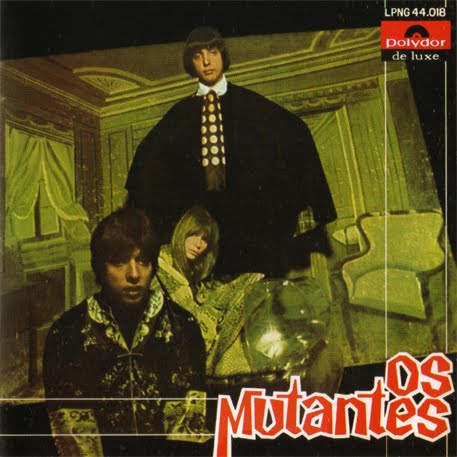
Os Mutantes - Os Mutantes (1968)

The band's debut album, "Os Mutantes", is far and away their best — a wildly inventive trip that assimilates orchestral pop, whimsical psychedelia, musique concrète, found-sound environments — and that's just the first song!

Elsewhere there are nods to Carnaval, albeit with distinct hippie sensibilities, incorporating fuzztone guitars and go-go basslines. Two tracks, "O Relogio" and "Le Premier Bonheur du Jour," work through pastoral French pop, sounding closer to the Swingle Singers than Gilberto Gil.

Though not all of the experimentation succeeds — the languid Brazilian blues of "Baby" is rather cumbersome — and pop/rock listeners may have a hard time finding the hooks, Os Mutantes' first album is an astonishing listen. It's far more experimental than any of the albums produced by the era's first-rate psychedelic bands of Britain or America.

Os Mutantes - Same (1968)
(320 kbps, front cover included)

Montag, 9. Dezember 2024

Last Poets - At Last (1976)

It was the combination of poetry with almost-frighteningly intense rhythm tracks, mostly done on hand drums, that helped create the Last Poets' reputation for being way ahead of the curve on the entire development of what would come to be called rap music.

With their politically charged raps, taut rhythms, and dedication to raising African-American consciousness, the Last Poets almost single-handedly laid the groundwork for the emergence of hip-hop. The group arose out of the prison experiences of Jalal Mansur Nuriddin, a U.S. Army paratrooper who chose jail as an alternative to fighting in Vietnam; while incarcerated, he converted to Islam, learned to "spiel" (an early form of rapping), and befriended fellow inmates Omar Ben Hassan and Abiodun Oyewole.

Tracklist:

A1In Time And Space
A2The Courtroom
A3Death Row
A4Picture In Blue
B1Tranquility
B2Reflections
B3Uncle Sam's Lament
B4The African Slave
B5Ode To Saphcallah
B6In Search Of Knowledge

Last Poets - At Last (1976)
(192 kbps, cover art included)

Sonntag, 8. Dezember 2024

Skin, Flesh & Bones - Fighting Dub (1975)

"Fighting Dub" is a collection issued on the Love label in 1975. The album's original mix was done by Errol "E.T." Thompson at Joe Gibbs' studio. Basically, these dubs were of Lloyd "Spiderman" Campbell's hits at the time, such as "Jacket" and "First Cut Is the Deepest."

This album was seen as the forerunner to the 'rockers' sound made famous by Sly Dunbar. Sly is in the band alongside Jackie Jackson, Hux Brown, Rad Bryan and Ansell Collins.


Tracklist:

Boxer Dub
Slavery Dub
Third Cut Dub
Jack Ruby Special
Scotch Dub
In Tone Rock
Spider Man Web
Run Run Dub
Baby Face Dub
Harbour View Rock

Skin, Flesh & Bones - Fighting Dub (1975)
(320 kbps, cover art included)

Samstag, 7. Dezember 2024

Rita Lee - Fruto Proibido (1975)

Rita Lee, a former member of the seminal rock band Os Mutantes, always had lots to say about Brazilian rock, but she spent most of her post-Mutantes career on innocuous dance grooves. 

On this album recorded in 1975, she is a truthful rock artist. Backed by the strong grip of her rock band Tutti Frutti, she delivers some of her biggest hits here: "Agora Só Falta Você," "Esse Tal de Roque Enrow" (composed with mega-selling esoteric writer Paulo Coelho, when he was an alternative rock composer [he was the main partner of the late rocker Raul Seixas]), and the eternal "Ovelha Negra," the anthem of the rebellious youngsters in Brazil. 

Lee can be a singer as competent in wild rock as in softer ballads when she acquires a girlish, tender quality. The album is a document of a time when she could be truthful about her ideals.


Tracklist:

A1 Dançar Prá Não Dançar 2:47
A2 Agora Só Falta Você 2:46
A3 Cartão Postal 2:46
A4 Fruto Proibido 2:47
A5 Esse Tal De Roque Enrow 2:47
B1 O Toque 2:47
B2 Pirataria 2:48
B3 Luz Del Fuego 2:47
B4 Ovelha Negra 2:47

(192 kbps, cover art included)

Inti-Illimani-1975-Canto de Pueblos Andinos (Inti-Illimani 3)

Inti-Illimani, from the Aymara dialect, means "Sun of the Illimani", in reference to a mountain at La Paz, Bolivia. It is the name of  a Latin American folk music ensemble from Bolivia & Chile. The band was formed in 1967 by a group of university students: Pedro Yañez (musical director), Jorge Coulon, Max Berrú, Horacio Durán, Oscar Guzmán, Luis Cifuentes and Ciro Retamal. That same year Luis Cifuentes was replaced by Luis Espinoza, and Ciro Retamal and Oscar Guzmán quit the band, joining them Horacio “Loro” Salinas. Pedro Yáñez also left the band in 1968.

They acquired widespread popularity in Chile for their song "Venceremos" (We shall win!) which became the anthem of the Popular Unity government of Salvador Allende. At the moment of September 11, 1973's Chilean coup they were on tour in Europe and were unable to return to their country where their music was proscribed by the ruling military junta. In Europe their music took on a multifarious character, incorporating elements of European baroque and other traditional music forms to their rich and colourful Latin American rhythms - creating a distinctive fusion of modern world music. They are perhaps the best internationally known members of the nueva canción movement.

Owing to personal problems, in 2001 they split in two bands (as Quilapayún): Inti Illimani Histórico (directed by Horacio Salinas, with H. Salinas, J. Seves, H. Durán, Jorge Ball, Fernando Julio, Danilo Donoso and Camilo Salinas) and Inti-Illimani "Nuevo" (Jorge and Marcelo Coulón, Manuel Meriño, Daniel Cantillana, Efrén Viera and César Jara).


Tracklist:

1 Huajra 3:46
2 Tema De La Quemada De Humahuaca 2:58
3 Dolencias 3:08
4 Lamento Del Indio 2:14
5 Taita Salasca 2:12
6 La Mariposa 2:09
7 Tinku 3:25
8 Amores Hallaras 1:59
9 Papel De Plata 2:42
10 Flor De Sancayo 2:30
11 Mis Llamitas 2:47
12 Sicuriadas 3:10


Inti-Illimani-1975-Canto de Pueblos Andinos (Inti-Illimani 3)
(192 kbps, cover art included)

Donnerstag, 28. November 2024

Pawlo Humeniuk – King Of The Ukrainian (1993)

Pawlo Humeniuk was a prolific fiddle player with a known catalog of 250-plus recordings. Born in Ukraine in the late 19th century, Humeniuk immigrated to the United States around 1902 and shortly thereafter began his study of the violin. His skill led to gigs at weddings and Ukrainian social events, where it appears he hired available local musicians rather than employing a regular band. This collection of music was recorded in New York between 1925 and 1927 and includes Ukrainian wedding and dance music.

“For collectors of authentic ethnic fiddling another country heard from. Humeniuk an energetic and accomplished fiddler is well backed on these 23 tracks by trombone clarinet piano lyra accordion cymbal (a rustically tuned hammered dulcimer) string bass bandura and lots more.

The tunes shake down into major-key tuneswhich often wheeze and oom-pah with Teutonic complacency and minor/modal tunes reminiscent of the klezmer bands once popular throughout the Ukraine. In fact the notes point out that one cut here `Oh Pidu Ja SzicherWicher’ is also known as `Reb Duvid’s Nign.’ They state: `this widely known old-time Yiddish dance tune can also be heard on early Polish and Swedish recordings.’ … The most amusing portion of this recording is its series of skits: Ukrainian Wedding Garland Weaving Ceremony Party After the Wedding . These 78s dramatized old world celebrations complete with toasts tears jokes and music. Humeniuk and instrumentalists backed comic actor Ewgen Zukowsky and `superbly cracked-voice singer’ Nasza Roza Kresnowska. A sample routine The Christening: `The curtains open with a discussion by the god-parents on the merits of cooking with chicken or pike. Church bells summon them to the baptism as they argue over naming the baby boy: Father prefers Ivan while Mother insists on Hryts.’ While Ewgen has a bit too much fervor to be a George Burns dear Nasza is a ringer for Gracie Allen and cracks me up though I understand not a word of Ukrainian.

Arhoolie’s Chris Strachwitz delights in the backwoods and back-alleys music of unassimilated rural and urban ethnic communities. The classic Arhoolie sound is gnarled and eccentric full of energy revelling in rhythmic melodic and harmonic anomalies. Turn to Arhoolie for a consoling and inspiring reminder that the world was not always suave and homogenous.”

(Jane Peppler — Sing Out!)


Tracklist:

1. Oi Ia Sobi Kozak Lepkii
2. I Ia Toe Divcha Liubliu
3. Iak Zachuiu Kolomyiku
4. Ukrainske Wesilia (Pt.1) (Wedding)
5. Ukrainske Wesilia (Pt.2) (Wedding)
6. Winkopletyny (Garland Weaving Ceremony)
7. Zaruczyny (Engagement Celebration)
8. Poprawiny (Pt.1) (Party After The Wedding)
9. Poprawiny (Pt.2) (Party After The Wedding)
10. Czaban (The Shepherd)
11. Hutzulka (Hutsul Dance)
12. Hraj Abo Hroszi Widdaj
13. Tanec Pid Werbamy
14. Oj Kozacze Bilousyj
15. Na Wesiliu Pry Weczeri
16. Chrestyny (Pt.1) (Christening)
17. Chrestyny (Pt.2) (Christening)
18. Oj Pidu Ja Szicher Wicher
19. Oj Tam Za Lisom (Beyond The Forest)
20. Na Wesiliu Pid Chatoju
21. Wals Bandura (Bandura Waltz)
22. Do Poczajewa Na Widpust
23. Dumka Y Kolomyika


Pawlo Humeniuk – King Of The Ukrainian (1993)
(192 kbps, cover art included)

Montag, 25. November 2024

Frejlechs - Soll Sayn Freylekh - Jiddische Klezmer-Musik (1991)

Klezmer is a traditional style of wedding music played by Eastern European Ashkenazi Jews. Part of Yiddish heritage, modern klezmer integrates different influences, such as Roma music and jazz.

The term "klezmer" derives from Yiddish, meaning "vessels of song," or music instruments. Traditionally played at weddings by itinerant Jewish musicians, it is a celebratory music with a strong Rom influence. The genre evolved after the arrival of Yiddish-speaking Jewish immigrants from Eastern Europe in the US in the late 19th and early 20th century, building on early jazz and international influences. In the 1970s, klezmer went through a revival led by Giora Feidman, The Klezmorim, Zev Feldman, Andy Statman, and the Klezmer Conservatory Band.

The mid-1990s were the heyday of the Berlin klezmer revival. In 1998 the Berlin cultural bimonthyl Zitty advertised as many as 302 klezmer concerts, most of which were staged by the Hackesches Hoftheater. Ten years later, when the theater had been closed for two years, the number of klezmer concerts dropped by more than 50 percent. In 2013 there were more than twenty professional and semiprofessional klezmer bands performing in Berlin, comprised of both Germand and foreign musicians, both Jewish and non-Jewish. There are a number of clubs, bars and cafés, as well as churches that have klezmer in their concert repertoire. 

Klezmer has been a controversial phenomenon in post-Holocaust Europe, ever since this traditional Jewish wedding music made it to the concert halls and discos of Berlin, Warsaw, Budapest and Prague. Played mostly by non-Jews and for non-Jewish audiences, it quickly gained the epithet of “fakelore” and was branded commercially-motivated heritage appropriation.


Tracklist:

Cafe Klez
1 Moldever Hore (Moldavian Hora) 3:01
2 Sherele 2:41

Zol Zayn Freylekh
3 Doyne / Kiever Freylekhs (Doina/Kiev Freylekhs) 3:14
4 Odeser Bulgar (Bulgar From Odessa) 2:38

A Kholem Fun Libe
5 Di Sapozhkelakh (The Little Boots) 3:38
6 Di Zilberne Khasene (The Silver Wedding) 2:21
7 Di Goldene Khasene (The Golden Wedding) 3:14
8 Medyatsiner Valts (Medyatsiner Waltz) 2:28

Ale Lakhn, Makhn Fun Mir Shpas
9 Papirosn (Cigarettes) 5:54

In Der Heym In Shtetele Amol
10 Sirbe (Serba) 3:01
11 Terkishe Melodye (Turkish Melody) 3:13
12 Bukevine (Bucovina) 2:13

Veln Zayn Gute Tsaytn
13 Shnirele, Perele (String, Pearl) 5:25
14 Shlof, Mayn Kind (Sleep, My Child) 2:32


Frejlechs - Soll Sayn Freylekh - Jiddische Klezmer-Musik (1991)
(320 kbps, cover art included)

Sonntag, 24. November 2024

Bewegte Zeiten - Neue Musik in der Weimarer Republik 1919 - 1933

"Bewegte Zeiten - Neue Musik in der Weimarer Republik 1919 - 1933" is a great 2-cd-set compilation, released only in Germany. The compilation includes excerpts from works by such composers as Feruccio Busoni, Heinz Tiessen, Alban Berg, Franz Schreker, Paul Hindemith, Ernst Krenek, Erwin Schulhoff, Kurt Weill, Alexander von Zemlinsky, Wilhelm Kempff, Emil Bohnke and Arnold Schönberg.

The compilations features performances by András Schiff, Dietrich Fischer-Dieskau, Anne Sofie von Otter, Hagen Quartett. Staatskapelle Dresden, Royal Concertgebouw Orchestra, London Sinfonietta,
Deutsches Symphonie Orchester Berlin, Berliner Philharmoniker et al. The conductors are Giuseppe Sinopoli, Karl Böhm, David Atherton, Herbert von Karajan, John Eliot Gardiner, Paul Hindemith.

Bewegte Zeiten - Neue Musik in der Weimarer Republik 1919 - 1933 - CD 1
Bewegte Zeiten - Neue Musik in der Weimarer Republik 1919 - 1933 - CD 2
(256 kbps, front cover included)

Samstag, 23. November 2024

Stephanie Haas - YOUKALI (1996)

"Youkali" is a wonderful album by Stephanie Haas with songs by Vojtech Saudek, Susanne Erding-Swiridoff, Friedrich Holländer and Kurt Weill. The album was recorded with support of Susan Wenckus, Roswitha Troitzsch, Alexandru Ianos and Christoph Haas.

This is an English translation for "Youkali":

"It was almost to the end of the world
That my wandering boat
Straying at the will of the waves
Led me one day
The isle is very small
But the kind fairy that lives there
Invites us
To take a look around
Youkali
Is the land of our desires
Youkali
Is happiness, pleasure
Youkali
Is the land where we forget all our worries
It is in our night, like a bright rift
The star we follow
It is Youkali
Youkali
Is the respect of all vows exchanged
Youkali
Is the land of love returned
It is the hope
That is in every human heart
The deliverance
We await for tomorrow
Youkali
Is the land of our desires
Youkali
Is happiness, pleasure
But it is a dream, a folly
There is no Youkali
And life carries us along
Tediously, day by day
But the poor human soul
Seeking forgetfulness everywhere
Has, in order to escape the world
Managed to find the mystery
In which our dreams burrow themselves
In some Youkali
Youkali
Is the land of our desires
Youkali
Is happiness, pleasure
Youkali
Is the land where we forget all our worries
It is in our night, like a bright rift
The star we follow
It is Youkali
Youkali
Is the respect of all vows exchanged
Youkali
Is the land of love returned
It is the hope
That is in every human heart
The deliverance
We await for tomorrow
Youkali
Is the land of our desires
Youkali
Is happiness, pleasure
But it is a dream, a folly
There is no Youkali

But it is a dream, a folly
There is no Youkali"


Tracklist:

Vojtech Saudek
Julie
Klubko
Hamlet
Makbeth
Sasek

Susanne Erding-Swiridoff
Einmal, Liebste
Sternkarte
Küste, das Meer
Einmal
Sehnsucht

Kurt Weill
Le Roi d'Aquitaine
Le grand Lustucru
Les filles de Bordeaux
Nannas Lied

Friedrich Holländer
Wenn ich mal tot bin

Kurt Weill
Youkali


Stephanie Haas - YOUKALI (1996)
(320 kbps, cover art included)

Freitag, 22. November 2024

Charles Mingus - Mingus Ah Um (1959)

Charles Mingus' debut for Columbia, "Mingus Ah Um" is a stunning summation of the bassist's talents and probably the best reference point for beginners. While there's also a strong case for "The Black Saint and the Sinner Lady" as his best work overall, it lacks "Ah Um"'s immediate accessibility and brilliantly sculpted individual tunes. 

Mingus' compositions and arrangements were always extremely focused, assimilating individual spontaneity into a firm consistency of mood, and that approach reaches an ultra-tight zenith on "Mingus Ah Um". The band includes longtime Mingus stalwarts already well versed in his music, like saxophonists John Handy, Shafi Hadi, and Booker Ervin; trombonists Jimmy Knepper and Willie Dennis; pianist Horace Parlan; and drummer Dannie Richmond. Their razor-sharp performances tie together what may well be Mingus' greatest, most emotionally varied set of compositions. At least three became instant classics, starting with the irrepressible spiritual exuberance of signature tune "Better Get It in Your Soul," taken in a hard-charging 6/8 and punctuated by joyous gospel shouts. "Goodbye Pork Pie Hat" is a slow, graceful elegy for Lester Young, who died not long before the sessions. The sharply contrasting "Fables of Faubus" is a savage mockery of segregationist Arkansas governor Orval Faubus, portrayed musically as a bumbling vaudeville clown (the scathing lyrics, censored by skittish executives, can be heard on "Charles Mingus Presents Charles Mingus"). The underrated "Boogie Stop Shuffle" is bursting with aggressive swing, and elsewhere there are tributes to Mingus' most revered influences: "Open Letter to Duke" is inspired by Duke Ellington and "Jelly Roll" is an idiosyncratic yet affectionate nod to jazz's first great composer, Jelly Roll Morton. 

It simply isn't possible to single out one Mingus album as definitive, but "Mingus Ah Um" comes the closest.


Tracklist:

Better Git It In Your Soul
Goodbye Pork Pie Hat
Boogie Stop Shuffle
Self-Portrait In Three Colors
Open Letter To Duke
Bird Calls
Fables Of Faubus
Pussy Cat Dues
Jelly Roll


(224 kbps, cover art included)

Kurt Weill & Bert Brecht - Die Dreigroschenoper - Songs & Szenen (1968)

Kurt Weill was born in Dessau on 2 March 1900. Having displayed musical talent early on, he became a substitute accompanist at the Dessau Court Theater during the First World War, and after studying theory and composition with Albert Bingenrolled at the Berlin Hochschule für Musik.

Not liking the training with Engelbert Humperdinck, though, he was accepted finally into Ferruccio Busoni’s master class in composition. In order to support himself, he conducted synagogue choirs, tutored students (e.g. Claudio Arrau, Maurice Abravanel) in music theory and contributed articles and reviews to "Der deutsche Rundfunk“.
By 1925, Weill had been established as one of the leading composers of his generation, along with Paul Hindemith and Ernst Krenek. In the same time, he turned to writing operas, collaborating a.o. with Georg Kaiser (e.g. "Der Protagonist“, Weill’s sensational theatrical debut in 1926, or "Der Silbersee“, 1933) and with Bertolt Brecht (e.g. "Aufstieg und Fall der Stadt Mahagonny“ or the ballet "The Seven Deadly Sins" for Balanchine’s troupe). The Brecht-Weill piece „Die Dreigroschenoper“ with its sometimes aggressive, sometimes sentimental popular song-style with elements of jazz, moritat and carabet songs remains one of his most famous works.

Weill’s compositions of the early thirties outraging the Nazis and campaigns discouraging productions of his work, Weill fled Germany in 1933 via Paris and London to America (in 1935) to oversee Max Reinhardt’s production of his opera "Der Weg der Verheißung“ after Franz Werfel’s biblical spectacle. Weill and his wife Lotte Lenya stayed in the USA and applied for American citizenship.
Working mainly for Broadway, Weill established himself soon as a new and original voice in the American musical theater, often chosing unusual collaborators such as Paul Green, Maxwell Anderson, Ogden Nash, and Langston Hughes. He also completed two film scores, including Fritz Lang’s "You and Me“.
In 1946 Weill was elected as the only composer-member of the distinguished Playwrights Producing Company (founded in 1938) which brought his musical version of Elmer Rice’s Pulitzer-Prize winning drama Street Scene to Broadway as an American opera, the first real successor to "Porgy and Bess“. Weill’s experiment "Lady in the Dark“ was a big success and his daring last two works for Broadway, the concept musical "Love Life“ and the musical tragedy "Lost in the Stars“, challenged the Broadway institution and audience to a degree that would not be met until the 1970s in the Sondheim-Prince collaborations.
Apart from his numerous stage works (including pantomime, ballet, student opera and operetta), Weill wrote two symphonies and other orchestral works, two string quartets and different kinds of vocal works.
He died on 3 April 1950 in New York City.

Here´s the 1968 recording of the "Threepenny Opera" wit Helmut Qualtinger, Karin Baal, Martin Held, Sylvia Anders, Hans Clarin, Franz-Josef Degenhardt and James Last (!).

Kurt Weill & Bert Brecht - Die Dreigroschenoper -Songs & Szenen (1968)
(192 kbps, front cover included)

Donnerstag, 21. November 2024

Eric Bentley ‎– Bentley On Brecht (1962)


Playwright, poet and lyricist Bertolt Brecht was among the most controversial figures ever to impact musical theatre; an avowed Marxist, he often worked in tandem with composer Kurt Weill to create one of the most provocative bodies of work ever staged. Brecht was born February 10, 1898 in Augsburg, Bavaria; while attending Munich University, he was drafted to serve as a medic in World War I, later forging a career as a writer. His early Expressionist dramas -"Trommeln in der Nacht", "Baal" and "Im Dickicht der Stadte" - reflected his anti-establishment leanings, as well as an obsession with violence; he then spent the majority of the 1920s touring the cabaret circuits of Germany and Scandinavia, often courting further controversy over the outspoken politics and nihilistic edge of his songs.
 
In 1928 Brecht earned his greatest theatrical success with "Die Dreigroschenoper", a musical adaptation of John Gay's "The Beggar's Opera" featuring music composed by Weill; like the previous year's Mann Ist Mann and 1929's "Mahagonny", it spotlighted the playwright's gift for incisive satire of bourgeois sensibilities. By 1933, Brecht - exiled to Denmark in the wake of the Reichstag fire - had acquired an international reputation on the strength of work like "The Threepenny Opera", which opened in an English-language version on Broadway. An outspoken critic of the Nazis, his plays, poems and radio dramas of the period attacked the Hitler regime with thinly-veiled contempt; finally, in 1941 he was forced to flee to Hollywood to escape the Nazis' wrath, settling there to write works including Der Kaukasische Kreidekreis and Leben des Galilei. In 1947 Brecht was called before the House Un-American Activities Committee for his pro-Communist beliefs; he then moved to East Berlin, where he established his own theater, the Berliner Ensemble. He died on August 14, 1956.

Eric Bentley (born September 14, 1916) is a British-born American critic, playwright, singer, editor and translator.
Beginning in 1953, Bentley taught at Columbia University and simultaneously was a theatre critic for The New Republic. Known for his blunt style of theatre criticism, Bentley incurred the wrath of playwrights Tennessee Williams and Arthur Miller, both of whom threatened to sue him for his unfavorable reviews of their work. From 1960-1961, Bentley was the Norton professor at Harvard University.

Bentley is considered one of the preeminent experts on Bertolt Brecht, whom he met at UCLA as a young man and whose works he has translated extensively. He edited the Grove Press issue of Brecht's work, and recorded two albums of Brecht's songs for Folkways Records, most of which had never before been recorded in English.

In 1968, he signed the “Writers and Editors War Tax Protest” pledge, vowing to refuse tax payments in protest against the Vietnam War.

Bentley became an American citizen in 1948, and currently lives in New York City.

The album "Bentley on Brecht" was recorded in New York City, 1962 and released on Riverside Records in the same year. It contains songs and poems written by Bertolt Brecht read and sung by Eric Bentley, accompanied on harmonium and piano.

Eric Bentley - Bentley On Brecht (1962)
(320 kbps, cover art included)

Mittwoch, 20. November 2024

Checkpoint Charlie - Same (Die Durchsichtige) (1979)

Checkpoint Charlie was formed in 1967 and named after the infamous checkpoint between the Eastern and Western zones of Berlin. They were part of the same polit rock wave as Floh De Cologne and Ton Steine Scherben.

Sinze 1967, the musicians around Uwe von Trotha have satirized "squares, cold warriors, senile military officers, certain politicians and string-pullers with loins like Barbie´s Ken".

The album "Checkpoint Charlie" aka "Die Durchsichtige" was released on the self organized label "Schneeball" (formerly "April Records"), founded by the band together with Embryo, Ton Steine Scherben and some other projects. The album was recorded at Sunrise Studios (Kirchberg, Swiss) and at Zuckerfabrik (Stuttgart), the tracks 3 and 4 are live recordings from the Zuckerfabrik.
          

Tracklist:
Du sollst dein Leben nicht den Schweinen geben
Smogalarm
Folter für John Travolta
Hitler in Dosen (Haben Rock)

Checkpoint Charlie - Same (Die Durchsichtige) (1979)
(256 kbps, cover art included)

VA - Touch Me In The Morning (Trojan)

Aimed directly at lovers rock fans (everyone else wouldn't touch this in the morning or any other time of the day), this compilation features covers of 25 classic love songs performed by the cream of Jamaica's artists. Many of the originals were Motown hits, and you're sure to recognize every track here.

Stylistically, the covers range from early reggae to soulful lovers rock, and even on to the American-style pop that was briefly all the rage on the island. The artists read like a who's who list of Jamaican talent -- Dennis Brown, John Holt, Delroy Wilson, and many, many more. Although the songs may be considered by some as little more than lightweight pop, the performances suggest otherwise, and virtually every one of these tracks rings with sincere emotion. Bob & Marcia (aka Bob Andy and Marcia Griffiths) reach profound depths on "Ain't Nothing Like the Real Thing" and Slim Smith is aquiver with vulnerability on "Everybody Needs Love," while the Jay Boys out-soul the Temptations on "I Can't Get Next to You." Lloyd Charmers exudes disbelief at his own good fortune on "Just My Imagination," and when Horace Andy sings "Ain't No Sunshine," you can feel the whole world darken. Every song included is of this same remarkable quality. Turn down the lights, turn up the stereo, and feel the passion.      

Tracklist:

1 –Dennis Brown My Girl
2 –The Tamlins Since I Lost My Baby
3 –Slim Smith Everybody Needs Love
4 –Delroy Wilson Put Yourself In My Place
5 –John Holt Alfie
6 –Chosen Few I Second That Emotion
7 –Bob & Marcia Ain't Nothing Like The Real Thing
8 –Slim Smith Love And Affection (I'm Gonna Make You Love Me)
9 –Harry J All Stars My Cherie Amour
10 –Delano Stewart Wherever I Lay My Hat (That's My Home)
11 –Bobby Blue Doggone Right
12 –Bob & Marcia Onion Song
13 –John Holt Yester Me, Yester You, Yesterday
14 –Audrey Someday We'll Be Together
15 –The Jay Boys I Can't Get Next To You
16 –Chosen Few Tears Of A Clown
17 –Lloyd Charmers Just My Imagination
18 –Joy White My Guy
19 –Horace Andy Ain't No Sunshine
20 –Now Generation Ben
21 –John Holt Help Me Make It Through The Night
22 –Lloyd Charmers Sweet Harmony
23 –John Holt Touch Me In The Morning
24 –Lloyd Charmers Keep Getting It On
25 –Pat Rhoden Living For The City


VA - Touch Me In The Morning (Trojan)
(192 kbps, cover art included)

Dienstag, 19. November 2024

Andy M Stewart - Songs Of Robert Burns (1989)

Robert Burns (1759 - 96) has been described as "the greatest poet that ever sprung from the bosom of the people." Born at Alloway in Ayrshire, Scotland, on 25th January, 1759, he grew up labouring as a ploughman and orra worker, yet was able to receive the best education available to him in the limited circumstances of the time. It was only when Mossgiel, the family farm, faced economic ruin that Burns considered publishing the poems he had been writing since boyhood. In 1686 his "Kilmarnock Poems" was published to great popular acclaim. The poet, who had planned to emigrate to the Indies, instead found himself touring Scotland in triumph as "Caledonia's Bard." He remained in his native country, married Jean Armour, a Mauchline mason's daughter, and began another farm in Ellisland at Dumfries.

In the course of his short life of 37 years, Burns proved not only to be an extremely prolific poet and songsmith, but also an avid collector of the traditional music and songs of rural Scotland. In his role as folklorist, he collected many beautiful pieces of music from the oral tradition that otherwise would have been lost.
Burns was a humanitarian, libertarian and equalitarian: his sympathies were for the common man, yet his poems have captured the hearts of all classes and nationalities. Burns' own experience conditioned his poetry; his experience was fundamental and there for universal and timeless. Although he died in poverty at Dumfries, 21st July, 1796, he was given a grandiose funeral, the "turn out" being one of the most extraordinary known to history.

Andy M. Stewart (born 8 September 1952, Alyth, Perthshire) is a Scottish singer and songwriter, formerly the frontman for Silly Wizard.
Stewart toured with Silly Wizard until the band broke up in 1988. Since then, he has recorded four solo albums, as well as three with Manus Lunny. Several of Stewart's songs have become well known within the folk community, including "The Ramblin' Rover", "Golden, Golden", "The Queen of Argyll", and "The Valley of Strathmore." In addition, his renditions of classic Robert Burns songs have been well received.


Tracklist:

Rantin' Rovin Robin 2:37
Ca' The Yowes To The Knowes 3:42
Is There For Honest Poverty (For A' That) 2:30
Green Grow The Rashes O 4:19
Ae Fond Kiss 3:52
Hey, Ca' Thro' 1:29
Hey How Johnnie Lad 3:15
The Lea Rig 3:54
It Was A' For Our Rightfu' King 3:08
A Red, Red Rose 4:13
To The Weavers Gin Ye Go 2:58

Andy M. Stewart - Songs Of Robert Burns (Wundertüte)
(192 kbps, cover art included)

Montag, 18. November 2024

Hugh Masekela - Still Grazing

Released to coincide with Hugh Masekela's autobiography of the same name, "Still Grazing" picks up the Masekela story from Verve's summary of the best of the MGM albums, "The Lasting Impression of Ooga-Booga", and runs through the "Uni" and "Blue Thumb" material. The 1966 tracks are from "The Emancipation of Hugh Masekela", where the trumpeter mixes his florid horn calls and vocals with variations of the boogaloo, township jive, soul-jazz, and in Antonio Carlos Jobim's "Felicidade," a slight pinch of bossa nova into a hip, brightly colored cuisine that no one else was attempting at the time.

As in the MGM days, Masekela is obliged to cover the hit tunes of the day, although "Up, Up, and Away" has more life and jazz licks than those earlier attempts. 1968's "The Promise of a Future" was the real commercial breakthrough - thanks to the out-of-the-blue success of the cowbell-beating "Grazing in the Grass," which improbably rose to the number one slot on Top 40 radio in those enlightened times. That triumphant track would be Masekela's last trip to the Top 40, whereupon he promptly used the exposure to shine a harsh light on what was going on in his homeland ("Gold") and America in 1968 ("Mace and Grenades"). The CD then jumps to a percolating, Echoplexed "Languta" from a 1973 session in Lagos, Nigeria, before concluding with a withering account of the South African coal-mining trains ("Stimela").

The package is given extra credibility by the original producer of these tracks, Stewart Levine, who compiled the album and also wrote a fond set of reminiscences. Many of these premonitions of today's world music scene have been gone for decades, and it's good to have at least some of them back in circulation again.  


Tracklist:

1Child Of The Earth
Bass – John CartwrightCongas – Big Black (2)Drums – Chuck CarterPiano – Charlie SmallsProducer – Stewart LevineTrumpet, Vocals – Hugh MasekelaWritten-By – Hugh Masekela
4:42
2Ha Lese Le Di Khanna
Bass – John CartwrightCongas – Big Black (2)Drums – Chuck CarterPiano – Charlie SmallsProducer – Stewart LevineTrumpet, Vocals – Hugh MasekelaWritten-By – Caiphus Semenya
6:45
3Felicidade
Bass – John CartwrightCongas – Big Black (2)Drums – Chuck CarterPiano – Charlie SmallsProducer – Stewart LevineTrumpet – Hugh MasekelaWritten-By – Antonio Carlos Jobim, Vinicius De Moraes
10:12
4Up, Up, And Away
Bass – Henry FranklinDrums – Chuck CarterPiano – Cecil Barnard*Producer – Stewart LevineSaxophone [Tenor] – Al AbreuTrumpet – Hugh MasekelaWritten-By – Jimmy Webb
5:32
5Bajabula Bonke (The Healing Song)
Bass – Henry FranklinDrums – Chuck CarterPiano – William HendersonProducer – Stewart LevineSaxophone [Soprano] – Al AbreuTrumpet, Vocals – Hugh MasekelaWritten-By – Miriam Makeba
6:29
6Grazing In The Grass
Bass – Henry FranklinDrums – Chuck CarterGuitar – Bruce LanghornePercussion – Unknown ArtistPiano – William HendersonProducer – Stewart LevineSaxophone [Tenor] – Al AbreuTrumpet, Vocals – Hugh MasekelaWritten-By – Harry Elston, Philemon Hou
2:37
7Gold
Bass – Henry FranklinDrums – Chuck CarterGuitar – Arthur AdamsPiano – Bill Henderson*Producer – Stewart LevineTrumpet, Vocals – Hugh MasekelaWritten-By – Hugh Masekela
4:10
8Mace And Grenades
Bass – Henry FranklinDrums – Chuck CarterGuitar – Arthur AdamsPiano – Bill Henderson*Producer – Stewart LevineSaxophone [Soprano, Tenor] – Al AbreuSaxophone [Tenor] – Wilton FelderTrombone – Wayne HendersonTrumpet, Vocals – Hugh MasekelaWritten-By – Hugh Masekela
3:54
9Languta
Congas, Flute, Vocals – Nat "Leepuma" Hammond*Congas, Vocals – James Kwaku MortonDrums – Acheampong WelbeckDrums [Talking], Percussion, Vocals – Isaac Asante*Electric Bass, Vocals – Stanley Kwesi Todd*Guitar – Richard Neesai "Jagger" Botchway*Percussion, Vocals – Samuel Nortey*Producer – Stewart LevineTrumpet, Vocals – Hugh MasekelaWritten-By – Hugh Masekela
4:49
10Been Such A Long Time
Congas – James Kwaku MortonCongas, Vocals – Nat "Leepuma" Hammond*Drums – Stix Hooper*Drums [Talking], Percussion, Vocals – Isaac Asante*Electric Bass, Vocals – Stanley Kwesi Todd*Electric Piano – Joe SampleGuitar – Richard Neesai "Jagger" Botchway*Producer – Stewart LevineRattle [Calabash], Bells, Bass Drum – Acheampong WelbeckShekere, Vocals – Samuel Nortey*Trumpet, Flugelhorn, Vocals – Hugh MasekelaWritten-By – Hugh Masekela
3:59
11Stimela (Coaltrain)
Congas – James Kwaku MortonCongas, Vocals – Nat "Leepuma" Hammond*Drums – Stix Hooper*Drums [Talking], Percussion, Vocals – Isaac Asante*Electric Bass, Vocals – Stanley Kwesi Todd*Guitar – Richard Neesai "Jagger" Botchway*Piano – Joe SampleProducer – Stewart LevineRattle [Calabash], Bells, Bass Drum – Acheampong WelbeckShekere, Vocals – Samuel Nortey*Trumpet, Flugelhorn, Vocals – Hugh MasekelaWritten-By – Hugh Masekela
6:28

Hugh Masekela - Still Grazing
(192 kbps, front cover included)            

Sonntag, 17. November 2024

Marisa Monte - Mais (1991)

Brazilian vocalist, songwriter, multi-instrumentalist, and producer Marisa Monte is widely considered the greatest singer of her generation. Her expressive, operatically-trained alto delivery weds samba and MPB to jazz and pop, funk, soul, and more.

"Mais" was released in 1991. By the time of the album's release, newspaper O Estado de S. Paulo praised the album, saying Monte was "less dramatic, with her voice even more tuned and crystalline, which seemed impossible, Monte even commoves. And, definitely, enters the pantheon of the titans, in all senses." In a 2020 retrospective review for his blog on G1, Mauro Ferreira said the album saw the emerging of "a Brazilian pop music which conciliated MPB, rock, samba and Northeastern [Brazil] music without having one genre overcome the other" and that Mais "reversed expectations of the ones waiting for another album of Brazilian music jewels polishing".


Tracklist:

1 Beija Eu 3:10
2 Volte Para O Seu Lar (Go Back To Your Home) 4:41
3 Ainda Lembro (I Still Remember) 4:05
4 De Noite Na Cama (At Night In Bed) 4:24
5 Rosa 2:43
6 Borboleta (Butterfly) 1:56
7 Ensaboa (Soap It Up) 4:15
8 Eu Não Sou Da Sua Rua (I Don't Live On Your Street) 1:29
9 Diariamente (Daily) 4:05
10 Eu Sei (I Know) 2:40
11 Tudo Pela Metade (Everything Halfway) 4:11
12 Mustapha 2:23


Marisa Monte - Mais (1991)
(ca. 230 kbps, cover art included)

Samstag, 16. November 2024

B. B. Seaton - Revolutionary Dub (1976)

B. B. Seaton is a singer with a soulful voice, a qualified musician, producer and one of the most prolific song writers in the history of Jamaican music. 

He had his first big hit in Jamaica when teaming up with Delano Stewart and Maurice Roberts to form "The Gaylads”.

Tracklist:

Tribal Dub
Riot In Soweto
March Back To Africa
Havana (Fidel's) Dub
Forward To The Battle Dub
Revolutionary Dub
Emporor's Theme
Nationalist Dub
Dread In Johannesburg
Liberation Dub

(192 kbps, cover art included)

Freitag, 15. November 2024

Lou Donaldson – Mr. Shing-A-Ling (1967)

Lou Donaldson (November 1, 1926 – November 9, 2024) was an American jazz alto saxophonist. He was best known for his soulful, bluesy approach to playing the alto saxophone, although in his formative years he was heavily influenced by Charlie Parker, as were many during the bebop era

"Mr. Shing-A-Ling" has long been considered the best of Lou Donaldson’s funk/soul albums from the late-60s, & includes a who’s who of great soul jazz players including Blue Mitchell, Jimmy “Fats” Ponder & Leo Smith. 

Donaldson’s funky version of “Ode to Billie Joe” is the most sampled track in Blue Note history, with artists including A Tribe Called Quest, Kanye West, Drake, Lauryn Hill, Mary J Blige, J Dilla, De La Soul, Eminem, and many more using the track for inspiration.

Tracklist:

A1: Ode To Billie Joe
A2: The Humpback
A3: The Shadow Of Your Smile
B1: Peepin’
B2: The Kid

(320 kbps, cover art included)