Samstag, 22. August 2020

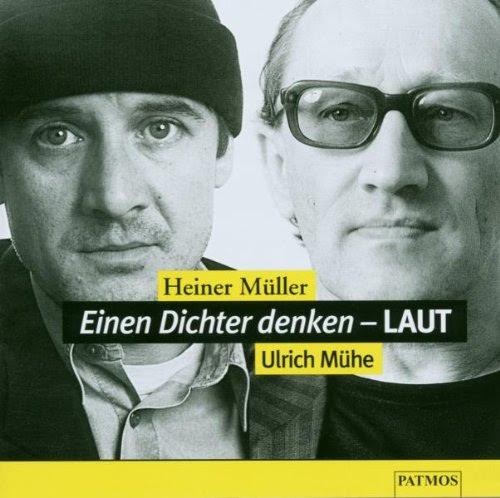
Ulrich Mühe - Heiner Müller - Einen Dichter denken - LAUT

Ul­rich Mühe (20 June 1953 – 22 July 2007) was a Ger­man film, tele­vi­sion and the­atre actor. He played the role of Haupt­mann (Cap­tain) Gerd Wiesler in the Oscar-win­ning film "Das Leben der An­deren" ("The Lives of Others", 2006), for which he re­ceived the gold award for Best Per­for­mance by an Actor in a Lead­ing Role, at the Deutscher Film­preis (Ger­man Film Awards); and the Best Actor Award at the 2006 Eu­ro­pean Film Awards.

After leav­ing school, Mühe was em­ployed as a con­struc­tion worker and a bor­der guard at the Berlin Wall. He then turned to act­ing, and from the late 1970s into the 1980s ap­peared in nu­mer­ous plays, be­com­ing a star of the Deutsches The­ater in East Berlin. He was ac­tive in pol­i­tics and de­nounced Com­mu­nist rule in East Ger­many in a mem­o­rable ad­dress at the Alexan­der­platz demon­stra­tion on 4 No­vem­ber 1989 shortly be­fore the fall of the Berlin Wall.

After Ger­man re­uni­fi­ca­tion he con­tin­ued to ap­pear in a large num­ber of films, tele­vi­sion pro­grammes and the­atre pro­duc­tions. In Ger­many he was par­tic­u­larly known for play­ing the lead role of Dr. Robert Kol­maar in the long-run­ning foren­sic crime se­ries "Der let­zte Zeuge" ("The Last Witness", 1998–2007).

Heiner Müller was an independent Marxist and wrote roughly 30 stage works. They were notable for their forceful language and unsparing political criticism and were often reworkings of classical Greek plays or Shakespeare.

He was the most influential German playwright since Bertolt Brecht, a powerful critique of both the failed socialist experiment in his native East Germany and the barbarity of capitalism. He teached us that hope for a better future can only exist as contradiction to history.

Heiner Müller was born in a village not far from Dresden in what became East Germany after World War II. His father was a political prisoner, a jailed socialist who opposed Nazism.

He was 16 when the war ended, and he remained in East Germany. "Most of my life I have been a victim of German history," Mr. Muller said in an interview in 1990. "I have to deal with history because it has dealt so much with me. Besides, onstage you need an enemy. German history is my enemy, and I want to stare into the white of its eye."

He summed up the East German state as "a dream that made a nightmare of history, like Kleist's Prussia and Shakespeare's England."

In 1951 he moved to East Berlin and did clerical and journalistic work for several years before taking a job with the Government-supported, Berlin-based Berliner Ensemble, then headed by Brecht.

Müller's first stage work, "Der Lohndrucker" ("The Wage Dumper"), which was performed in Berlin and elsewhere in 1958, was about an overachieving East German bricklayer. The work drew opposition from the Communist Party and is said to have been kept off stages in East Germany until 1988.

For years Müller remained deeply out of favor with East Germany's authoritarian authorities, who called him a "historical pessimist." He was dismissed from the Writers' Union, the main East German writers' organization, in the early 1960's, and his plays were banned.

But in the 1980's, the East German Government, reportedly motivated by a desire to capitalize on his international prestige, began treating him better. He was awarded the country's National Prize in 1986.

Even his admirers say that his plays are complicated, extremely idiosyncratic and frequently difficult for theatergoers to understand. As the Suddeutsche Zeitung put it, "He made things difficult for his readers and his audiences not because he eccentrically wanted to prove to everyone how learned he was, but rather because he sought a participating partner, thinking and feeling along with him -- the recipient as fellow-producer."

Müller's playwriting has been called surrealistic or Dadaesque in its esthetics and confrontational in its politics.

In a New York Times review of "The Hamlet Machine," staged by Robert Wilson in 1986 at New York University, Mel Gussow wrote: "The plays by Heiner Müller are as dense as they are brief -- shell fragments fired into our collective psyche." He described the play as "a small still life with silent scream, until the climax, when that scream becomes an ear-piercing reality."

In "The Hamlet Machine" and other works, Müller deals with subjects like terrorism in its many guises, including genocide and assassination. His admirers have credited him with exercising a moral force.

After East and West Germany were reunited in 1990, Heiner Müller worked chiefly as a director. His autobiography, "War Without Battle: Life Under Two Dictatorships," was published in 1992. In the last months of his life, he tried to forestall plans by another noted German dramatist, Rolf Hochhuth, to gain control of the Berliner Ensemble theater company, of which Heiner Müller had become the artistic leader.
The audiobook "Einen Dichter denken - LAUT" is a hommage for the great Heiner Müller. He died Dec. 30, 1995.


Tracklist
1Prometheus I3:02
2Landschaft mit Argonauten10:10
3Der Mann im Fahrstuhl12:32
4Hamletdarsteller8:41
5Herakler 2 oder die Hydra9:05
6Debuisson, Sasportas, Gallouedec - „Die Revolution hat keine Heimat mehr ...“15:59
7Prometheus II1:09


Ulrich Mühe - Heiner Müller - Einen Dichter denken - LAUT
(256 kbps, cover art included)

Gisela May - Brecht-Songs mit Gisela May (ETERNA, 1969, vinyl rip)

Although in America it is common to associate the songs of Kurt Weill with the voice of his wife, Lotte Lenya, in Germany Weill's music is just as readily reckoned with the singing actress once the star attraction of the Berlin Ensemble, Gisela May.

Eterna's "Brecht-Songs mit Gisela May" uses poet Bertolt Brecht, rather than Weill, as its point of departure, and focuses in particular on Brecht's early texts; the dates given with the titles connote that of the composition of the poetry, not the music.

Weill is heard in only two numbers, "Vom entrunkenen Mädchen" and "Zu Potsdam unter den Eichen," both from his Berliner Requiem (1927), of which the score had only lately been rediscovered when May recorded this album in 1968.

The balance of the material consists mostly of settings by Hanns Eisler and there are no settings by Paul Dessau, who only worked with Brecht on his later projects. A handful of early Brecht texts lacking authentic musical settings are given over to composers considered contemporary in 1960s East Germany.

Always an ardent communist, Brecht was chased out of the United States by the House on Un-American Activities Committee; he happily returned to communist East Berlin only to discover that life wasn't as idyllic there as he expected it would be. Brecht died in 1956, Eterna's "Brecht-Songs mit Gisela May" represents the ongoing legacy of Brecht at a decade's distance and will prove of strong interest to those who follow the vicissitudes of German theater. To others, while Gisela May is a first-class diseuse, her scrappy, deliberately un-pretty singing voice might prove an acquired taste.

Tracks:

1. Vom ertrunkenen Mädchen (Kurt Weill)
2. Das Lied der Eisenbahntruppe von Fort Donald
3. Ballade vom Weib und dem Soldaten
4. Zu Potsdam unter den Eichen (Kurt Weill)
5. Bericht über den Tod eines Genossen (Hanns Eisler)
6. Lied einer deutschen Mutter
7. O Falladah, die du hangest! (Hanns Eisler)
8. Das Frühjahr (aus dem Film: Kuhle Wampe) (Hanns Eisler)
9. Philosophisches Tanzlied (Lied der müden Empörer)
10. Ballade von den Selbsthelfern
11. Das Lied von der Wolke der Nacht
12. Lied der verderbten Unschuld beim Wäschefalten
13. Kuppellied (Hanns Eisler)
14. Die Legende der Dirne Evelyn Roe
15. Mutter Beimlein (Hanns Eisler)

Gisela May - Brecht-Songs mit Gisela May (ETERNA, 1969, vinyl rip)

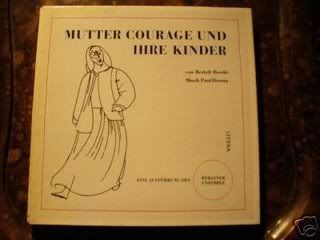
Bertolt Brecht - Mutter Courage und ihre Kinder

"Mother Courage and Her Children" ("Mutter Courage und ihre Kinder") was a play written in 1939 by the German dramatist and poet Bertolt Brecht (1898 - 1956) with significant contributions from his mistress at the time, Margarete Steffin. It has subsequently been filmed.

Image

It is one of nine plays that he wrote in an attempt to counter the rise of Fascism and Nazism. Following Brecht's own principles for political drama, the play is not set in modern times but during the Thirty Years' War of 1618-1648. It follows the fortunes of Anna Fierling, nicknamed "Mother Courage," —a wily canteen woman with the Swedish Army who is determined to make her living from the war. Over the course of the play, she loses all three of her children, Swiss Cheese, Eilif, and Katrin, to the same war from which she sought to profit.
The play is an example of Brecht's concepts of Epic Theatre and Verfremdungseffekt or "alienation". ("Alienation", however, is something of a misleading translation, for it suggests that the audience are actively cut off from the performance. A more accurate translation of Verfremdungseffekt is "distancing effect" or "to make strange", since Brecht's intention was to set the audience apart from familiar situations so that they may think about them objectively). Verfremdungseffekt is achieved through the use of placards which reveal the events of each scene, juxtaposition, actors changing characters and costume on stage, the use of narration, simple props and scenery. For instance, a single tree would be used to convey a whole forest, and the stage is usually flooded with bright white light whether it's a winter's night or a summer's day. Several songs are used to underscore the themes of the play.

The action of the play takes place over the course of 12 years —1624 - 1636 —represented in 12 short scenes. One is given a sense of Courage's career without being given enough time to develop sentimental feelings and empathize with any of the characters. Meanwhile, Mother Courage is not depicted as a noble character—here the Brechtian epic theatre sets itself apart from the ancient Greek tragedies in which the heroes are far above the average. With the same alienating effect, the ending of Brecht's play does not arouse our desire to imitate the main character, Mother Courage.

Brecht and Steffin wrote this play in only two months, and it is among his most famous plays. His work attempts to show the dreadfulness of war and the idea that virtues are not rewarded in corrupt times. He used an epic structure so that the audience focuses on the issues being displayed rather than getting involved with the characters and emotions. Epic plays are of a very distinct genre and are typical of Brecht; a strong case could be made that he invented the form.

The play was originally produced in Zurich at the Schauspielhaus, produced by Leopold Lindtberg in 1941. Music was written by Paul Dessau. The musicians were placed in view of the audience so that they could be seen—this is one of Brecht's many techniques in Epic Theatre. Therese Giehse, (a well-known actress at the time) took the title role. The first production in (East-)Berlin was in 1949, with Brecht's (second) wife Helene Weigel, his main actress and later also director, as Mother Courage.

This production would highly influence the formation of the Berliner Ensemble, which would provide Brecht a venue to direct many of his plays. Brecht died directing Galileo for the Ensemble.

(128 kbps)

Gisela May - Singt Tucholsky (Amiga, 1967)


Gisela May (born May, 31 1924) was a distinguished German character actress of theatre and a singer, critically acclaimed for performing the songs written by Bertolt Brecht and Kurt Weill. She also appeared as a film and TV actress in a number of movies between 1951 and 1991.

Gisela May studied at the drama school in Leipzig. She was employed for nine years at various theatres, including the State Theatre of Schwerin and the State Theatre in Halle. From 1951 she was engaged at the Deutsches Theater in Berlin, Max Reinhardt's former workplace. She played a variety of roles from the classics to modern.

In 1962 Gisela May moved to Bertolt Brecht's theatre group, the Berliner Ensemble, to which she belonged for 30 years. Here she played many roles including Madame Cabet in "The Days of the Commune," Mrs Peachum in "The Threepenny Opera,and " Mrs Kopecka in "Schweik in the Second World War." The theatrical highlight in Brecht's stage work was her personification of Mother Courage. This performance was for about 13 years until the end of 1992 central to the repertoire of the Berliner Ensemble. Since 1992, the artist has been freelance, often working at Berlin's Renaissance Theatre.

Gisela May's second career as a chanteuse ran parallel to her acting. The composer Hanns Eisler valued her particularly for her command of Brecht's style, and worked with her.

In addition to song interpretation Gisela May has experience in the Musicals: in Hello Dolly, she performed as the title character at the Metropol Theatre in Berlin, as well as Fraulein Schneider in "Cabaret" at the “Theater des Westens”.

Tours through Europe, across America and Australia have taken her to New York at Carnegie Hall, to the Sydney Opera House and La Scala, Milan. In 1989 she performed in London at a celebration of the 40th anniversary of the DDR.

May has been internationally acclaimed as First Lady of the Political Song and Best Brecht Interpreter. She has performed all over the world for the past forty years. May was one of the leading artists in the former DDR from the early fifties onward. She enjoyed an intensive collaboration with composer Hanns Eisler and was attached as an actress to the Berliner Ensemble for thirty years, until she was fired in 1990, after the fall of the Berlin Wall.


Tracklist:

A1 Augen In Der Gross-Stadt
A2 Lamento
A3 Sie Zu Ihm
A4 Die Nachfolgerin
A5 Das Lied Von Der Gleichgültigkeit
A6 Das Lächeln Der Mona Lisa
A7 Chanson - Japanlied

B1 Das Leibregiment
B2 Wenn Eena Jeborn Wird
B3 Wenn Eena Dot Is
B4 Mutterns Hände
B5 Der Graben
B6 Rote Melodie
B7 Krieg Dem Kriege


Gisela May - Singt Tucholsky (Amiga, 1967)
(320 kbps, cover art included)

Sing For Freedom - The Story Of The Civil Rights Movement Through Its Songs

"Sing For Freedom: The Story of the Civil Rights Movement Through Its Songs" is a moving collection of 26 songs - hymns, speeches, spirituals, gospel songs and prayers - recorded in churches and mass meetings during the early 1960s in Alabama, Georgia, Mississippi, and Tennessee. It includes classics like "We Shall Overcome", "This Little Light of Mine", and "Keep Your Eyes on the Prize".
This compilation captures the irrepressible spirit of that era and reveals a determined and triumphant African American culture. It is a collection of glorious songs and heartstopping selections by The SNCC Freedom Singers, Martin Luther King, Jr., Ralph Abernathy, and others.

"...there is wonderful singing here, great conviction, and the immediacy of living truth...powerful documentation of the most important social movement of our time."

If you ever need an emotional and spiritual pick-up, then this album is for you. The beauty of these recordings is the courage the speakers and singers had in the danger of what they faced. Hopefully this will inspire listeners to similar courage in the problems they may face today.
Sing Out!

"If you can't run - WALK, and if you can't run - CRAWL, just KEEP MOVING ON!" (Martin Luther King)

(192 kbps)

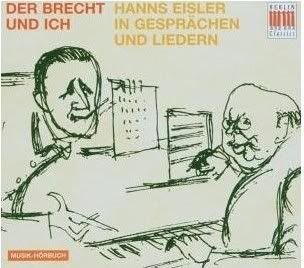
Der Brecht und ich - Hanns Eisler in Gesprächen und Liedern

Image
Bertolt Brecht (February 10, 1898 - August 14, 1956) was a German poet, playwright, and theatre director. A seminal theatre practitioner of the twentieth century, Brecht's achievement is equally significant in dramaturgy and in theatrical production, the latter particularly through the seismic impact of the tours undertaken by the Berliner Ensemble - the post-war theatre company operated by Brecht and his wife and long-time collaborator, the actress Helene Weigel - with its internationally acclaimed productions.

From his late twenties Brecht remained a life-long committed Marxist who, in developing the combined theory and practice of his 'epic theatre', synthesized and extended the experiments of Piscator and Meyerhold to explore the theatre as a forum for political ideas and the creation of a critical aesthetics of dialectical materialism. Brecht developed a technique known as "Verfremdungseffekt" or "alienation effect", which was designed to encourage the audience to retain their critical detachment.

On the album "Der Brecht und ich - Hanns Eisler in Gesprächen und Liedern" the componist Hanns Eisler reports in 25 short episodes about his cooperation with Brecht. Artist like Ernst Busch, Gisela May, Ekkehard Schall, Sonja Kehler and Eisler himself are interpreting some of the most beautiful songs of Brecht and Eisler.

Der Brecht und ich - Hanns Eisler in Gesprächen und Liedern

Gisela May - Chansons (Amiga, 1968)

[​IMG]Gisela May was a German national treasure, a singing actress (or "diseuse") in the tradition established by Lotte Lenya and Marlene Dietrich and later continued by Ute Lemper. Born to artistic parents, May's career got off to a slow start, working obscure parts in East German films and taking acting lessons in Leipzig. Her singing talents were discovered by composer Hanns Eisler, and in 1962 she joined the Berliner Ensemble, the theatrical group founded by Bertolt Brecht.

May remained a member of the Ensemble for three decades. She is strongly identified with the roles of Mother Courage, which she took over from Brecht's wife Helene Weigel after the latter died in 1971, and of Mrs. Kopecka in Schweyk and the Second World War. In 1992, May decided to leave the Berliner Ensemble and enjoyed a second career starring in German productions of the shows Cabaret and Hello, Dolly! Although the better part of her career was based in Soviet-bloc East Germany, May was able to pursue it on an international basis, touring to Australia and even the United States.

May is considered an expert interpreter of the work of Brecht, Kurt Weill, Eisler, Kurt Tucholsky, and Jacques Brel. She has recorded extensively and has won numerous prizes and awards, including election to the East German Academy of the Arts. May's memoir, "Es wechseln die Zeiten Erinnerungen (The Times Memories Change Around)", was a best seller in Germany when it was published in 2002. She also held master classes and workshops in German on Brechtian theater and cabaret performance.


Seite A:

01 Ankündigung einer Chansonette
02 Frühling
03 Sentimentale Romanze
04 Oktober
05 Abschied
06 Maskenball im Hochgebirge
07 September

Seite B:
08 Padam, padam...
09 Das Lied vom starken Mann
10 So geht die Liebe
11 Rummelplatz der Liebe
12 Überleg`s dir noch mal mit dem Herzen
13 Nein, es tut mir nicht leid

Gisela May - Chansons (Amiga, 1968)
(320 kbps, cover art included)

Hanns Eisler - Historic Recordings - Historische Aufnahmen

This album really is a collector’s item: These recordings of Brecht/Eisler political songs from the Weimar years have documentary character and value. They are sung by Ernst Busch, along with an early 50s recording by the Berliner Ensemble of the songs from Brecht’s “Die Mutter”.

Among other things, they chronicle what was special about the aspect of Hanns Eisler´s composing that had clearly emerged since 1928 as the new fabric of “Kampfmusik” (“battle music”): In the genre of politically operational songs and ballads; in the genre of new-style film scores, such as that to “Kuhle Wampe”, for which the “Solidaritätslied” (“Song Of Solidarity”) was composed; in the genre of scores for the “epic theatre”, for the historically new type of didactic piece by Bertolt Brecht, and in the genre of the “Wiegenlieder” (“Cradle Songs”) – the attempt to renew a traditonal, highly simple form of vocal popular music by direct reference to the contemporary socio-political awareness of opposition.

The present recordings primarily chronicle the specific manner in which this compositional practice, new at that time, was interpreted. They let us hear and sense how much the incomparable delivery of the great actor and singer Ernst Busch helped shape the form of “battle music”. What is more, the songs and ballads were accompanied at the piano by Eisler in countless performances or rehearsed and conducted by the composter himself fro gramophone recordings by “Homocord” in Berlin around 1930. By the way, the Homocord recording of the “Lied der Baumwollpflücker” (“Song of the cotton pickers”) won first prize at the Leipzig Gramophone Exhibiton at the beginning of 1931. Hanns Eisler also played an active part in rehearsing his music for the performance of Brecht´s stage play “Die Mutter” (“The Mother”) in 1951. Accordingly, there is every justification for describing the recordings of this album as “authentic”.

Hanns Eisler - Historic Recordings (new link)
(256 kbps, front & back cover included)

Gisela May - Brecht-Weill Songs (Eterna, 1989)

Gisela May has been acclaimed in concert halls around the world for the Brecht/Weill songs included on this record. Her repertoire is broad, but she prefers singing Brecht n settings by this three main composers: Kurt Weill, Hanns Eisler and Paul Dessau. may´s interpretations of these songs benefits from years of experience with international audiences;her performances have gained a new, mature quality which is clearly conveyd in these recordings from 1987.

Gisela May possesses the ideal qulaities for a "Brechtian singer". Apart from her international career as a recitalist, she has continued to work as an actress with the Berliner Ensemble. Just as Brecht advocated, she thus combines the related arts of acting and singing. She studied under Hanns Eisler for three years, learning the fundamentals of her work, which distinguish her to this day and have always stood her in good stead: the search for a precise characterisation for each sing; the ability to adapt this characterisation to her own personality and vocal abilities; relentless work on musical and rhythmic preciseness, on the little details which together make for yet another fantastic performance.

This album with songs from "Happy End", "Berliner Requiem", "Die Dreigroschenoper" and "Aufstieg und Fall der Stadt Mahagonny" was recorded in the year 1987 at "Studio Rechstagsufer" in Berlin and released on the Eterna label in 1989.


Tracklist:

Side 1:
Aus "Happy End"
(01) Gisela May - Der Matrosen-Song
(02) Gisela May - Der Bilbao-Song
(03) Gisela May - Der Song von Mandelay
(04) Gisela May - Das Lied vom Surabaya-Johnny
(05) Gisela May - Ballade von der Höllen-Lili
(06) Gisela May - Das Lied von der harten Nuß

Aus "Das Berliner Requiem"
(07) Gisela May - Zu Potsdam unter den Eichen
(08) Gisela May - Vom ertrunkenen Mädchen

----

Side 2:
Aus "Die Dreigroschenoper"

(09) Gisela May - Die Moritat von Mäckie Messer
(10) Gisela May - Die Seeräuber-Jenny
(11) Gisela May - Das Lied von der Unzulänglichkeit menschlichen Strebens
(12) Gisela May - Barbara-Song
(13) Gisela May - Die Ballade von der sexuellen Hörigkeit
(14) Gisela May - Solomon-Song

Aus "Aufstieg und Fall der Stadt Mahagonny"
(15) Gisela May - Denn wie man sich bettet, so liegt man
(16) Gisela May - Der Havanna-Song
(17) Gisela May - Alabama-Song

Track (07) und (08):
Werner Eberhardt (Bariton)
Horst Dittmann (Bariton)
Wolfgang Dersch (Baß)
Manfred Schmieder (Baß)
Gundula Sonsalla (Gitarre)
Siegfried Lotz (Kontrabaß)

Track (09) bis (14):
Milan Samko (Harmonium)

Studioorchester
Conductor: Henry Krtschil

Gisela May - Brecht-Weill Songs (Eterna, 1989)
(192 kbps, front cover included)

Hazel O´Conner - Cover Plus (1981)

Hazel O'Connor (born 16 May 1955, Coventry, England) is an English singer-songwriter and actress. She is the daughter of a soldier from Galway who settled in England after World War II to work in a car plant. She became famous in the early 1980s with hit singles "Eighth Day", "D-Days" and "Will You", as well as starring in the film "Breaking Glass".

"Cover Plus" is O'Connor's third studio album, released in 1981. Yes, the woman is very very creative, I know. She never runs out of it. For many O'Connor fans this is her best album of all, although successfully doesn't surpass "Breaking Glass".

This album charted to #32 in the U.K. "Cover Plus" musically speaking follows the line of her previous two albums but at the same time sounds different to these other albums.

Tracklist:
A1 (Cover Plus) We're All Grown Up
A2 Hanging Around
A3 Ee-i-addio
A4 Not For You
A5 Hold On
A6 So You're Born
B1 Dawn Chorus
B2 Animal Farm (We Will Be Happy?)
B3 Runaway
B4 Do What You Gotta Do
B5 Men Of Good Fortune
B6 That's Life

Hazel O´Connor - Cover Plus (1981)
(256 kbps, cover art included)

Freitag, 21. August 2020

VA - Rote Lieder - Festival des polititschen Liedes 8

"Singe-Bewegung" and "Oktoberklub" in East Germany, part 12.

Festival des politischen Liedes (Political Song Festival)

Music festivals played a key role in the dissemination of political folk songs in the 1960s. In den US it was the Newport Folk Festival; in West Germany the Chanson and Folklore Festival, held from 1964–69 at Burg Waldeck in Hunsrück, attracted a wide public with prominent artists like Franz-Josef Degenhardt, Reinhard Mey, Hannes Wader and Dieter Süverkrüp. In East Berlin a "Festival des politischen Liedes" (Political Song Festival) was held from 1970–90. Begun as an anniversary party of sorts for the Oktoberklub, it became one of the biggest music events in the German Democratic Republic. Artists from over 60 countries and every continent played here, including leading lights of the folk and singer-songwriter scenes like Miriam Makeba, Quilapayún and Pete Seeger. The West German contingent ranged from Degenhardt, Wader and Floh de Cologne to Zupfgeigenhansel, Heinz-Rudolf Kunze and Konstantin Wecker. The festival was instrumentalized for political PR purposes, but was above all a window on the world, a “political carnival”, as songwriter Hans-Eckardt Wenzel put it, that “briefly suspended the drab monotony of day-to-day life in East Germany”.

Tracklist:
1.Jahrgang '49Wer aber ist die Partei
2.TrovanteNuvem Negra
3.Alen MakMelnistscha Sa Ziment
4.Singegruppe Aus Der Vdr LaosSainam Say
5.KiesosReforma Agraria
6.Frankie ArmstrongThe Lament Of The Working Class Hero's Wife
7.OktoberklubDas Brot des Volkes
8.Hannes WaderFreunde, Genossen
9.MoncadaCuando Tenga La Tierra
10.Skiffle SchwerinBrüder, seht, die rote Fahne
11.Rosa LeónCancion De Cuna Para Victor G. Leon
12.Dieter SüverkrüpDer Sozialismus, Genossen
13.Maria Dimitriadi And Notis MawrudisDie Versammlung der Studenten
14.Yaki KandruAus einer Kantate indianischer Musik
15.QuilapayunSolidaritätslied

VA - Rote Lieder - Festival des polititschen Liedes 8
(320 kbps, cover art included)

VA - Solidarität geht weiter - X. Weltfestspiele der Jugend und Studenten · Berlin 1973 · Hauptstadt der DDR (Eterna)

The first World Festival of Youth and Students took place in Prague in 1947, with subsequent festivals occurring every other year through the mid-1960s, after which they became slightly less frequent. Transnational by nature, they were organized by two socialist-leaning, non-government organizations—the World Federation of Democratic Youth (WFDY) and the International Union of Students (IUS)—both of which supported international and national preparatory committees with the organization of events on the ground in locations as far-flung as Budapest, Helsinki, Havana, Moscow, and East Berlin. By the 1960s, the festival themes reflected the aspirations of the Soviet Union and, by extension, the Eastern bloc countries to forge connections with Third World state and non-state actors in the aftermath of the rapid wave of decolonization across the global South. In projecting international solidarity across time and space, the festivals came to embody a socialist ritual that travelled from one city to the next, collapsing the local versus global divide.

While a demonstration of socialism's internationalism was at least part of the impetus for the festival's mobile character, its ability to be rooted temporarily in local spaces also served a strategic purpose. East Berlin, for instance, represented a particularly important site for the festival, as it symbolized a key “border region” during the Cold War. This designation refers to the idea that the divided city of Berlin—located deep within the East German state—served as both a concrete and imagined point of interaction between the “East” and “West” during the Cold War. In fact, the World Youth Festival had been held once before in East Berlin—in 1951. At the time, the presence of international youths had undoubtedly served to reinforce the East German state's claim to legitimacy in the face of the West German state's refusal to recognize it. Countering West German isolation efforts, the 1951 festival program underscored the East German state's foundational myth, by aligning the GDR's proclaimed antifascist origins with a commitment to anti-imperialist struggles in the Third World.

By contrast, the 1973 festival in East Berlin took place during a period of relaxation between the East and West. Rather than seeking to legitimize the GDR, state planners recognized the 1973 festival as indicative of the very spirit of détente that had come to mark the shift in East-West German relations after the recent signing of the Basic Treaty. That agreement had not only established “neighborly relations” between the two German states, but also paved the way for widespread recognition of the GDR beyond the Eastern bloc, ending the decades-long struggle for legitimacy that East and West Germany had fought through diplomatic and trade agreements in the Third World. As the West German weekly Der Spiegel reported, the 1973 festival seemed to embody “the openness, even opulence with which, this week, the GDR presented itself before the rest of the world and its own people.” Yet, despite East Germany's improved international standing, the preparations for the 1973 festival reflected the East German authorities’ continued concern with perceived internal and external threats that were, in many respects, exacerbated—rather than diminished—by the relaxation in East-West tensions.


Tracklist:

A1 –Singegruppe Michael Höft und Rundfunk-Tanzorchester Berlin - So wird es sein
A2 –Oktoberklub Berlin - Wir treffen uns auf jeden Fall
A3 –Uwe Leo, Oktoberklub und Studiochor-Gruppe Berlin, Instrumentalgruppe Klaus Schneider -  Frieden, Freundschaft, Solidarität
A4 –Liedgruppe X. Weltfestspiele - Die Solidarität geht weiter
A5 –Klaus Renft-Combo - Ketten werden knapper
A6 –Vlady Slezák und der Gerd Michaelis-Chor, Rundfunk-Tanzorchester Berlin - Solidarität
A7 –Oktoberklub Berlin, Rundfunk-Tanzorchester Berlin - Ist das klar
B1 –Singegruppe Michael Höft, Rundfunk-Tanzorchester - Berlin Salut
B2 –Oktoberklub Berlin, Siegfried Mai und sein Orchester - Marsch für die X. (Noch immer gibt es Hunger auf der Erde)
B3 –Rundfunk-Jugendchor Wernigerode Rhythmusgruppe - Die junge Welt ist in Berlin zu Gast
B4 –Rundfunk-Jugendchor Wernigerode Rhythmusgruppe - Es geht um die Erde ein rotes Band
B5 –Rundfunk-Jugendchor Wernigerode Rhythmusgruppe - You and me
B6 –Oktoberklub Berlin - Wir sind überall
B7 –Aurora Lacasa, Reinhard Lakomy Chor und Orchester - Terra Humanitas

VA - Solidarität geht weiter - X. Weltfestspiele der Jugend und Studenten · Berlin 1973 · Hauptstadt der DDR (Eterna)
(192 kbps, cover art included)

Mittwoch, 19. August 2020

Unser Leben im Lied - 30 Jahre DDR (ETERNA, Tape-Box, 1979)

This year will be the 71th anniversary of the founding of the GDR, which was announced by Wilhelm Pieck on 7 October 1949. This event marked the end of a development that had begun shortly after the end of the War. Since 1945, there had been mounting tension between the four allied powers. Although they had jointly declared the formation of a democratic Germany to be their most important goal, their definitions of democratisation were worlds apart. To remember this event, we post "Unser Leben im Lied", a box with three tapes, released in 1969 to celebrate the 30th anniversary of the GDR. It is a very interesting compilation with songs from the antifascist resistance and "Aufbaulieder"  (tape 1), children and youth songs (tape 2) and songs from the "Singebewegung" (tape 3).
.
The GDR viewed the whole democratic and revolutionary song tradition as its own cultural inheritance. The "Kampflieder" of Brecht and Eisler and songs from the Spanish Civil War were learned in schools and in the army.

In the late 1940s and throughout the 1950s these songs appeared in song books of the Free German Youth (FDJ) and the Young Pioneers alongside German folk songs and new, so called "Aufbaulieder" written specially for the GDR youth. Songs such as "Fleißig, nur fleißig" and Johannes R. Becher´s "Nationalhymne der DDR" encouraged diligence and a joyful common purpose in the building of the new socialist state. In general, however, the political song genre did not prosper in the 1950s. It was a serious, sacred tradition, not to be tampered with, and the writing of new songs critical of the GDR was unthinkable. On the other hand, as Lutz Kirchenwitz notes, for the young poets of the 1950s, who were inspired by the creation of a socialist state on German soil, the political crises caused by the uprising of 17th June 1953 and the Soviet invasion of Hungary in 1956 created an atmosphere of disillusionment that was detrimental for the writing of new political poetry and song.


By the early 1960s, a completely new kind of protest song culture was being encountered. The American civil rights song was filtering over the air waves via West Germany through to East Berlin. The building of the Berlin Wall in August 1961 had given the GDR government a sufficient sense of security to relax the severity of censorship in the arts. During this political thaw, which lasted roughly up until the infamous 11th Plenum of the SED in December 1965, an independent folk music scene emerged in East Berlin, based on the informal Hootenanny model made famous by American folk singers such as Pete Seeger. 
The Berlin Hootenannies were guided by the resident banjo-playing Canadian Perry Friedman. With his uninhibited performance style, Friedman made German folk songs attractive for the youth and freed the workers´ songs of their sacred aura.

In general during the cultural thaw there was an easier access to western pop music and jazz. In this respect the formation of the Hootenanny-Klub in 1966 was the culmination of four years of musical eclecticism in a vibrant scene in East Berlin that also included Wolf Biermann, Eva-Maria Hagen, Manfred Krug and Bettina Wegner.

The political thaw came to an abrupt end with the 11th Plenum of the Zentralkomitee of the SED in December 1965. Pop groups were banned for their alleged corrupting Western influence. But as Jürgen Tinkus writes, this created a space for folk and singing groups to emerge. In late 1966 it was decided at the highest of levels that the Hootenanny-Klub was to be taken over by the FDJ. With the agreement of several leading members, the groups name was changed to the "Oktoberklub". The writer Gisela Steineckert was installed as a supervisor. This appropriation of the singing youth movement by the FDJ was ideologically motivated. With effective control over all popular performance events, the FDJ had the means to bring it to the masses, and by 1968 thousends of singing clubs had formed all over the GDR. Leaders of the singing clubs were frequently remindet that they had to remain "politische Instrumente des Jugendverbandes." In this way the movement became increasingly instrumentalized as an agent of state propaganda. From 1968 onwards, under the slogan "DDR-Konkret" the FDJ encouraged young students and wokers to write new songs dealing with their everyday lives and with issues of importance to them. This gave a new twist to the concept of revolutionary "Gebrauchslyrik" pioneered by Erich Mühsam in his ealry-twentieth-century "Kampflieder".

The official role of the political song in the GDR was defined by Inge Lammel as follows:
"Die neuen Lieder werden für die Politik von Partei und Regierung geschaffen. Sie sind nicht mehr Kampfmittel einer unterdrückten Klasse gegen eine Klasse von Ausbeutern, sondern Ausdruck der gemeinsamen Interessen aller Werktätigen."


Teil 1 Lieder aus dem Antifastischem Wiederstand:

01 - Einheitsfrontlied -  Großer Chor des Berliner Rundfunks
03 - die Moorsoldaten - Erich Weinert Ensemble der DDR
04 - mein Vater wird gesucht - Christian vom Rundfunk Orchester Berlin
05 - Dank an die Sowjetarmee - Solistenvereinigung des Berliner Rundfunks
06 - Kalinka - Rotbanner Ensemble der Sowjetunion
07 - der Zukunft entgegen - Rundfunk-Jugendorchester Wernigerode
08 - Du hast ja ein Ziel vor den Augen - großes Rundfunk Orchester Berlin
09 - Ein neues Leben will errungen sein - Solistenvereinigung des Berliner Rundfunks
10 - Marsch der fröhlichen Jugend - Zentraler Pionierchor 'Edgar Andre'
11 - Aufbaulied der FDJ - Rundfunk Jugendorchester Leipzig
12 - wann wir schreiten Seit an Seit - Kammerchor des Rundfunk
13 - Heut ist ein wunderschöner Tag - Rundfunk Jugendchor Leipzig
14 - Sportmarsch - Großer Radio DDR Kinderchor
15 - Weil wir jung sind - Orcester des Wachregiments Berlin
16 - Hymnus der Jugend - Chor der Pädagogischen Hochschule Potsdam
17 - Ich trage eine Fahne - Chor der Gerhard Hauptmann Oberschule Wernigerode
19 - Lied vom Bau des Sozialismus - Rundfunk Orchester Berlin
20 - Signale der Jugend - Rundfunk Jugendchor Wernigerode
21 - Immer lebe die Sonne - Rundfunk Kinderchor Berlin
22 - Für den Frieden der Welt - Orcester des Tanzensembles Berlin


Teil 2 Jugend-, Heimat- und Kinderlieder:

01 - Bitte der Kinder - Rundfunk Kinderchor Leipzig
02 - Lied von der blauen Fahne - Großer Chor des Berliner Rundfunks
03 - Im August blühen die Rosen - Großes Rundfunk Orchester Berlin
04 - Auf zum Sozialismus (Fröhlich sein und singen) - Zentraler Pionierchor 'Edgar Andre' Berlin
05 - Getreu der Partei - Orchester des Tanzensembles der DDR
06 - Es geht um die Erde ein rotes Band (Bruder unbekannter Bruder) - Chor der Gerhart Hauptmann Oberschule Wernigerode
07 - Mein Lied ist laut - Hermann Hähnel
08 - Dschungellied (der Jim starb gestern) - Orchester Gerd Natschinski
09 - es lebe das Brot - Chor der NVA
10 - Heute lacht Brandenburg - Chor und Orchester des Staatlichen Volksensembles der DDR
11 - Fritz der Traktorist - Rundfunk Jugendchor Leipzig
12 - Eisenbahnerlied - Rundfunk Jugendchor Wernigerode
13 - Zimmermannstanz - Orchester Gerhard Kneifel
14 - die Heimat hat sich schön gemacht - Zentraler Pionierchor 'Edgar Andre'
15 - es wird einmal in den Schulbüchern stehen - Eva Lorenz
16 - Fuchs und Igel - Hermann Hähnel
17 - tapfer lacht die junge Garde - Erich Weinert Orchester der NVA
18 - Über die Diktatur - Hermann Hähnel
19 - wie Thälmann kampfentschlossen - Erich Weinert Ensemble der NVA
20 - wer möchte nicht im Leben bleiben - Rundfunk Kinderchor Berlin
21 - Republik mein Vaterland - Rundfunkchor Berlin
22 - zwei liebevolle Schwestern - Gisela May


Teil 3 Lieder aus der Singebewegung:

01 - Oktobersong - Oktoberklub Berlin
02 - Song von den gefallenen Genossen - Oktoberklub Berlin
03 - Sag mir wo Du stehst - Hartmut und der Oktoberklub Berlin
04 - der Weg - Singeklub der EOS Büntzow
05 - Lied aus dem fahrenden Zug zu singen - Kurt Demmler und der Singeklub "Venceremos" Berlin
06 - Lied vom Vaterland - Oktoberklub Berlin
07 - Zugvögel - Songgruppe der TU Dresden
08 - Wer bin ich, und wer bist Du - Petra Rechlin und kurt Demmler
09 - Als ich aufsah von den Büchern - Monika Zöllner und der Oktoberklub Berlin
10 - Die Kraniche fliegen im Kiel - Jahrgang 49
11 - Mein kleiner Bruder - Singeklub der NVA
12 - Fahnenlied - Jahrgang 49
13 - Komsomolzenlied - Oktoberklub Berlin
14 - Hiring Aal un Kabeljau - Singeklub "Geschwister Scholl" Wismar
15 - Lied von der unruhvollen Jugend - Folkloretruppe der TU Dresden
16 - Kinder, kommt nun herein - Singeklub "Spartakus" Potsdam
17 - Saigon ist frei - Oktoberklub Berlin
18 - Was wollen wir trinken - Oktoberklub Berlin
19 - Für unser Chile - Jahrgang 49
20 - Havanna '78 - Jahrgang 49


Included is a scan of the very informative booklet with an essay by Inge Lammel about the development of the music in the GDR.

Thanks a lot to the unknown original uploader!

Unser Leben im Lied - 30 Jahre DDR  (ETERNA, Tape-Box, 1979), part 1 (Booklet & Tape 1)
Unser Leben im Lied - 30 Jahre DDR  (ETERNA, Tape-Box, 1979), part 2 (Tape 2 & 3)
(256 kbps, booklet included)

Wolf Biermann - Warte nicht auf beßre Zeiten (1973)

Born in 1936 in Hamburg as the son of a Jewish deckhand, Biermann was confronted with totalitarianism, prosecution and loss as a young child.
His father, who was active in the communist resistance, was murdered at Auschwitz in 1943. In the same year, he and his mother fled Hamburg as the Allies bombarded it.

Some 300,000 people left East Germany for the west in 1953, but 17-year-old Biermann went against the flow. He settled in the socialist German state out of political conviction and, two years later, began studying economics, philosophy and math at Humboldt University in Berlin.

With the support of composer Hans Eisler, Biermann began to write songs and poems and perform cabaret. He also worked as an assistant producer at the famed Berliner Ensemble for two years.
After publishing his some of his works in East German magazines and anthologies, he endeavored to found a small theater of his own.
Just before the first performance, the theater was shut down by the state and Biermann was expelled from the communist party and banned from practicing his profession for half a year. The play was about the building of the Berlin Wall.
Conflict with the GDR authorities only compounded. After his first concert tour in West Germany and the publication of his poetry book "Die Drahtharfe" ("The Wire Harp") by a West Berlin publishing house, the singer-songwriter-poet was accused of being a traitor and banned from performing, publishing and traveling abroad.

For 12 years, Biermann sang for himself or for small, private audiences in his East Berlin apartment on Chausseestrasse. Some of his albums, however, were smuggled over to the west and his songs became more popular there than in the east.
In September 1976 Biermann was finally permitted to perform publicly again in the GDR and two months later he was given a visa to go on tour in West Germany.
Three days after his legendary concert in the Cologne sport arena, he was expatriated by the East German party leaders for his "hostile performance" and not permitted to return to the GDR.

Over 100 artists, writers and actors in the socialist German state staged public protests. When the authorities responded with intimidation, jail sentences and bans, masses of intellectuals picked up and left the GDR.
Biermann saw his expatriation as a catastrophe. "I thought it was all over with my life as a singer and poet," he said later.
Indeed, the first years in exile weren't easy. Nevertheless, the "Troubadour of inner German conflict," as the "Süddeutsche Zeitung" called him in a 1987 article, carried on with his career. He published several volumes of lyric and prose and settled old scores with both East and West Germany on concert tours at home and abroad.
Biermann was enthusiastically received at his first performance in eastern Germany after the fall of the Berlin Wall in 1989. He'd already broken with the socialism his former homeland was shedding.

In the 1990s he began exploring his Jewish roots more extensively and was active in politics and media. He campaigned against the Party of Democratic Socialism, the successor to the East German communist party and became head cultural correspondent for the daily newspaper Die Welt in 2003.
Today, Biermann is still an uncomfortable and controversial coeval. He's not afraid to stick his finger in open wounds and stir up discussion. Even if not everyone likes his message, at least it comes across.
"I can't complain that I've been fundamentally misunderstood. I've generally always been well understood," he told Deutsche Welle reporters.

"Warte nicht auf beßre Zeiten" was the second album by Wolf Biermann, released in 1973. This cd reissue completes the 8 tracks of the original album by 3 re-recorded tracks, originally released in 1968 on the single "4 neue Lieder" (Wagenbachs Quartplatte).

Wolf Biermann - Warte nicht auf beßre Zeiten (1973) & 3 tracks

(256 kbps, cover art included)


Dagmar Manzel - Ich bin ein Wesen leichter Art


Born in 1958 in Berlin, Dagmar Manzel is one of Germany’s most noticed and successful actresses. Alongside of her career in theater, film and TV, her love pertains for music as well. Following her successful solo song recital "Ich bin ein Wesen leichter Art" at Deutsche Theater, Berlin, she performed the title role of Offenbach’s operetta "Die Großherzogin von Gerolstein". Further engagements in musical theater led her to the title role at Berliner Ensemble in "La Périchole" and to Hans-Otto-Theater Potsdam as "Rosalinde / Die Fledermaus". At Komische Oper Berlin, she has been celebrated not only for her debut as "Mrs. Lovett / Sweeny Todd", but also for her achievements as Lilli Vanessi in "Kiss me Kate". This successful show has also been transferred to the opera Cologne, where it has been running ever since. Dagmar Manzel can also be seen and heard in a new production of Ralph Benatzky’s "Im Weißen Rößl" at Komische Oper Berlin since the start of the season 2010/2011.

Dagmar Manzel is also familiar to the concert stage. She performed at La Cité de la Musique in Paris with the Ensemble Intercontemporain songs by Hanns Eisler under the direction of Peter Rundel; with whom she collaborated again in Zurich this year to perform Kassandra by Michael Jarell with the chamber orchestra of Collegium Novum Zurich. Twice already, she has been working with co-actor Robert Gallinowski in a song recital called Philharmonischer Salon. It is a recital evening, initiated by Götz Teusch, former cello player with the Berliner Philharmoniker, with songs from Berlin cultural life during the 1920s. On the occasion of opening the Jewish Culture Days in Berlin, Manzel gave a concert devoted to Richard Heymann accompanied by the pianist Tal Balshai and his ensemble in early spring of 2011. With the equal lineup she could be heard at Konzerthaus Berlin Gendarmenmarkt during Hanns Eisler Days 2012. A triumphant success has been the new production of Kurt Weill’s "Sieben Todsünden" with director Barrie Kosky at Komische Oper Berlin in spring of 2012 in which Dagmar Manzel sang the role of Anna. Furthermore, she performed at the opening of the Augsburg Brecht Festival in spring of 2013. In summer of 2013, Dagmar Manzel returned to Komische Oper Berlin to sing the role of Madeleine de Faublas in Paul Abraham’s "Ball im Savoy".

Here´s the album "Ich bin ein Wesen leichter Art" featuring here programm of stage songs performed at the Deutsches Theater in Berlin.

Dagmar Manzel - Ich bin ein Wesen leichter Art
(256 kbps, cover art included)

Wolf Kaiser - Bertolt Brecht - Songs, Gedichte & Geschichten (LITERA)


Wolf Kaiser was a German theatre and film actor. He grew up in Switzerland, where he studied chemistry and physiology. In 1937 he was deemed unfit for service in the Wehrmacht, and then went to Berlin where he trained as an actor.
Kaiser made his stage début in 1941 at the Stadtheater in Jihlava, Czechoslovakia, when that country was occupied by Germany. This led to Kaiser's engagement at the Volksbühne in Berlin from 1942 until 1945. Kaiser then had engagements in Frankfurt am Main, Munich and the Schauspiel Leipzig. In 1950 Kaiser returned to Berlin, where Bertolt Brecht recruited him to the Deutsches Theater and the Berliner Ensemble. Kaiser starred as Mack the Knife in Brecht and Weill's The Threepenny Opera in more than 450 times. Kaiser stayed with the Berliner Ensemble until 1967, becoming one of East Germany's foremost stage actors.

Kaiser had acted in films since the Second World War, including roles in Wolfgang Staudte's Die Geschichte vom kleinen Muck (1953), Kurt Maetzig's Ernst Thälmann, Sohn Seiner Klasse (1954), Martin Hellberg's Thomas Müntzer and Peter Palitzsch and Manfred Weckwerth's film version of Brecht's Mother Courage and Her Children (1961). Kaiser's first starring role was in 1956 in Hellberg's Die Millionen der Yvette, and he was noted for his roles in Helmut Spieß's 1956 film version of The Valiant Little Tailor,, Martin Hellberg's 1959 film version of Friedrich Schiller's Intrigue and Love  and Robert Vernay's 1965 film Das Stacheltier – Das blaue Zimmer. From 1969 Kaiser concentrated his career on screen acting, including Peter Zadek's 1973 version of Kleiner Mann – was nun? and Egon Günther's 1978 television version of Ursula. Kaiser's last major film role was in 1981 as Casanova in Martin Eckermann's Casanova auf Schloß Dux.  Kaiser appeared frequently on East German television.
Kaiser believed in and supported the East German Communist state. He was distressed by its collapse in 1989 and the return of capitalism and mass unemployment to eastern Germany from 1989 onwards. In 1992, a few days before his birthday, Kaiser committed suicide by leaping out of the study window of his apartment. Kaiser is buried in the Dorotheenstadt and Friedrichswerder Cemetery in Berlin.
Tracklist:

01. (00:01:57) Wolf Kaiser - Die Ballade vom angehemen Leben
02. (00:01:41) Wolf Kaiser - Morgendliche Rede an den Baum Griehn
03. (00:05:55) Wolf Kaiser - Aus den Psalmen
04. (00:08:08) Wolf Kaiser - Die Antwort
05. (00:05:18) Wolf Kaiser - Das Gleichnis aus Coriolan
06. (00:02:48) Wolf Kaiser - Des Feldpredigers Gespräche
07. (00:02:48) Wolf Kaiser - Mackie Messer
08. (00:02:03) Wolf Kaiser - Der Kanonensong
09. (00:02:03) Wolf Kaiser - Der neue Kanonensong
10. (00:01:06) Wolf Kaiser - Ruf aus der Gruft
11. (00:02:29) Wolf Kaiser - Abbitte-Ballade
12. (00:05:19) Wolf Kaiser - Der Soldat von La Ciotat
13. (00:04:09) Wolf Kaiser - Geschichten von Herrn Keuner
14. (00:02:33) Wolf Kaiser - Das Lied vom Extra
15. (00:01:00) Wolf Kaiser - Vergnügungen


Wolf Kaiser - Bertolt Brecht - Songs, Gedichte & Geschichten (LITERA)
(320 kbps, cover art included)

Erwin Geschonneck - "Widerstand und Anpassung - Überlebensstrategie" (Originaltonfeature by Thomas Heise)

PhotobucketErwin Geschonneck, a German actor who spent years in Nazi concentration camps for his communist sympathies and went on to star in scores of East German films, died on March, 13, 2008 in Berlin at the age of 101.

Geschonneck's "engaging artistic and political efforts were recognized with the highest international acclaim for decades," the german Academy of Arts said in a statement. It said that the biography of Geschonnek, who died at his Berlin apartment, "is a window into a century of German history."

Geschonneck, the son of a cobbler, was born in East Prussia on Dec. 27, 1906 and grew up in Berlin. He joined the Communist party in 1919, and spent years with theater groups that performed agitprop, with workers' choirs and in a young people's theater. He made his big-screen debut in 1931 as an extra in Slatan Dudows' "Kuhle Wampe" - a film about unemployment in the Weimar Republic written by famed playwright and director Bertolt Brecht.

After the Nazis came to power in 1933, Geschonneck went into exile in the Soviet Union, settling in Odessa - where he worked in a German-language collective theater until he was expelled in 1938. He ended up in Prague, where he was arrested by the SS in 1939 after the Nazis took over, then thrown into the Sachsenhausen concentration camp outside Berlin.
During the war, he was also imprisoned in the Dachau and Neuengamme camps. Just days before the end of the war, he was being transported aboard the Cap Arcona - a prewar luxury liner that had been commandeered by the German navy - along with some 4,000 other concentration camp inmates when it was sunk by the Royal Air Force in the Baltic.
Many of those who were not killed in the attack were gunned down by the SS as they tried to swim ashore.
Geschonneck was one of 350 who survived, and his story would be later made into the 1982 East German television film "Der Mann von der Cap Arcona" - "The Man of the Cap Arcona" - in which he also acted.

After the war, Geschonneck resumed acting in 1946 in Hamburg in the theater, and also took on several supporting film roles.
In 1949, he moved to East Berlin and joined Brecht's Berliner Ensemble theater troupe, where he gained national attention starring as "Matti" in an acclaimed production of "Mr. Puntila and his Man Matti."

He acted in his first film for DEFA - East Germany's state-run film agency - in 1950 and later that decade decided to concentrate all of his efforts on the screen, despite Brecht's objections.
He rose to become one of East Germany's best-known actors with scores of films to his credit, and won several awards for his work. He also became vice president of the country's film and television federation. Despite being a strong supporter of the communist movement, he appeared in several movies criticizing the East German government, which were not banned due to his reputation.

After the reunification of Germany, he was awarded with the national "Filmband in Gold" prize in 1993.
He acted in his last film, "Matulla und Busch," in 1995 under the direction of his son, Matti Geschonneck. Rest in peace!

In memory of this great artist here´s a radio feature by Thomas Heise, banned in East Germany in 1987 and broadcasted in 1989. It is called "Widerstand und Anpassung - Überlebensstategie" and features Erwin Geschonneck remembering his time in the concentration camp Dachau. The feature is in german language.

Widerstand und Anpassung - Überlebensstrategie (Originaltonfeature)

Dienstag, 18. August 2020

Berliner Ensemble - Die Mutter (Bertolt Brecht, Hanns Eisler, Ernst Busch, ETERNA, 1951)

This is an album collecting five 10 inch shellacs (played on 78 RPM) with songs from Bertolt Brecht´s stage play "Die Mutter" with music by Hanns Eisler.

These shellacs were released on Ernst Busch´s label "Lieder der Zeit" with the Eterna catalogue numbers 2340 to 2349.

These classic recordings are presenting the chorus and the orchestra of the Berliner Ensemble, conducted by Adolf Fritz Guhl. Lead vocals are mostly by Ernst Busch.

Hanns Eisler played an active part in rehearsing his music for the performance of Brecht´s stage play "Die Mutter" in 1951. Accordingly, there is every justification for describng the present recordigns as "authentic".

Tracklist Shellac 1:
A Wie Die Krähe (with Carola Braunbock)
B Der Zerrissene Rock


Tracklist Shellac 2:
A Lob Des Lernens
B1 Lied Von Der Suppe (vocals by Edith Weiss)
B2 Lob Des Kommunismus (vocals by Helene Weigel)

Tracklist Shellac 3:
A Bericht Vom 1.
Mai 1905 (vocals by Ernst Kahler and Kurt Sperling)
B Bericht Vom 1. Mai 1905 (vocals by Gerd Schäfer and Friedrich Gnass)

Tracklist Shellac 4:
A1 Lob Der Wlassowas (vocals by Ernst Kahler)
A2 Lob Eines Revolutionärs
B1 Lob Der Dritten Sache (vocals by Helene Weigel)
B2 Im Gefängnis Zu Singen


Tracklist Shellac 5:
A Grabrede Über Einen Genossen, Der An Die Wand Gestellt Wurde
B 1 Steh' Auf!
B 2 Lob Der Dialektik

Berliner Ensemble - Die Mutter (Brecht, Eisler, Busch, ETERNA, 1951)

(192 kbps, scans of all of the shellac labels are included)

Hanns Dieter Hüsch - 40 Jahre unterwegs

Hanns Dieter Hüsch (6 May 1925, in Moers – 6 December 2005, in Windeck-Werfen) was a German author, cabaret artist, actor, songwriter and radio commentator.
With a working life of more than 53 years on the German cabaret stage and 70 of his own programmes he was one of the most productive and successful representatives of literary cabaret in Germany in the 20th century.

It is said that more than 3.5 million people have seen Hanns Dieter Hüsch's live performances from 1947 to 2000. He received the Bundesverdienstkreuz and, twice, the German Cabaret award "Deutscher Kleinkunstpreis"; he also received honorary citizenship of Moers and Mainz, the North Rhine-Westphalia culture prize, the 1995 Kassel Literary Prize, and the culture prize of Rhineland-Palatinate, as well as other honors.

With "40 Jahre unterwegs" Hanns Dieter Hüsch looks back at 40 years on stage. The album was recorded in December 1989 at the "Renitenz-Theater" in Stuttgart.

Tracklist:

1-1Begrüßung5:41
1-2Spaziergang7:00
1-3Hedwig4:04
1-4Hagenbuch und die Schriftsteller13:09
1-5Mein Onkel17:14
1-6Die Geschichte von den Bäckern aus Beumelburg11:13
1-7Geschichte3:12
1-8Jugend1:55
1-9Das Alter2:08
1-10Abendlied3:58
1-11Was soll die Frieda kochen3:49
1-12Das Wort zum Montag3:19
2-1Schluß gemacht4:17
2-2Inside Story15:01
2-3Solei mit Kultur5:39
2-4Orangerie4:30
2-5Wo bin ich?6:47
2-6Japanischer Film10:53
2-7Dialog mit der Jugend2:52
2-8Die Forelle4:05
2-9Religiothek3:35
2-10Ich setze auf die Liebe4:48


Hanns Dieter Hüsch - 40 Jahre unterwegs, CD 1
Hanns Dieter Hüsch - 40 Jahre unterwegs, CD 2
(320 kbps, cover art included)