Freitag, 27. Juli 2018

Max Roach ‎– We Insist! Max Roach's Freedom Now Suite

"We Insist! Max Roach's Freedom Now Suite", co-authored by Max Roach and Oscar Brown, Jr., was a pivotal work in the early-'60s African-American protest movement, and continues to be relevant in its message and tenacity. It represents a lesson in living as to how the hundreds of years prior were an unnecessary example of how oppression kept slaves and immigrants in general in their place. 

Vocalist Abbey Lincoln expresses this oppression as effectively as anyone could with her thespian-based wordless vocals, and lyrics written by Brown that tell the grim story of the struggle of African-American for far too long. Musically, Roach assembled one of the greatest bands, from his own emerging ensemble with trombonist Julian Priester and trumpeter Booker Little, to the legendary Coleman Hawkins and lesser-known, underappreciated tenor saxophonist Walter Benton. Percussionists Ray Mantilla and Michael Olatunji gave the poetic pieces sung by Lincoln enough substance and spice to also refer to Afro-Cuban and South American prejudice and urgency for change. Hawkins is particularly impressive, as his emotional range during the deep and dour, 5/4 slave song "Driva' Man" clearly feeds off of Lincoln's blues singing about quittin' time. 

"Triptych; Prayer/Peace/Protest" is the magnum opus of the set, introduced by Roach's signature drum moves, an eerie operatic vocal or oppressed angst yelling from Lincoln, and a 5/4 beat from the percussionist against a calmer vocal component, all written for interpretive dance. Of the modern jazz that Roach is renowned for, the horns jump into furious hard bop with solos from Little, Benton, and Priester on "Freedom Day" after Lincoln quietly invites you to "whisper/listen," while the obscure bassist James Schenck leads in 6/8 and 5/4 ostinato over Lincoln's sustained tones on "Tears for Johannesburg," with the layered horns in and out of well-wrought harmonies, and another triad of instrumental solos. "All Africa" sports lyrics about being on the beach, or maybe the beach head in the battle for freedom, as chants of tribal names echo similar village beats. 

This is a pivotal work in the discography of Roach and African-American music in general, its importance growing in relevance and timely, postured, real emotional output. Every modern man, woman, and child could learn exponentially listening to this recording - a hallmark for living life.


Tracklist:

Driva' Man  5:10
Freedom Day  6:02
Triptych: Prayer, Protest, Peace  7:58
All Africa  7:57
Tears For Johannesburg  9:36

Max Roach ‎– We Insist! Max Roach's Freedom Now Suite
(320 kbps, cover art included)

Mittwoch, 18. Juli 2018

Sun Ra - Outer Spaceways Incorporated (1968)

This album adds a previously unreleased "Intergalactic Motion" to the original five-piece program. Sun Ra's orchestra was at its most radical during this period, alternating simple chants with very outside playing and dense ensembles.

While the sidemen include such notables as Marshall Allen and Danny Davis on altos, baritonist Pat Patrick, John Gilmore on tenor, bassist Ronnie Boykins and percussionist Clifford Jarvis, most of the other players in the 15-piece band (such as trumpeters Ahk Tal Ebah and Kwame Hadi) have slipped back into obscurity. This music is quite intriguing, although it requires an open mind and a sense of humor to fully appreciate.   

Tracklist:

1 Somewhere There 15:10
2 Outer Spaceways Incorporated 7:02
3 Intergalactic Motion 8:07
4 Saturn 6:08
5 Song Of The Sparer 4:22
6 Spontaneous Simplicity 7:56


Track 3 was previously unreleased, recorded in New York City 1968.

Sun Ra - Outer Spaceways Incorporated (1968)
(256 kbps, cover art included)          

Montag, 16. Juli 2018

Jackie Mittoo - Macka Fat (1972)


Keyboard virtuoso Jackie Mittoo was among the true legends of reggae -- a founding member of the Skatalites and an extraordinarily prolific songwriter, he was perhaps most influential as a mentor to countless younger performers, primarily through his work as the musical director at the famed Studio One.

There are a dozen nice sultry instrumentals on this LP, released in the early '70s, though as always with vintage reggae albums, that doesn't necessarily indicate that all of the material was recorded then. Certainly it has the sound of the best rocksteady music, some of its trancier grooves hinting at the dub era. Bubbly organ riffs are heard throughout, of the sort that, with some tweaks, would be popularized in the U.S. by Timmy Thomas´ 1973 hit "Why Can't We Live Together."

Tracks:

Henry The Great
Good Feeling
Macka Fat
Lazy Bones
Fancy Pants
Something Else
Happy People
Purple Heart
Whoa Whoa
Division One
Ghetto Organ
Dad Is Home

Produced by C.S. Dodd at Studio 1 (Kingston, JA)

Jackie Mittoo - Macka Fat (1972)
(192 kbps, front cover included)

Samstag, 14. Juli 2018

Sun Ra - The Singles (2 CDs)


Had the chance to see a wonderful Sun Ra concert this week with bandleader Marshall Allen.
Of all the jazz musicians, Sun Ra was probably the most controversial. He did not make it easy for people to take him seriously, for he surrounded his adventurous music with costumes and mythology that both looked backward toward ancient Egypt and forward into science fiction. In addition, Ra documented his music in very erratic fashion on his Saturn label, generally not listing recording dates and giving inaccurate personnel information, so one could not really tell how advanced some of his innovations were. It has taken a lot of time to sort it all out (although Robert L. Campbell's Sun Ra discography has done a miraculous job). In addition, while there were times when Sun Ra's aggregation performed brilliantly, on other occasions they were badly out of tune and showcasing absurd vocals.

Sun Ra consistently maintained he came from another planet - and his taste in clothes and harmonies lent some credence to the claim - but he also felt he could connect with a broad terrestrial audience, which is why he continually released singles on his Saturn label. Some of these singles were his trademark space-jazz, but most of them were more down-to-earth-doo-wop, blues, R&B vocals, swing standards, novelty songs and big-band dance numbers. Yet they all had the Sun Ra touch, which made them weird and worldly all at once.


Back in the mid-'50s, bandleader Sun Ra decided to get his music to his audience through a more direct process by starting his own label, Saturn Records. Equal parts creative futuristic vision and small-time Southern R&B bandstand hustle, these 45s were pressed in unbelievably small quantities (sometimes in runs of only 50 copies), making them the holy grail of Sun Ra collectibles. The collection of singles runs a neat 30-year time-frame and features everything from Sun Ra with an embryonic form of his Arkestra doing backup duties behind doo-wop groups and R&B slopbucket singers like 'Space Age Vocalist' Yochannon to wild-ass sonic experiements from the late '70s into the early '80s that would have atmospherically fit on any of his avant-garde albums. Pieced together for this release from the contributions of private collectors around the world -- and sonically cleaned up far beyond the audio capabilities of the original vinyl they were pressed on -- these 49 three-minute opuses will alternately confuse, astound, confound, delight, and illuminate Sun Ra fans of all stratas of involvement. A major piece of puzzle that is the man, now in place.

Sun Ra - The Singles CD 1
Sun Ra - The Singles CD 2
(192 kbps, cover art included)


Freitag, 6. Juli 2018

Claude Lanzmann died at 92. - "Der Letzte der Ungerechten"

Claude Lanzmann, the French director behind the landmark nine-and-a-half-hour Holocaust documentary Shoah, has died yesterday at 92.

Lanzmann – who fought with the French resistance aged 17 – will be best remembered for Shoah (1985), one of the most important documentary features of all time and a significant moment in cinema history.
The director's magnum opus is over nine hours in length and was 11 years in the making, composed entirely of new interviews with survivors of the Nazi Holocaust during the Second World War.

Lanzmann believed that the process of recycling contemporary newsreel footage of Germany's extermination camps only served to erode our understanding of the true significance of what went on behind their walls.
In re-running old clips or seeking to dramatise the Final Solution in fiction, we were remiss in our duty to remember, he believed.
Doing so safely confined the horrors of Auschwitz-Birkenau, Belsen, Treblinka and the rest to the annals of history, the first step on the road to forgetting the worst atrocity in human history and increasing the likelihood of our repeating it in the future.

Instead, Lanzmann undertook the enormous task of interviewing as many survivors of the camps as he could – with no exposition or explanation, just straight talking head recitals of their memories of what they endured, a necessarily gruelling and unflinching business.
His elderly subjects include Abraham Bomba, a barber living in Israel who breaks down in tears as he recalls shaving the heads of Jewish women destined for the gas chamber, shaking with sorrow as he relives the moment a woman he knew sat in the chair before him and sought reassurance that everything would be OK.

Others include Sonderkommando Mordechai Podchlebnik, escapee Rudolf Vrba, train driver Henryk Gawkowski and Szymon Srebrnik, a 13-year-old boy soprano forced to sing for the Nazis as he rowed down the Ner River near Chelmno in Poland, tasked with dumping sacks of bones and ashes into the water.

Persistent and intrepid, Mr Lanzmann also worked hard to track down former members of the SS to interview, although securing their co-operation was far tougher. 
What is so devastating in Shoah is the details: Nazi Corporal Franz Suchomel – one of the few he is able to speak to, with the aid of a concealed mic – admits making naked Jewish prisoners destined for extermination queue outside in winter temperatures of -20C, asking camp barbers to take their time in sheering their hair so as to ensure they suffered more.
In making it, Lanzmann achieved the impossible, recording oral testimonies that would otherwise have been lost to reveal to us the true legacy of the atrocity. Lanzmann's film is a gruelling experience but an essential one.

Claude Lanzmann and Benjamin Murmelstein, Rome, 1975; from Lanzmann’s film The Last of the Unjust

“Le Dernier des Injustes” (“The Last of the Unjust”) was a devastating 2013 film about betrayal, complicity and survival centered on the figure of Rabbi Benjamin Murmelstein, who had been on the governing body at the Germans’ “show-camp” of Theresienstadt. Murmelstein was an "Ältester" (council elder) of the Judenrat in the Theresienstadt concentration camp after 1943. He was the only "Judenältester" to survive the Holocaust and has been credited with saving the lives of thousands of Jews by assisting in their emigration, while also being accused of being a Nazi collaborator.

Here´s the ebook "The Last Of The Unjust" in German language.

Claude Lanzmann - Der Letzte der Ungerechten
(ebook)

Donnerstag, 5. Juli 2018

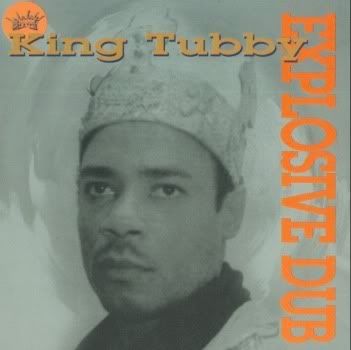
King Tubby - Explosive Dub

Image

Born January 28th 1941, King Tubby (Brad Osborne) is known primarily for his influence on the development of dub in the 1960s.
In the 1950s, King Tubby's musical career began with the sound systems, set up on the streets of Kingston and playing dance music for the people. As a radio repairman, Tubby soon became quite helpful at most of the sound systems around.
Tubby began working with Duke Reid in 1968. At Treasure Isle, a studio, Tubby began making remixes of hit songs, usually by simply removing the vocals. In time, Tubby (and others) began shifting the emphasis in the instrumentals, adding sounds and removing others and adding various special effects, like echoes. By 1971 , Tubby's soundsystem was one of the most popular in Kingston and he decided to open a studio of his own. His remixes soon proved enormously popular, and he became one of the biggest celebrities in Jamaica.

During the 1970s, Tubby's work in the studio gave rise to modern dub music. He had a long string of hit songs, and worked as a producer for some of Jamaica's most popular artists, including Lee Perry, Bunny Lee, Augustus Pablo and Yabby You. In 1973, he began recording vocals to put along the instrumentals. By the later part of the decade though, King Tubby had mostly retired from music, still occasionally recording remixes and tutoring a new generation of artists, including King Jammy and Scientist. In the 1980s, he focused on production for Anthony Red Rose, Sugar Minott and other popular musicians.

He was shot and killed by unknown persons, probably in a robbery attempt, in 1989, February 06th."

"Explosive Dub" is a collection of tracks originally appeared on Brad Osbourne's New York based Clocktower label in the late 70s, many of which were played as dub plates by the sound systems of these days.


Tracklist:

Soundtrack Dub
Easy Skanking Dub
Burning Dub
Daylight Dub
Stepping Dub
Just A Man Dub
Send Me Dub
In Love Dub
Perfidia Dub
Reggae Dub
Babylon Dub
Love Me With Your Heart Dub
Music Field Dub
So Fine Dub
True Dub
Freedom Dub
Today Dub
No One Dub
Good Man Dub

King Tubby - Explosive Dub

Sonntag, 1. Juli 2018

Tom Robinson Band - Up Against The Wall (Single, 1978)

 .

Tracks:
A Up Against the Wall
B I'm All Right Jack

"Up Against The Wall" was the great third single from the Tom Robinson Band, released in 1978. This storming stuff from a wonderful band is still actual more than 30 years after it´s release. Tom Robinson jettisonned his band Cafe Society after he attended a Sex Pistols gig and got to work on a band that what would become the overtly political T.R.B.
Tom Robinson began gigging in London in 1976. By the end of the year, he had decided to put together a permanent band. Robinson's old friend, guitarist Danny Kustow, was the first in the permanent lineup. They ran small ads in the music papers looking for a bass player and drummer. Robinson found drummer Brian "Dolphin" Taylor. The search for a bass player continued, until Mark Ambler auditioned. Some days later, Ambler mentioned he also played keyboards; he had spent many years studying piano with veteran jazz musician, Stan Tracey. After listening to Ambler playing his Hammond organ Robinson realised he would have to be the bass player himself.
The band hit the club scene right in the middle of London's punk explosion. Their live shows got favourable reviews, and soon A&R men were attending many of their gigs.
EMI Records signed TRB. Robinson later described this period, saying "Within nine months we'd made the transition from signing on at Medina Road dole office to Top Of The Pops, Radio One, EMI Records and the giddy heights of the front cover of the New Musical Express".
TRB made leaflets and fliers about their political views and sent them to everyone who attended their gigs, they gave away badges and made up T shirts emblazoned with the band's logo and they appeared regularly at Rock Against Racism concerts.

"2-4-6-8 Motorway" was their first single, released in late 1977. It got into the top five of the UK singles charts, staying there for over a month. It was followed almost immediately by their next record, a four song EP called "Rising Free" which was recorded live at London's Lyceum Theatre in November 1977. It contained the songs "Glad to Be Gay", "Right On Sister", "Don't Take No for an Answer", and "Martin". The EP reached #18 in the UK singles charts.
In early 1978, TRB recorded their debut album, "Power in the Darkness". The UK version of the LP contained all new songs, but in the US (on the Harvest label), the "2-4-6-8 Motorway" single and "Rising Free" record were combined for a six-track bonus EP that made the album almost a double.
"Power in the Darkness" reached number 4 in the UK album charts and won the band a gold record, and TRB were voted "Best New Band" and "Best London Band" for the year 1977 by listeners at the Capital Radio Music Awards. Mark Ambler left the band after recording the album. Session pianist Nick Plytas was drafted in as a temporary replacement, and played with TRB at a major Anti Nazi League rally in London's Victoria Park early that year.
Ian Parker joined as a permanent replacement for Ambler. TRB then went to Rockfield Studios in Wales to record their next album, "TRB Two". Chris Thomas who had produced their first album, was also at the control deck for their second album, to start off with. Dolphin Taylor suggested Todd Rundgren should replace Thomas. After not being able to decide which tracks should appear on the LP, the band eventually agreed to let Rundgren choose. However, he picked two of the songs Dolphin particularly disliked, and Taylor decided that he would leave rather than play on the tracks. A day later he had calmed down somewhat and offered to return, but Robinson refused, and Preston Heyman was recruited as an emergency stand-in. His picture was included on the album cover, but there was never any intention for him to join the band permanently. Taylor's eventual replacement was Charlie Morgan who had played for Kate Bush, and went on to drum for Elton John for a further fifteen years.
To support the album's release, the band went on tour, but by this point the TRB's infighting had taken its toll. When Kustow decided to quit in 1979 that was the end of TRB.
In 1989, Robinson, Kustow and Ambler put together a reunion tour and played sold out shows at the Marquee in London and went on for the best part of a year before splitting one final time.

Tom Robinson Band - Up Against The Wall (Single, 1978)
(192 kbps, cover art included)

Dienstag, 26. Juni 2018

The Kingston Trio - The Kingston Trio (1958)


"The Kingston Trio" is The Kingston Trio's debut album, released in 1958. It entered the album charts in late October 1958, where it resided for nearly four years, spending one week at #1 in early 1959.

Dave Guard, Nick Reynolds, and Bob Shane formed the Kingston Trio in Palo Alto, California in June 1957. By 1958 they had a recording contract with Capitol Records and were in the studio by February. From their first recording sessions, the single "Tom Dooley" was released and became a number one hit in the US. The single's success helped propel their debut album to the number one spot of the Billboard Pop chart.


It's easy to rate the group's debut album too low, since its two best-known songs ("Tom Dooley," "Scotch and Soda") have had no shortage of appearances elsewhere in the decades since, and the group went on to cut more than 20 additional albums in their prime years. A little less polished and accomplished than, say, the music that Terry Gilkyson and the Easy Riders were cutting at Columbia around this time, it makes up for those shortcomings with youthful spring, exuberance, freshness, and a number of song choices that spoke of a new generation of folk singing -- not only their hits but the first version of the comedic piece "Coplas" and "Sloop John B," which would become a rock standard in the hands of the trio's fellow stripe-shirted labelmates the Beach Boys. Dave Guard was the most influential member of the group here, in terms of song selections and arrangements, but the entire trio is well represented.

Additionally, producer Voyle Gilmore made their singing on "Bay of Mexico" and "Fast Freight" into something slightly larger than life. "Sara Jane," which the group learned from Louis Gottlieb of the Gateway Singers and, later, the Limeliters, who also arranged it, isn't far behind, a potential hit single in the same league with "Wimoweh." Listening to this album, one also gets a sense of just how strong the trio was musically right out of the starting gate - "The Kingston Trio" was essentially an idealized version of the group's stage show of the era, recorded over three days in the studio, and a fine, bracing body of music.  

The Kingston Trio - Same (1958)
(192 kbps, cover art included)

Sonntag, 24. Juni 2018

Sun Ra - The Magic City (1965)

The boundaries of Sun Ra's self-proclaimed "space jazz" underwent a transformation in the mid-'60s. "The Magic City" is an aural snapshot of that metamorphic process. Many enthusiasts and scholars consider this to be among Ra's most definitive studio recordings.

Although the "city" in the album's title was thought to have been New York - where the disc was recorded - it is actually Ra's earthly birthplace of Birmingham, AL. "The Magic City" consists of four free jazz compositions: the album side-length title track, "The Shadow World," "Abstract Eye," and "Abstract I" - two variants of a common work. These pieces are essentially ensemble improvisations recorded live. Any direction from Ra, indicating the order of soloists for instance, would be given either through his playing or with hand signals.

Sun Ra & His Solar Myth Arkestra took up residency in Manhattan's East Village in the early to mid-'60s. Their neighbors included Pharaoh Sanders as well as Babatunde Olatunji. In fact, "The Shadow World," "Abstract Eye," and "Abstract I" were actually recorded in Olatunji's loft. The title track begins with weaving distant and frenetic lines from Ronnie Boykins (bass) and Ra (piano, clavoline), connected by intermittent eruptions from Roger Blank (drums). All the while, Marshall Allen's dreamlike piccolo randomly maneuvers through the sonic haze. The piece also contains an ensemble onslaught that abruptly contrasts with everything experienced up through that point. In the wake of the innately earthbound "Magic City" are three comparatively shorter pieces with subtle undercurrents that return Ra to space motifs. For example, the importance of sonic contrast defines "The Shadow World" by juxtaposing the lightly churning bass and cymbal into some surreal keyboard interjections from Ra. The Magic City also comes with an insightful liner notes essay from Ra scholar John F. Szwed, aiding in understanding the circumstances surrounding this piece of free jazz genius.

John F. Szwed explains in the Village Voice:
"[Birmingham was] the earthly birthplace he steadfastly denied, and in the recording he reimagines the city without its grim, racist, smoke-choked past. By simply pointing to musicians when he wanted them to play, he proved it possible to collectively improvise an entire album on the strength of nothing more than a shared belief. 

Tracklist:
AThe Magic City27:24
B1The Shadow World10:59
B2Abstract Eye2:45
B3Abstract "I"4:01

Sun Ra - The Magic City (1965)
(320 kbps, cover art included)     

Samstag, 16. Juni 2018

VA - The Gospel Sound (2 CDs)

"This recording documents the changes in Afro-American religious music over a forty-year period. This collection is powerful, filled with vitality, integrity and direct personal communcation.

The best in gospel music from the mid-forties to the late fifties contained moving spirituals by Mahalia Jackson, Marion Williams, The Staple Singers and many other great gospel artists.

Gospel is one of the dominant sounds of our times. In one form or another, gospel has reformed our listening expectations.

The tension between beats, the almost subliminally anticipated climac are straight out of the church. The dance steps that ushered in a new physical freedom were copied form the church dance, the shout. The sit-ins soothed by hymns, the freedom marches powered by shouts, the "brother and sister" fraternity of revolution: the black gospel church gave us all these." - From the liner notes

VA - The Gospel Sound pt 1
VA - The Gospel Sound pt 2
(192 kpbs, front cover included)

Donnerstag, 14. Juni 2018

Luis Mariano - Le Chanteur de Mexico

Mariano Eusebio González y García (13 August 1914 – 14 July 1970), also known as Luis Mariano, was a popular tenor of Spanish Basque origin who achieved celebrity in 1946 with « La belle de Cadix » (« The Beautiful Lady of Cadix ») an operetta by Francis Lopez. He appeared in the 1954 film Adventures of the Barber of Seville and Le Chanteur de Mexico (1957) and became popular in France as well as his native Spain.

Luis Mariano was born in Irun, Spain on 13 August 1914, the son of a garagiste and taxi-driver and showed interest in singing as a child. His family moved to France at the start of the Spanish Civil War and settled in Bordeaux where he studied at the Conservatoire, and also sang in cabarets.
Jeanne Lagiscarde, who was in charge of the classical department of a record store in Bordeaux, took Mariano under her wing, and gave up her job to nurture his talent in Paris. To earn a living, he sang in stage shows and appeared in films, starting with 'L'escalier sans fin' in 1943. That year he auditioned for the role of Ernesto in Don Pasquale, and sang in the opera at the Palais de Chaillot and later at the Théâtre des Variétés, with Vina Bovy, recording excerpts from the opera. He also left many recordings of popular song and operetta.

He continued to appear in other films from 1946, including a singing role in Napoléon and a film adaptation of Lehar's Der Zarewitsch.
In his encyclopedia Gänzl describes Mariano as a "svelte singing idol of French operetta of the post-war stage and screen". Mariano died in Paris in 1970.
His music is featured prominently in the 1996 Belgian film Le huitième jour in which he is played by Laszlo Harmati during scenes employing magical realism.

Luis Mariano - Le Chanteur de Mexico
(256 kbps, front cover included)

Dienstag, 12. Juni 2018

King Size Ska - Original Jamaican Instrumental Ska Sounds 1964-1966 (Trojan)

This album is a collection of original Jamaican instrumental ska sounds, recorded from 1964 to 1966.
This compilation collects some excellent ska tunes, in particular "El Torro" and "The Cat" by Roland Alphonso. Baba Brooks trumpet never sounded better as it does on "First Session", check it out. Well done, Trojan!

Trojan Records was founded in 1967 by Chris Blackwell and Lee Gopthal, as an Island Records subsidiary. The first releases were licensed from Duke Reid's Treasure Isle label, and the company took its name from Reid's sound system - The Trojan. In the 60s and 70s Trojan did a major effort in spreading Reggae over the UK, licensing Jamaican releases as well as pushing their own UK acts.

Tracks:
1 Roland Alphonso -El Torro
2 Baba Brooks & His Recording Band -King Size
3 Granville Williams Orchestra -Hi Life
4 Roland Alphonso -On The Move
5 Sammy Ismay & Baba Brooks Band- Cocktails For Two
6 Raymond Harper & Carib Beats- No Other Love
7 Roland Alphonso -Women Of The World
8 Baba Brooks & His Recording Band- Faberge
9 Granville Williams Orchestra -Old McDonald
10 Roland Alphonso -Nothing For Nothing
11 Tommy McCook & The Supersonics- Riverton City
12 Val Bennett & His Selected Group -Atlas
13 Roland Alphonso -Jungle Bit
14 Baba Brooks & His Recording Band -First Session
15 Granville Williams Orchestra-Popeye Ska
16 Roland Alphonso The Cat
17 Roy Richards & Baba Brooks Band, The Contact
18 Raymond Harper & Carib Beats, The Amour
19 Roland Alphonso Guantanamera
20 Carib Beats, The J.J. Special
21 Granville Williams Orchestra-Honky Tonk (Ska)
22 Roland Alphonso -Song For My Father
23 Baba Brooks & His Recording Orchestra -The Scratch
24 Granville Williams Orchestra -Tear Up
25 Cluett Johnson Orchestra Hot Nosh


King Size Ska - Original Jamaican Instrumental Ska Sounds 1964-1966  (Trojan)

(192 kbps, front cover included)

Sonntag, 10. Juni 2018

Bessie Smith - Empress Of The Blues 1923 - 1933

Bessie Smith (April 15, 1894 – September 26, 1937) was an American blues singer.
Nicknamed The Empress of the Blues, Smith was the most popular female blues singer of the 1920s and 1930s. She is often regarded as one of the greatest singers of her era and, along with Louis Armstrong, a major influence on other jazz vocalists.


"Empress of the Blues: 1923-1933" is a respectable, budget-priced collection of Bessie Smith's best material from her most potent period. It contains 21 tracks of piano-based blues from an era when the music was just coming out of brothels and saloons and on to the American (and European) stages. Notable tracks on this set include "Tain't Nobody's Business If I Do" and  "St. Louis Blues".

Bessie Smith - Empress Of The Blues 1923 - 1933
(256 kbps, front cover included)


Freitag, 8. Juni 2018

Robert Wyatt - Ruth Is Stranger Than Richard (1975)


An enduring figure who came to prominence in the early days of the English art rock scene, Robert Wyatt has produced a significant body of work, both as the original drummer for art rockers Soft Machine and as a radical political singer/songwriter.

There was no way that Wyatt's follow-up to "Rock Bottom" could be as personal and searching, but this album that came barely a year later instead collects some earlier material to be revamped for this release. "Soup Song," for instance, is a rewrite of "Slow Walkin' Talk," written before the forming of Soft Machine. "Team Spirit," written with Phil Manzanera and Bill MacCormick of Quiet Sun, would turn up the same year as "Frontera" on Manzanera's "Diamond Head".

While some of the songs tend to plod along, the dirge-like "Five Black Notes and One White Notes," a lethargic cover of Offenbach's "Baccarole," Charlie Haden's "Song for Che," and Fred Frith's piano team-up with Wyatt on "Muddy Mouth" are magical. As usual, the assembled band, including the underrated Gary Windo on sax and Mongezi Feza on trumpet, never dissapoint.

Tracklist:

1. Muddy Mouse (0:50)
2. Solar Flares (5:35)
3. Muddy Mouse (0:50)
4. 5 Black Notes and 1 White Note (4:58)
5. Muddy Mouse (6:11)
6. Soup Song (5:00)
7. Sonia (4:12)
8. Team Spirit (8:26)
9. Song for Ché (3:36)

Robert Wyatt - Ruth Is Stranger Than Richard 1975)
(256 kbps, cover art included)

Samstag, 2. Juni 2018

Fela Kuti & Africa 70 - Shakara (1972)

Fela Kuti was often
described as
"the James Brown of Africa," but one could also argue that he was Africa's equivalent of Miles Davis or John Coltrane. Truth be told, either description is valid. Kuti was highly eclectic, and his innovative, visionary music contained elements of funk/soul, jazz, and blues, as well as African music.

That eclectic spirit proves to be a major asset on Shakara, which consists of two 13-minute performances by Kuti's Africa 70 band: "Lady" and "Shakara (Oloie)."

Performed in English, "Lady" finds Kuti criticizing modern African women in a humorous way for becoming what he sees as overly westernized and embracing a western view of feminism. You might agree or disagree with the song's viewpoint, but the groove and the beat are irresistible. Equally addictive - and equally sarcastic - is "Shakara (Oloje)," which is sung in both Yoruba and English and makes fun of the type of pompous, loud-mouthed braggarts who can never make good on their empty boasts.

Fela Kuti & Africa 70 - Shakara (1972)
(320 kbps, front cover included)

Freitag, 1. Juni 2018

Billie Holiday - Songs For Distingué Lovers (1957)


"Songs for Distingué Lovers" forms part of the last series of extensive small-group recordings that Lady Day would make in the studio.

Although her voice was largely shot at this point, she puts so much feeling into the lyrics that it's easy to overlook her dark sound. The band is a major asset, and made up of all-stars: trumpeter Harry "Sweets" Edison, tenor saxophonist Ben Webster, pianist Jimmie Rowles, guitarist Barney Kessel, bassist Red Mitchell, and Alvin Stoller or Larry Bunker on drums.

There are plenty of short solos for Edison, Webster, and Kessel. Holiday does her best on such numbers as "A Foggy Day," "One for My Baby," "Just One of Those Things," and "I Didn't Know What Time It Was," and there are plenty of haunting moments, even if one could tell (even at the time) that the end was probably drawing near for the singer.

Tracklist:
A1 Day In, Day Out
A2 A Foggy Day
A3 Stars Fell On Alabama
B1 One For My Baby (And One More For The Road)
B2 Just One Of Those Things
B3 I Didn't Know What Time It Was

Billie Holiday - Songs For Distingué Lovers (1957)
(320 kbps, cover art included)

VA -Tiger Goes Calypso (Esso, 1966)


This is a fine LP from 1966 put out by Esso gas for promotional work. It is a collection of Calypso, Reggae, and Ska songs. Two of the tracks have to do with Esso gas. A rare little promo item with pretty good songs. It features Young Killer with "Tiger in your tank" and some big names of the calypso scene, like Mighty Sparrow and The Merrymen. Enjoy it!

Tracklist:
1 Young Killer - Tiger in your tank
2 Carlos Malcolm Orchestra - Tribute to Don Drummond
3 The Merrymen - Never on a sunday
4 Westside Symphony Orchestra - Jamaica ska
5 Clarence Curvan Orchestra - Mama dis is mas
6 The Mighty Sparrow - She's been gone too long
7 André Tanker Flamingoes - Linstead market
8 The Mighty Dougla - Leave me


VA - Tiger Goes Calypso (1966)
(192 kbps, back & front cover included)

René Bardet´s Poesie & Musik: Pablo Neruda 2 - Tiersammlung (Mood, 1980)

Here´s the second "Poesie & Musik" album with interpretations of works by Pablo Neruda. "Tiersammlung" was recorded live at the famous club "Manufaktur" in Schorndorf in the southern part of Germany in 1980.

Members of the band were at this time René Bardet (bouzouki, guitar, voice), Tini Hägler (marimba, percussion), Ruedi Häusermann (flute, sopranino), Martin Schütz (cello, mandoline) and Orlandon Valentini (bass, drums, guitar, percussion).

Tracks:
1 Wo mag Guillermina sein
2 Wie lange lebt man
3. Gewisser Überdruss
4. Tiersammlung


René Bardet´s Poesie & Musik - Pablo Neruda 2 - Tiersammlung

(192 kbps, cover art included)

Dienstag, 29. Mai 2018

B. B. Seaton - Gun Court Dub Vol. 2

"Gun Court Dub Vol. 2" is a great late seventies dub set produced by B. B. Seaton and mixed by Errol Brown at Treasure Isle.Studio. It features Sly Dunbar & the Revolutionaires, The Conscious Minds Band & Skin Flesh & Bones.

Harris Lloyd "B.B." Seaton (born 3 September 1944), also known as "Bibby", is a Jamaican reggae singer and record producer who was a member of The Gaylads, The Astronauts, Conscious Minds, and The Messengers (along with Ken Boothe, Lloyd Charmers and Busty Brown), and who has had a long solo career dating back to 1960.

Seaton was the first reggae artist to be signed by Virgin Records, leading to the creation of the Front Line label. He became based in the United Kingdom in the mid-1970s where he became active as a producer, his productions including the Gun Court Dub series of dub albums.

Tracklist:

Side One:
1. Laughing Dub
2. One Little Dub
3. Jah Dub
4. Dub Of Quality
5. Hold On To Your Dub
6. Careless Dub

Side Two:
1. Dubbing In The Rain
2. Daddy's Dub
3. Mamma Dub
4. Hop Skip & Jump
5. Revolution Dub
6. Dub For Us All

B. B. Seaton - Gun Court Dub Vol. 2
(320 kbps, cover art included)

Samstag, 26. Mai 2018

Justin Hinds & The Dominoes - Corner Stone (Treasure Isle)


Throughout a crucial period that bore witness to the emergence of ska and its later mutations into rocksteady and finally reggae, Justin Hinds was among the most successful recording artists on the Jamaican music scene, his sweet tenor spotlighted on hundreds of Duke Reid-produced singles between 1963 and 1972.

Born on May 7, 1942 in the St. Ann's area, Hinds' greatest music was later created in the company of his backing vocalists the Dominoes, a duo comprising Dennis Sinclair and Junior Dixon. They first recorded at Reid's Treasure Isle studios in late 1963, a debut session that yielded the hit "Carry Go Bring Come" in just one take.

Between 1964 and 1966, Hinds was Reid's most popular artist, and during this period alone he recorded some 70 singles backed by session aces Tommy McCook and the Supersonics; among his biggest ska hits were "King Samuel," "Jump Out of the Frying Pan," "The Ark" and "Rub Up Push Up."

Around 1966, Hinds made the transformation to rocksteady, and the hits kept coming. Over the next several years, he released smash after smash, including "The Higher the Monkey Climbs," "No Good Rudy," "On a Saturday Night," "Here I Stand," and "Save a Bread." He and Reid parted company in 1972, with the latter dying three years later; Hinds then began working with producer Jack Ruby, a collaboration which resulted in the 1976 LP "Jezebel". Two years later, he also teamed with producer Sonia Pottinger for a series of singles including "Rig-Ma-Roe Game" and "Wipe Your Weeping Eyes." After 1984's "Travel with Love", however, the reclusive Hinds essentially went into retirement, leaving Jamaica only rarely.

He did return to recording, albeit sporadically, with a final studio effort in 1992, "Know Jah Better", and then a decade later with a live album "Let's Rock Live". Another concert album, 2003's "Live at the Grassroots", featured Hinds backed by roots revivalists John Brown's Body.

Justin Hinds succumbed to cancer two years later, passing away quietly at his Jamaican home on March 16, 2005.

Tracklist:

Carry Go Bring Come
Rub Up Push Up
Corner Stone
Here I Stand
Over The River
The Higher The Monkey Climbs
Teach The Youth
Hey Mama
Fight Too Much
Sinners
If It's Love You Need
Mighty Redeemer
Boderation
Save A Bread
On A Saturday Night
Say Me Say
Once A Man
Carry Go Bring Come Version 2

Justin Hinds - Corner Stone (Treasure Isle)
(192 kbps, front cover included)