Sonntag, 12. Februar 2023

Joseph Spence - The Complete Folkway Recordings 1958


Born on the island of Andrus in the Bahamas, Joseph Spence created an idiosyncratic (and inimitable) guitar style rife with percussive and improvisatory vamps around staid hymns and such "square" standards as "Coming in on a Wing and a Prayer." He was a folk guitarist's Thelonious Monk, and his growling vocal counterpoint and surprising inventions are one of folk music's great delights.                

These recordings of Joseph Spence, made by Samuel Charters in 1958, display one of the most inventive guitar styles ever put to tape. Spence improvised on traditional tunes in a manner comparable to African-Americans Elizabeth Cotten and Mississippi Fred McDowell, like them adding rhythmic and melodic accents and changes in unexpected ways. In addition to his guitar work, he possessed an unparalleled vocal style. The closest match is the deep-voiced blues singer Howlin' Wolf.

Charters met Joseph Spence, who was well-known to people on the island of Andros in the Bahamas, somewhat unintentionally while looking for Bahamian folk music. The recordings were made with field equipment, and the sound quality reflects this. As with all field recordings, this is a blessing and a curse. The lack of a studio preserves the "authenticity" of the folk sound, while the vocals on some tracks end up too low in the mix, thus de-emphasizing one of the most interesting aspects of the music.

Nonetheless, the songs on this collection are intriguing and novel, even to the seasoned folk music listener. Spence's complexity of guitar work and uniqueness of vocal style are an unmatched combination.       
   
Joseph Spence - The Complete Folkway Recordings 1958
(256 kbps, cover art included)
  

VA - Blues at Newport - Newport Folk Festival 1959 - 1964

"Blues at Newport - Newport Folk Festival 1959-64" offers fine performances by John Hurt, Skip James, Rev. Gary Davis, Robert Wilkins, and others. It is a compliation of blues performances recorded live at the Newport Folk Festivals, 1959-1964, produced by Samuel Charters for the Vanguard Records label.

"You have so many memories, if you were old enough and lived close enough and knew enough to get to the Newport Folk Festival in its great days in the 1960s….And, just as certainly, you remember the blues, which was one of the richest strands in the rich weave of music and culture that was the Festival….Part of the emotional response to the blues singers was that most of them had been forgotten in the years since they’d made their handfuls of recordings for the old ‘race’ labels of the 1920s….It’s true that memories can sometimes be insubstantial, or that time can change what you heard or saw, and maybe you’ve romanticized the playing you remember or the singers you shouted for — but here on this collection of live recordings from the Newport Festival blues concerts you can hear that the music was as great as you remember it was. And if you’re hearing it for the first time — this is what it was like to be there." — Sam Charters

(320 kbps, cover art included)

The Fugs - Songs From A Portable Forest (1990)

This compilation is a ‘best of' highlighting recordings from the ‘80s reincarnation of the Fugs. Along for the ride are founding members Tuli Kupferberg and Ed Saunders. Although this disc doesn't contain any previously unissued material, there are a few tracks from "Star Peace" -- which is currently out-of-print on CD. 

"Songs From A Portable Forrest" also gathers key tracks from "Refuse To Be Burnt-Out" and "No More Slavery". The ‘80s Fugs remained an amalgam of Dadaist beat poetry and reckless abandon garage rock with a message promoting all that is sensually pleasurable. Perhaps due to the sheer volume of new compositions Saunders added to the ‘80s cannon, "Songs From A Portable Forrest" is a bit heavier on his, rather than Kupferberg's contributions. That said however, two of Tuli's finest are included here. "If You Want To Be President" from "Refuse To Be Burnt-Out" as well as an adaptation of "Dover Beach from "No More Slavery" -- which was actually written by 19th Century Oxford poet Matthew Arnold. Kupferberg's bold touch can be heard in the unique arrangement that couples the poem with a traditional Jewish melody. Chief among Saunders compositions are works incorporating pivotal motifs during the initial revival of the Fugs name and spirit. "Keeping The Issues Alive" and "Refuse To Be Burnt-Out" -- the latter of which is an apt cenotaph to "those guys in the Fugs who have since died," according to Saunders. Speaking of the past, only a revamped "Nova Slum Goddess" is offered on this collection from the ‘60s Fugs repertoire. While "Songs From A Portable Forrest" is a good launch pad, enthusiasts keen on hearing more should also be aware of the 1995 live release "The Real Woodstock Festival" -- which also features guest appearances by "Country" Joe McDonald and Allen Ginsberg.


Tracklist:
1 No More Slavery 4:07
2 Cold War 3:50
3 Dreams Of Sexual Perfection 11:14
4 Dover Beach 3:31
5 Liberty Not War (Hands Reach Out) 3:38
6 Technology (Is Going To Set Us Free) 2:30
7 What Would Tom Paine Do? 2:48
8 World Wide Green 4:40
9 If You Want To Be President 2:35
10 Nova Slum Goddess 3:26
11 Refuse To Be Burnt Out 4:17
12 Keeping The Issues Alive 7:08


The Fugs - Songs From A Portable Forest (1990)
(320 kbps, cover art included)

Sonntag, 5. Februar 2023

Allen Ginsberg - Howl And Other Poems (1959)

Allen Ginsberg wrote his epic poem “Howl” in mid-‘50s San Francisco and Berkeley, and the rest is literary history. The work, first read in public in 1955 and published in 1956 before emerging victorious in a 1957 court ruling that it was not obscene, has been hailed as one of the most important poems of the 20th century, and it inspired a wave of Beat poetry.

Fantasy Records became the unofficial audio home of the movement, documenting not only Ginsberg but several other poets of the day.

Allen Ginsberg´s poetry broke so many social taboos that copies were impounded as obscene, and the publisher, poet Lawrence Ferlinghetti, was arrested. The court case that followed found for Ginsberg and his publisher, and the publicity made both the poet and the book famous. Ginsberg went on from this beginning to become a cultural icon of sixties radicalism. This works seminal place in the culture is indicated in Czeslaw Milosz's poetic tribute to Ginsberg: "Your blasphemous howl still resounds in a neon desert where the human tribe wanders, sentenced to unreality".

The "Howl and Other Poems" vinyl LP was first released in 1959, repackaged for the burgeoning hippie generation in 1969, and remained in print until 1985, when the company ran out of vinyl LPs. In 1998 there was a cd reissue.


Tracks:
1. Howl
2. Footnote to Howl
3. A Supermarket in California
4. Transcription of Organ Music
5. America
6. In the Back of the Real
7. Strange New Cottage in Berkeley
8. Europe! Europe!
9. Kaddish (part 1)
10. The Sunflower Sutra

Allen Ginsberg - Howl And Other Poems (1959)
(128 kbps, small front cover included)

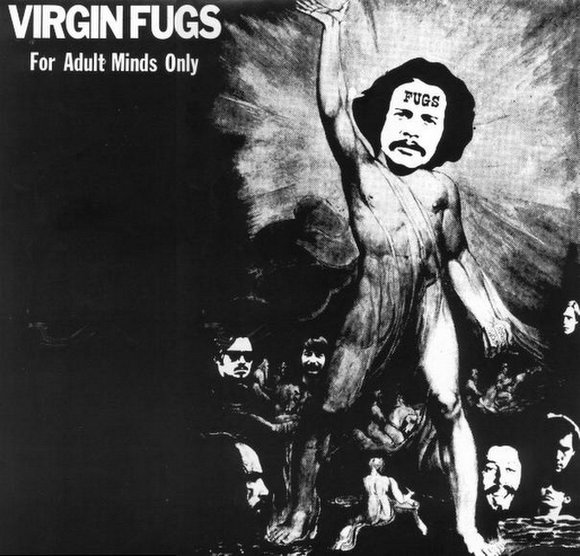
The Fugs - Virgin Fugs

"Virgin Fugs" collects outtakes from the April 1965 and July 1965 sessions that yielded the Fugs' first album.

It does, however, contain some barrier-breaking (in terms of subject matter) compositions of note, such as "Coca Cola Douche," "CIA Man," "The Ten Commandments" (credited to GOD and Tuli Kupferberg), and "I Saw the Best Minds of My Generation Rot," which is Allen Ginsberg prose set to music by Ed Sanders.

Several of the songs were given far more professional, full rock arrangements on the live album "Golden Filth" (recorded in 1968), if you want to hear them in less grating contexts. View this album as comedy, or as a political message, and not as outstanding music. Of course, this album is brilliant, enjoyable, and listenable again and again. Simply don't expect Hendrix - these guys aim to offend. And listen with a smile...


The Fugs - Virgin Fugs (2005 Reissue)
(192 kbps, ca. 47 MB)

Lightnin´ Hopkins - Same


Sam Hopkins was a Texas country bluesman of the highest caliber whose career began in the 1920s and stretched all the way into the 1980s. Along the way, Hopkins watched the genre change remarkably, but he never appreciably altered his mournful Lone Star sound, which translated onto both acoustic and electric guitar. Hopkins' nimble dexterity made intricate boogie riffs seem easy, and his fascinating penchant for improvising lyrics to fit whatever situation might arise made him a beloved blues troubadour.

Born in 1912 to a poor sharecropping family in the cotton country between Dallas and Houston, Hopkins left home when he was only eight years old with a guitar his brother had given him. He made his living however he could, sticking to the open road, playing the blues, and taking odd jobs when money was short.

Hopkins didn’t begin recording until 1946, when he was dubbed “Lightnin’” during his first session, and he soon joined Muddy Waters and John Lee Hooker on the national R & B charts. But by the time he was “rediscovered” by Mack McCormick and Sam Charters in 1959, his popularity had begun to wane. A second career emerged - now Lightnin’ was pitched to white audiences, not black ones, and he became immensely successful, singing about his country roots and injustices that informed the civil rights era with a searing emotive power.

Lightnin´ Hopkins - Same
(256 kbps, front & back cover included)

Samstag, 4. Februar 2023

Allen Ginsberg - The Lion For Real

Irwin Allen Ginsberg (June 3, 1926 – April 5, 1997) was an American poet and one of the leading figures of both the Beat Generation of the 1950s and the counterculture that soon would follow. He vigorously opposed militarism, economic materialism and sexual repression and was known as embodying various aspects of this counterculture, such as his views on drugs, hostility to bureaucracy and openness to Eastern religions. He was one of many influential American writers of his time known as the Beat Generation, which included famous writers such as Jack Kerouac and William S. Burroughs.

Recorded in the late '80s, "The Lion for Real" consists primarily of brief poems set to avant-jazz. Producer Hal Willner has assembled a group that at various times features Marc Ribot, Bill Frisell and Arto Lindsay, and they skillfully navigate the emotional tones and wit in Ginsberg's poems.

This doesn't contain any of Ginsberg's major works, but it's a welcome reminder of his irascible humor and mischievousness.            

Tracklist:                           
A1Scribble
A2Complaint Of The Skeleton To Time
A3Xmas Gift
A4To Aunt Rose
A5The Lion For Real
A6Refrain
A7The Shrouded Stranger
A8Gregory Corso's Story
B1Cleveland, The Flats
B2The End
B3Stanzas: Written At Night In Radio City
B4Sunset
B5Hum Bom!
B6Kral Majales
B7Guru
B8Ode To Failure

Allen Ginsberg - The Lion For Real
(320 kbps, cover art included)

Tuli Kupferberg - No Deposit No Return (An Evening of Pop Poetry with Tuli Kupferberg) (1966, vinyl rip)

Prior to his notable presence as the spiritual figurehead and founding member of the funky, folky Fugs, Tuli Kupferberg gained indirect notoriety as the real life "guy who jumped off of the Brooklyn Bridge and lived," immortalized in Allen Ginsberg's epic "Howl".

"No Deposit, No Return" is Kupferberg's out-of-print 1966 spoken-word solo debut.

"...'is america insane' asks the insert that came with this disk, released on the ESP-Disk label back in 1966, an LP of tuli kupferberg reading adverts from various newspapers/comics/magazines...its pop art, taking the everyday normal object and showing it in unfamiliar circumstances so it takes on different meanings...these ads when glanced at in their ordinary setting may not attract too much attention but when pulled out and presented here they show another side, they open new vistas showing the strangeness that surrounds everywhere...emminently playable when an evening of fugnacious madness is called for..." (http://stupidd.blogspot.com)


Tracklist:

01 - Pubol
02 - Social Studies
03 - The Hidden Dissuaders
04 - Lifetime Guarentee
05 - The Art Scene
06 - Want Ads 1
07 - Purina
08 - Lanoflo
09 - The Hyperemiator
10 - The Sap Glove
11 - The Bunny Mother
12 - Auto-De-Fe
13 - Fields Matrimonial Service
14 - Want Ads 2
15 - Howard Johnson's Army
16 - No Deposit, No Return

Tuli Kupferberg - No Deposit, No Return (1966, vinyl rip)
(320 kbps, cover art included)

Mittwoch, 1. Februar 2023

Lightnin Hopkins - Live At Newport 1965

There's something affecting about Lightnin' Hopkins' off-the-cuff approach. Whether he's in the studio or before an audience, he gives the impression of a guitar player and singer who's just doing his own thing. When he breaks out a signature piece like "Mojo Hand," he isn't really trying to impress the listener as much as do what he does best: just play a little blues.

Recorded in 1965, "Live at Newport" captures Hopkins in a loose mood communing with an appreciative audience. The mostly solo electric set apparently didn't cause any controversy (as Dylan's electric set with the Paul Butterfield Blues Band would in 1965). The nice thing about the album is that all the material seems to have come from the same set, giving the listener a taste of what seeing Hopkins at Newport might have been like.

Good versions of "Baby Please Don't Go," "Trouble in Mind," and "Where Can I Find My Baby?" show up early in the set, and feature an intimate interplay between Hopkins and the audience. The latter part of the set rocks a bit harder by adding drums. The percussion pushes the energy level up a notch on "Jealous of My Wife" and "Shake That Thing," pieces that probably had old-timers boogying in the aisles. "Live at Newport" also includes several unreleased versions, making it a good album to add to one's Hopkins collection.

Lightnin Hopkins - Live At Newport 1965
(320 kbps, cover art included)

 Tracklist
1Introduction By Michael Bloomfield
2Where Can I Find My Baby?
3Baby Please Don't Go
4Mojo Hand
5Trouble In Mind
6The Woman I'm Loving, She's Taken My Appetite
7Come On Baby
8Cotton Patch Blues
9Instrumental
10Jealous Of My Wife
11Every Day About This Time (Instrumental)
12Shake That Thing

Allen Ginsberg - The Ballad Of The Skeletons

Allen Ginsberg understood as well as anyone that, in the latter half of the 20th century, rock & roll would be the medium through which poetry and social commentary would reach the young and hungry masses. He eagerly hopped a ride on the bandwagon, collaborating with Dylan, the Clash, and Cornershop; setting William Blake's "Songs of Innocence and Experience" to music; and teaching "Eleanor Rigby" to his English classes at Brooklyn College. The boxed set "Holy Soul Jellyroll" proves that Ginsberg made himself, by sheer force of will, a highly effective though hardly conventional singer/songwriter. Apparently, however, he saved the best for last. 

The single "The Ballad of the Skeletons", his final recorded release, is his musical masterpiece and deserves to be considered one of the most passionate, powerful, and articulate performances in the history of rock. Backed by a gang of high-profile pals (Philip Glass on keyboards; Lenny Kaye on bass; Paul McCartney on guitar, organ, and drums (!); plus crack session guitarists David Mansfield and Marc Ribot), Ginsberg intones the words of 66 skeletons, each of which represents some aspect of global (particularly American) society's cultural and political landscape. The skeletons snipe at each other and declare their own interests in a pageant that is both comic ("Said the Family Values skeleton/My family values mace") and macabre ("Said the Underdeveloped skeleton/Send me rice/Said Developed Nations skeleton/Sell your bones for dice"). In each verse, he cuts straight to the heart of the phenomenon in question with razor-keen perception, brutal simplicity, and deep wisdom. "Said the Middle Kingdom skeleton/We swallowed Tibet/Said the Dalai Lama skeleton/Indigestion's whatcha get." Perhaps most impressive is the way he deploys startling juxtapositions: "Said the Mirror skeleton/Hey good-looking/Said the Electric Chair skeleton/Hey what's cooking." 

Ginsberg never just reads. He cleverly varies the tone of his rich, electric voice to best suit each skeleton as he invokes it. The band follows suit, finding many opportunities to mix things up and thus keep the listener engaged over the song's eight minutes. The B-side, a brief plea on behalf of the homeless set to the tune of "Amazing Grace," is big-hearted but somewhat trite. It only serves to emphasize, by way of contrast, how amazing a piece of journalism/art "The Ballad of the Skeletons" is. Even in death, Allen Ginsberg remains the outraged, outrageous aesthetic and social conscience of our lunatic times.


Tracklist:

1 The Ballad Of The Skeletons 7:46
2 The Ballad Of The Skeletons (Edit) 4:07
3 Amazing Grace 2:47
4 The Ballad Of The Skeletons (Clean) 7:46


Allen Ginsberg - The Ballad Of The Skeletons
(192 kbps, cover art included)

The Hopkins Brothers - Joel, Lightning & John Henry (1964)

A once-in-a-lifetime meeting of the three Hopkins brothers in Waxahatchie, TX in 1964 produced this marvelous brace of field recordings. The oldest brother was considered the best songster in the family, and certainly his performances here are throwbacks to a more archaic style, although he's an amazingly energetic performer. Middle brother Joel is the crudest of the three, surprising since he's the one of the three who spent the most time around mentor Blind Lemon Jefferson. These are loose, conversational recordings made with a single microphone. They capture three brothers enjoying each other's company immensely.

Sam Hopkins was a Texas country bluesman of the highest caliber whose career began in the 1920s and stretched all the way into the 1980s. Along the way, Hopkins watched the genre change remarkably, but he never appreciably altered his mournful Lone Star sound, which translated onto both acoustic and electric guitar. Hopkins' nimble dexterity made intricate boogie riffs seem easy, and his fascinating penchant for improvising lyrics to fit whatever situation might arise made him a beloved blues troubadour.

Hopkins' brothers John Henry and Joel were also talented bluesmen, but it was Sam who became a star. In 1920, he met the legendary Blind Lemon Jefferson at a social function, and even got a chance to play with him. Later, Hopkins served as Jefferson's guide. In his teens, Hopkins began working with another pre-war great, singer Texas Alexander, who was his cousin. A mid-'30s stretch in Houston's County Prison Farm for the young guitarist interrupted their partnership for a time, but when he was freed, Hopkins hooked back up with the older bluesman.

The pair was dishing out their lowdown brand of blues in Houston's Third Ward in 1946 when talent scout Lola Anne Cullum came across them. She had already engineered a pact with Los Angeles-based Aladdin Records for another of her charges, pianist Amos Milburn, and Cullum saw the same sort of opportunity within Hopkins' dusty country blues. Alexander wasn't part of the deal; instead, Cullum paired Hopkins with pianist Wilson "Thunder" Smith, sensibly re-christened the guitarist "Lightnin'," and presto! Hopkins was very soon an Aladdin recording artist.

"Katie May," cut on November 9, 1946, in L.A. with Smith lending a hand on the 88s, was Lightnin' Hopkins' first regional seller of note. He recorded prolifically for Aladdin in both L.A. and Houston into 1948, scoring a national R&B hit for the firm with his "Shotgun Blues." "Short Haired Woman," "Abilene," and "Big Mama Jump," among many Aladdin gems, were evocative Texas blues rooted in an earlier era.

A load of other labels recorded the wily Hopkins after that, both in a solo context and with a small rhythm section: Modern/RPM (his uncompromising "Tim Moore's Farm" was an R&B hit in 1949); Gold Star (where he hit with "T-Model Blues" that same year); Sittin' in With ("Give Me Central 209" and "Coffee Blues" were national chart entries in 1952) and its Jax subsidiary; the major labels Mercury and Decca; and, in 1954, a remarkable batch of sides for Herald where Hopkins played blistering electric guitar on a series of blasting rockers ("Lightnin's Boogie," "Lightnin's Special," and the amazing "Hopkins' Sky Hop") in front of drummer Ben Turner and bassist Donald Cooks (who must have had bleeding fingers, so torrid were some of the tempos).

But Hopkins' style was apparently too rustic and old-fashioned for the new generation of rock & roll enthusiasts (they should have checked out "Hopkins' Sky Hop"). He was back on the Houston scene by 1959, largely forgotten. Fortunately, folklorist Mack McCormick rediscovered the guitarist, who was dusted off and presented as a folk-blues artist; a role that Hopkins was born to play. Pioneering musicologist Sam Charters produced Hopkins in a solo context for Folkways Records that same year, cutting an entire LP in Hopkins' tiny apartment (on a borrowed guitar). The results helped introduced his music to an entirely new audience.

Lightnin' Hopkins went from gigging at back-alley gin joints to starring at collegiate coffeehouses, appearing on TV programs, and touring Europe to boot. His once-flagging recording career went right through the roof, with albums for World Pacific; Vee-Jay; Bluesville; Bobby Robinson's Fire label (where he cut his classic "Mojo Hand" in 1960); Candid; Arhoolie; Prestige; Verve; and, in 1965, the first of several LPs for Stan Lewis' Shreveport-based Jewel logo.
Hopkins generally demanded full payment before he'd deign to sit down and record, and seldom indulged a producer's desire for more than one take of any song. His singular sense of country time befuddled more than a few unseasoned musicians; from the 1960s on, his solo work is usually preferable to band-backed material.

Filmmaker Les Blank captured the Texas troubadour's informal lifestyle most vividly in his acclaimed 1967 documentary, "The Blues Accordin' to Lightnin' Hopkins". As one of the last great country bluesmen, Hopkins was a fascinating figure who bridged the gap between rural and urban styles. - AMG

Tracklist:

1. See About My Brother John Henry
2. Hot Blooded Woman
3. Black Hannah
4. I Want To Go Fishing
5. Doin' Little Heiffer
6. Hey, Baby Hey
7. Saddle Up My Grey Mare
8. Tell Me, Tell Me
9. Little Girl
10. I Got A Brother in Waxahachie
11. Matchbox Blues
12. Home With Mama
13. Come Down To My House
14. Grosebeck Blues
15. The Dice Game
16. I Walked From Dallas
17. Two Brothers Playing (Going Back To Baden-Baden)

The Hopkins Brothers - Joel, Lightning & John Henry (1964)
(320 kbps, cover art included)

Holy Modal Rounders feat. Peter Stampfel - The Moray Eels Eat The Holy Modal Rounders

Some years ago the zero crew had the chance to experience a weird live gig by Peter Stampfel in a small venue. Remembering this great evening, here´s a classic Holy Modaly Rounders album featuring Peter Stampfel.

In the mid- to late '60s you couldn't get much further underground in the ever-expanding world of rock music than the Fugs — unless of course you were one of the Holy Modal Rounders, i.e. folk musicians Peter Stampfel and Steve Weber. The Rounders started out in the same early-'60s New York folk and jug scene as Ed Sanders and Tuli Kupferberg, and had crossed paths numerous times. Stampfel and Weber will be eternally remembered for "Bird Song," which was prominently featured in both the movie Easy Rider and its soundtrack. It's also the opening cut on "The Moray Eels Eat the Holy Modal Rounders", an album way beyond anything else considered to be "far out" at the time. Unabashed in its own eccentricity, this set is similar to their 1967 ESP release "Indian War Whoop" in that it combines acoustic traditional American folk, blues, and hillbilly music regurgitated by crazed folkie acidheads experimenting with electric instruments. Following the disc's release, Stampfel said this album reflected producer Frazier Mohawk's musical taste more so than the band's. The Modal duo are assisted, in this case, by playwright Sam Shepard on tambourine, Richard Tyler on piano, and John Wesley Annis on bass and drums. As good luck would have it, the Water label unleashed this CD on the public for the first time in 2002 with two previously unreleased bonus tracks. Absolutely essential.

(Thanks to Bone Money Blog for the description)


Tracklist:                           
A1Bird Song
A2One Will Do For Now
A3Take-Off Artist Song
A4Werewolf
A5Interlude
A6Dame Fortune
B1Mobile Line
B2The Duji Song
B3My Mind Capsized
B4The STP Song
B5Interlude 2
B6Half A Mind
B7The Pledge

Holy Modal Rounders feat. Peter Stampfle - The Moray Eels Eat The Holy Modal Rounders
(320 kbps, cover art included)

The Fugs - The Belle Of Avenue A (1969)

The Fugs sounded a little weary and burnt out on their final studio album of the 1960s. The psychedelic experimentation and orchestral arrangements of 1968's "It Crawled into My Hand, Honest" were ditched in favor of basic rock or even, at times, acoustic performances.

The title track and "Queen of the Nile" are essentially Ed Sanders solo cuts, with acoustic guitar accompaniment by Dan Hamburg; "Bum's Song" is likewise pretty much a Tuli Kupferberg recording, with just his voice and Hamburg's guitar. The sexually and politically charged heart of the band continued to beat on songs like "Chicago" (originally written for the soundtrack of a Yippie movie about Chicago police riots at the 1968 Democratic Convention) and "The Belle of Avenue A," about a quickie between a hippie and a truck driver.

But the production and adrenaline levels are kind of flat. The country influence that was always present in Ed Sanders' singing and songwriting started to really flower on this LP, where his yodeling vocal style - which was less than an acquired taste - prefigured the country satire of his 1969 debut solo album, "Sanders' Truckstop". It was up to Tuli Kupferberg to provide the record's highlight, the sincere ballad "Flower Children."


Tracklist:

A1 Bum's Song
A2 Dust Devil
A3 Chicago
A4 Four Minutes To Twelve
A5 Mr. Mack
B1 Belle Of Avenue A
B2 Queen Of The Nile
B3 Flower Children
B4 Yodeling Yippie
B5 Children Of The Dream


The Fugs - The Belle Of Avenue A (1969)
(320 kbps, cover art included)

Floh De Cologne - Faaterland (Pläne, 1983)


Floh De Cologne appeared at the Essen song festival in Autumn 1968. With their blend of political lyrics, (German) humour and lunacy they became known as the German answer to The Fugs and Mothers Of Invention. Not surprisingly they were signed to the underground labels of the 1970s and 80s: Ohr records, Pläne records.

The studio album "Faaterand" was released in 1983 on the Pläne label.

Tracklist:

1. Nicht so eng sehn (2:25)
2. Ey Mamma, fix! (3:29)
3. Kopf an die Wand (3:16)
4. Die Drei u.a. (2:48)
5. Die Erste Millionen (4:22)
6. Es Gab Eine Zeit (2:45)
7. Dann Ist Es Erreicht (1:32)
8. Der Amerikanische Freund (2:57)
9. Ballade Von Sanstag Auf Sonntag (3:39)
10. Faaterland (2:02)

Musicians:
Dieter Klemm - Vocals
Theo Konig
Markus Schmidt - Guitar, Keyboards
Dick Stadtler - Bass
Gerd Wollschon - Vocals

Floh De Cologne - Faaterland (Pläne, 1983)
(192 kbps, cover art included)

Mittwoch, 25. Januar 2023

Au Pairs – Sense And Sensuality (1982)

On their second album, the Au Pairs were very much in tune with the growth pangs of the punk/new wave scene as a whole in the early '80s. In stripping their music to a funkier, more rhythmic essence, and shifting the focus of their lyrics to the personal rather than the political, they lost some of the direct impact (and critical acclaim) of their debut. Musically, however, things were actually more interesting. The addition of horns and imaginative synthesizers allowed for more satisfying sonic diversity. 

The words were still confrontational, but more obscure in their intent. Although occasionally political (as in the blunt anti-Reagan screed "America"), they were far more concerned with questioning sex/relationship roles (as in "Sex Without Stress," "Intact," and "Instant Touch"). The record didn't get as much attention as their first LP, but it's just as much a touchstone of post-punk.


Tracklist:

1 Instant Touch 2:43
2 America 5:27
3 Sex Without Stress 4:15
4 Intact 3:04
5 Stepping Out Of Line 5:34
6 Shakedown 4:04
7 Don't Lie Back 4:31
8 (That's When) It's Worth It 3:36
9 Tongue In Cheek 2:50
10 Fiasco 3:29
11 She Runs With Honey 6:22
12 No More Secret Lives 5:16
13 Beat Of A Machine 3:42
14 Lion Love 4:17
15 Hokka He Ha 5:33
16 Taking Care Of Him 5:15


1 to 10 are the original album tracks recorded between April - June 1982 at Jacobs Studio.
Additional tracks written for the third Au Pairs album:
11 to 14 performed at a Janice Long Show, 1983, licensed from BBC Enterprises Ltd.
15 and 16 are studio demos.
New sleeve and running order of the tracks on demand of the Au Pairs.

(320 kbps, cover art included)

Sister Rosetta Tharpe ‎– Sister Rosetta Tharpe (1960)

The daughter of Arkansas cotton-pickers, Sister Rosetta Tharpe was raised by her mother, a travelling evangelist with the Church of God in Christ. She was six years old, and already playing the guitar and performing in church, when they moved to Chicago, where she soon absorbed the sounds of blues and jazz, and went on to attract a following. In 1938, after a short-lived first marriage, she moved to New York, where the great talent scout John Hammond included her – alongside Big Joe Turner, Big Bill Broonzy, Count Basie and others – in his celebrated From Spirituals to Swing concert at Carnegie Hall.

But she also shocked her original fans by appearing at the Cotton Club and singing secular material – some of it, such as "Four or Five Times" and "I Want a Tall Skinny Papa", decidedly risqué. Nevertheless, a song called "Strange Things Happening Every Day" became the first gospel record to reach the R&B top 10 in 1945; and 25,000 fans paid to attend her wedding to her third husband in a Washington DC sports stadium in 1951. But she had returned to near obscurity when the English trombonist Chris Barber invited her to tour the UK with his band in 1957.

Her following had once included the young Elvis Presley, who loved her ferocious guitar-playing. Dylan, on his radio show, said of a later British tour: “I’m sure there are a lot of young English guys who picked up an electric guitar after getting a look at her.” He was referring to a visit in 1964, when Granada TV set up a concert for the members of the American Folk, Blues and Gospel Caravan in a railway station at Chorlton-cum-Hardy, outside Manchester. The young audience sat on one platform, while the performers set up on the other side of the tracks, which the programme-makers had dressed up to resemble the porch of a sharecropper’s shack.

For today’s listeners, just as remarkable as her guitar-playing is the great artistry of her singing: the strength of her tone and her command of expressive variation, the flexibility of her phrasing, the mastery of vibrato. The headstone erected on her grave decades after her death bears these words: “She would sing until you cried, and then she would sing until you danced for joy. She kept the church alive and the saints rejoicing.” And she helped shape the sound of rock’n’roll.

Tracklist:

If I Can Help Somebody
Walk All Over God's Heaven
I Believe
Take My Hand Precious Lord
Faith
Twelve Gates
I Couldn't Hear Nobody Pray
He
If You Believe
Light A Candle
Bless This House
Without Him


Sister Rosetta Tharpe ‎– Sister Rosetta Tharpe (1960)
(320 kbps, cover art included)

Sonntag, 22. Januar 2023

Ernst Busch - Six Songs For Democracy - Discos De Las Brigadas Internacionales (New York, Keynote Recordings, 1940)

Today is the 123. birthday of Ernst Busch. 

The legendary album "Six Songs For Democracy" was originally issued by Keynote in 1940. It was a reissue of six songs recorded by Ernst Busch in 1937/38 in Barcelona during the spanish civil war. In 1937 Ernst Busch joined the International Brigades to fight against Fascism in Spain. His wartime songs were then recorded and broadcasted by Radio Barcelona and Radio Madrid.

These 6 songs by prominent German singer and stage actor Ernst Busch, a political refugee from Nazi Germany, who fought with the antifascist International Brigade during the Spanish Civil War were recorded with a chorus of soldiers, purportedly in the men's barracks, with noises of wartime activity in the background. As translated from their Spanish titles, the songs included are "The Four Generals," "Song of the United Front," "Song of the International Brigader," "The Thaelmann Column," "Hans Beimler," and a song from the Nazi concentration camps, "Song of the Peat Bog Soldiers."

The photograph below shows Ernst Busch with comrades from the XI Brigade of anti-fascist forces in Spain during the Spanish Civil War. (As printed in "Ernst Busch: Canciones de las Brigadas Internationales", VEB Deutsche Schallplatten, Berlin: Aurora-Schallplatten, 1963). Note: Busch is the only man in the photo not in uniform.

Ernst Busch - Six Songs For Democracy
(192 kbps, front cover included)

Samstag, 21. Januar 2023

David Crosby & Graham Nash - Live In San Francisco, Dec. 14,1974

Rest in peace, David Crosby! Thanks a lot for all that wonderful music.

This is a well recorded delightful set deserving of a proper release. Crosby & Nash run through fan favorites and, what would have been, new songs in an all acoustic set.

Excellent live show recorded Dec. 14, 1974 by ace producer and engineer, Wally Heider, edited as a live album that would never come out. Fantastic sound and also known as the "Whale & Fieldworkers Benefit 1974" concert. There are a number of highlights, including Crosby’s new (at the time) “Carry Me” and a slow, tortured reading of “Wooden Ships.”


Tracklist:

Intro (0:24)
Deja Vu (6:05)
Lady Of The Island (3:55)
Prison Song (3:40)
Carry Me (4:30)
It’s All Right (2:55)
Another Sleep Song (4:21)
King Of The Mountain (4:21)
Time After Time (4:26)
Guinnevere (6:30)
Fieldworker (4:28)
The Last Whale (4:14)
Wooden Ships (5:32)
What Are Their Names? (0:57)
Chicago (5:06)
Long Time Gone (6:32)
Outro (5:14)

(192 kbps, front cover included)

Crosby, Nash & Young - Prison Benefit (Winterland, March 26, 1972)

This fine Crosby, Nash & Young bootleg from 1972 is also know as "Waterbrothers". The recording comes from a radio broadcast.

Tracks:

Wooden Ships
I Used To Be A King
Lee Shore
Harvest*
Only Love Can Break Your Heart*
Southbound Train*
Almost Cut My Hair
Page 43
And So It Goes
Immigration Man
Heart Of Gold*
The Needle And The Damage Done*
Teach Your Children*
Military Madness > No More War*
Chicago*

*with Neil Young

Crosby, Nash & Young - Prison Benefit
(192 kbps, cover art included)

Crosby, Stills, Nash & Young ‎– Standing Ovation (1969)

"Standing Ovation" utilizes a brand new almost complete very good audience recording. There is an older complete tape source of the entire show that was released on the fan produced cdr "Bring Me Sadness". That source is described by one collector as “horrendous” that wouldn’t even appeal to a hardcore CSN&Y diehard. The two Neil Young tracks from the acoustic set, “Birds” and the rarely played “I’ve Loved Her So Long”, surfaced from a professional source on the fan produced compilation "A Perfect Echo". This new tape source comes very close to the stage, or perhaps even on stage, capturing the performance very well. It emphasizes the treble frequencies although the lower end isn’t absent either, capturing Young’s guitar in the electric set. The August 26th show at the Greek Theater was CSN&Y’s third ever performance after two shows in Chicago followed by their appearance at Woodstock.

The title "Standing Ovation" comes from Robert Hilburn’s review of the event for the Los Angeles Times. “Crosby, Stills, Nash and Young – pop music’s new supergroup-is starting its career at the top and is giving every indication of staying there….Its opening Monday night at the Greek Theater was a triumph of the first order as the group gave a staggering display of individual and collective talent…. But Monday’s ‘sold out’ sign and lengthy standing ovation were indications that Crosby Stills, Nash, and Young have lived up to, if not exceeded, all expectations…. CSNY is composed of David Crosby (an ex-Byrd), Steve Stills (part of the old Buffalo Springfield), Graham Nash (formerly of the Hollies), Neil Young (also an old Buffalo Springfield) plus Dallas Taylor on drums and Greg Reeves on electric bass….In the namesakes, CSNY has four strong writers, musicians and lead vocalists. One of the most impressive things about the group is its resulting versatility.

“With so much writing and performing talent, the group, unlike many current outfits, is not limited to a narrow musical path…. By the end of the evening, Crosby, Stills, Nash and Young, on such songs as ‘Wooden Ships’ and Young’s excellent ‘Sea of Madness,’ had moved a long way from the simple acoustic background and sweet harmony of ‘Suite: Judy Blue Eyes.’…In the process, they gave the Greek Theatre audience a generous sample of the strength and creativity of pop music’s newest supergroup.” Mainstream has done a good job in producing this tape. There is evidence of its being downloaded from the internet with slight swooshes of sound in the higher frequencies, but nothing to distract from the music. This tape is important enough to overlook such deficiencies and the warmth of the performance is enough to make this title an essential piece of the CSN&Y collection. (GS)

Tracklist:

Acoustic Set
1 Suite: Judy Blue Eyes
2 Blackbird
3 Helplessly Hoping
4 Guineverre
5 Lady Of The Island
6 Black Queen
7 Birds / I've Loved Her So Long
8 You Don't Have To Cry
9 So Begins The Task

Electric Set
10 Pre-Road Downs
11 Long Time Gone
12 Bluebird
13 Sea Of Madness
14 Wooden Ships
15 Down By The River


Crosby, Stills, Nash & Young ‎– Standing Ovation (1969)
(320 kbps, cover art included)