Happy X-Mas to you all!
We want it!
R.I.P, John!


 Cathy Berberian, singer and wife of Luciano Berio, was one of music's true originals. Equally adept at Monteverdi and the wildest effusions of the avant-garde, her performances brought her husband's music to new and appreciative audiences, while permitting Berio to create some of his most gripping work at the same time.
 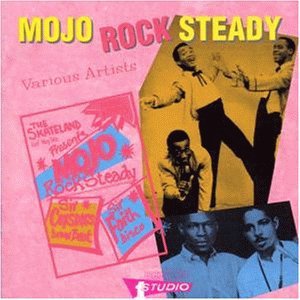 The term "reggae," often used to describe any music coming from Jamaica, is in reality a term that represents a whole canon of music that has grown, developed, and branched off from Jamaica's first native popular music, ska. Rock steady, the next form the island developed, is the precursor to the specific sub-genre of reggae, as well as the politically and culturally directed music that followed it called roots. In the rock steady era of the '60s and '70s, ska's blaring horns were minimized, and an electric bass and syncopated horn line carried the rhythm. The lyrics became more centered upon political and social concerns, especially the plight of Jamaica's black citizens. MOJO ROCK STEADY is an excellent introduction to this important era in the development of reggae music. Rhythmically and contextually, the songs contained herein represent important markers in reggae's growth. There are classic instrumental pieces like "Rockfort Rock" (originally titled "Psychedelic Rock" but renamed because a DJ from the Rockfort area of Kingston claimed it as his neighborhood's theme song), protean social protest songs from the Gaylads ("Africa") and the Bassies ("River Jordan"), and an example of one of reggae's lesser-known female vocalists, Denise Darlington ("Feel So Good"). You´ll find the tracklist in the comment.
 More than any other individual, Pete Seeger had conceived and fostered a tradition of protest song that drew from a number of cultural roots, had significant political consequence, and reshaped the forms and content of popular music.
 Far and away the best Three Johns album. Funnier, sharper, and more focused than "Atom Drum Bop", "The World By Storm" really lets the guitars rip, creating a more manic, tuneful wall of noise behind which the Johns rant and rave.
 Cram an electric trio and seven egyptian musicians in a little room in the heart of Cairo for ten days and see what happens. The first steps of egyptian hard core? An oriental version of end-of -the millenium electric rock`n`roll? The rebirth of arabic pop muisc?
 With influences drawn from diverse sources all over the world — from Istanbul to Bolivia, Andalusia to North Africa — Up, Bustle and Out is one of the harder groups to pin down on the experimental breakbeat landscape. Hailing from the English town of Bristol, home also to Tricky and Massive Attack, Up, Bustle and Out comprises producers Rupert Mould and D. "Ein" Fell, who formed the group in the early '90s as an adjunct to their respective interests in non-Western musics, funk and soul, jazz, and experimental underground club styles like house, techno, ambient, and trip-hop.
 The mid-1930s were golden years for jazz. The music on this CD is quite exciting but much of it is issued here in incomplete fashion.
 Known as "the Godfather of Ska," Laurel Aitken was Jamaica's first real recording star. He was a pioneer in many other respects as well: he was one of the first artists ever to release a ska record, the first to work at promoting his music in the U.K., and one of the first to record for the seminal Island label, itself a major force in the international popularity of Jamaican music. Cutting his teeth on the sort of jump blues and boogie shuffles popular during the early days of American R&B, Aitken recorded numerous hits for a variety of labels over the years, enjoying his heyday during the '60s. His continued presence in the U.K. made him an elder statesman to the Two Tone ska revival movement of the punk era, and he continued to tour even into the new millennium.
 |
| ARI UP (SLITS) - On stage 1977 |


 Though Johnny Cash went from total unknown to Number 1 charting artist (“I Walk The Line”) during his time with Sun Records, it’s easy to forget that it all happened pretty quick and he was only with the label for two years, from 1955 to 1957, before he moved on to greener pastures at Columbia Records. The music that he made during this time, however, is truly timeless and in its grit and fatalism marked a new kind of country music with songs more than embracing sadness and loss, songs that turned a cold, brooding eye on the stark realities of life and love.
 Willie Dixon's life and work was virtually an embodiment of the progress of the blues, from an accidental creation of the descendants of freed slaves to a recognized and vital part of America's musical heritage. That Dixon was one of the first professional blues songwriters to benefit in a serious, material way — and that he had to fight to do it — from his work also made him an important symbol of the injustice that still informs the music industry, even at the end of the 20th century. A producer, songwriter, bassist, and singer, he helped Muddy Waters, Howlin' Wolf, Little Walter, and others find their most commercially successful voices.
 Ranking Trevor has been largely ignored by the archivists, a peculiar oversight, as the DJ was a major force in the sound systems on both sides of the Atlantic during the roots age. Most of his recordings remain infuriatingly out of print, and his singles and albums, now with hefty price tags attached, are much sought after by collectors. Born Trevor Grant in Jamaica on January 20, 1960, the toaster to be fell under U-Roy's spell in childhood. He never completely shook the Originator's influence, but no matter, for Ranking Trevor had an equally sharp sense of timing and relaxed delivery that never went out of fashion in this period. Eager for success, Grant was barely into his teens when he began professionally DJing, honing his skills at the Socialist Roots Sound System. He was all of 15 when Jo Jo Hookim took him into the studio for the first time, where he cut 1975's "Natty a Roots Man." Over the next few years Trevor recorded a steady stream of singles for Hookim, all backed by the Revolutionaries, with his popularity increasing proportionally.
 On the third of four CDs in the Robert Parker series that reissues a cross section of early jazz recordings from a regional area, the music ranges from the famous (Jelly Roll Morton, Fletcher Henderson, Bessie Smith and Duke Ellington) to the lesser known (Charlie Johnson's Paradise Ten, Lloyd Scott and Freddy Jenkins).
  Harry Johnson, or Harry J as he's better known to fans around the world, was a prolific producer of top-notch reggae, and continues to run one of Jamaica's most legendary studios. Born in Kingston, Jamaica, in 1945, after leaving school Johnson worked as an insurance salesman. Interest in music, however, led him to schedule time at Studio One in 1968 to record the vocal group the Beltones. The resulting single, "No More Heartaches," was a hit, the first of many. Lloyd Robinson's seminal — and much versioned — "Cuss Cuss" arrived the following year, as did a slew of sizzling instrumentals from Johnson's studio band, the Harry J All-Stars. Their first, 1968's "Smashville," mashed up the sound systems, but it was the phenomenal success of "Liquidator," a number that stormed into the Top Ten of the British chart in late 1969, that cemented his reputation. The British reggae label Trojan promptly handed Johnson his own imprint, Harry J, and a slew of the All-Stars' instrumentals saw release. Although none of them repeated "Liquidator"'s success, the songs went down a storm with the skinhead crowd. Of course, the instrumentals were actually backings of vocal cuts, spiffed up by soloing organs or brass, and those vocal numbers were exciting plenty of attention, too. During these early years, Johnson oversaw excellent singles from the Cables, Winston Jarrett & the Flames, Joe White, Bob Andy, and Marcia Griffiths. When the latter two artists joined forces in duet, Johnson's fortune was made, with Bob & Marcia's cover of "Young, Gifted and Black" sailing into the U.K. Top Five, with "Pied Piper" following it up the chart.
 Over three months, Neil Young planned to visit 65 cities and stop for a break at the end of March. The "Time Fades Away"-tour would resume in August and shift to Europe in November, playing seven shows in the UK. Then back to America to play the final dates in New York, Boston, two shows in Ohio, Chicago and finally in Berkeley.