Freitag, 21. Oktober 2022

Lizzy Mercier Descloux ‎– Mambo Nassau

Out in some alternate universe, where old songs float around in space, there is a bridge that links Talking Heads' "I Zimbra" to the same band's "Born Under Punches." That bridge is formed by nine of the ten songs that make up "Mambo Nassau", Lizzy Mercier Descloux's second solo album.

Whether or not Descloux's severe yet foreseeable change in approach had anything to do with Talking Heads' own development is not (widely) known. It is known that she had become inspired by the traditional world music released on France's Ocora label, and in 1980 she took drummer Bill Perry down to Nassau to record at Compass Point, where she was aided by a number of people, including keyboard wiz, arranger, and -- ding ding! -- future Talking Heads associate Wally Badarou. The intent was to incorporate African elements into Descloux's existing vibrant mix of arty funk, disco, and film music, and the result was an album that nearly rivals just about any other rhythmically inventive release that came from the rock world at the time. 

Naturally, "Mambo Nassau" is even more adventurous than "Press Color". The instrumental setup - with the exception of some of the percussion - is completely Western and rock-oriented, with Badarou's excitable synthesizer often figuring prominently, whether churning out squiggled melodies or affecting the mood of the song with sensitive accents. The interplay between all of the instruments is positively acrobatic, including off-kilter time-keeping, wriggling guitars, and plump basslines that seem to twist in place. And, of course, there's Descloux's voice at the center of it all, adding even more life to the material with infectious wide-eyed exuberance. Eight of the album's ten songs are originals. Once you hear the cover of Kool & the Gang's "Funky Stuff," you'll realize that no one has ever had as much fun as Descloux had playing that song.


Tracklist:

Lady O K'Pele 2:24
Room Mate 3:37
Sports Spootnicks 4:20
Payola 4:19
Milk Sheik 0:45
Funky Stuff 4:05
Slipped Disc 3:35
It's You Sort Of You 2:14
Bim Bam Boom 3:05
Five Troubles Mambo 2:12

Lizzy Mercier Descloux ‎– Mambo Nassau (1981)
(256 kbps, cover art included)

Mekanik Destrüktiw Komandöh – Live! Die Kriegserklärung (1982)

"Live! Die Kriegserklärung" ("Live! Declaration of war") is a rare live recordings from the West-Berlin Punk & Avantgarde scene. "Mekanik Destrüktiw Komandöh" was an interesting project between punk, industrail and avantgarde. Alexander Hacke played in the weirdest projects and became famous with Einstürzende Neubauten.

Review from RateYourMusic:
"Babies von heute sind die Soldaten von morgen" ("Today's babies are tomorrow's soldiers").
Lots of overlap on this live album with the first "Weg zum Frieden" tape. The A-side was recorded in the Kant-Kino in June 1980 and is a bit more polished, the B-side was recorded in the SO 36 a month earlier, and the sound quality is much rougher. Which is a pity, as the band seems in a great form there – its incredibly intense, theatrical, dark punk with occasional jazz notes and loads of atmosphere, and it grooves like hell on tracks like "Babies von heute". Of course, if you don't speak German, you'll miss half the fun, as Volker Hauptvogel's lyrics are just as good as the music.

Tracklist:
Side A · Live at Kant-Kino, Berlin
01. Banane/Zitrone (1:52)
02. Rhythmus der Musik (3:40)
03. Rohe Gewalt (2:23)
04. Das Mörderlied (5.23)
05. Die Superbraut (3:18)
06. Kreuzberg 36 (1:02)

Side B · Live at SO36, Berlin
01. Kleine Mädchen (1:48)
02. Das Friedenslied (4:50)
03. Babies von Heute (2:15)
04. Falsche Freunde (2:30)
05. Liebeslied (3:07)
06. Propaganda durch die Tat (2:29)
07. Spaß muß sein (3:49)
Total Time: 38:06

Musicians
Volker Hauptvogel: vocals
Alexander Hacke: guitar
Edgar Domin: bass
Uli Radtke: drums
Stefan Schwietzke: sax

(ca. 256 kbps, cover art included)

Leadbelly, Big Bill Broonzy & Josh White - A Treasury Of Folk Music (1966)


Huddie William Ledbetter (January 1888 – December 6, 1949) was an iconic American folk and blues musician, notable for his strong vocals, his virtuosity on the 12-string guitar, and the songbook of folk standards he introduced. He could also play the piano, mandolin, harmonica, violin, concertina, and accordion. In some of his recordings, such as in one of his versions of the folk ballad "John Hardy", he performs on the accordion instead of the guitar. In other recordings he just sings while clapping his hands or stomping his foot.
The topics of Lead Belly's music covered a wide range of subjects, including gospel songs; blues songs about women, liquor and racism; and folk songs about cowboys, prison, work, sailors, cattle herding and dancing. He also wrote songs concerning the newsmakers of the day, such as President Franklin Roosevelt, Adolf Hitler, Jean Harlow, the Scottsboro Boys, and Howard Hughes.

Big Bill Broonzy (26 June 1898 – 15 August 1958) was a prolific American blues singer, songwriter and guitarist. His career began in the 1920s when he played country blues to mostly black audiences. Through the ‘30s and ‘40s he successfully navigated a transition in style to a more urban blues sound popular with white audiences. In the 1950s a return to his traditional folk-blues roots made him one of the leading figures of the emerging American folk music revival and an international star. His long and varied career marks him as one of the key figures in the development of blues music in the 20th century.
Broonzy copyrighted more than 300 songs during his lifetime, including both adaptations of traditional folk songs and original blues songs. As a blues composer, he was unique in that his compositions reflected the many vantage points of his rural-to-urban experiences.

Joshua Daniel White (February 11, 1914 – September 5, 1969), best known as Josh White, was an American singer, guitarist, songwriter, actor, and civil rights activist. In the early 1930s, he also recorded under the names "Pinewood Tom" and "Tippy Barton."
He became a 1920s and 1930s star of "race records", with a prolific output of recordings in genres including Piedmont blues, country blues, gospel, and social protest songs. He was billed in concert as "The Sensation of the South". In 1931, White moved to New York and within a decade his fame had spread widely, and his repertoire expanded to include urban blues, jazz, Tin Pan Alley, cabaret, folk songs from around the world, and hard-hitting political protest songs. He soon was in demand as an actor on radio, Broadway, and film. However, his pioneering guitar playing never altered or diminished, while some would even argue it broadened with the expansion of his musical repertoire.

Tracklist:

A1. Leadbelly - How Long                  
A2. Leadbelly & Sonny Terry - John Henry
A3. Leadbelly & Josh White - Don't Lie Buddy
A4. Leadbelly - Ain't You Glad
A5. Big Bill Broonzy - Letter To My Baby
B1. Josh White - Saint James Infirmary
B2. Josh White - Lass With The Delicate Hair
B3. Josh White - When I Lay Down & Die Do Die 
B4. Josh White - Early Morning Blues
B5. Big Bill Broonzy - Baby Please Don't Go

Leadbelly, Big Bill Broonzy & Josh White - A Treasury Of Folk Music (1966)
(ca. 170 kbps, cover art included)

Familie Hesselbach - Süddeutschland (1984)

Familie Hesselbach was formed in Tübingen, West Germany in 1981.

The South German punk and new wave band caused a sensation between 1981 and 1985, first regionally and then nationwide. They indulged in a deliberate eclecticism from the musical preferences of the individual family members and formed these into their unmistakable sound. Disco, pop, punk, rap, the main thing is danceable. The lyrics in German and Italian, later also in English - and always with a wink. Their trademarks were the rousing live quality of the performances and the use of brass instruments, trumpet and clarinet from the beginning - the tenor saxophone was added later. 

 The 12´´ "Süddeutschland" was released on the Zickzack label in 1984.

Tracklist:


A1 Süddeutschland 5:15
A2 Das Bild 4:48
B1 Rimini 3:35
B2 Zur Kur 4:11


Familie Hesselbach - Süddeutschland (1984)
(256 kbps, cover art included)

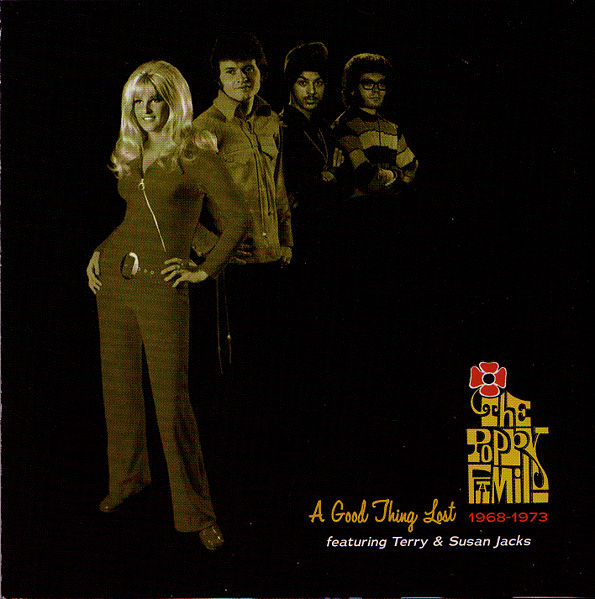
The Poppy Family - A Good Thing Lost 1968 - 1973

Susan Pesklevits and Terry Jacks met in the band Powerline.

They later married and formed the Poppy Family in 1968. With guitarist Craig McCaw and percussionist Satwan Singh, the duo's third single, "Which Way You Goin' Billy," became a hit in the U.S. and their native Canada, selling over two million copies.

The group recorded three albums in the early '70s: "That's Where I Went Wrong" and "Which Way You Goin' Billy" in 1970 and "Poppy Seeds" in 1971.

Terry and Susan were divorced by 1973, however, and both began solo careers. Susan released "Dream" (1976), "Ghosts" (1980) and "Forever" (1982), but Terry became more successful when his "Seasons in the Sun" single went platinum in Canada (more than 150,000 units). His albums include "Seasons in the Sun" (1974), "Y'Don't Fight the Sea" (1976), "Pulse" (1983) and "Into the Past" (1989).

Tracks:
Beyond The Clouds
Free From The City
What Can The Matter Be?
Which Way You Goin', Billy?
Happy Island
There's No Blood In Bone
A Good Thing Lost
You Took My Moonlight Away
Shadows On My Wall
That's Where I Went Wrong
Where Evil Grows
I Was Wondering
Tryin'
Winter Milk
Good Friends?
I'll See You There
You Don't Know What Love Is
I Thought Of You Again
Another Year, Another Day
Evil Overshadows Joe
Endless Sleep

The Poppy Family - A Good Thing Lost (1968 - 1973)
(192 kbps, cover art included)

Donnerstag, 20. Oktober 2022

Cassiber - Man Or Monkey (1982)

"Man or Monkey" was Cassiber's first album. It was released in 1982 on the German label Riskant as a set of two 45 rpm LPs - a format that turned it into a pricy collector's item. For this first effort, 

Christoph Anders, Chris Cutler, Heiner Goebbels, and Alfred 23 Harth entered the studio with only a handful of the drummer's lyrics and a few melodic ideas. They improvised, letting structures and arrangements develop by themselves, so to speak, and singer Anders threw in a text when he felt it appropriate. 

Even on the ReR Megacorp CD reissue, the structure of the four-sided LP remains strongly detectable. Side A presents three short improvised songs. Lyrics are more declamated than sung and the musical flooring is loosely rhythmical but very intense ("Red Shadow" is a highlight). Side B focuses on more prepared songs and Anders' singing. The festive music of "Our Colourful Culture" creates a disgusting contrast with the somber lyrics ("I came from the country/Arriba! Arriba!/They were killing my family/Ha ha ha ha"). "O Cure Me" sets the lyrics from one of Bach's cantatas against a delicate keyboard motif and thunderous clashes of noise. Both of these pieces would remain in the group's live sets until the end ten years later. Side C contains the 16-minute free improvisation "Man or Monkey." It has interesting moments but never really lifts up -- a failed attempt for the most part. Side D contains nice percussion work. "Man or Monkey" is miles away from the conciseness and strength of  "A Face We All Know", but it already shows all the ingredients for the maturation of this seminal avant rock group.


Tracklist:
1. Not Me (3:38)
2. Red Shadow (3:50)
3. Chor der Gefangenen (4:51)
4. Our Colourful Culture (3:05)
5. O Cure Me (5:54)
6. This Core (4:20)
7. Man or Monkey (16:39)
8. Django vergibt (3:10)
9. Die Verunreinigung des Flusses ist gerade noch ertraeglich (6:38)
10. Sag mir wo die Blumen sind (2:41)

(ca. 192 kbps, cover art included)

Terry Jacks - Seasons In The Sun (1973 / 2008)

Terry Jacks (born March 29, 1944 in Winnipeg, Manitoba) is a Canadian singer, songwriter, record producer and environmentalist.His family having relocated to Vancouver, Jacks took up guitar in his teens and at 18 joined a Vancouver, British Columbia, band called The Chessmen. The group had a few minor local hits before disbanding, after which Jacks teamed up with singer Susan Pesklevits (born 1948, Saskatoon, Saskatchewan). Jacks played guitar while Pesklevits sang lead vocals. Initially, their material consisted mainly of cover songs but eventually, Jacks began writing more and his songs were added to the repertoire. The duo performed at small Vancouver clubs before adding another guitarist (Craig McCaw) and tabla player (Satwant Singh) to restyle themselves as The Poppy Family.

Jacks and Pesklevits married in 1968 and eked out a living until the band burst onto the national charts in 1969 with their debut album, "Which Way You Goin' Billy?" which was written and produced by Jacks. The 45rpm single went to No. 1 in Canada and reached No. 2 on the Billboard charts in the United States, selling over three million copies. The single was the first million-selling record to ever recorded in British Columbia. It won a Juno Award for best performance while Jacks earned a Juno for best producer of a single. The Poppy Family won a Juno for best group and immediately followed up with a second album, Poppy Seeds, but it did not match the success of the first album. The Poppy Family did place two other singles in the top five in Canadan and the U.S. Top 50, "That's Where I Went Wrong" (No. 29, 1970) and "Where Evil Grows" (No. 45, 1971), the latter of which was a duet (unusual since Susan was lead singer on most of the group's singles). Jacks then released the solo single "Concrete Sea" which went to number one in Canada. It was never released in the US.

In 1973, Susan and Terry separated but Jacks produced two more albums before the marriage officially ended, Susan's first solo album "I Thought Of You Again" and Terry's "Seasons in the Sun." Jacks had worked with the Beach Boys to record the song "Seasons In The Sun" but the project was never finished so he recorded the song himself. Released in 1973 on his own record label, Goldfish Records, the song became the largest-selling international single by a Canadian artist and earned Jacks four Juno Awards. The song was based on an original called "Le moribond" by Jacques Brel with lyrics and melody modified by Jacks in honour of a friend who had died of leukemia. In the United States, where it was released on Bell Records, the song went to No. 1 on the charts. He released two more singles entitled "If You Go Away" (another English-language version of a Jaques Brel song entitled "Ne Me Quitte Pas") and "Rock & Roll (I Gave You The Best Years Of My Life)", both of which were substantial hits in Canada and placed well on the Billboard Hot 100 chart in the USA.

Jacks wrote and recorded a number of other songs and went on to produce Nana Mouskouri, Chilliwack (including the groups' first hit, ``Crazy Talk.``) and other Canadian artists. He earned Juno and Gold Leaf awards for his production work.

In the late 1970s Jacks married Margaret Zittier and gradually withdrew from the music world. The couple had a daughter, Holly Michelle Jacks, in 1985 and Jacks became involved in the environmental movement, focusing on pulp mill pollution issues in Canada. Jacks`environmental work has earned him several awards including one from the United Nations and the Western Canada Wilderness Committee. He has worked extensively in film and video, producing several shorts on environmental themes including "The Tragedy of Clearcutting", "The Southern Chilcotin Mountains" and "The Warmth of Love" (The Four Seasons of Sophie Thomas). The video production "The Faceless Ones" earned an Environmental Gold Award from the New York International Film Festival.
Jacks`second marriage ended in 2001. In 1996, Jacks released the CD, "A Good Thing Lost 1968-1973", a collection of The Poppy Family songs. He lives in Pender Harbour, British Columbia, and still does the occasional performance.


Tracklist:
01. Concrete Sea
02. I'm Gonna Love You Too
03. Pumpkin Eater
04. Again and Again
05. Since You Broke My Heart
06. Fire on the Skyline
07. The Love Game
08. I'm So Lonely Here Today
09. It's Been There from the Start
10. Sail Away
11. Seasons in the Sun
12. Put The Bone In *
13. If You Go Away *
14. Me And You *
15. Rock N Roll *
* — Bonus tracks

Terry Jacks - Seasons In The Sun (1973 / 2008)
(320 kbps, cover art included)

The Poppy Family - Which Way You Goin´ Billy? (1969)


The Poppy Family was a late 1960s and early 1970s Canadian pop music group, based in Vancouver, British Columbia. Susan Pesklevits and Terry Jacks met in the band Powerline. They later married and formed the Poppy Family in 1968.
"In the late summer of 1969 the Canadian record buying public chose to endorse The Poppy Family by establishing "Which Way You Goin' Billy?" as the biggest Canadian hit ever. 'Billy' successfully climbed to the No.1 spot on all radio stations across Canada. Having watched The Poppy Family from Vancouver, British Columbia, evolve as a recording group has been a satisfying and rewarding experience. The constant creative growth, both musically and lyrically, within the group is evident in the album "Which Way You Goin' Billy?".
The versatility of the group, from Terry Jacks' meaningful writing, to his wife Susan's beautiful and emotion-packed voice allow them to explore avenues of musical expression hitherto uncharted. All the while The Poppy Family retain their own sound so unique to themselves". (Fraser Jamieson, President London Records, Canada - November 17 1969).
Managed and produced by Terry Jacks, with featured vocalist Susan Jacks (tambourine/bean pod) and musicians Craig McCaw (guitar/sitar) and Satwant Singh (tablas/drums), the group recorded two albums.
At their career peak, Terry and Susan Jacks performed "Which Way You Goin' Billy?" on Bobby Darin's 1970 television variety special, "The Darin Invasion". The special also featured a young Linda Ronstadt performing her first solo hit, "Long Long Time". They also appeared on numerous other variety shows including "Rollin' On The River" with Kenny Rogers, the Bobby Vinton Show and The George Kirby Special.

The Poppy Family disbanded in 1973 when Susan ended their five and a half year marriage, the same year their solo albums were released - Terry's "Seasons in the Sun" and Susan's "I Thought of You Again". Terry Jacks scored an international No. 1 hit with Jacques Brel's "Seasons in the Sun". which earned him Juno awards for Male Vocalist of the year 1973 and 1974 and top selling single in 1973 and 1974. It still remains the best selling single ever released by a Canadian artist with sales of over 13 million worldwide. He was also charted with the singles "If You Go Away" (#45 1974) (another Brel cover, previously a minor hit for Damita Jo), "Concrete Sea" (#16 1972), "Christina" (#9 1975), "Rock'N Roll (I Gave You The Best Years Of My Life)" (#22 1975) (a bigger American hit by Mac Davis), and the Buddy Holly cover "I'm Gonna Love You Too" (#7 1973). He has since faded from the recording scene.

Susan Jacks went on to release three more solo albums and had a series of Juno nominated hits in Canada including "Anna Marie" (#20 1976), "All The Tea in China" (#93 1980), and "Tall Dark Stranger" as well as other hits such as "I Thought of You Again "(#7 1974), "You Don't Know What Love Is" (#3 1973) and "You're a Part of Me" (#41 1975) (later a Top 40 hit for Kim Carnes and Gene Cotton). In 1982, she moved to Nashville, Tennessee and, in addition to recording, became a staff songwriter for a Nashville publishing company. Several of her compositions have been recorded by Canadian artists, one of her songs being recorded on a Grammy nominated children's album. She recently returned to the Pacific Northwest and has resumed recording and live performances.

Album review:
While in recent years dozens of would-be hipsters have written about the dark undercurrents to be found in the music of the Carpenters, anyone looking for a truly great bummed-out soft rock experience needs to dig up the long out of print debut LP from Vancouver's Poppy Family. While producer, arranger, songwriter, and general straw boss Terry Jacks later found fame for his hit adaptation of Jacques Brel's "Seasons in the Sun," his greatest work was with his then-wife Susan Jacks and their group, the Poppy Family. Blending moody soft pop with light psychedelia, the group hit a rich vein of gorgeous melancholy that made sadness sound positively sensual (the album's token "upbeat" tune, "Happy Island," is significantly also one of the set's weakest moments). The album's two international hit singles, "Which Way You Goin' Billy?" and "That's Where I Went Wrong," are both tales of lovers on the run that sound as desperate as Del Shannon and as lonesome as Brian Wilson's worst nightmare, and such lost classics as "You Took My Moonlight Away" and "Beyond the Clouds" are every bit as strong, boasting clear but emotive vocals from Susan Jacks, brilliant if oddball Indian percussion from Satwan Singh, and melodramatic string arrangements from Graeme Hall. And the two side-closing "freakouts," "There's No Blood in Bone" and "Of Cities and Escapes," manage to be cheesy and powerfully effective at the same time. If the '70s were supposed to be about having a nice day, "Which Way You Goin' Billy?" shows the Poppy Family were one band waiting for a cloud to blot out all that annoying sunshine; at once kitschy and marvelously sincere, it's a great record worthy of rediscovery. (by Mark Deming, http://www.allmusic.com)

Track listing:
1. "That's Where I Went Wrong" – 2:28
2. "Free From The City" – 2:15
3. "Beyond The Clouds" – 2:30
4. "A Good Thing Lost" – 2:00
5. "You Took My Moonlight Away" – 2:40
6. "There's No Blood In Bone" – 2:55
7. "Happy Island" – 2:45
8. "Which Way You Goin' Billy?" - 3:18
9. "Shadows On My Wall" - 2:25
10. "What Can The Matter Be?" - 2:17
11. "For Running Wild" - 2:14
12. "Of Cities And Escapes" - 3:45

Musicians:
Susan Jacks: vocals, percussion
Terry Jacks: guitar
Craig McCaw: guitar, sitar
Satwant Singh: tablas, bongos, percussion

The Poppy Family - Which Way You Goin´ Billy? (1969)
(192 kbps, cover art included)

Mittwoch, 19. Oktober 2022

Cem Karaka - Die Kanaken (Pläne, 1984)

The legendary Turkish Rock Star Cem Karaca recorded the LP "Die Kanaken" during his exile in Germany. The album was released in 1984 on the Pläne label and contained songs from the musical “Ab in den Orientexpress” - which had its first performcance on the 22nd of April 1984 at the Westphalian State Theatre in Castrop-Rauxel - and other tracks.

The album is described as a "rebellion in a borrowed tongue", as the pioneer of the Anatolian rock movement sung the songs in German language.

Cem Karaca in an interview: “… Foreign workers are colloquially referred to as ‘Gastarbeiter’ in this country. Meaning guest laborer, guest worker. Isn’t the very reasoning of the people who can come up with such a phrase against our sensibilities? A guest who labors!”
“Cem Karaca has endured an inordinate amount of hardship. … His very exile resulted from a news item by a tabloid, causing him to find himself lumped together with other exiles from Turkey with whom he felt he did not belong, in the same category and the same country. Rather than the exiles he imperatively stood apart from, he grew closer to entities that we can define as the new social movements of Germany, such as the Greens, which in turn let do Karaca putting aside the use of language as his most important weapon and making music in a borrowed tongue.” (Münir Tireli, “Münir Tireli, Cem Karaca and Die Kanaken")

Cooming from the Hawaiian word kanaka Kanake (-n): is a German word for people from German-speaking countries with roots in Arab countries, Turkey, Southeast Europe and Persian speaking countries. It is used as a derogatory word, but also as a self-denomination. … Kanake has been re-appropriated by people of Arab, Turkish, Kurdish, and of other Middle Eastern ethnic minorities in Germany and used proudly as a term of self-identification. - Wikipedia

Cem Karaca’s first visit to Germany was in 1967 with his band at the time, Apaşlar. He recorded some 45-rpm records to be published by Türkofon, the record company owned by Yılmaz Asöcal that would later become Türküola. He returned to Turkey after shooting videos for WDR Television.

Of the songs that the band recorded in 1967, “Resimdeki Gözyaşları” was released in Turkey in 1968 and became a hit. Cem Karaca subsequently returned to Germany in ’68 to attend a festival titled “Europe Meets in Cologne”. According to the news item by Kölner Stadtanzeiger, Cem Karaca prompted the most fervent adulation of the festival. The same year, they released English versions of “Resimdeki Gözyaşları” and “Emrah”, but these would not become hits. Imagine if Elvis Presley opened a cassette shop in England!


In the words of Ironhand Records owner Ercan Demirel, “Cem Karaca’s Germany experience is full of what-ifs. The commonly held view about Cem Karaca is that he fled the country due to the warrant for his arrest. We know from news items and magazine articles at the time as well as an interview Cem Karaca gave to German television that this wasn’t the case.

In 1979 he goes to England to perform Pink Floyd at the famous Rainbow Arena where Pink Floyd performed no less…while abroad, they also stop by Germany and take the opportunity, thanks to demand by the gurbet crowd, to organize an array of concerts.

After the Germany and Netherlands concerts, Karaca returns to Turkey in September of 1979. There he records the album Hasret with Uğur Dikmen and studio musicians. Though the album is not yet released, he performs “Bu Biçim” for TRT audiences. With left-right conflicts in Turkey no less heated than when he left, he returns to Germany on January 11th 1980 and opens up a cassette shop in Munich. Imagine if Elvis Presley opened a shop in England!

Later on, in 1985, they participate in a live broadcast in which they perform as Die Kanaken. Cem Karaca describes it in his own words: he says that in the wake of a piece of news in a tabloid magazine in 1981, the military administration called for him to return to the country. However, he said, he was too afraid of what might happen to him if he did, so he rejected the call and was subsequently expatriated in 1983.”

When several of the musicians traveling in Germany with Karaca returned to Turkey, there was a shortage of band members. They met and began working with a German bassist. According to Fehiman Uğurdemir, one of the Anatolian rock scene’s legendary guitarists, who stayed with Karaca in Germany:

“It was through this bassist that we received a proposal to act and perform in a theater play at the Westfälisches Landestheater. A play, geared towards high-schoolers, that criticized the xenophobia that had been incited to worrisome magnitudes at that time: Ab in Den Orient Express [Backwards on the Orient Express].”

The play opens with a bet between two close friends, Bernd and Nuri. According to the bet, Bernd is to win 100 Marks if he can fulfill the conditions of being a Turk for a week. The conditions: to reach an agreement with an eminent personality, fulfill an errand in a government office and get a job, all in the guise of a Turk. Nuri adds one more mission post facto: Bernd will also have to steal the heart of a German girl. With a false mustache, provincial dress complete with black salwar and an affected accent, Bernd is now Süleyman for a week. What he encounters will take him by great surprise.

The script, comprised of poetry that would later be set to music, was penned by Harry Böseke and Martin Brukert.

Coming from a theatre-wise family, Karaca “decided in advance” and “dragged [Uğurdemir] into it”. Says Uğurdemir: “Kanaken’s ideology was something else entirely. It wasn’t Kanaken’s purpose to entertain the public. To the contrary, it was a project meant to criticize and examine the current situation and spur people to think. At the time we performed some of the songs live on TV programs. That got word of the album out there. It was rather more popular amongst the German intelligentsia, however. When you listen to a famous âşık in Turkey it hits you in your soft spot because it’s written in your language and says something of your sentiments and culture. I think that Harry Böseke and Martin Burkert’s words touched the sweet spot of the German people in the same way. With those intense lyrics, people at the concerts couldn’t dance even if they wanted to.”


In the album that was recorded in Cologne, not only with Fehiman Uğurdemir, but also with Cengiz Öztunç, Sefa Pekelli, İsmail Tarlan and Betin Güneş. Along with the musicians from Turkey, in "Beim Kaffee" Clemente Alfredo plays the violin and in "Çok Yorgunum", the synths were played by Dick Stadtler.

Writer and critic Ulrich Gutmair remarks that on first listen to this album, he thought it quaint and unlike the German pop sound of the ‘80s. He says that upon then listening to a Turkish album by Cem Karaca, he understood that Karaca had stayed true to his own sound with "Kanaken" too.

We share below the lyrics of the song "Es kamen Menschen an" that, just like the bard Ata Canani’s "Deutsche Freunde", were inspired by the words “laborers were called, humans came” by Swiss playwright Max Frisch:

"Man brauchte unsere Arbeitskraft, (Our manpower was needed)
die Kraft, die was am Fließband schafft (the power that runs the assembly line)
Wir Menschen waren nicht interessant, (We as humans were not interesting)
darum blieben wir euch unbekannt (so we remained strangers to you)
Ramaramaramaramadah (amman amman amman amman)
Gastarbeiter (guest workers)
Ramaramaramaramadah (amman amman amman amman)
Gastarbeiter (guest workers)
Es wurden Arbeiter gerufen,
doch es kamen Menschen an (Laborers were called, humans came)"


The only Turkish song on the album "Die Kanaken" was adapted from the Nazım Hikmet poem "Çok Yorgunum" [I Am So Tired]. On the special request of Cem Karaca, all of the lyrics were printed in both languages.


Trackllist:

A1 Mein Deutscher Freund 4:17
A2 Beim Kaffee 2:31
A3 Total Geschlaucht 3:20
A4 Willkommen 2:35
A5 Es Kamen Menschen An 4:20
B1 Schnüffler 3:05
B2 Orient-Express 2:35
B3 Was Sagst Du
B4 Ayşe, Meral, Semra 2:47
B5 Çok Yorgunum

Cem Karaka - Die Kanaken (1984)
(128 kbps, cover art include)

Montag, 17. Oktober 2022

X-Ray Spex – The Day The World Turned Day-Glo (Single, 1978)

X-Ray Spex were a British UK Punk Rock group formed in 1977 by vocalist Poly Styrene (born Marianne Elliott-Said), bassist Paul Dean, guitarist Jak "Airport" Stafford, drummer Paul "BP" Hurding and saxophonist Lora Logic. This song was the first of their three UK Top 40 hits. The band dissolved in Autumn 1979 and Poly Styrene temporary pursued a solo career before giving up music to pursue her interest in Eastern mysticism. Stafford and Hurding went on to form the new wave band Classix Nouveaux together with Mik Sweeney and Sal Solo with whom they achieved some chart success.

Poly Styrene explained this song to Mojo magazine: "Most people thought the song was about tripping, but I was using images of artificiality. I grew up in a generation where all we had was brown paper bags in the local store, but gradually everything became more colorful. Day-Glo symbolized the shift from natural to synthetic. We weren't buying cotton any more but Bri-Nylon. It was a great time, people were discovering things with technology. Bri-Nylon you could wear to school and your mum didn't have to iron it."


Tracklist:

A The Day The World Turned Day-Glo
B Iama Poseur

(320 kbps, cover art included)

Sonntag, 16. Oktober 2022

Interzone - Interzone (1981)

Interzone was a German blues-rock group, founded in the beginning of 1979, headed by vocalist Heiner Pudelko. In the beginning Pudelko was not writing his own lyrics, but was fascinated by the poems of Wolf Wondratschek, the great poet for all eccentrics and loners. .

In early 1981, Interzone went into the Berlin 'Audio' recording studio and recorded with co-producer Udo Arndt their first album, still unsigned. Shortly before the end of the production, it came to an agreement with a record company and mid-June 1981, the self titled debut album was released. . Shortly thereafter Interzone played live at Berlin Waldbühne in front of 22,000 fans and were broadcast live on TV. 

Montezuma wrote in 2014 about this album:

Times were pretty easy then: the west was shiny and rich, the east was dark and dirty. Colorbright the west, grey the east. Was it? 
No! There was more between the different sectors. Something between "Die Zone" - how the east was called - and "Der Westen". The Interzone!!

I remember holding this album in my hands for the first time. The angry man on the front - all back & white - with red letters on top: "interzone"

I remember putting this album on my turntable for the first time. Hard blues guitars and a voice killing me immediatly:

"Du verstehst nichts vom Business
sagt der Hintermann"


Shock and awe! And then the refrain came:

"und er kommt dir entgegen
und haut dir mit vergnügtem sinn
in die schnauze rin"

("and he comes towards you
and beats you with a jolly sense
into your trap")


I never heard something like that from a German band. The lyrics felt the same.

I could quote most any song on this album to highlight the lyrics on this. Never had a band such a language of gutter to tell songs from the gutter.

"Kinderlied"("Children's song") is a song about a child who's parents are addicted to drugs and whos mum works as a prostitute too.

And Heiner Pudelko was the perfect singer to this songs.

Interzone didn't sing about the good life, they weren't on the sunny side. Everything was grey and muddy. Like it's been in Berlin, east and west. This was about "blnw".

Tracklist:

Hintermänner 3:59
Blues 3:14
Kinderlied 3:30
Blnw 2:50
Jobs 2:51
Rita & Klaus 3:18
Dilettanten Des Wunders 3:28
Die Lebendigen + Die Toten 4:17
Liebeslied 4:01
Glotze 4:00
Karl 3:59

(320 kbps, cover art included)

Samstag, 15. Oktober 2022

Paul Butterfield - Live - Unicorn Coffee House, Boston, MA

Paul Butterfield was the first white harmonica player to develop a style original and powerful enough to place him in the pantheon of true blues greats. It's impossible to overestimate the importance of the doors Butterfield opened: before he came to prominence, white American musicians treated the blues with cautious respect, afraid of coming off as inauthentic.

Not only did Butterfield clear the way for white musicians to build upon blues tradition (instead of merely replicating it), but his storming sound was a major catalyst in bringing electric Chicago blues to white audiences who'd previously considered acoustic Delta blues the only really genuine article. His initial recordings from the mid-'60s — featuring the legendary, racially integrated first edition of the Paul Butterfield Blues Band — were eclectic, groundbreaking offerings that fused electric blues with rock & roll, psychedelia, jazz, and even (on the classic East-West) Indian classical music.

As members of that band — which included Michael Bloomfield and Elvin Bishop — drifted away, the overall impact of Butterfield's music lessened, even if his amplified harp playing was still beyond reproach. He had largely faded from the scene by the mid-'70s, and fell prey to health problems and drug addiction that sadly claimed his life prematurely. Even so, the enormity of Butterfield's initial impact ensured that his legacy was already secure.

Here´s a Paul Butterfield Blues Band bootleg, recorded life at the Unicorn Coffee House, Boston, MA in spring 1966

Set 1:

01 Look Over Yonders Wall
02 Born In Chicago
03 Love Her With A Feeling
04 Walking Blues
05 Don't Say No To Me
06 One More Heartache
07 Work Song

Set 2:

08 Thank You Mr. Poobah
09 Serves You Right To Suffer
10 Got A Mind To Give Up Living
11 Walking By Myself
12 Baby Please Don't Go
13 World Is In An Uproar
14 Got My Mojo Working

Paul Butterfield - harp, vocals
Mike Bloomfield - guitar
Elvin Bishop - guitar
Mark Naftalin - keyboard
Jerome Arnold - bass
Billy Davenport - drums

Paul Butterfield - Live - Unicorn Coffee House, Boston
(320 kbps, cover art included)

Enrico Medail Canta Ferré – Nè Dio Nè Padrone (1977)


"Medail est un poète, et c'est pour ça qu'el ne m'a jamais tradi. Et puis, il a du talent, et puis il chante bien. Ecoutez-le. Vous ne l'entendrez jamais su "Hit Parade" de la merde. Et c'est bien comme ça. Il me ressemble et bravo!" – Léo Ferré

This album is Enrico Medail's only recording with songs from Léo Ferré translated into Italian.

Léo Ferré (24 August 1916 – 14 July 1993) was a Monegasque French poet and composer, and a dynamic and controversial live performer, whose career in France dominated the years after the Second World War until his death. He released some forty albums over this period, composing the music and the majority of the lyrics. He released many hit singles, particularly between 1960 and the mid-seventies. Some of his songs have become classics of the French chanson repertoire, including "Avec le temps", "C’est extra", "Jolie Môme" or "Paris canaille".

Along with Serge Gainsbourg, Jacques Brel and Georges Brassens, he is considered one of the greatest French-language singer-songwriters of all time, but unlike Brel and Gainsbourg, or even Charles Aznavour, his songs are little known in the English-speaking world. Ferré also gained a large following as an anarchist, and is often seen as the archetypal French protest singer.

Ferré’s songwriting was famously incisive and attuned to the issues of the day, but also poetic. He mixed revolt with love and melancholy, sophisticated lyricism with slang and shouts, and rhyming verse with prose monologues. He moved from music-hall to symphonic music and spoken word, breaking free from traditional song structure, inventing his own dramatic and innovative musical territory. He also popularized the French poètes maudits, such as François Villon, Charles Baudelaire, Paul Verlaine, and Arthur Rimbaud, as well as acclaimed French poets from the 20th century such as Guillaume Apollinaire and Louis Aragon, by setting many of their poems to music.

Tracks
01. Gli stranieri 06:26
02. Rotterdam 03:00
03. I poeti 02:45
04. La notte 03:54
05. Nè Dio nè padrone 02:32
06. La malinconia 04:01
07. È solo lei 04:16
08. Thank you Satan 03:25
09. L'età in fiore 04:07
10. Signora miseria 02:05

Musicians
Enrico Medail: vocals, lyrics
Cesare Poggi: pianoforte, arrangiamenti
Cecilia Vallini: flauto
Sergio Almangano: violino
Giorgio Azzolini: contrabasso
Tonino Paolillo: tecnico
Registrato alla Mondial Sound, Milano

Enrico Medail Canta Ferré – Nè Dio Nè Padrone (1977)
(ca. 256 kbps, cover art included)

Lizzy Mercier Descloux ‎– Press Color (1979)

Lizzy Mercier Descloux made a significant splash in New York's underground music community with her first solo album for the ZE label, home to equally bent acts like Was (Not Was), Cristina, the Contortions, and Kid Creole & the Coconuts. 

The French transplant had already established herself as one half of Rosa Yemen, a short-lived no wave combo that released a hastily recorded six-song EP for the same label a year earlier. Along with Rosa Yemen partner DJ Barnes and Garçons' Eric Elliason, she recorded "Press Color" - eight tense, terse tunes owing more to disco, funk, and film scores than punk rock - within the span of two weeks. 

The lead single, a cover of Arthur Brown's "Fire," couldn't have ripped out Descloux's no wave roots any more violently, all the while changing the original's fire-and-brimstone theatrics into a zippy roller-rink wink. Covers of two Lalo Schifrin compositions - "Mission: Impossible" and "Jim on the Move" - are relatively faithful, though Descloux adds something of her own to the latter by repeatedly intoning the title ("Jim...Jim! Jim, Jim, Jim -- on...the move"). The original arrangement of the standard "Fever" is also kept intact, but Descloux replaces every instance of "fever" with "tumor" ("you give me tumor," "tumor when you hold me tight," etc.). The other half of the album is made up of originals, including "Wawa," a bobbing, disco-inspired instrumental full of the spindly guitars that would populate much of her brilliant follow-up, "Mambo Nassau". 

Spirited, fun, and full of luscious basslines, the only thing that prevents "Press Color" from being as venerated as ESG's early releases is that no rap producer has been keen enough to sample from it.

This reissue combines the Press Color LP, the Rosa Yemen EP and 4 bonus cuts.


Tracklist:

"Fire" (Brown) 5:11
"Torso Corso" 1:48
"Mission Impossible" (Schifrin) 2:35
"No Golden Throat" 2:38
"Jim on the Move" (Schifrin) 2:29
"Wawa" 2:18
"Tumor" (Cooley, Davenport) 2:57
"Aya Mood" 2:50
"Mission Impossible 2.0" (Schifrin) 2:20
"Rosa Vertov" (Descloux, D.J. Barnes) 1:43
"Decryptated" (Descloux, Barnes) 1:20
"Herpes Simplex" (Descloux, Barnes) 2:03
"Lacrosse Baron Bic"(Descloux, Barnes) 1:36
"Tso Xin Yu Xin" (Descloux, Barnes) 1:20
"Nina Con Un Tercer Ojo" (Descloux, Barnes) 0:58
"Birdy Num-num" 3:32
"Hard Boiled Babe" 4:28
"Morning High" (Rimbaud /Descloux, Patti Smith) 3:04


Tracks 10-15 are originally from the Rosa Yemen EP.
Tracks 16-18 are previously unreleased bonus tracks.

(192 kbps, cover art included)

Pete Seeger - Frontier Ballads, Vol. 1 (1954)


Pete Seeger's "Frontier Ballads" collection of 19th century American songs tracing rural life and the development of the American West was released both as a double-length LP and in two separate volumes on 10" discs.

Seeger accompanies himself on the banjo (with the occasional a cappella song thrown in) on material divided into three thematic sections, the first two of which appear on this first volume. Immigrants contains seven songs referring to those who came to the U.S., their experiences explored in such lyrics as "No Irish Need Apply." The next seven songs, The Trek, concern the movement west with special attention paid to the "Cumberland Gap" and the "Erie Canal," as well as encounters with "Sioux Indians." The album's extensive liner notes put the songs into historical context, and Seeger's spirited performances bring to life a panorama of American experiences during the 19th century when the country was being discovered and settled. (The second volume recounts the experiences of The Settlers as they hunt, farm, build railroads, distill liquor, and just live.) 

   Tracklist:
                           
Immigrants
A1Fare You Well, Polly
A2No Irish Need Apply
A3Johnny Gray
A4Greer County Bachelor
A5Cowboy Yodel
A6The Trail To Mexico
A7Joe Bowers

The Trek
B1Wake Up, Jacob
B2Cumberland Gap
B3Erie Canal
B4Blow The Man Down
B5Ox Driver's Song
B6Texian Boys
B7Sioux Indians

Pete Seeger - Frontier Ballads, Vol. 1 (1954)
(256 kbps, cover art included)                  

Donnerstag, 13. Oktober 2022

Matching Mole - March (Live, 1972)

Matching Mole was the band that drummer/vocalist Robert Wyatt formed after he left the pioneering UK outfit Soft Machine in July, 1971. Over the course of its brief, one-year existence, Matching Mole would develop a characteristic sound, a unique take on fusion, with interesting structures that encouraged individualistic expression through solos. When one of the members came across a forgotten live show on tape - identified simply as 'March, 1972' - , it was released it on the same titeld album.

Recorded live in Europe 3/72, shortly after Dave MacRae became the keyboardist, this includes the basic repertoire that the band would perform during their lifetime, with a few surprises thrown in. The sound is surprisingly superb for a live show of this vintage, and once again Tom Recchion has come up with a charming cover.

Tracklist:


1 March 4:49
2 Instant Pussy 4:53
3 Smoke Signals 6:24
4 Part Of The Dance 9:50
5 No 'Alf Measures 5:40
6 Lything And Gracing 11:39
7 Waterloo Lily 4:20

Matching Mole - March (Live, 1972)
(256 kbps, cover art included)

Fiedel Michel - Live (1977)

"Fiedel Michel" from Münster, who had first appeared in 1972 as the "Rambling Pitchforkers", playing a set of Scottish and Irish folk, won first prize for German songs in the 1973 Interfolk Festival in Osnabrück. The Interfolk Festival (or "Internationales Folklorefestival") combined "authentic" folk music and an intimate atmosphere. With artistic quality and the non-commercial orientation of the performers, Interfolk remarkably withstood the trend toward mass-oriented festivals.

In the mid-1970s, Fiedel Michel were alsongside Elster Silberflug (from Heidelberg) and Liederjahn (from Hamburg) one of the leading German folk groups. On their albums, they combined dance tunes, traditional music and socially critical "Volkslieder". They were part of the folk and "Liedermacher" movement looking for new possibilities for a musical culture with a political awareness after the collaps of the 1968 student movement. In the face of political impotence, it was now time for the radical youth to give up the slogan "Gitarren in die Ecke" and to once agian let the songs do the talking. By this it meant the political song scene should not forgo its radicalism, but should adapt to the new conditions of the 1970s.

This Fiedel Michel album was live recorded in Braunschweig, Peine and Berlin in December, 1976.


Tracklist:

A1 He Sä Mi So Vel 3:30
A2 De Junge Wetfru 3:45
A3 Wer Jetzig Zeiten Leben Will 3:45
A4 Goort Met Strup/Jägerquadrille 3:30
A5 Ballade Von Den Drei Grafen 5:20
B1 Min Jehann 3:05
B2 Lütt Matten De Haas 4:00
B3 Rosa Willen We Dansen/Grooter Achter 4:25
B4 Michel Warum Weinest Du 2:50
B5 Mein Vater Wird Gesucht 2:00
B6 Die Wacht Am Rhein 4:05

(160 kbps, cover art included)

The Critics Group - Waterloo, Peterloo (1968)


From the sleeve notes:

"The songs on this record belong to the period roughly between the years 1780 to 1830. They are the songs of a semi-literate population — weavers, farm labourers, travelling ballad-mongers-who lived in a time of unparalleled economic, political and social change when old ways of life, old patterns of thought were being swept away on a tidal wave of revolution. The reactions of the people whose lives were shaped by the stormy events of that era are mirrored vividly in the songs they created.

The times were stormy indeed. The revolution in France, with its message of hope to some and of terror to others, cast its shadow every where. Napoleon's armies marched and countermarched, re-making the map of Europe. Forges glowed and steam hissed as engineers harnessed iron and coal and water to the service of industry. It was an age which great men — Napoleon, Byron, Paine, Shelly, Stephenson — and also millions of men and women who did not aspire to be great, but only to keep themselves and their children from penury and starvation. Ruled as they were by men who held the doctrines of laissez-faire in somewhat higher reverence than the Sermon on the Mount, they could be forgiven if they had despaired and given up the struggle. Despair they did. but they also fought, sometimes physically, sometimes in less spectacular fashion. Driven from the land, herded into the slums of London or the dark industrial ghettoes that mushroomed like fungoid growths over the countryside. they held on to as much of their old culture as they could and set about forging a new one to meet the challenge of their changed situation.

There is no lack of literature dealing with this period of English history. The mass of statistics of birth-rates, death-rates, wage-rates, corn prices, import and export levels, the plethora of Enclosure Acts. Combination Acts, Gagging Acts, Corn Laws and Seditious Meeting Acts, the endless procession of inventors and their ingenious inventions have been scrupulously chronicled and minutely analysed by an army of historians. But it is often difficult for us to gain any immediate impression of the thoughts and reactions of those shadowy figures, the English common people, who fought and starved and loved and laughed and died to build the world that we know to-day. They did not usually commit their feelings to the pages of books. But the songs they created and sang open up a window directly on to their everyday lives. Bitter or humorous, tragic or ephemeral, these songs have tended to be rather undervalued by most historians as source material. More important for us. perhaps, many of them are fine songs and well worth singing.

We wish to thank the Midlands Folk Centre for allowing us access to their archives."

Sung by The Critics Group:
Frankie Armstrong
John Faulkner
Brian Pearson
Denis Turner
Terry Yarnell

Accompaniment:
John Faulkner – mandolin, English concertina
Sandra Kerr – guitar, dulcimer, tin whistle, spoons
Jim O’Connor – drums, percussion
Peggy Seeger – guitar

Tracklist:
1. With Henry Hunt We'll Go
2. The Lancashire Lads
3. The Labouring Man
4. Jone 'O Grinfilt
5. Humphrey Hardfeatures
6. Van Deimans Land
7. The Death of Parker
8. Drink Old England Dry
9. The Battle of Waterloo
10. Boney Was a Warrior
11. The Victory
12. The Dudley Boys
13. Keepers and Poachers
14. I Should Like to Be a Policeman
15. The Way to Live
16. Hand Loom Weavers Lament

The Critics Group - Waterloo, Peterloo (1968)
(320 kbps, cover art included)

Jackie Mittoo - In London (1967)

Image
Though the title might be taken to mean otherwise, this is not a live album, but a collection of early Mittoo solo sides, all of them instrumental.

Even by reggae albums' oft-shoddy standards, the level of crudeness on the packaging is laughable, even insulting: the songs are listed totally out of order, "Norwegian Wood" isn't even on the sleeve at all, 12 tracks are listed although 14 play, no songwriting credits are given, and the artist's name is misspelled "Jackie Mitto" on the back cover.

But guess what? It doesn't really matter, because it's still mighty fun rock-steady, paced by the uniquely effervescent tone of Mittoo's organ, though his style is heavily influenced by Booker T. Jones of Booker T. & the MGs. Too, the repertoire is about half covers of contemporary pop-rock and soul hits from outside of Jamaica, including such unlikely suspects as not just "Norwegian Wood," but also "Winchester Cathedral," the Bee Gees' "Massachusetts," "Whiter Shade of Pale," and "Something Stupid" (in a more R&B vein, there's also a good version of the Bar-Kays' "Soul Finger").

No matter whether this was recorded "in London" or not — the humid sound of Jamaica just oozes out of these grooves, and it's a perfect complement to a hot and heavy night, in both the meteorological and emotional meanings of that description.

Jackie Mittoo - In London (1967)
(320 kbps, cover art included)

Dienstag, 4. Oktober 2022

VA - The Revolutionary Hymns (1991)

"Jazz was created in America. Not through any great educational force, but from the Souls of People who were brought here under protest" (Dizzy Gillespie)

Black musicians in the `60s more than in anay previous, and even recent, period, were sharing a sense of community with their fellow blacks and were attempting to unite the black community in its pursuit of self-determination. Because they realized that the cuts alone could´nt replace politics and economics, they demonstrated their political commitment by activities in the community as well as in their music.

In his article in Downbeat, "Racism in Jazz", Brooks Johnson commented on this: "(...) jazz always has been a mirroc of mainstream Americna. Many jazz musicians would like to think that they are above and beyond the current trends, but the truth is that most of the products of their times, and teir works are the essence of the period. But jazz, as a form of expression, must have a background from which to draw substance. Because the principle thrust of jazz is succesfully concernded with capturing the contemporary and the current it manifests and crystallizes the prevailing `isms´ and thei major concers of the day. Thus jazz mirrors much of what is today."

"The Revolutionary Hymns" is a great compilation featuring Albert Ayler, Archie Shepp, Charles Mingus, Charlie Haden, John Coltrane, Max Roach, Ornette Coleman, The Black Voices, The Last Poets and others.


Tracklist:

CD1:
1. Listen - The Black Voices 0:13
2. Black is Chant - The Last Poets 0:56
3. Introduction - Charlie Haden Liberation Orchestra 3:08
4. Pretty Nigger - The Last Poets 2:22
5. Man From South Africa - Max Roach 5:08
6. Hands Off - The Last Poets 4:01
7. Pickaninny - Archie Sheep 7:18
8. I´ll Stop Calling You Niggers - The Black Voices 1:19
9. Clowns All Around - The Black Voices 1:33
10. Change Has Come - Albert Ayler 6:11
11. Black Wish - The Last Poets 1:42
12. Freedom - Charles Mingues 3:38
13. It´s A Trip - The Last Poets 4:45
14. I Got It Bad And That Ain´t Good - Archie Sheep 5:11
15. When The Revolution Comes - The Last Poets 2:28
16. Lonesome Lover - Max Roach 7:00
17. On The Subway - The Last Poets 1:31
18. Sadness - Ornette Coleman 4:05

CD2:
1. Listen - The Black Voices 0:13
2. Run Nigger - The Last Poets 1:09
3. We Shall Overcome - Charlie Haden Liberation Orchestra 1:17
4. Wake Up Niggers - The Last Poets 2:44
5. It´s Time - Max Roach 6:41
6. Niggers Are Scared Of Revolution - The Last Poets 5:12
7. Attica Blues - Archie Shepp 4:47
8. Just Because - The Last Poetgs 1:30
9. Song For Che - Charlie Haden Liberation Orchestra 9:33
10. The Meek - The Black Voices 0:05
11. Holy Ghost - Albert Ayler 7:27
12. Birds Words - The Last Poets 6:12
13. Nearer My God To Thee - The Black Voices 2:34
14. A Love Supreme - John Coltrane 7:38
15. Jazz Is - The Last Poets 3:21

(320 kbps, cover art included)